A history of Sony Alpha - Minolta AF 85 mm f/1.4 G D versus Sony Zeiss Planar T* 85 mm f/1.4
7. Coma and astigmatism
| Minolta AF 85 mm f/1.4 G D |
|
| Zeiss Planar T* 85 mm f/1.4 |
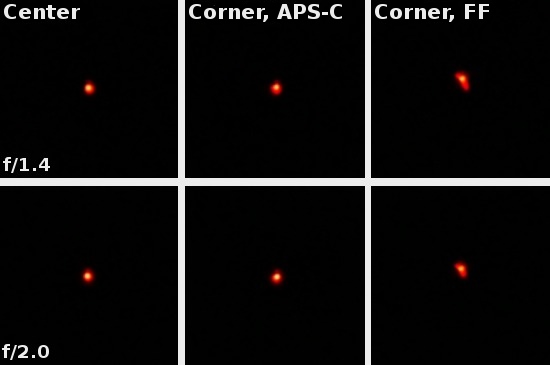
|
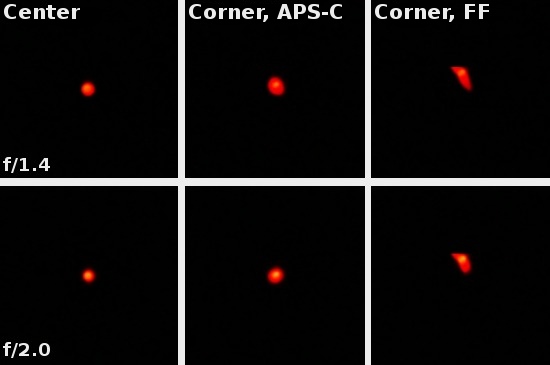
The first thing that sticks out is not coma but rather the Minolta’s astigmatism; amounting to 16%, it doesn’t allow to get a spot picture of the diode, as it was in the case of the Sony, which astigmatism at the level of 9% is lower. A higher level of astigmatism for an older lens shouldn’t surprise us at all because, as the time goes by, this aberration has a tendency to increase due to slight operating slacks in the casing and by elements shift. On the other hand, though, the G series was the best and the most expensive Minolta lenses series and it was supposed to be designed to withstand years of intensive wear and tear.
Please Support UsIf you enjoy our reviews and articles, and you want us to continue our work please, support our website by donating through PayPal. The funds are going to be used for paying our editorial team, renting servers, and equipping our testing studio; only that way we will be able to continue providing you interesting content for free. |
- - - - - - - - - - - - - - - - - - - - - - - - - - - - - - - - - - - - - - - - - - - - - - - -
Returning to the coma, we could write that also in this category the Sony performs better. In the APS-C sensor corner the coma problem practically doesn’t exist in both cases, although if you look closely the Minolta’s result seems to be a tad worse. In the full frame corner there’s no doubt that the Sony fares better.