Nikon Nikkor AF-S DX 17-55 mm f/2.8G IF-ED
5. Chromatic aberration
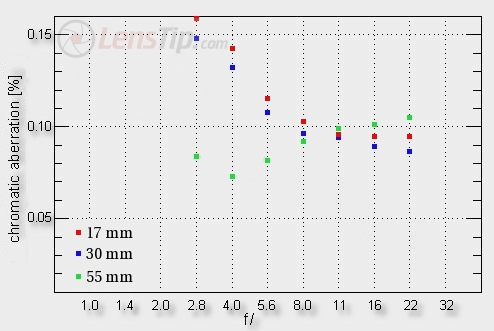
In the case of Nikkor 17-55 mm, the aberration will occur mainly with the shortest focal lengths and at large apertures; its level is on the borderline between medium and high. With the rest of combinations of focal lengths and apertures the results are grouped around 0.1% - the value very low and rather unobtrusive.
Please Support UsIf you enjoy our reviews and articles, and you want us to continue our work please, support our website by donating through PayPal. The funds are going to be used for paying our editorial team, renting servers, and equipping our testing studio; only that way we will be able to continue providing you interesting content for free. |
- - - - - - - - - - - - - - - - - - - - - - - - - - - - - - - - - - - - - - - - - - - - - - - -
One thing should be noted here – chromatic aberration levels, tested here, showed an upward trend with the increase of the goal’s proximity. The aberration was the highest for the smallest test chart and the lowest for the biggest. When we looked carefully at the model pictures, they showed that for objects situated further the aberration level is not very disturbing, even with the most demanding combination of maximal aperture and the shortest focal length.
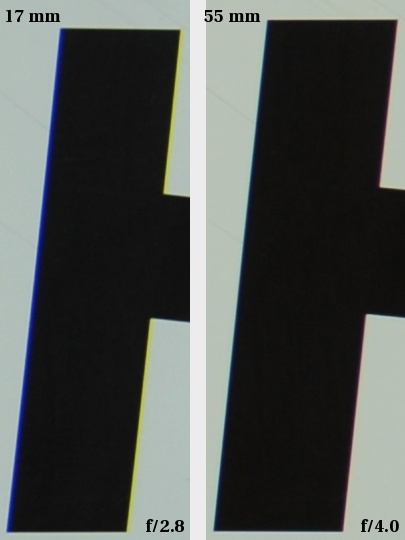
How it looks exactly on our smallest test chart can be seen in these fragments.
 |
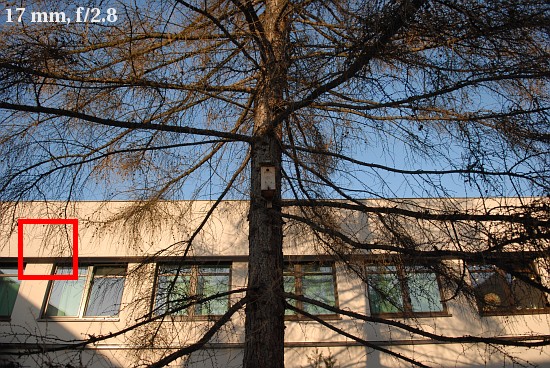
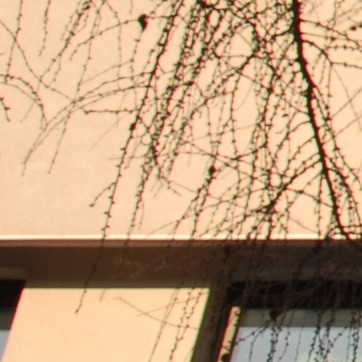
The picture below shows a fragment of a frame corner with 17 mm and f/2.8 for the objects situated considerably further than our test charts. As you see, the colourful fringings are not as bothersome as they were before.
 |
 |