Sigma 19 mm f/2.8 EX DN
7. Coma, astigmatism and bokeh
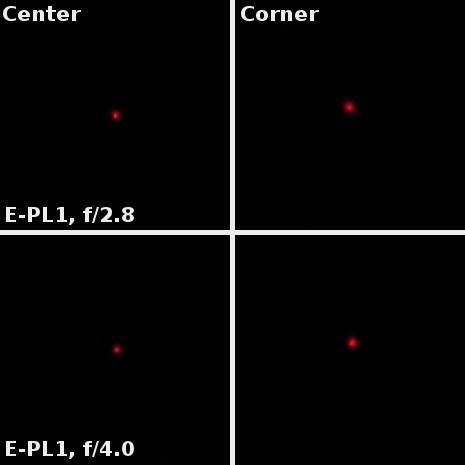
As you see even at the maximum relative aperture the diode image, positioned in a frame corner, is circular and differs just slightly from that in the frame centre. It means the coma is corrected well and won’t cause you any serious troubles on smaller Micro 4/3 sensors.
Please Support UsIf you enjoy our reviews and articles, and you want us to continue our work please, support our website by donating through PayPal. The funds are going to be used for paying our editorial team, renting servers, and equipping our testing studio; only that way we will be able to continue providing you interesting content for free. |
- - - - - - - - - - - - - - - - - - - - - - - - - - - - - - - - - - - - - - - - - - - - - - - -
Now let’s have a glance at the performance on the APS-C sensor.
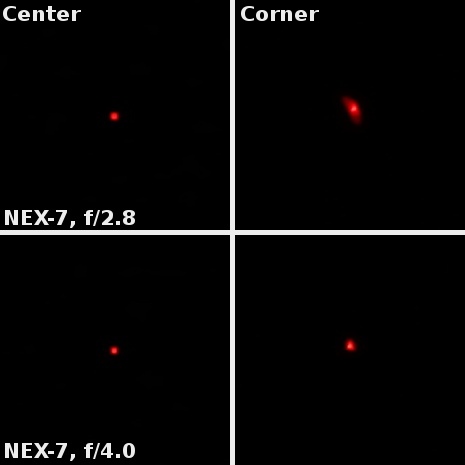
This time the situation is a bit different. At the maximum relative aperture the coma level is high and difficult to omit. Fortunately it disappears almost completely on stopping down the lens by one aperture stop.
The astigmatism, understood as an average difference between horizontal and vertical MTF50 function values, amounted to 8%. It is a good result but far from perfect.
Now, let’s see how defocused diode images look like at different apertures which will enable you to assess the quality of out-of-focus images provided by this lens.
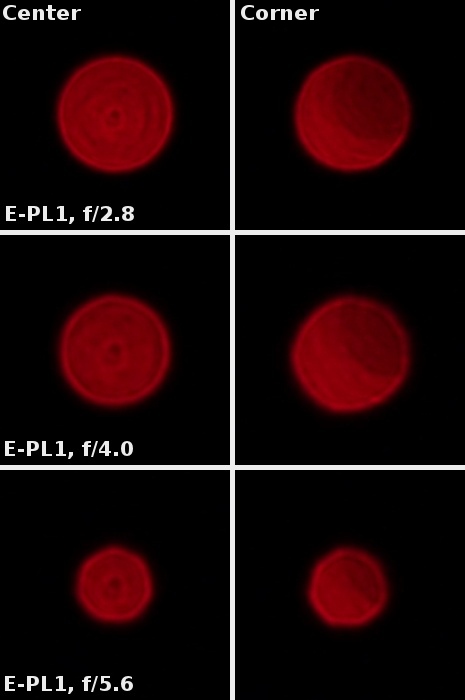
The light layout in the circles is not exactly homogeneous - you can notice lighter and darker rims. What’s more images in the frame corner suffer from the influence of differential vignetting so one part of the circle is lighter and the part closer to the frame corner – darker.