Sigma S 200 mm f/2 DG OS
6. Distortion and field of view
Field of view
A full frame rectilinear 200 mm lens should offer you a range of angles of view of 12.3 deg and the producers state such a value in their official specifications. Of course we decided to check this field anyway, by taking photos of a starry sky and saving them in the JPEG format.Then we measured them precisely as it should be done, for rays of light coming from infinity. Our measurements were based on photos of starry sky; then we transformed the pixel layout (X,Y) from the photo into the equatorial coordinate system (right ascension and declination), which locates a star on a celestial sphere. The transformation was based on the positions of 74 stars spread evenly across the frame with the mesh fitting error amounting to just 3 minutes of arc.
Finally our result amounted to 12.39 deg with a measuring error of 0.06 of a degree. The real field of the tested instrument seems to be a tad wider than the declared one but the difference we find simply cosmetic.
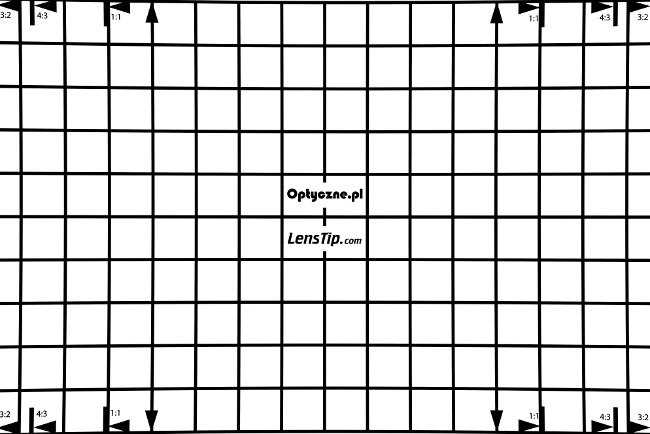
Distortion
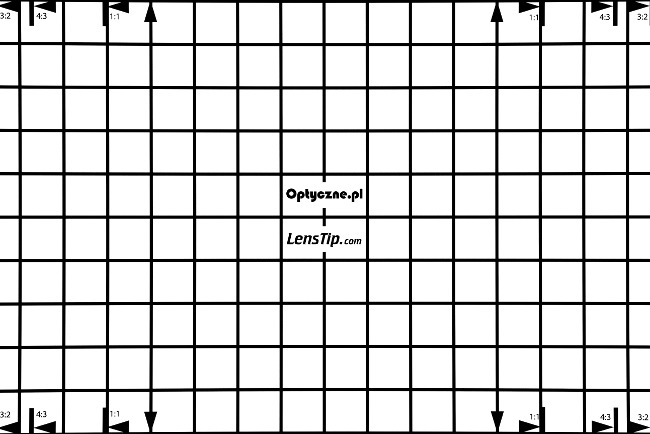
In case of the smaller APS-C sensor distortion doesn't give you any serious reasons to complain. Our official result amounts to +0.72% so it fits a range of low values.
Please Support UsIf you enjoy our reviews and articles, and you want us to continue our work please, support our website by donating through PayPal. The funds are going to be used for paying our editorial team, renting servers, and equipping our testing studio; only that way we will be able to continue providing you interesting content for free. |
- - - - - - - - - - - - - - - - - - - - - - - - - - - - - - - - - - - - - - - - - - - - - - - -
On full frame pincushion distortion is a big higher because you deal here with +1.60%. It is not a level that should be seriously criticized but still it surprises us. After all a fixed-focal lens at this price point with such a complexity of optics distortion correction shouldn't constitute a big problem for the producers. I admit I expected here a value lower than 1%.
Why? It's enough to remind here the results of less complex reflex camera lenses. The Canon EF 200 mm f/2.0L IS USM corrected this aberration practically to zero, with a result of just -0.02%. In case of the Nikkor this level was a tad higher, +0.86%, but still, compared to that, the results of the Sigma are weak.
| A7R IIIa, 200 mm, JPEG, APS-C/DX | |||
 |
|||
| A7R IIIa, 200 mm, JPEG, FF | |||
 |
|||