Canon EF-S 18-135 mm f/3.5-5.6 IS
8. Vignetting
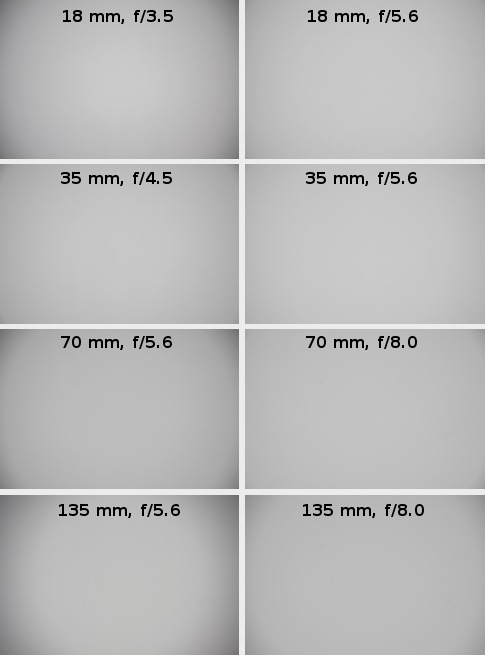
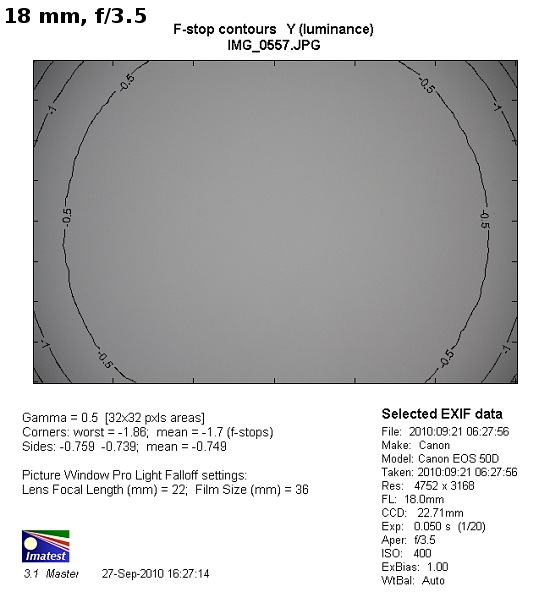
No surprise here. At 18 mm and by f/3.5 the vignetting reaches a high level of 44% (-1.7 EV) and after stopping down to f/4.0 it decreases to 38%. The aberration is still noticeable by f/5.6 where it amounts to 22%. On further stopping down we see some improvement but it is rather slight because by f/8.0 we noticed the vignetting level of 20% and by f/11 it reached the value of 19%.
Please Support UsIf you enjoy our reviews and articles, and you want us to continue our work please, support our website by donating through PayPal. The funds are going to be used for paying our editorial team, renting servers, and equipping our testing studio; only that way we will be able to continue providing you interesting content for free. |
- - - - - - - - - - - - - - - - - - - - - - - - - - - - - - - - - - - - - - - - - - - - - - - -
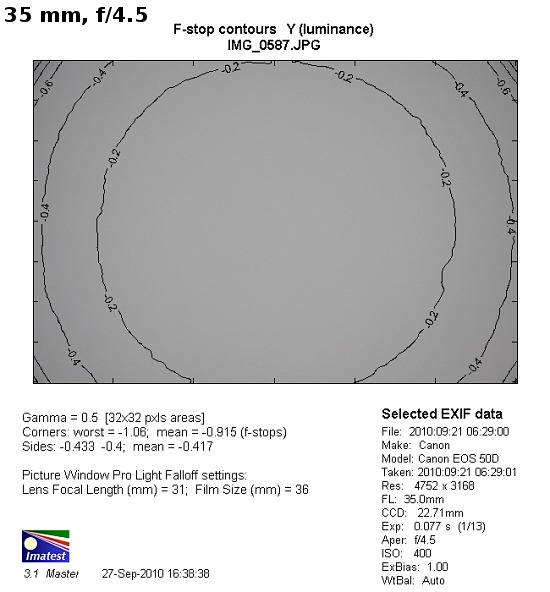
The situation improves a lot at 35 mm focal length. At the maximum relative aperture the brightness loss in the frame corners gets to 27% (0.92 EV). On stopping down to f/5.6 the vignetting becomes hardly bothersome because it reaches just 16% and by f/8.0 it decreases to an imperceptible level of 10%.
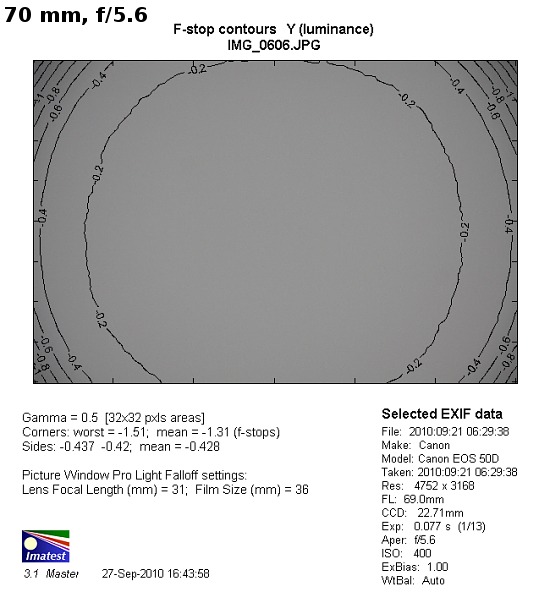
When we lengthen the focal length further, some serious troubles with vignetting are back. At 70 mm and by f/5.6 the light fall-off in the frame corners is 36% (-1.31 EV). Fortunately this aberration decreases very quickly on stopping down, by f/8.0 amounting to 17% and by f/11 -to only 10%.
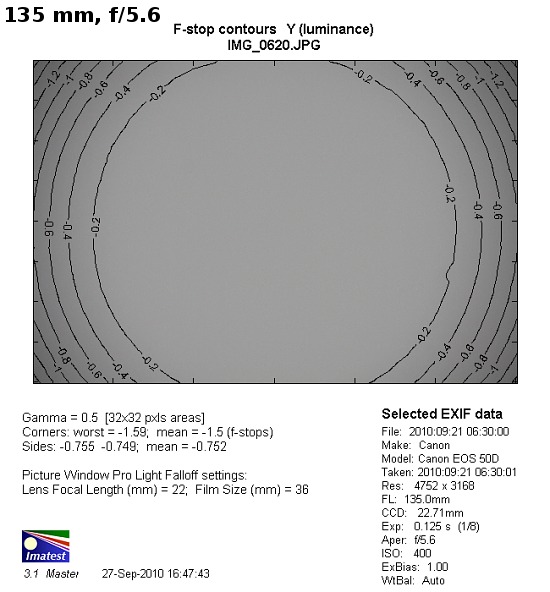
The results at 135 mm are even a bit worse. At the maximum relative aperture we must cope with the vignetting level of 40% (-1.5 EV) and by f/8.0 its value is still 22%. Only the usage of f/11 and f/16 apertures release us from this problem because the brightness loss in the frame corners amounts there to 13% and 8% respectively.
To sum up in this category the Canon 18-135 mm IS didn’t impress us much. However, to be honest, we didn’t expect to be impressed at all.
 |
 |
 |
 |