Canon EF 35 mm f/1.4L USM
5. Chromatic aberration
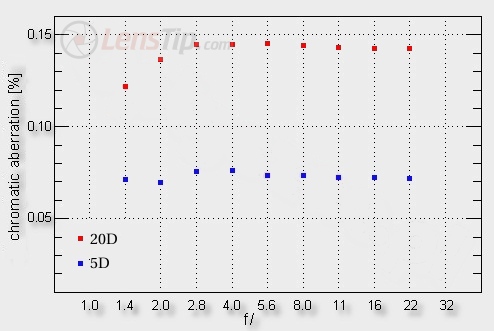
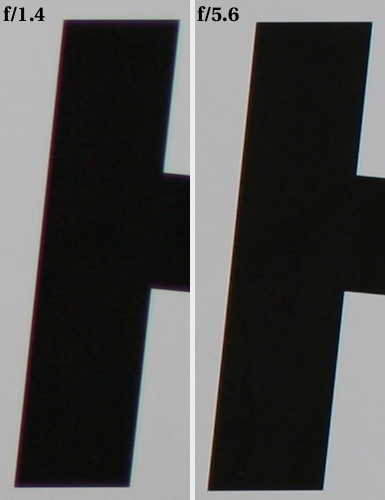
This effect can be understood if we stop for a while and think how the chromatic aberration happens and how we measure it. When pixels are larger, the chromatic aberration is more difficult to register and, additionally in our methods it is measured by determining the size of an area, expressed in pixels, between the resolution graph for blue/cyan and for red. When the pixels are bigger, there are less of them in this area – thus a lower result and a necessity to redefine the scale. Fortunately the full frame EOS 1Ds Mark III has exactly the same pixel density than the 20D and that camera is a natural candidate for the full frame measurements. The use of that reflex camera will make the conversion of the MTF values and the chromatic aberration values unnecessary. There’s one question, though – when we will be able to afford it…but it’s quite another story.
Please Support UsIf you enjoy our reviews and articles, and you want us to continue our work please, support our website by donating through PayPal. The funds are going to be used for paying our editorial team, renting servers, and equipping our testing studio; only that way we will be able to continue providing you interesting content for free. |
- - - - - - - - - - - - - - - - - - - - - - - - - - - - - - - - - - - - - - - - - - - - - - - -