Viltrox AF 15 mm f/1.7 Air
10. Autofocus and focus breathing
Autofocus
We tested the autofocus of the Viltrox AF 15 mm f/1.7 Air by joining it to the Fujifilm X-T2 and X-T3. In both cases the performance of the mechanism was noiseless and quick. Running through the full distance range and confirming the focus took typically 0.3-0.5 of a second without any significant wavering or oscillations.When it comes to the accuracy of the mechanism we noticed some differences between both bodies. The older X-T2 cooperated with the Viltrox worse and, as a result, we noticed several misses. There were also moments when autofocus kept missing for the third or the fourth time and only the next shutter release managed to put it right.
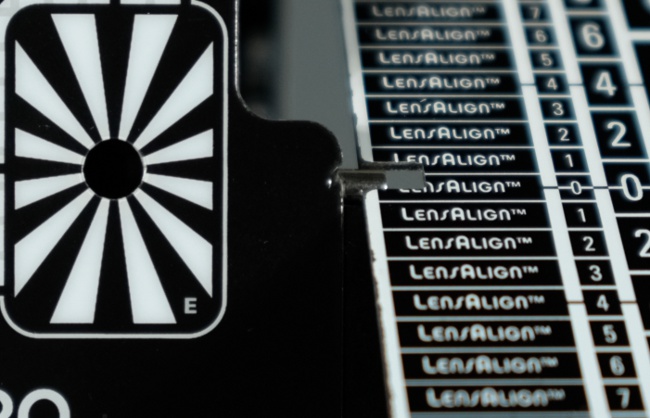
Using the newer X-T30 body improved the work culture significantly, with far less misses and wavering, but still the performance was worse than the performance of brand Fujinons. The photo below proves that the tested Viltrox didn't have any front or back focus tendencies.
| Fujifilm X-T2, f/1.7 |
 |
Focus breathing
Focus breathing tests show reframing images as you oversharp them. We conduct the test by manually passing from the minimum focusing distance to infinity with the aperture stopped down; then we check how the field of view of the lens changed as a result.
Please Support UsIf you enjoy our reviews and articles, and you want us to continue our work please, support our website by donating through PayPal. The funds are going to be used for paying our editorial team, renting servers, and equipping our testing studio; only that way we will be able to continue providing you interesting content for free. |
- - - - - - - - - - - - - - - - - - - - - - - - - - - - - - - - - - - - - - - - - - - - - - - -
A frame change ranging from 0 to 5% we consider to be low. Between 5 and 10% you can speak about medium levels. Usually such values constitute also the maximum efficiency level of any breathing compensation algorithms, present in some bodies. Between 10 and 15% focus breathing is high, above 15% its level can be called very high.
Below we present the test video of the Viltrox lens:
Still it's worth noticing that in the video recording mode automatic distortion correction is a tad too aggressive and, as a result, in the recording shown above, especially for smaller distances from the filmed objects, you can observe noticeable pincushion distortion, a result of too strong 'straightening' of the barrel variant, present before the correction. It would be very nice if the producers corrected that while updating the software and eliminated the problem.