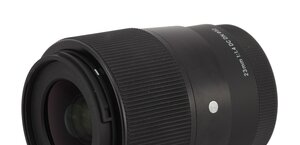
The following chart presents a comparison between the new Sigma and its predecessor and other full frame 1.2/35 models shown not so long ago.
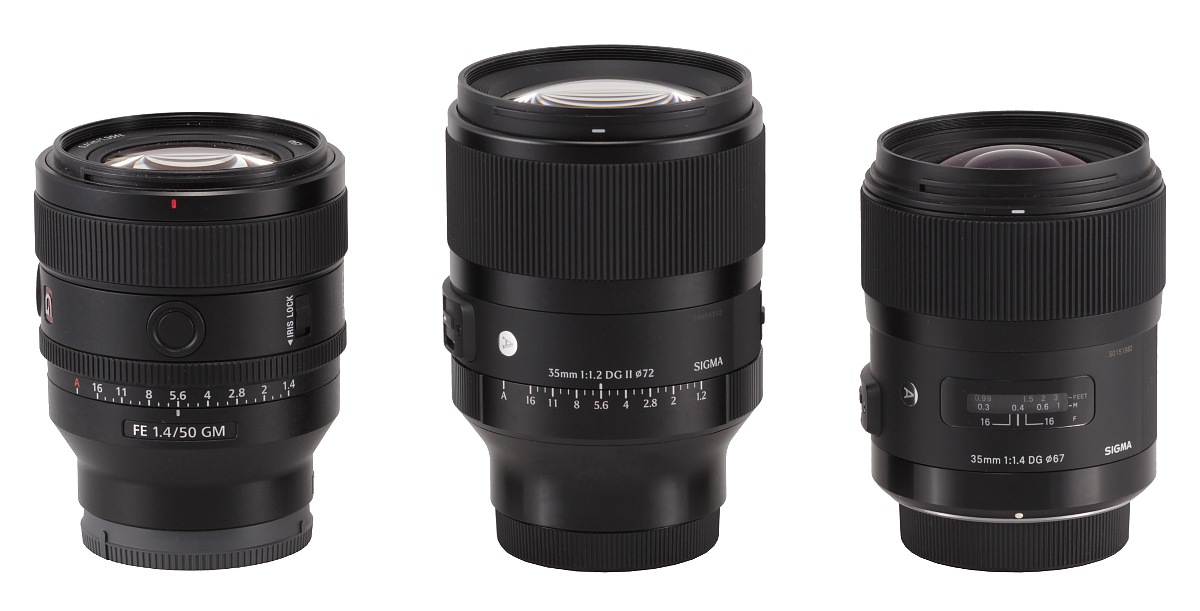
The old Sigma is here undoubtedly the heaviest lens, and only the new Nikkor managed to surpass its physical parameters. The second Sigma version is a huge step forward as its weight and dimensions have been decreased and, as a result, it is actually significantly shapelier than the Nikkor and the Viltrox. As if it wasn't enough, it also offers the shortest minimum focusing distance, amounting to just 28 cm.
In the photo below, the Sigma A 35 mm f/1.2 DG II is positioned between the Sony FE 50 mm f/1.4 GM and the reflex camera Sigma A 35 mm f/1.4 DG HSM.
Please Support Us
If you enjoy our reviews and articles, and you want us to continue our work please, support our website by donating through PayPal. The funds are going to be used for paying our editorial team, renting servers, and equipping our testing studio; only that way we will be able to continue providing you interesting content for free.
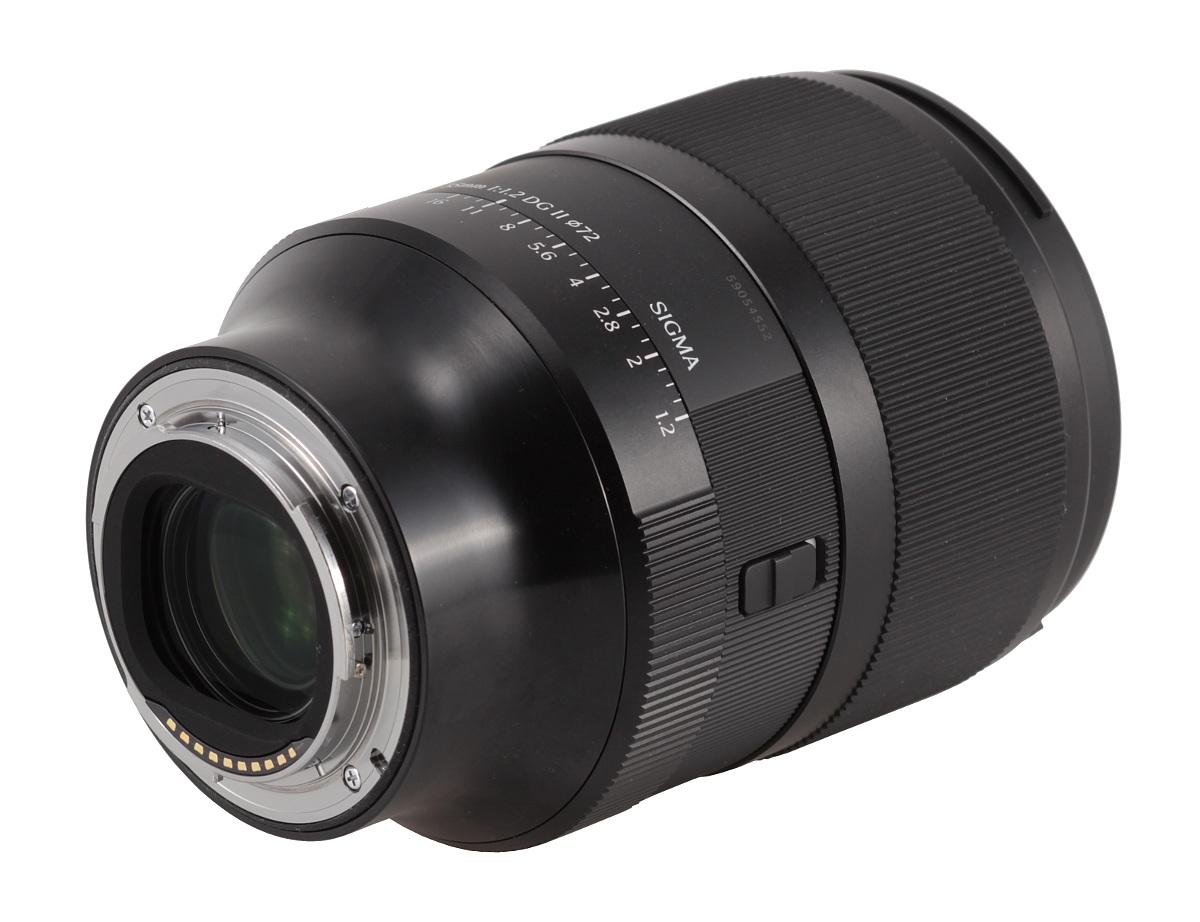
The tested lens starts with a metal mount surrounding a contact plate and an immobile rear element, 27 mm in diameter. That element is positioned right under a black plastic frame with rounded corners as big as 32x27 mm. From this side everything looks really fine.
A smooth, black, metal ring that quickly but smoothly increases its diameter is the first part of the proper barrel – on it you can find a white dot, making an alignment with a camera easier; "025," informing you about the production year of the instrument; an inscription MADE IN JAPAN, and also the focusing mechanism working range :„0.28M/0.92FEET – ∞”.
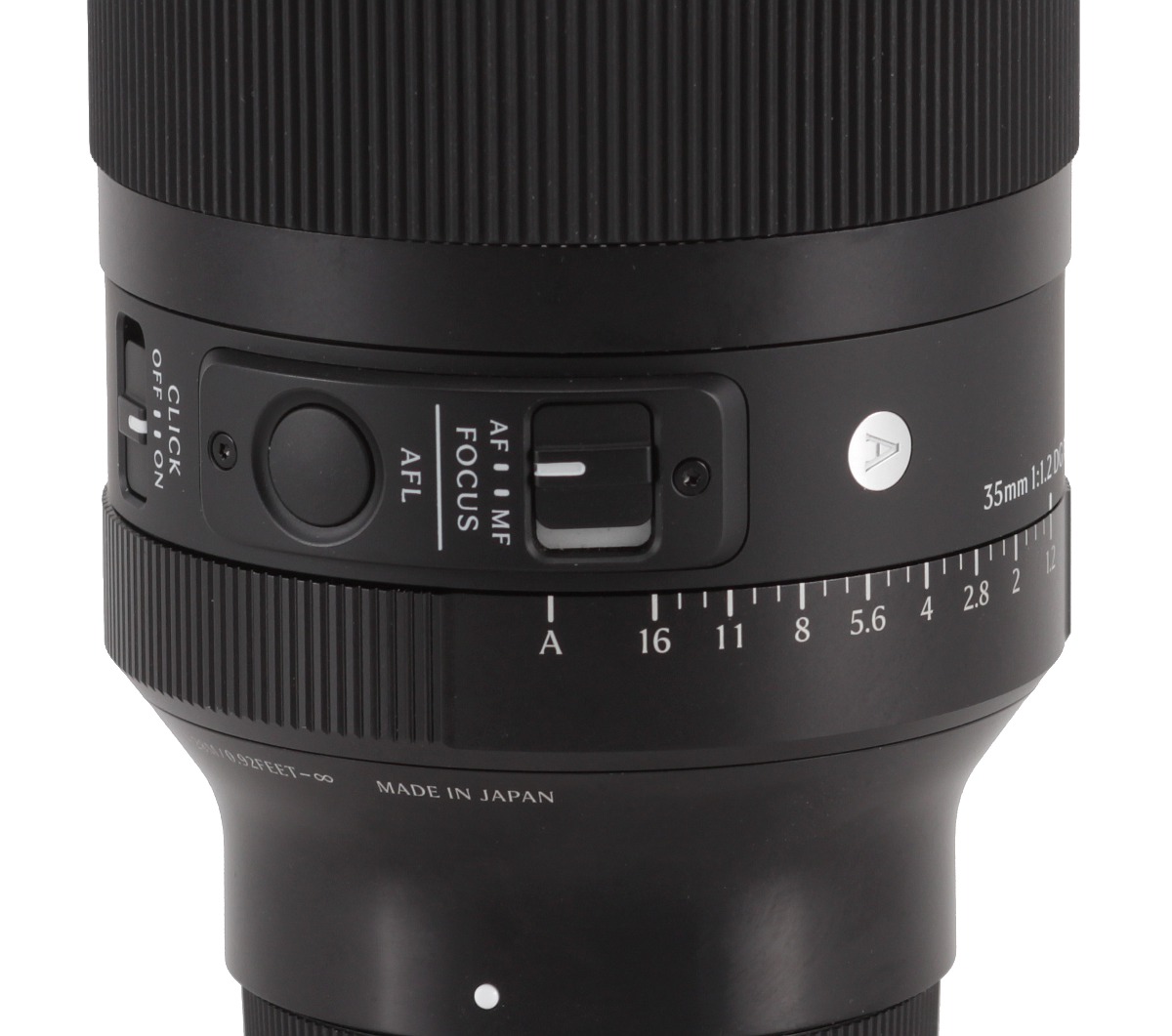
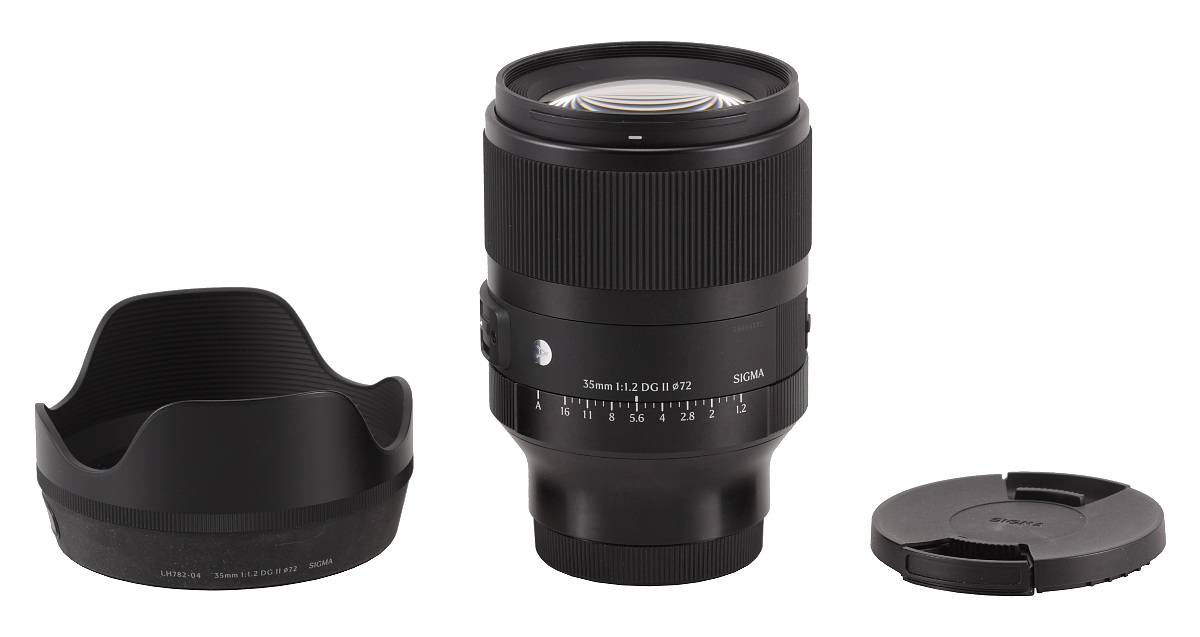
An aperture ring, as wide as 16 mm, is the next part. Most of its surface is covered by ribbing, but the producers also managed to squeeze in aperture markings, ranging from f/16 to f/1.2, and an „A” value (automatic). The ring moves in 1/3 of a stop increments, but you can de-click it completely. We found its performance very comfortable and really beyond reproach.
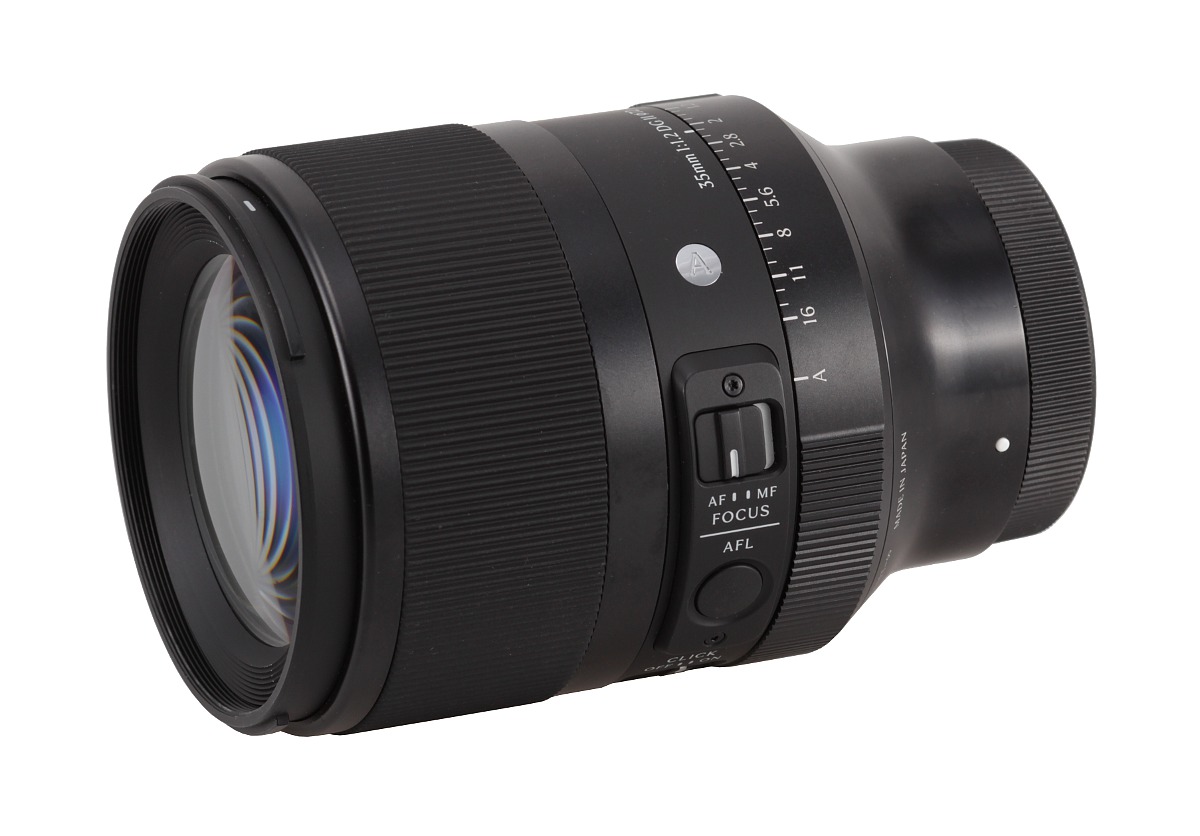
Further on, you see an immobile part covered by plastics, featuring the company's logo, the name and parameters of the lens, its serial number, fine ribbing, an „A” letter, which means the instrument was qualified as an Art line lens, and a bevy of switches. The first of them - AF/MF FOCUS – allows you to control the focusing mechanism working mode. The second one – AFL – enables you to recall a respective autofocus position but you can allot it other functions too. Below you see the third switch, CLICK OFF/ON, sets the working mode of the aperture ring. On the other side you see the aperture ring locking switch with several positions: A or ranging from f/1.2 to f/16.
The next part of the lens's barrel is a manual focus ring, as wide as 45 mm and mostly covered by fine ribbing. You can't find any distance or DoF scale on it and it is a focus-by-wire mechanism. Its movements are very smooth, but it works with proper resistance. The focusing range depends on the speed of your turning. When you move the ring fast its focus throw amounts to about 180 deg; when you move it slower, you can reach even 280 deg. Both these values ensure you very precise settings.
The barrel of the lens ends with a short, immobile ring, which turns into a hood mount, a part that is added in the box with the lens. The front element is 55 mm in diameter, slightly convex, immobile, and surrounded by a non-rotating filter thread, 72 mm in diameter.
The lens is a weather-resistant construction, dust- and splash proof. The front element is additionally covered by hydrophobic coatings which are supposed to repell water, dust, and grease.
It's worth mentioning the fact that I had an opportunity to test this lens during the worst cold snap that came to Poland at the turn of January and February 2026, with temperatures outside reaching -13°C and the apparent temperature being about -19°C. In these harsh conditions the lens fared exceedingly well.
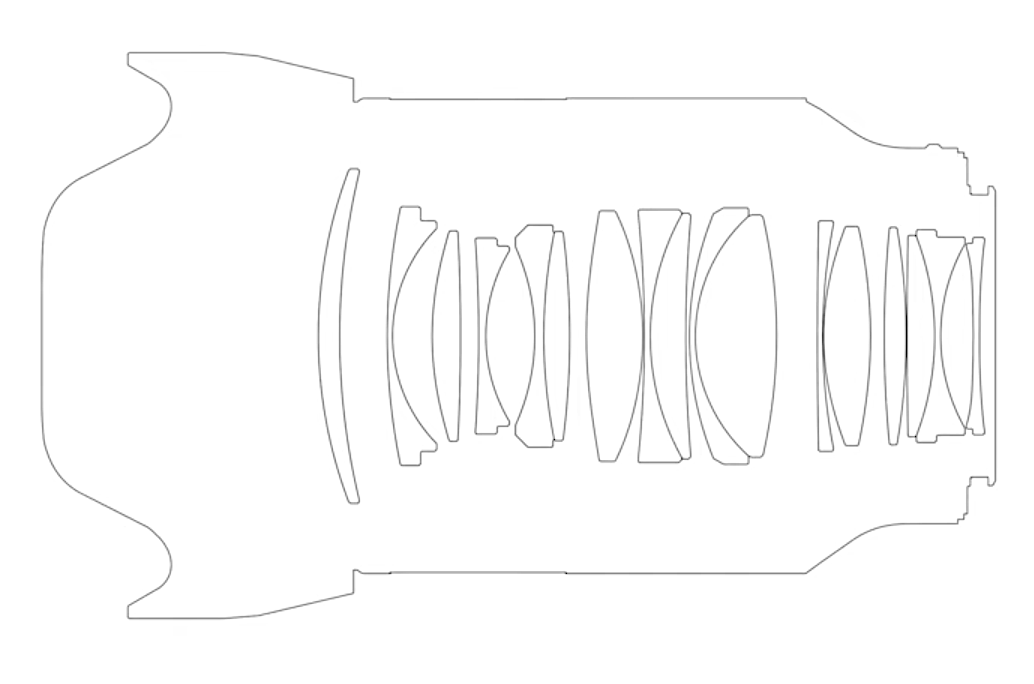
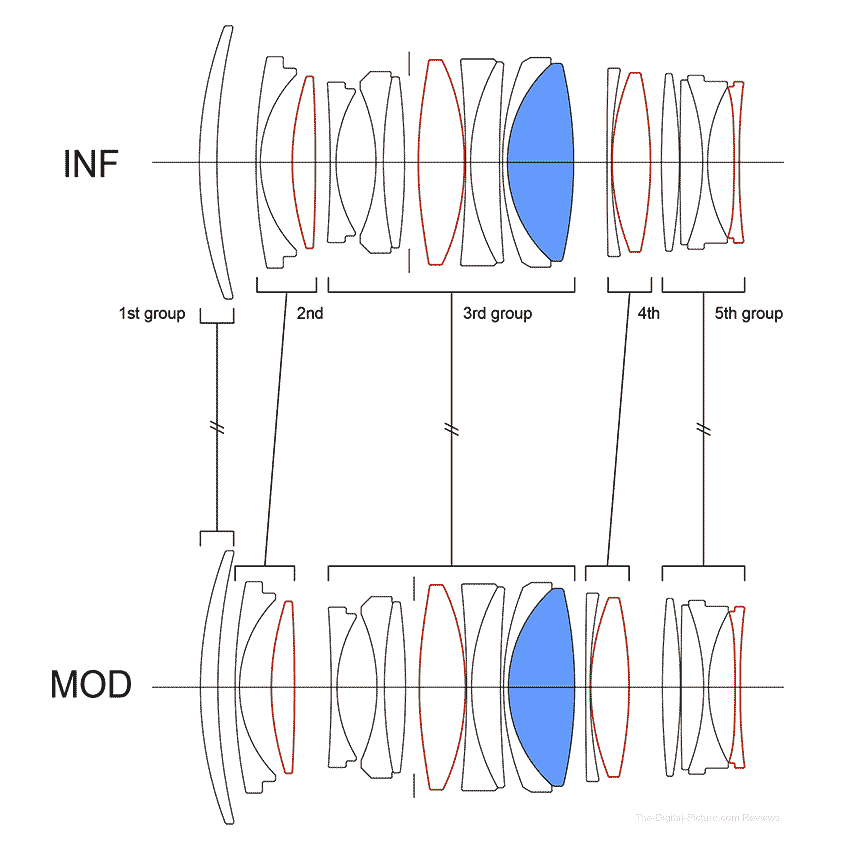
When it comes to optical construction, you deal here with 17 elements positioned in 13 optical groups. Among the elements, you can find one made of low dispersion SLD glass and four aspherical ones. Inside there is also a rounded aperture with 11 diaphragm blades, which can be closed down to a value of f/16.
Buyers get both caps, a petal-type hood, and a soft pouch of doubtful protective value in the box with the lens.