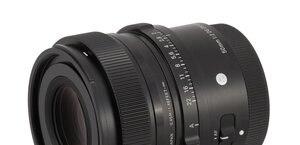
While 85 mm f/1.4 lenses are very popular and included in the lineups of most manufacturers, brighter f/1.2 models are much less common. In the full-frame mirrorless segment, such lenses are offered only by Canon, Nikon and Sigma, so somewhat out of necessity we have supplemented our table with DSLR lenses from Mitakon and Samyang. As you can see, Sigma has made a considerable effort to keep the dimensions down, as its lens is the lightest in the entire comparison, with only the manual DSLR lenses being smaller. At the same time, Sigma has achieved this despite having the most complex optical design and the largest number of aperture blades.
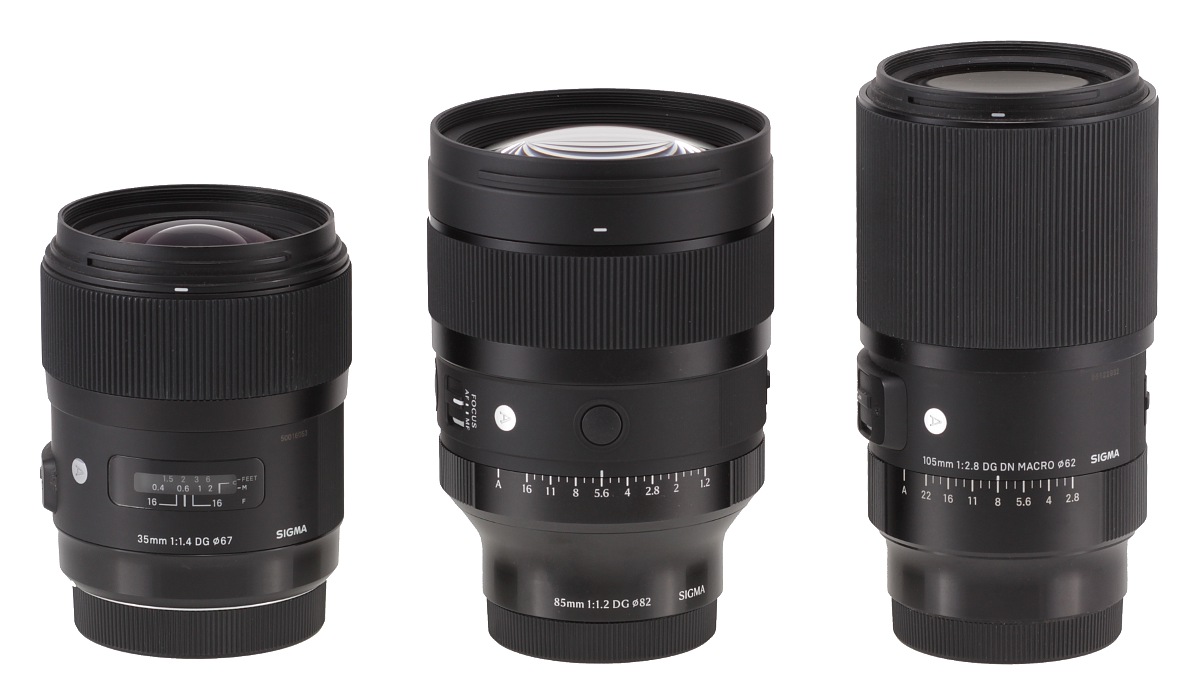
In the photograph below, the Sigma A 85 mm f/1.2 DG is positioned between the DSLR-oriented Sigma A 35 mm f/1.4 DG HSM and the mirrorless Sigma A 105 mm f/2.8 DG DN OS Macro.
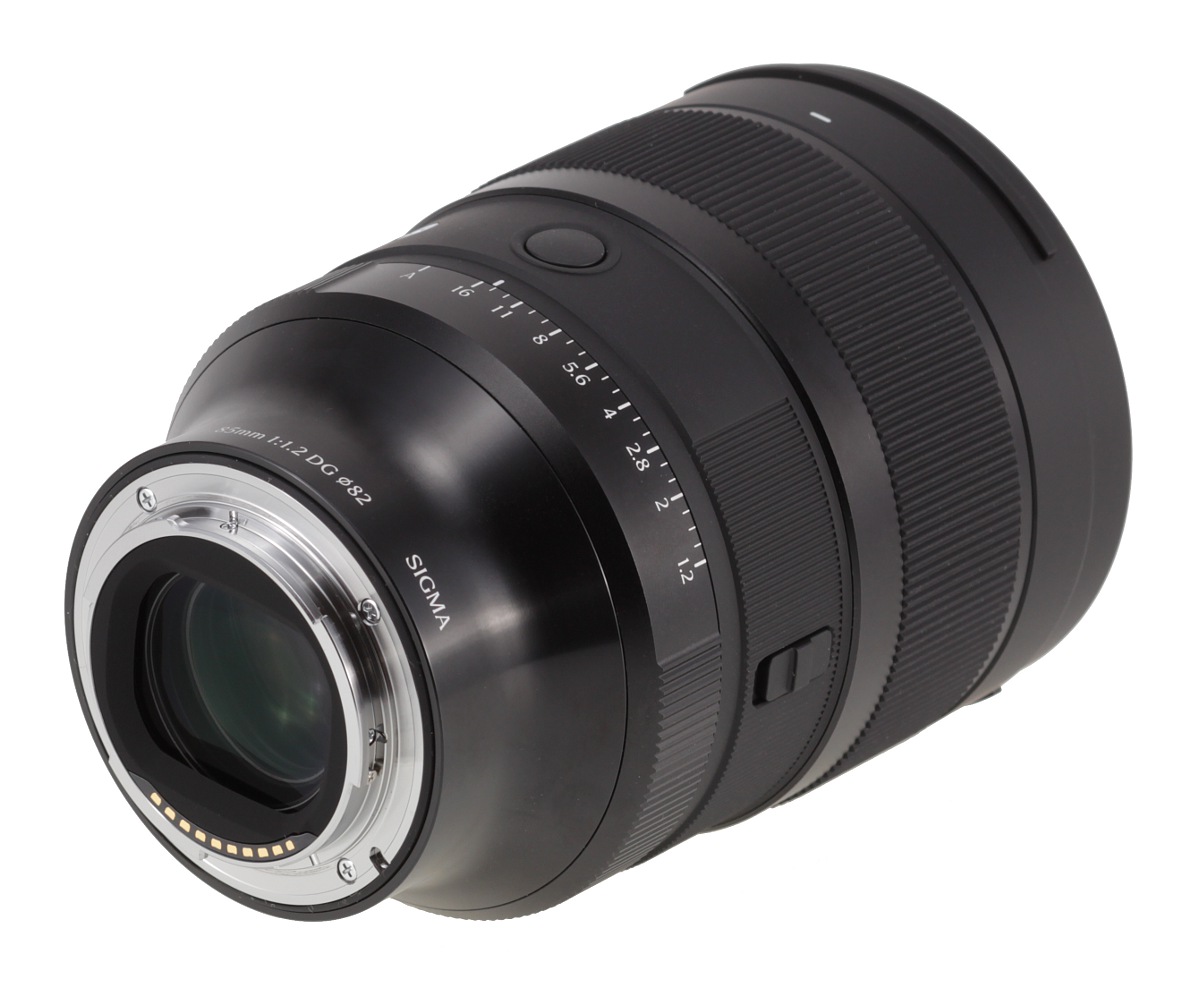
The tested lens starts with a metal mount surrounded by electrical contacts and a fixed rear element measuring 29 mm in diameter. This element is located just a few millimeters below the contacts, directly beneath a matte black frame with rounded corners. The frame measures 33 × 26 mm. Everything looks very good from this side.
Please Support Us
If you enjoy our reviews and articles, and you want us to continue our work please, support our website by donating through PayPal. The funds are going to be used for paying our editorial team, renting servers, and equipping our testing studio; only that way we will be able to continue providing you interesting content for free.
The first section of the main lens barrel is a smooth, black metal ring that gradually and rapidly increases in diameter. It features a white dot to help align the lens with the camera mount, the lens's basic specifications and filter diameter marking, the manufacturer's logo, and the number "026", indicating the instrument's model year. Slightly higher up, we can also find the inscription "MADE IN JAPAN" and the focusing range: "0.84M/2.76FEET–∞".
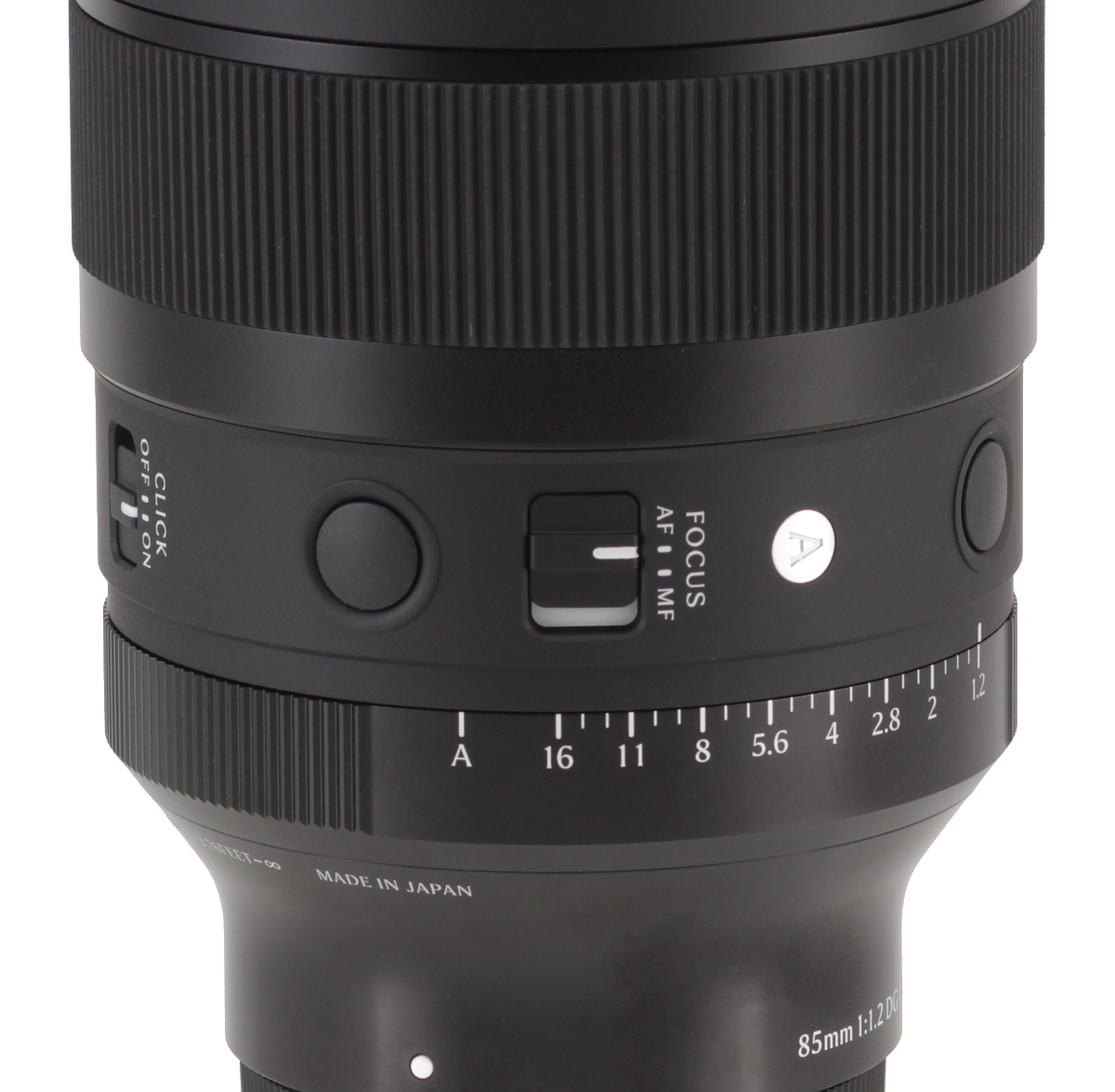
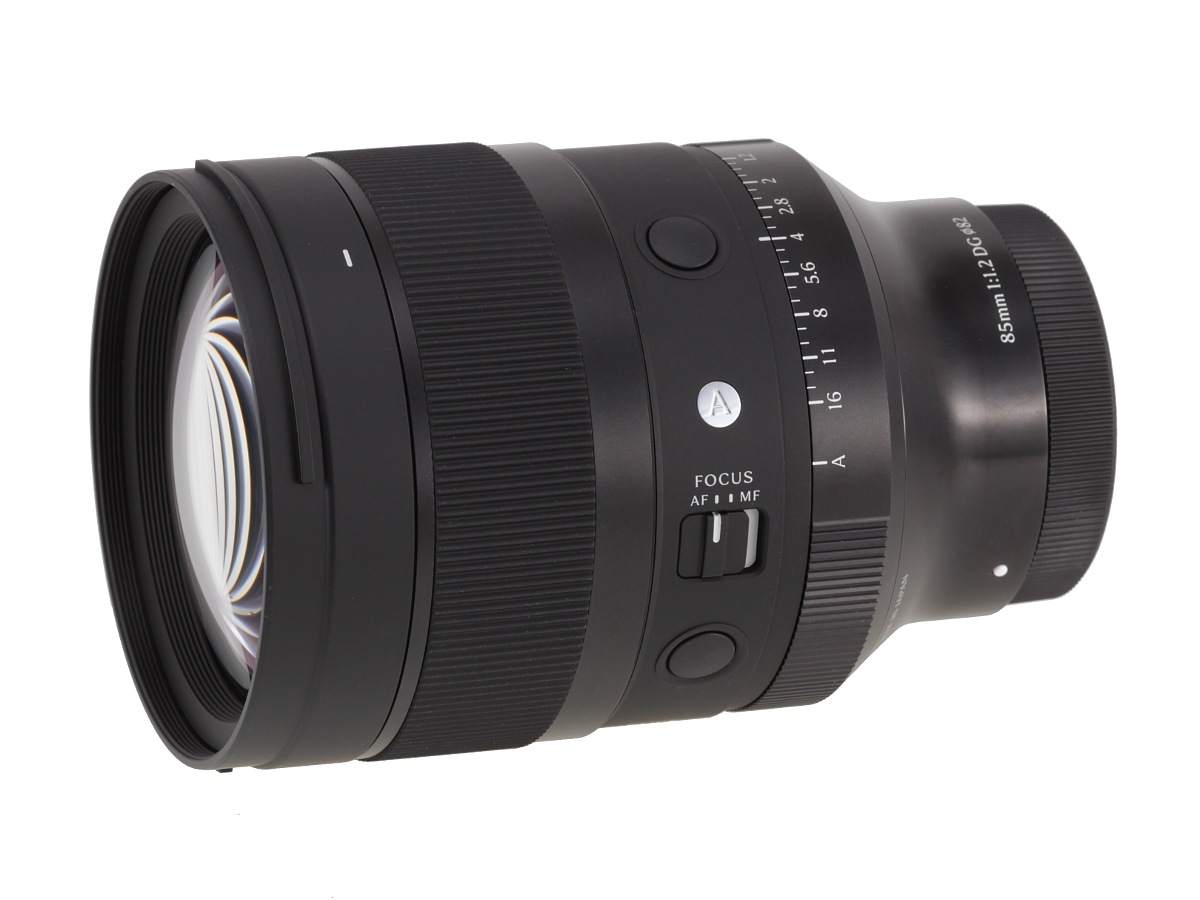
The next component is the aperture ring, which is 16 mm wide. Most of its surface is ribbed, but it also features aperture markings ranging from f/16 to f/1.2, as well as an "A" (automatic) setting. The ring operates in 1/3 EV increments, but it can also be switched to stepless operation. It is very comfortable to use, and it is difficult to find anything to complain about here.
Moving further along the barrel, we come across a fixed component covered with plastic, featuring fine ribbing, the "A" symbol indicating that the lens belongs to the Art line, and a series of switches and buttons. These include two round, programmable AFL buttons and the AF/MF FOCUS switch, which selects the operating mode of the focusing mechanism, as well as the CLICK OFF/ON switch, which controls the aperture ring's operating mode. On the opposite side, we find a switch that locks the aperture ring either in the A position or within the f/1.2 to f/16 range.
The next part of the lens barrel is the manual focusing ring, which is as much as 36 mm wide and mostly covered with ribbing. There is no distance or depth-of-field scale. The ring uses an electronic focus-by-wire mechanism and operates very smoothly while providing an appropriate level of resistance. The rotation angle depends on how quickly the ring is turned. When operated quickly, it is approximately 180 degrees, while slower operation allows for a rotation of more than 300 degrees. These values make very precise adjustments possible.
The lens barrel ends with another fixed ring made of plastic, bearing the serial number and extending into the mount for the supplied lens hood. The front element measures 69 mm in diameter, is slightly convex and fixed in place, and is surrounded by a non-rotating filter thread with a diameter of 82 mm.
The lens is sealed, making it splash-resistant and protected against dust and dirt. The front element has been coated with hydrophobic layers that make it more difficult for dirt, moisture and grease to adhere to its surface.
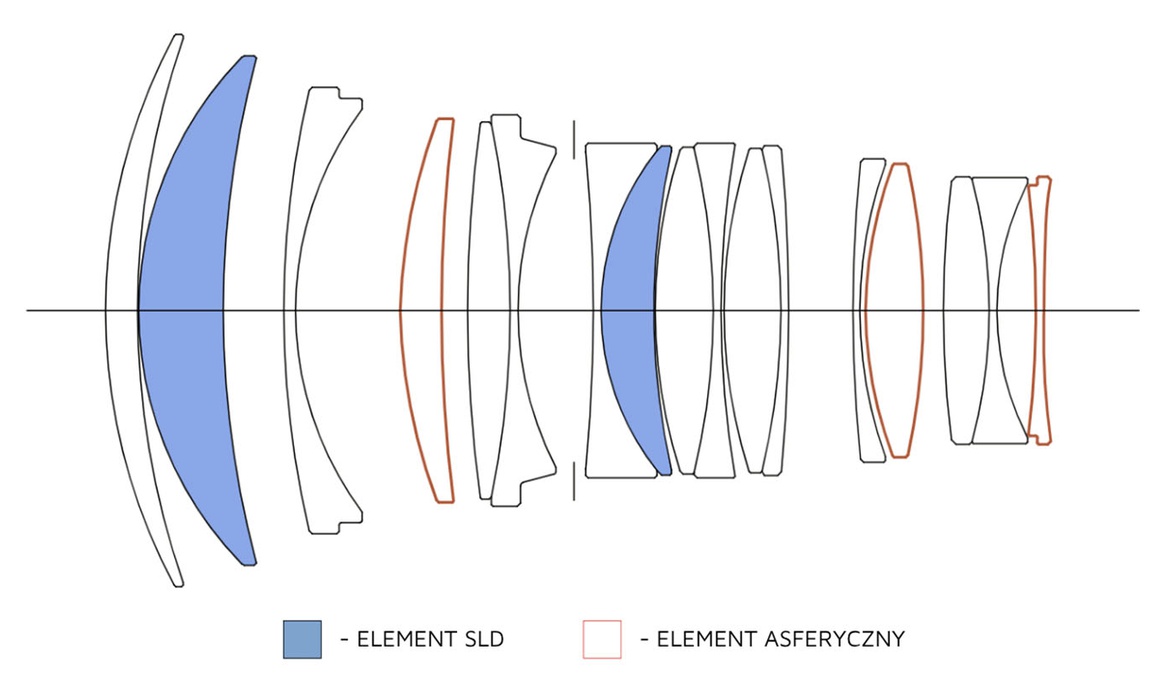
As for the optical design, the lens employs a total of 17 elements arranged in 12 optical groups. Two elements are made of low-dispersion SLD glass, while three others have aspherical surfaces. Inside, we also find a circular aperture diaphragm with as many as 13 blades, which can be stopped down to a maximum aperture of f/16.
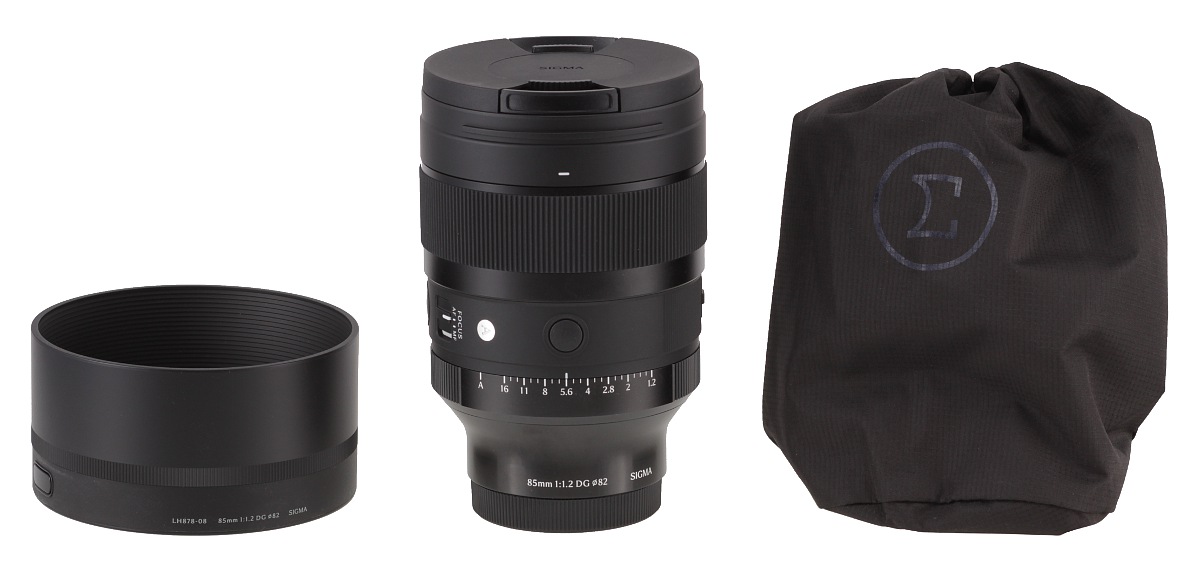
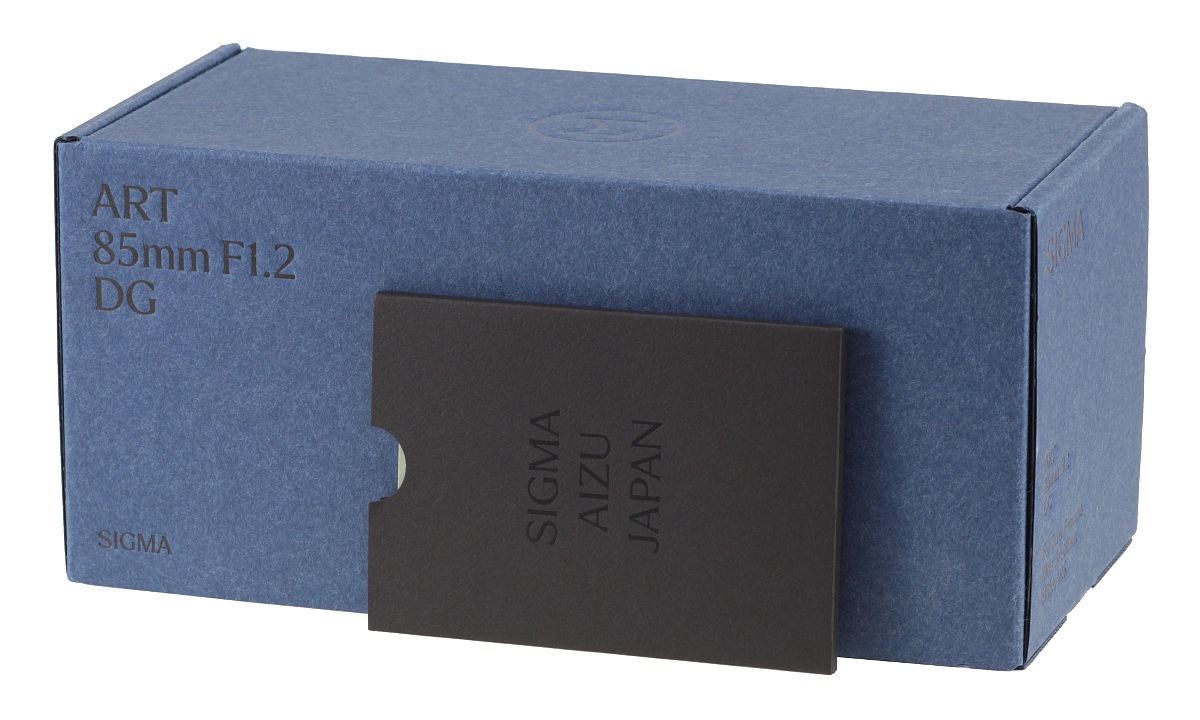
The package includes both lens caps, a lens hood and a soft case with rather questionable protective properties.