Nikon Nikkor AF 35 mm f/2D
3. Build quality
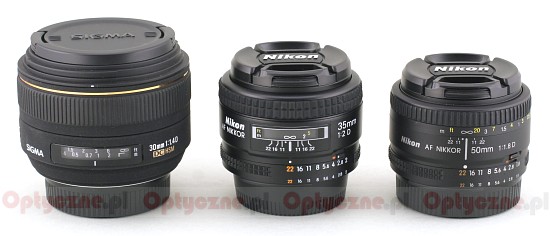 |
The build quality is typical for this standard prime Nikkor lenses series. Anybody who has ever handled one of the 2.8/20, 2.8/24, 2.8/28, 1.4/50 models will find the same features in 2.0/35 – the metal bayonet and the barrel looks the same. Perhaps it is not the most solid or the most tight but you can’t find a fault with the build quality either.
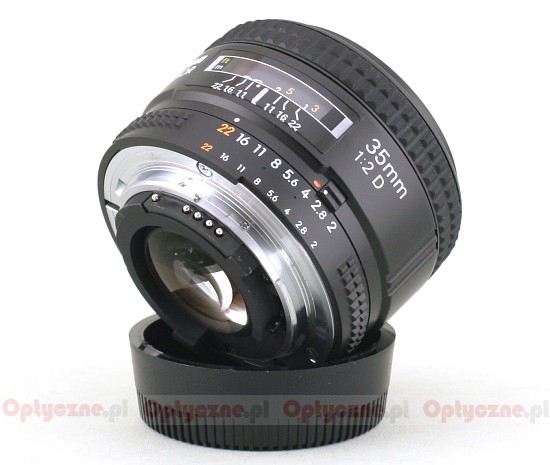 |
Despite its small dimensions, you will find that the tested Nikkor has all the elements that make your work with a lens comfortable. There’s a narrow but comfortable manual focus ring above a distance scale window and a depth of field scale underneath. The manual zoom ring is situated the closest to the bayonet.
Please Support UsIf you enjoy our reviews and articles, and you want us to continue our work please, support our website by donating through PayPal. The funds are going to be used for paying our editorial team, renting servers, and equipping our testing studio; only that way we will be able to continue providing you interesting content for free. |
- - - - - - - - - - - - - - - - - - - - - - - - - - - - - - - - - - - - - - - - - - - - - - - -
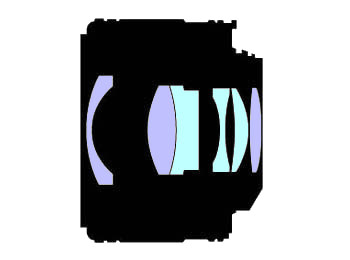
When it comes to the inner construction we deal here with 6 elements in 5 groups. The manufacturer doesn’t boast of using any special glass type or shape. The whole optics moves slightly forwards or backwards by focusing but it doesn’t causes any filter thread rotation. The filter thread size is 52 mm in diameter and, to get the whole picture, we also have to add that there is a seven diaphragm blades aperture, which can be stopped down to f/22.
Nikkor 2.0/35 belongs to the group of lenses from the bottom price shelf, with no extra accessories included. Apart from two caps and a box the buyer won’t get anything else.