Fujifilm Fujinon XF 23 mm f/2.8 R WR
10. Autofocus and focus breathing
Autofocus
The autofocus of the Fujinon 2.8/23 was tested with the help of three Fujifilm bodies: the X-T2, the X-T30, and the X-E5.In case of this aged X-T2 body the mechanism is not completely noiseless because the starting autofocus can wave the whole optical system and buzz slightly. The efficiency of work is also very hit-or-miss – there are situations when the autofocus can find the right position very quickly and the whole operation lasts just about 0.4 of a second. In other moment you can notice a significant wavering along with going in the wrong direction so the focusing time can last even two times longer.
When you pass to the newer X-T30 camera the culture of work improves. You still can hear a slight whirr but this time it is short. The focusing time is equally short, typically 0.3-0.4 of a second. In this case there is also a lot less wavering and even if they occur their amplitude is far lower.
Please Support UsIf you enjoy our reviews and articles, and you want us to continue our work please, support our website by donating through PayPal. The funds are going to be used for paying our editorial team, renting servers, and equipping our testing studio; only that way we will be able to continue providing you interesting content for free. |
- - - - - - - - - - - - - - - - - - - - - - - - - - - - - - - - - - - - - - - - - - - - - - - -
Unfortunately even progressing to the newest X-E5 body doesn't mean the quality of work improves significantly. The lens is perhaps too small to feature a more efficient AF system. You deal here with a quite chaotic movement of the whole optical system at once. It remains me a bit the old, good 'screwdrivers' and 'drills'.
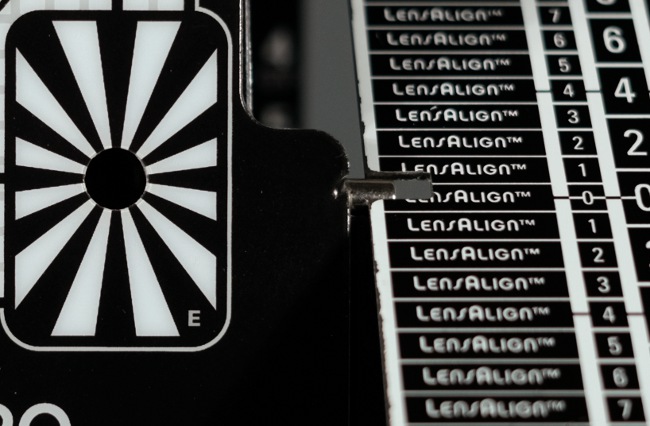
Such an effect is also visible when it comes to the accuracy of the focusing mechanism. There are a lot of misses, their number can reach even 10-20% depending on the body you attach to the lens and lighting conditions. Definitely such a result lags behind contemporary standards.
Fortunately the lens didn't have any distinct front or back focus tendencies.
| Fujifilm X-T2, f/2.8 |
 |
Focus breathing
Focus breathing tests show reframing images as you oversharp them. We conduct the test by manually passing from the minimum focusing distance to infinity with the aperture stopped down; then we check how the field of view of the lens changed as a result.A frame change ranging from 0 to 5% we consider to be low. Between 5 and 10% you can speak about medium levels. Usually such values constitute also the maximum efficiency level of any breathing compensation algorithms, present in some bodies. Between 10 and 15% focus breathing is high, above 15% its level can be called very high.
Below we present the test video of the Fujinon lens: