Sony FE 50-150 mm f/2 GM
5. Chromatic and spherical aberration
Chromatic aberration
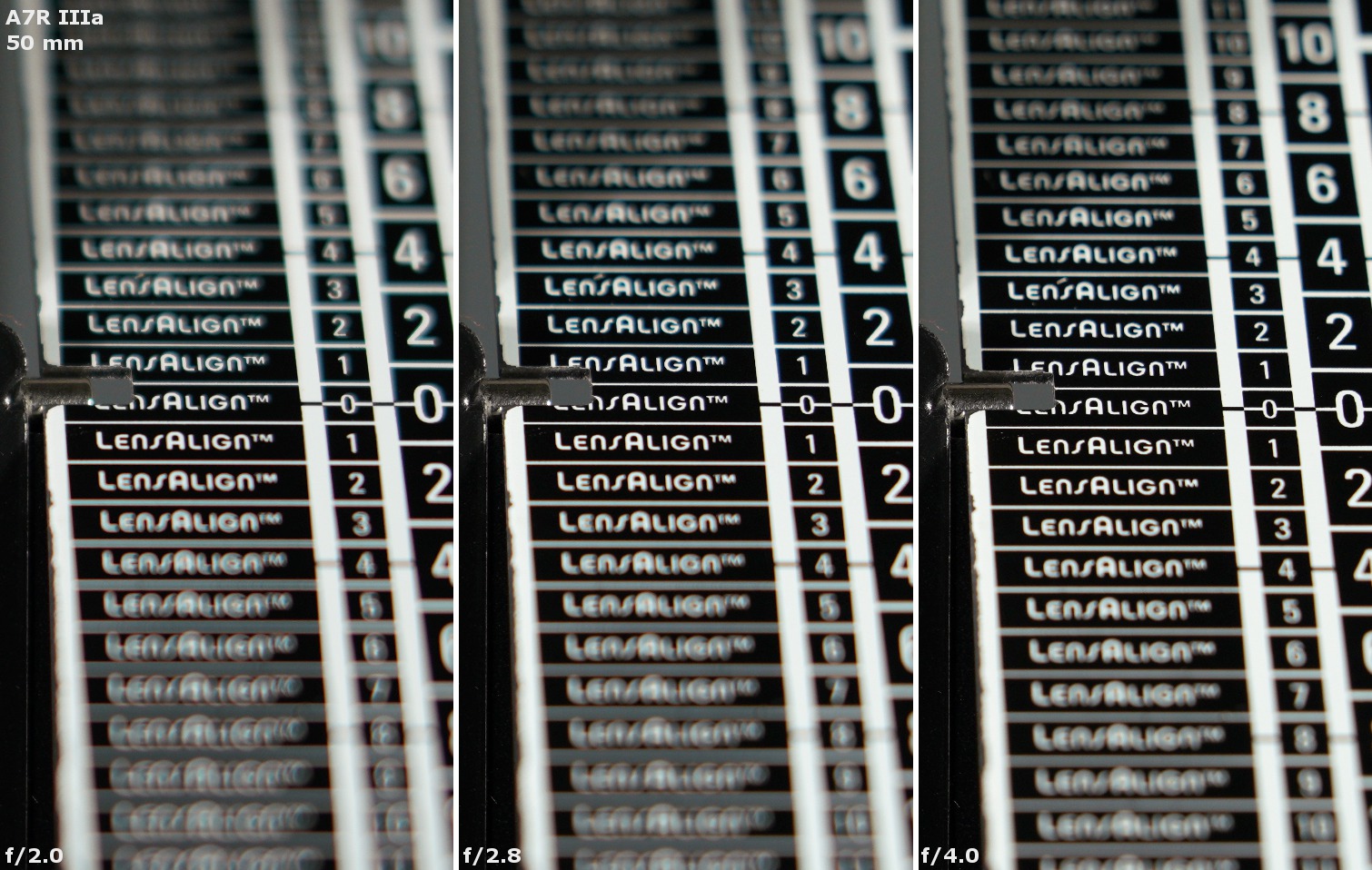
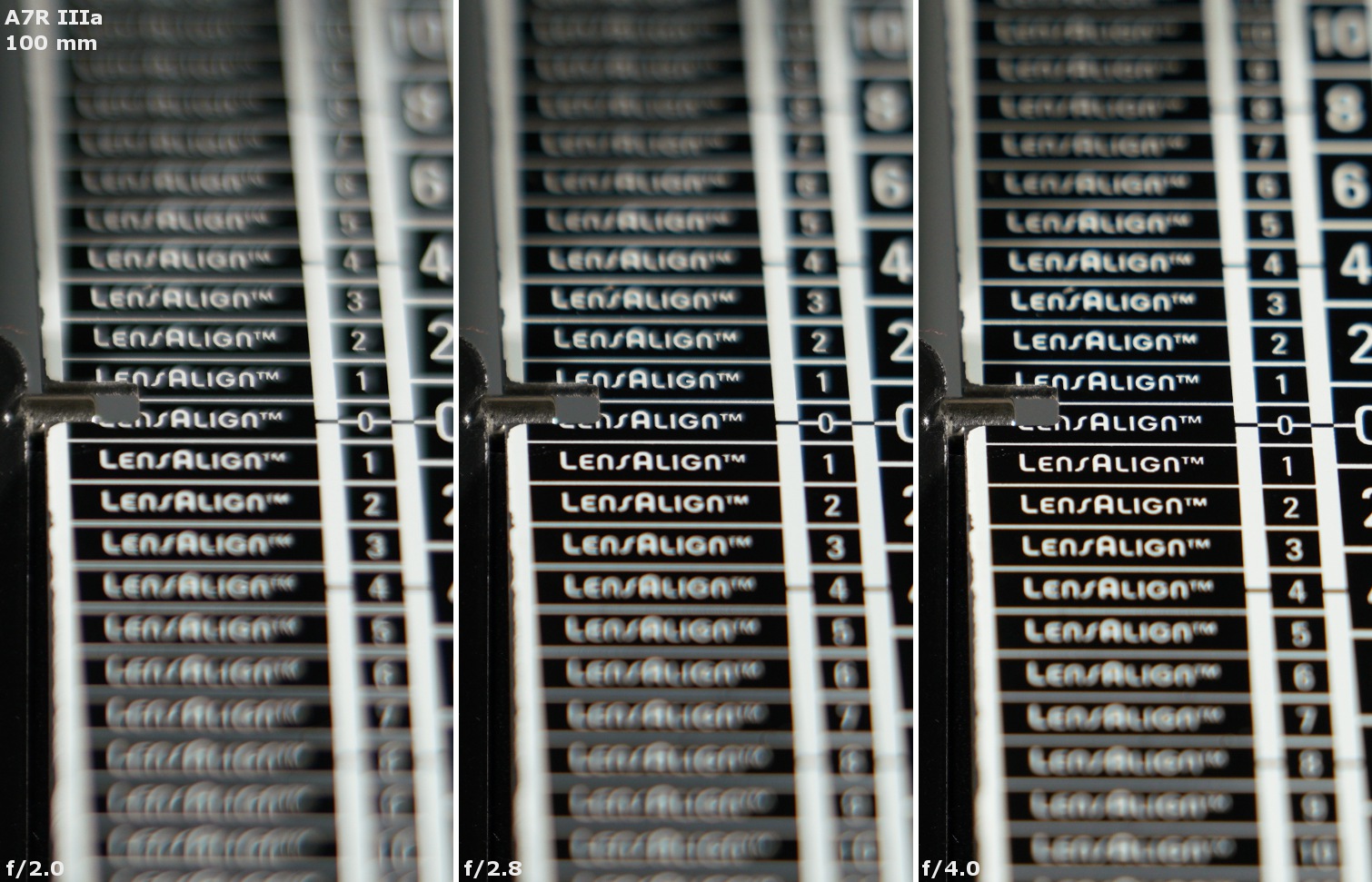
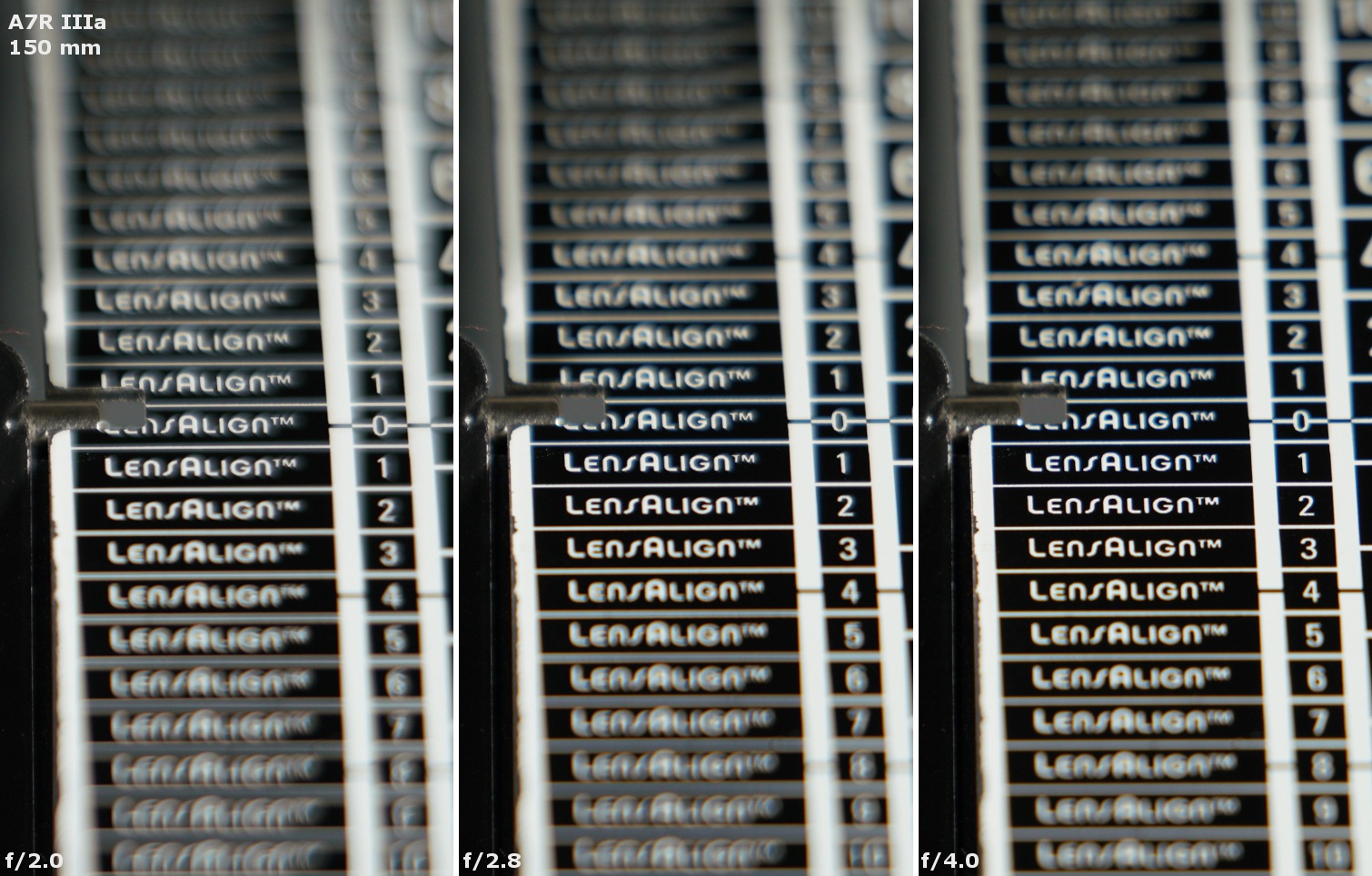
It goes without saying that a lens with such a focal range and fast aperture is difficult to correct when it comes to longitudinal chromatic aberration. Sony constructors had to be aware of that – after all they did equip it with as many as five elements made of two kinds of low dispersion glass.This move provided excellent results because the Sony FE 50-150 mm f/2 GM doesn't have the slightest problems with this aberration no matter what focal length you employ. It's difficult to notice any colouring of out-of-focus areas even at the maximum relative aperture.
 |
Please Support UsIf you enjoy our reviews and articles, and you want us to continue our work please, support our website by donating through PayPal. The funds are going to be used for paying our editorial team, renting servers, and equipping our testing studio; only that way we will be able to continue providing you interesting content for free. |
- - - - - - - - - - - - - - - - - - - - - - - - - - - - - - - - - - - - - - - - - - - - - - - -
 |
 |
Now let's check how the tested lens corrects lateral chromatic aberration – its performance depending on the focal length and aperture present graphs below. They concern, respectively, the edge of the APS-C sensor and the edge of full frame.
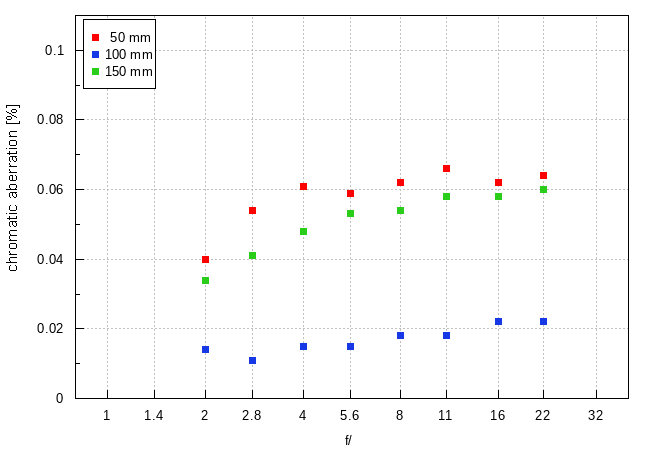
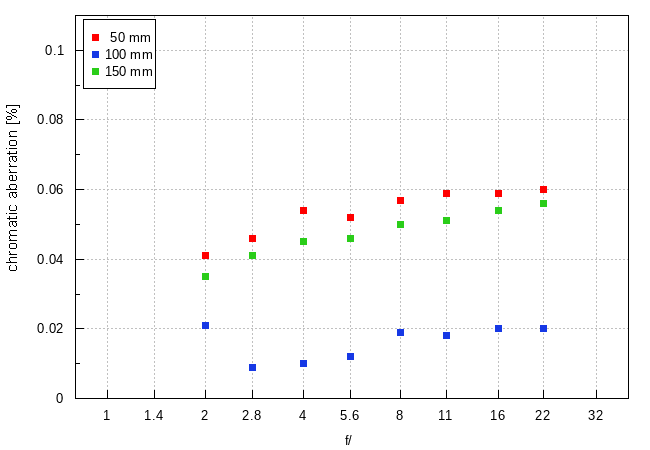
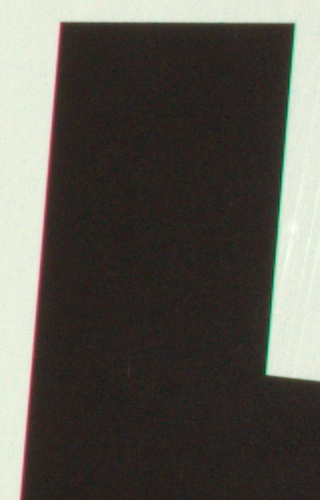
It is not an accident that the 100 mm focal length fared so well in our resolution test. It is also the focal length that corrects lateral chromatic aberration the best, reducing it to a negligible level. In case of both edges of the focal spectrum the aberration increases slightly on stopping down the aperture, starting from about 0.04% and ending near 0.06%. All these values we still consider to be low so the performance in this category should be only praised.
| A7R IIIa, RAW, 50 mm, f/16.0 | A7R IIIa, RAW, 100 mm, f/2.8 |
|

|
Spherical aberration
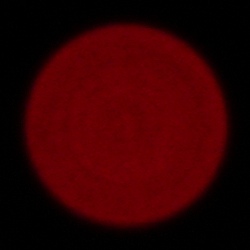
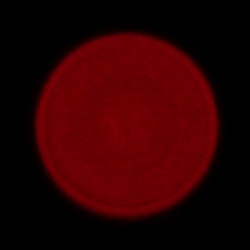
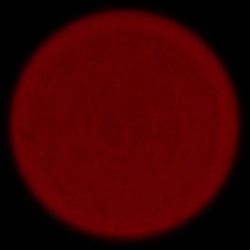
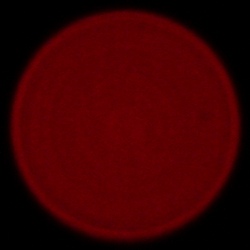
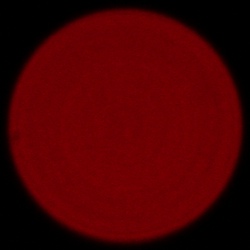
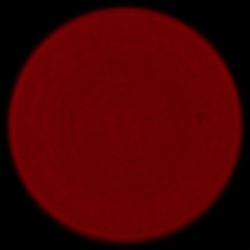
First photos of this chapter show just a very slight focus shift effect. The appearance of defocused circles of light proves this – at all focal lengths the circle we got behind the focus features a slightly brighter rim than the circle we got before the focus. High resolution in the frame centre up from the maximum relative aperture indicates that the problems with the correction of spherical aberration cannot be very pronounced so also in this category there is nothing to worry about.
| A7R V, 50 mm, f/2.0, before | A7R V, 50 mm, f/2.0, after |
|
|
| A7R V, 100 mm, f/2.0, before | A7R V, 100 mm, f/2.0, after |
|
|
| A7R V, 150 mm, f/2.0, before | A7R V, 150 mm, f/2.0, after |
|
|