Nikon Nikkor Z MC 105 mm f/2.8 VR S
3. Build quality and image stabilization
Although the Nikkor is a significantly big lens, the Canon rules in this category - you should remember that its mapping scale is better. Both these lenses, along with the Sony, are equipped with an image stabilization unit.
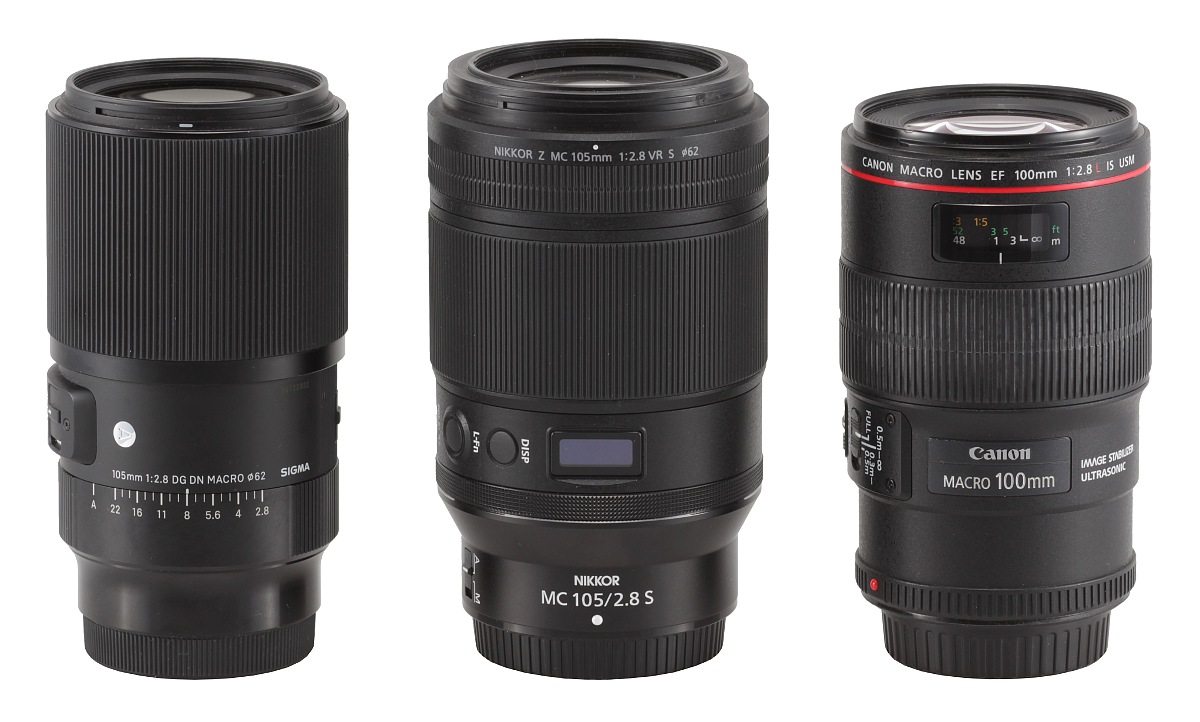
In the photo below the Nikkor Z 2.8/105 MC is positioned between the reflex camera Canon EF 100 mm f/2.8L IS USM and the mirrorless Sigma A 105 mm f/2.8 DG DN. When you compare it to the older Canon model, also featuring with the silent USM motor and optical stabilization, it's conspicuous that the Nikkor is quite large, definitely bigger than its Canon rival.
 |
Please Support UsIf you enjoy our reviews and articles, and you want us to continue our work please, support our website by donating through PayPal. The funds are going to be used for paying our editorial team, renting servers, and equipping our testing studio; only that way we will be able to continue providing you interesting content for free. |
- - - - - - - - - - - - - - - - - - - - - - - - - - - - - - - - - - - - - - - - - - - - - - - -
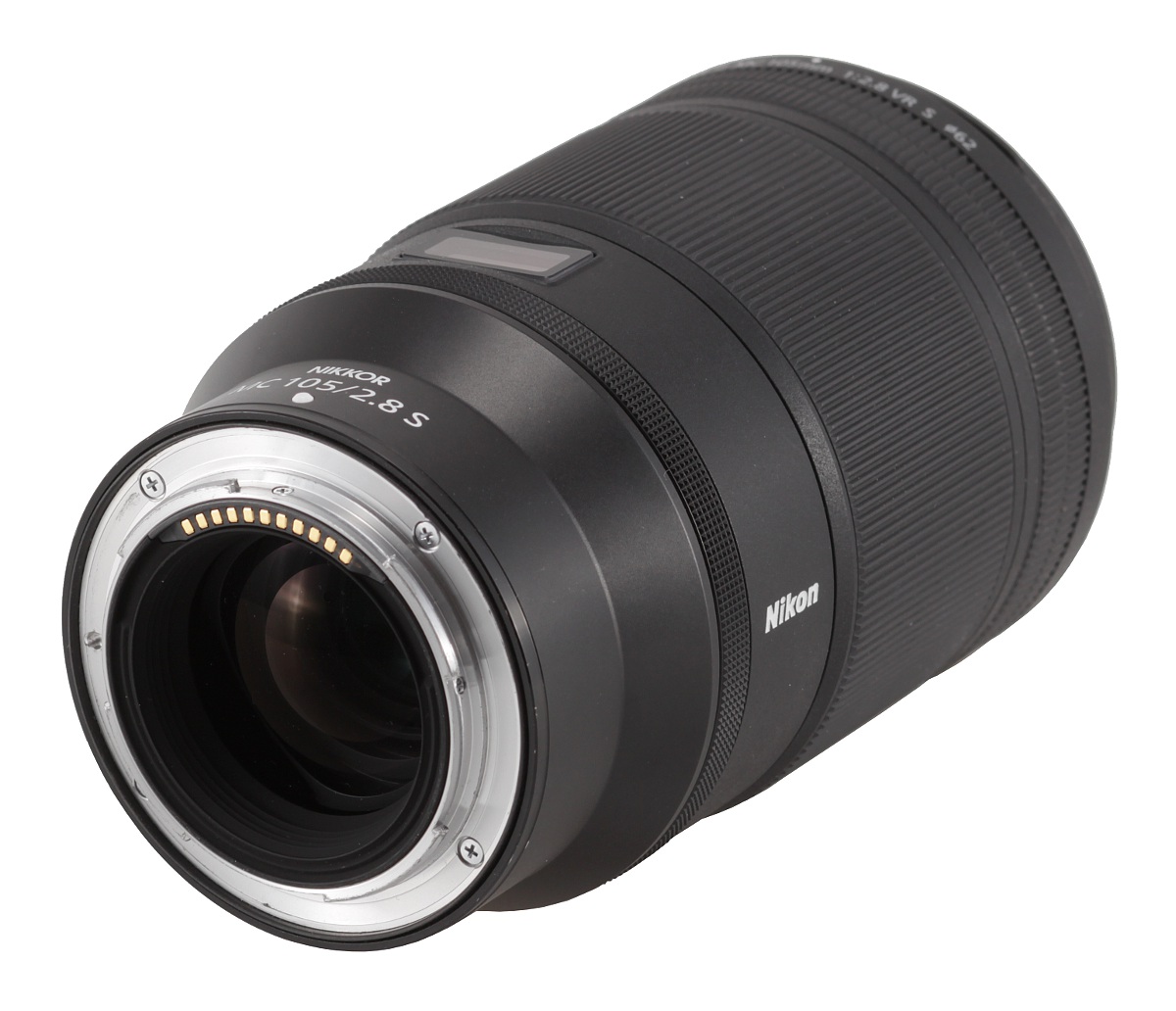 |
Further on you find a ribbed control ring, 7 mm wide, that can be used either for setting clicklessly the aperture control or for exposure compensation. It moves smoothly and is properly damped.
 |
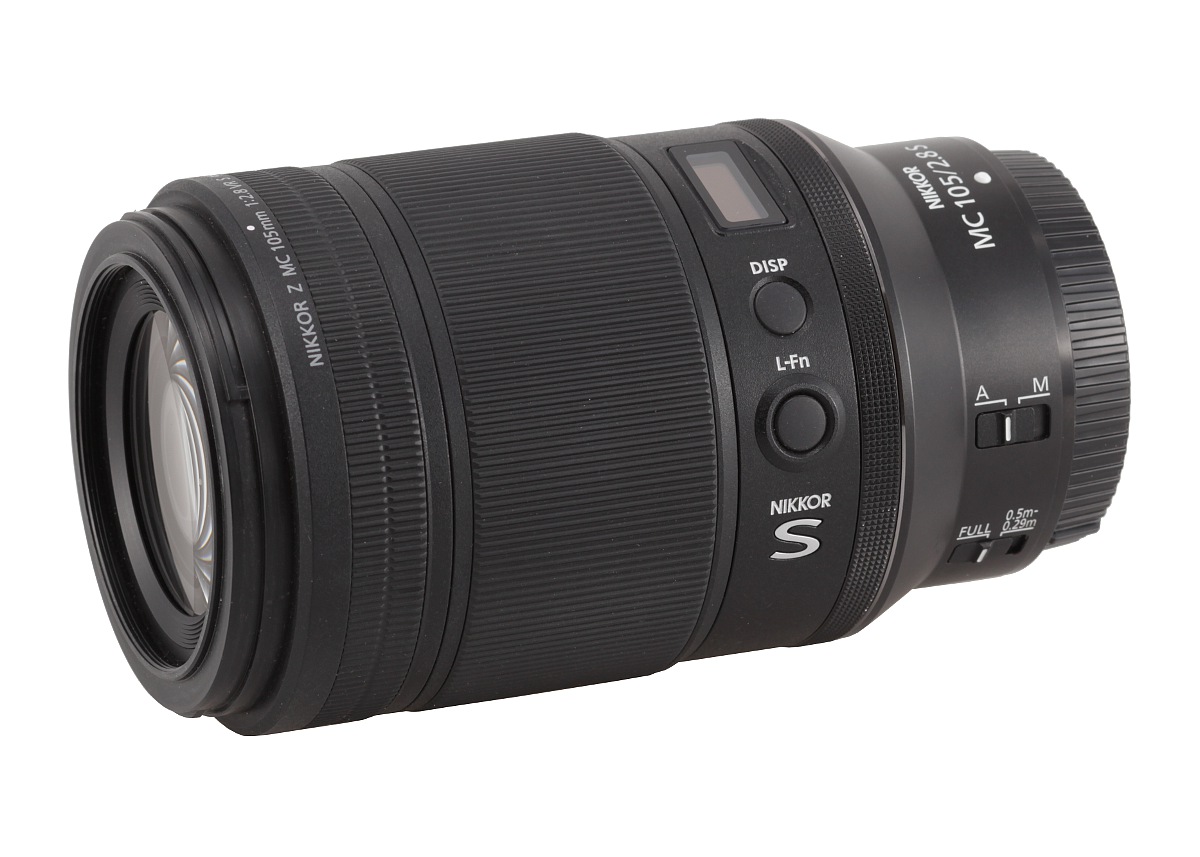
A manual focus ring covered by rubber ribbing, as wide as 47 mm, is the biggest part of the lens. The ring, a focus-by-wire construction, moves smoothly and it is properly damped. There is no distance or depth-of-field scale next to it. Its focus throw depends weakly on the speed of your turning, amounting to an angle of about 700 degrees. It is a very high value, allowing you very precise settings. Still you have to remember that the majority of this range belongs to the macro range. When you take normal photos, passing from 0.5 of a meter to infinity needs a much smaller angle, that of 100 deg. It still ensures you a very comfortable performance.
 |
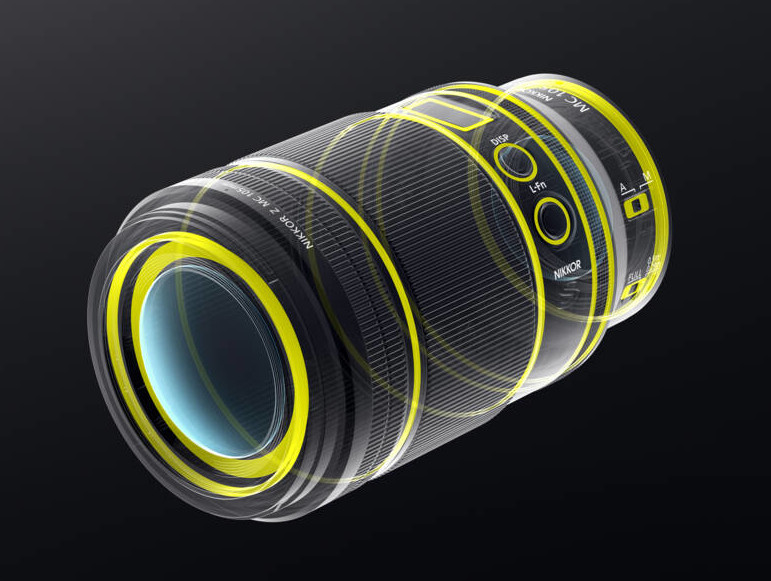 |
Producer emphasizes the fact that all movable parts of the casing and its shoe are sealed – it is supposed to ensure good protection against dust and humidity. The fluorite coating on the front element protect it against water, dirt, and dust.
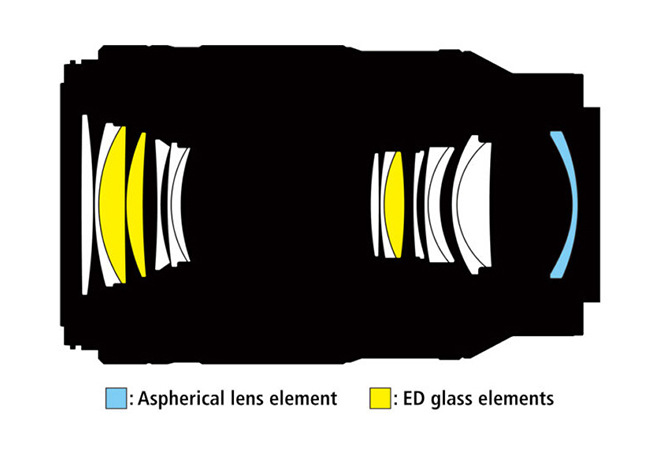
It's also worth mentioning the fact that, in case of 1:1 mapping the front element of the lens is positioned in a distance of about 11 centimeters from the photographed object and the maximum relative aperture decreases to f/4.5.
 |
Buyers get both caps, a hood, and a soft pouch in the accessory kit. That pouch is very flimsy so I doubt it can provide you any kind of protection. I admit at this price-point and in class of equipment I would expect something definitely more solid and stylish.
 |
Image stabilization
In order to check the efficiency of the optical stabilization mechanism of the tested Nikkor we took several dozen photos with exposure times ranging from 1/160 to 1/2.5 of a second and the stabilization switched on and off. For every set of photos we determined a percentage of out-of-focus shots; then we presented it in a form of a graph of exposure time which was expressed in EV (with 0 EV being an equivalent of 1/125 of a second).
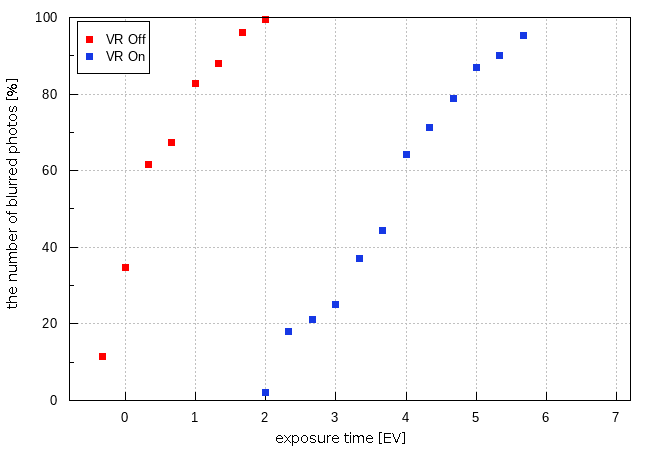
The maximum distance between both curves indeed reaches almost 4 EV and such is, in our view, the real efficiency of the stabilization mechanism of the tested lens. Every result up from the proximity of 4 EV we consider to be very good so the tested lens should be praised for its performance in this category.