Viltrox AF 85 mm f/1.4 Pro
4. Image resolution
Let's see how the Viltrox AF 85 mm compares – its results in the frame centre, on the edge of the APS-C/DX sensor and on the edge of full frame presents a graph below.
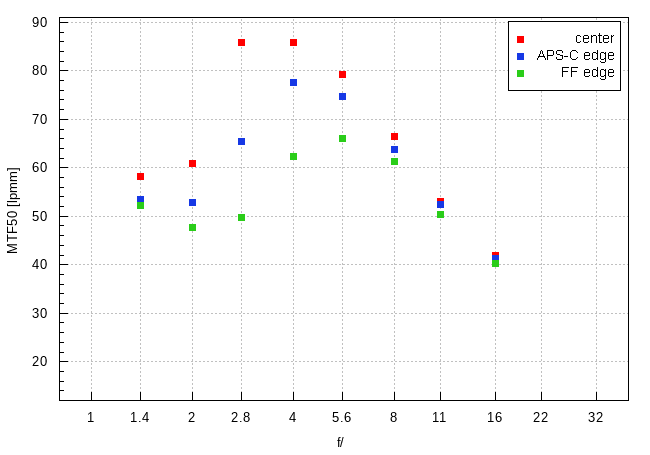
The centre of the frame features really good results. Already at the maximum relative aperture and by f/2.0 the lens achieves values of about 60 lpmm and after passing to f/2.8 we see results going even higher and reaching really sensational levels of 85.9 lpmm. It is just a tad higher than the maximum results of the Sony FE 85 mm f/1.4 GM II and this slight difference is all it takes to make the Sony cede its place among record-holding devices. We'll have to update the entry to this chapter.
Please Support UsIf you enjoy our reviews and articles, and you want us to continue our work please, support our website by donating through PayPal. The funds are going to be used for paying our editorial team, renting servers, and equipping our testing studio; only that way we will be able to continue providing you interesting content for free. |
- - - - - - - - - - - - - - - - - - - - - - - - - - - - - - - - - - - - - - - - - - - - - - - -
The performance on the edge of the frame is quite untypical. You observe a dip by f/2.0, connected to the local maximum of lateral chromatic aberration and we are going to deal with this topic in the next chapter. Still, even this dip means only that the results are near 50 lpmm; the lens officially doesn't have any problems with exceeding the decency level at any point. No matter what aperture you employ, you'll deal with at least good image quality across the frame.
Now let's compare the performance of the Viltrox and that of its direct rivals so the Meike AF 85 mm f/1.4 FF and the Sony FE 85 mm f/1.4 GM II in the frame centre in more detail – the results you can find below.
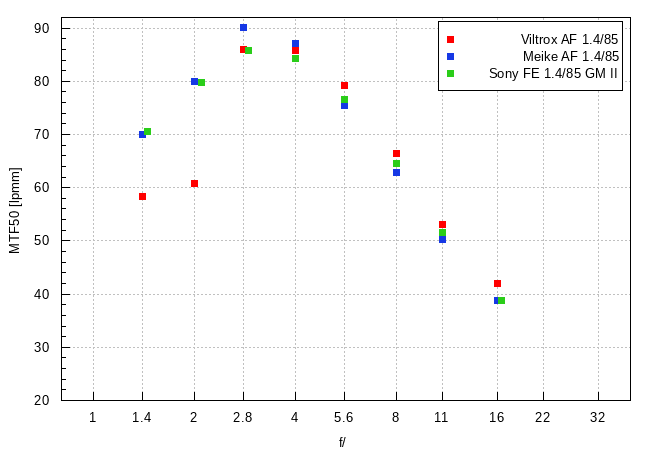
The best values belong to the Meike, a lens slightly better than the Sony. Both these lenses are distinctly better than the Viltrox but the difference is visible just by f/1.4 and f/2.0. Up from the f/2.8 aperture all three instruments present very even, and quite excellent resolution levels.
Now it's time to check the duel on the edge of the APS-C sensor.
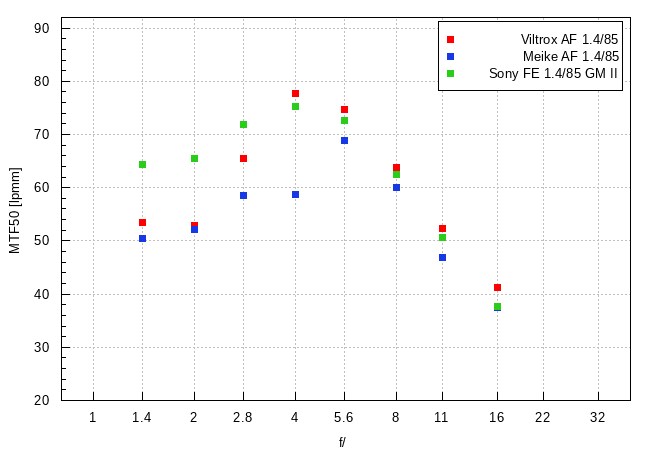
It's clear here that Meike optics specialists focused their efforts on perfect correction of the frame centre and gave up on the edges. In this cases the Sony definitely fares the best and the Viltrox can be placed somewhere in the middle.
What about the edge of full frame? Let's check how these three lenses fare there.
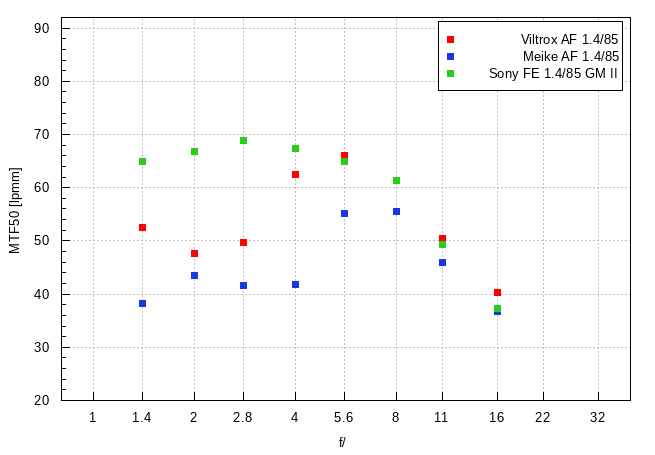
Once again the Sony performs the best, increasing its advantage. The Viltrox managed to take the second place, leaving noticeably the Meike behind.
To sum up in the resolution category the tested Viltrox AF 85 mm f/1.4 Pro fares exceedingly well, without any weak points. Near the maximum relative aperture it is a tad weaker than its direct rivals but it is a very even lens, more even than the Meike that is visibly burdened by weaker edges of the frame.
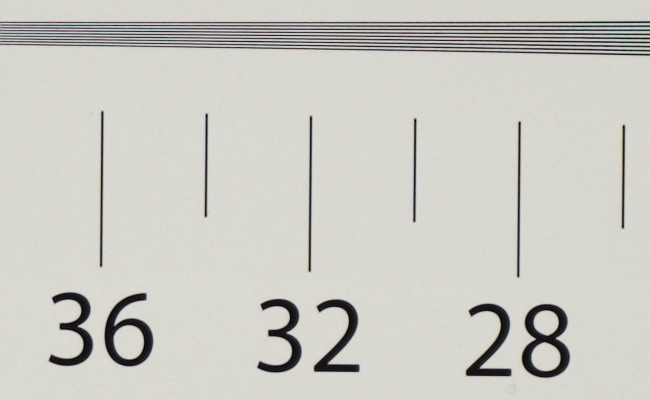
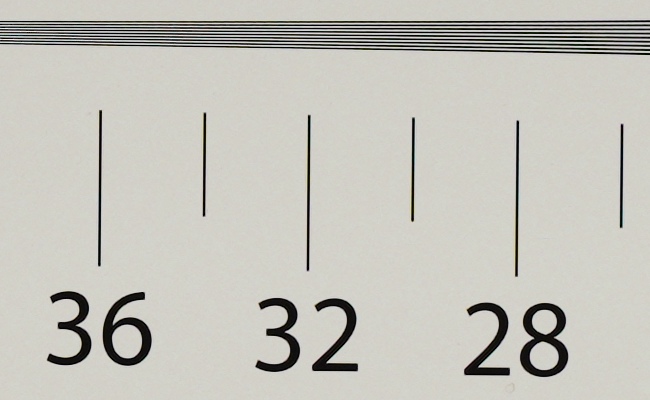
At the end of this chapter, traditionally, we present crops taken from photos of our resolution chart; they were taken from JPEG files saved along RAW files we used for the analysis above.
| A7R IIIa, JPEG, 85 mm, f/1.4 |
 |
| A7R IIIa, JPEG, 85 mm, f/2.8 |
 |