Panasonic Lumix S Pro 50 mm f/1.4
5. Chromatic and spherical aberration
Chromatic aberration
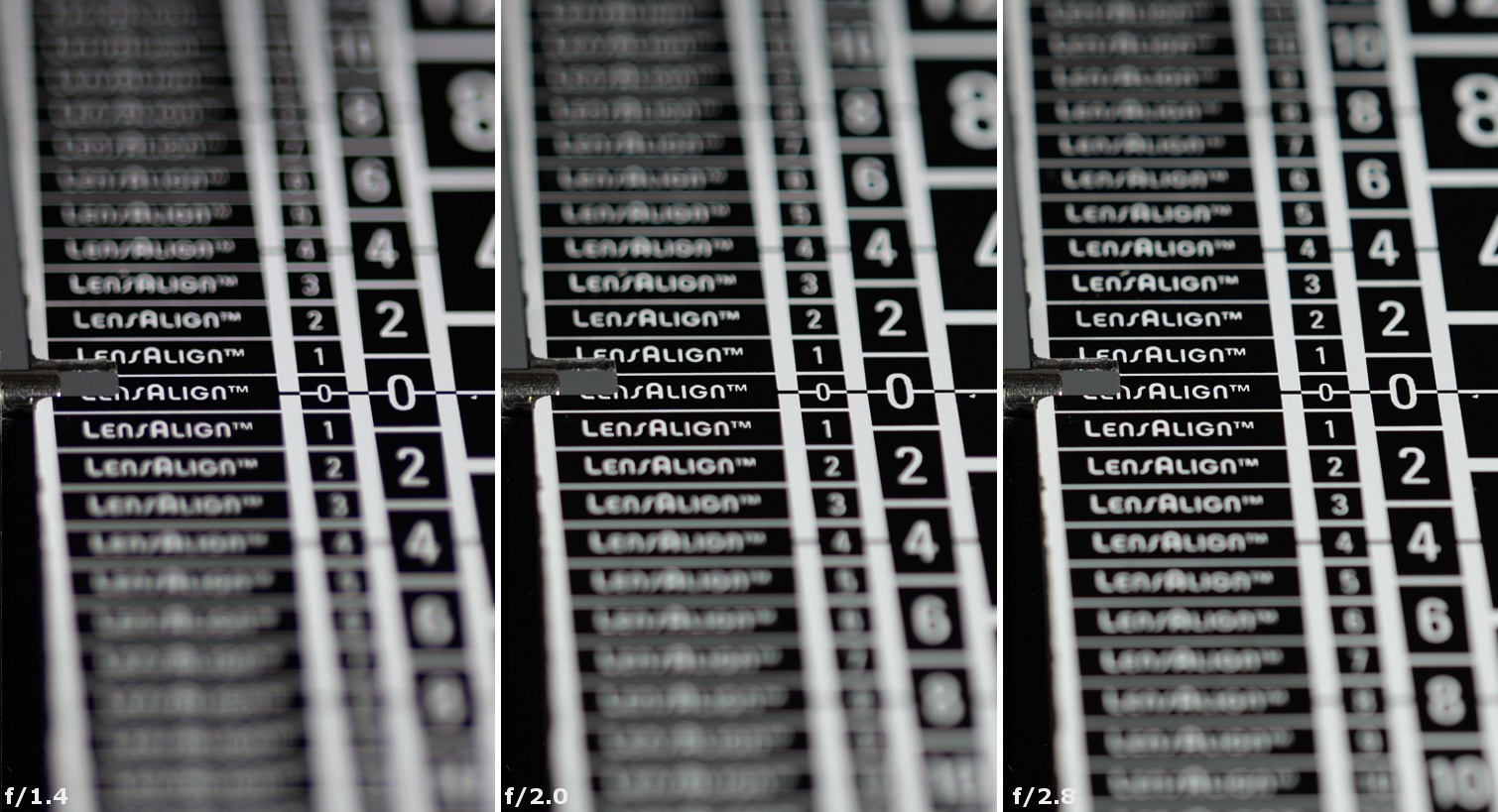
If a lens, like the Lumix, features a complex optical system with as many as three elements made of low dispersion glass, we expect an excellent performance in the category of chromatic aberration. Fortunately this time we weren't let down.The crops below prove very distinctly that the Panasonic S Pro 1.4/50 doesn't have any problem with the correction of the longitudinal variant of this aberration. Even at the maximum relative aperture and in out-of-focus areas positioned further away it's difficult to notice any trace of colouring. A round of applause!
 |
What about the correction of lateral chromatic aberration? The performance of the lens, depending on the aperture applied, on the edge of the APS-C sensor and on the edge of full frame, presents a graph below.
Please Support UsIf you enjoy our reviews and articles, and you want us to continue our work please, support our website by donating through PayPal. The funds are going to be used for paying our editorial team, renting servers, and equipping our testing studio; only that way we will be able to continue providing you interesting content for free. |
- - - - - - - - - - - - - - - - - - - - - - - - - - - - - - - - - - - - - - - - - - - - - - - -
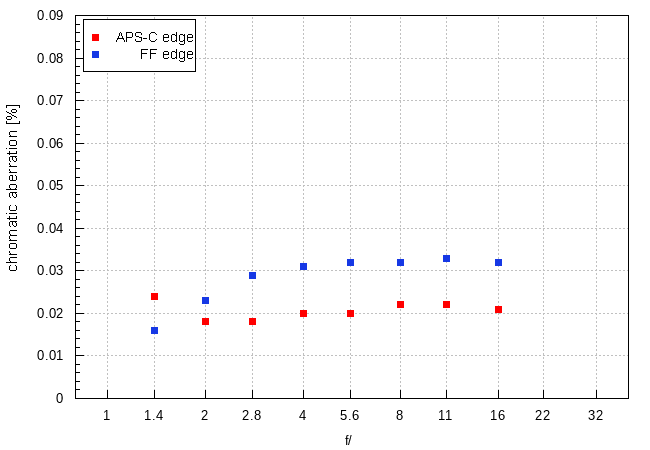
The results show that aberration depends very weakly on the aperture value and in the majority of cases keeps a range from 0.02 to 0.03%. These are values we consider to be very low so also in this area the tested lens deserves to be praised. It's worth adding that the values, within the margin of error, are practically the same as the performance of the Sony FE 50 mm f/1.4 GM.
| S1R II, 50 mm, RAW, f/1.4 | S1R II, 50 mm, RAW, f/11.0 |

|
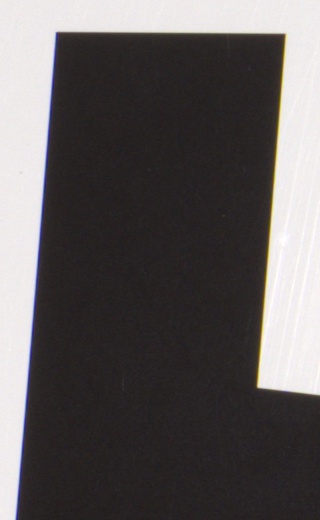
|
Spherical aberration
Why near the maximum relative aperture the Panasonic was defeated by the smaller but more optically complex Sony model? One of the reasons seems to be the fact that the producers left some moderate level of uncorrected spherical aberration.The first photo from this chapter shows a slight 'focus shift' effect. It's very difficult to notice it on passing from f/1.4 to f/2.0 but after another stopping down by 1 EV it becomes a tad more visible.
The appearance of defocused circles of light we produced before and behind the focal point is also the proof of presence of a low level of spherical aberration. The first of them features soft edges and the second one – a tad brighter rim, both being classic symptoms of this aberration.
Still it's possible that leaving a moderate level of spherical aberration was deliberate. Such an operation is a common procedure if you want your lens to produce nicer bokeh. Significant dimensions of the Panasonic allowed the constructors to kill two birds with one stone. Images by f/1.4 and f/2.0 could still be sharp and useful but, at the same time, with a very nice out-of-focus background; the performance by f/2.8 and f/4.0 allowed to break resolution records.
| S1R II, 50 mm, f/1.4, before | S1R II, 50 mm, f/1.4, after |
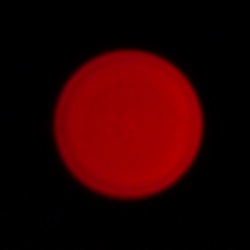
|
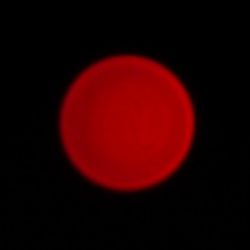
|