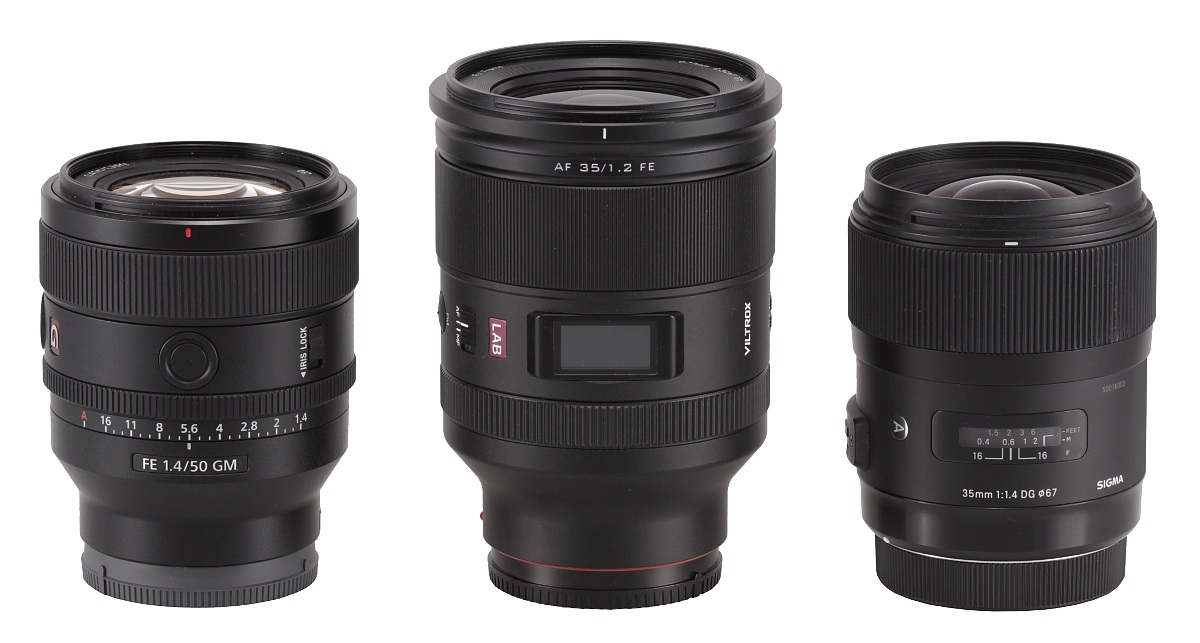
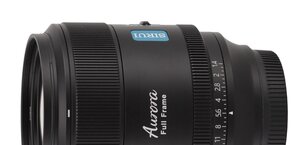
The following chart presents a comparison between basic parameters of different 1.2/35 lenses equipped with autofocus that are designed to cooperate with full frame mirrorless lenses. One glance and you know that you deal here with only big and heavy models.
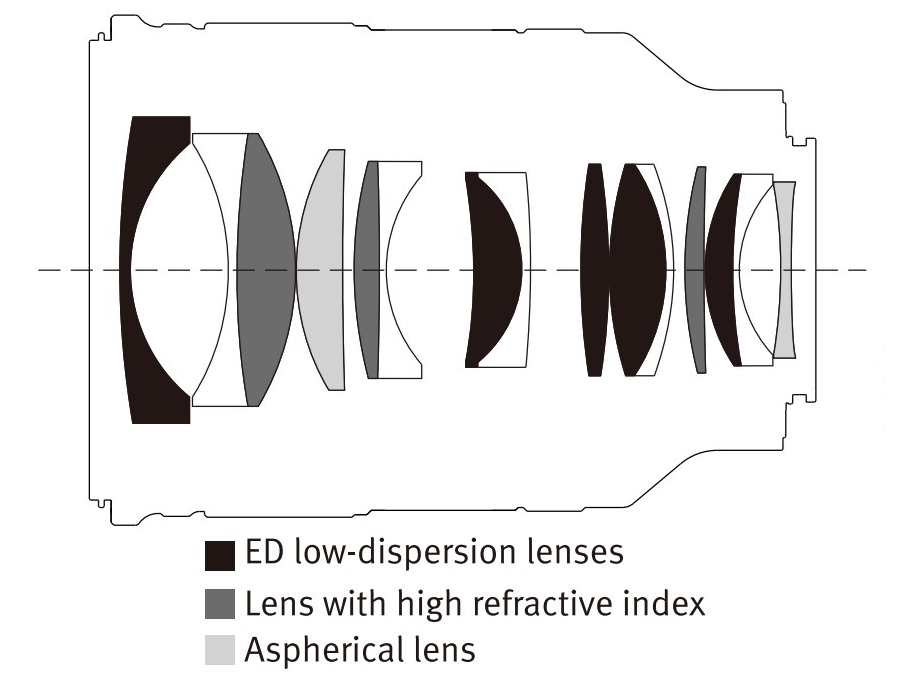
Compared to its rivals, the optical construction of the Viltrox is the simplest. It also features a liquid crystal display and the longest minimum focus distance. Still, it is also the cheapest model in this group, costing $1000.
In the photo below, the Viltrox AF 35 mm f/1.2 LAB is positioned between the Sony FE 50 mm f/1.4 GM and the Sigma A 35 mm f/1.4 DG HSM. Do you still remember times when the Sigma was considered to be heavy and big?
Please Support Us
If you enjoy our reviews and articles, and you want us to continue our work please, support our website by donating through PayPal. The funds are going to be used for paying our editorial team, renting servers, and equipping our testing studio; only that way we will be able to continue providing you interesting content for free.
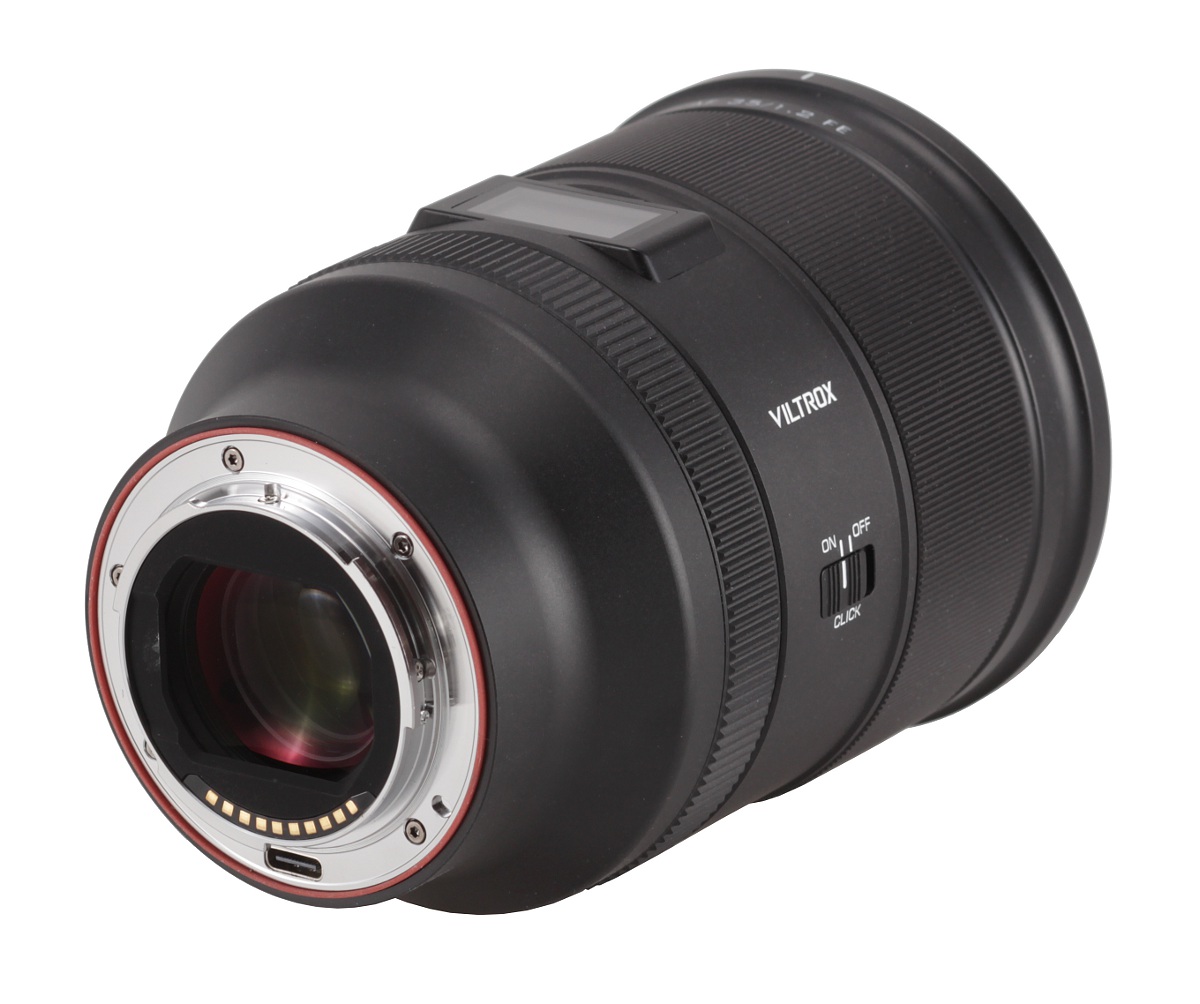
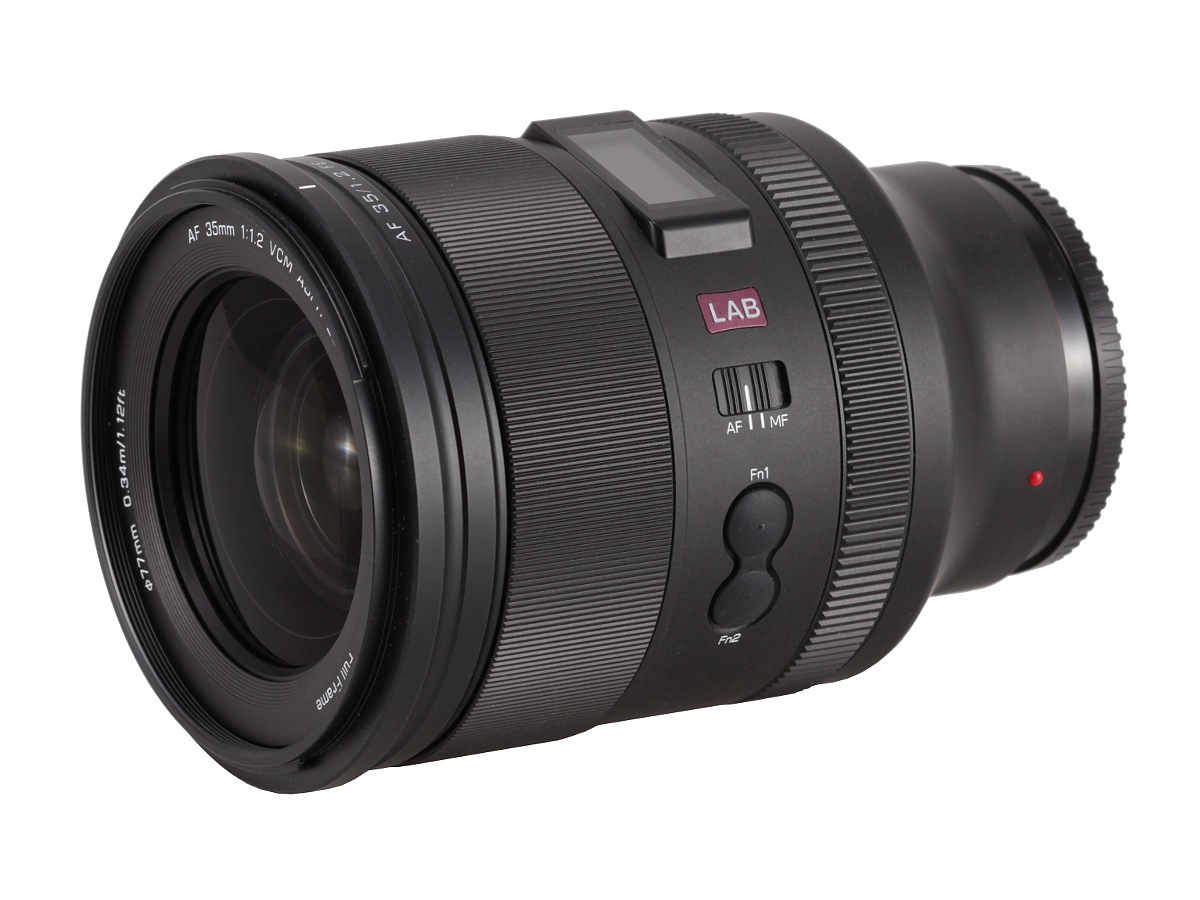
The tested lens starts with a metal mount equipped with an USB-C port that allows you to update your software fast. The mount sealed with a rubber gasket surrounds contacts and a 32×26 mm frame made of black plastic. Right under this frame you find an immobile rear element, 27 mm in diameter. From this side everything looks very well indeed.
A black, metal ring that increases its diameter is the first part of the proper body of the Viltrox 1.2/35 LAB. On the ring you can find a red dot, making an alignment with a camera easier, its serial number, and information that it was made in China.
Then you see a metal ring covered by ribs, 12 mm wide, that, in default settings, is used to change the aperture. It is devoid of any markings, but you get the possibility to change its working mode from clicked to declicked.
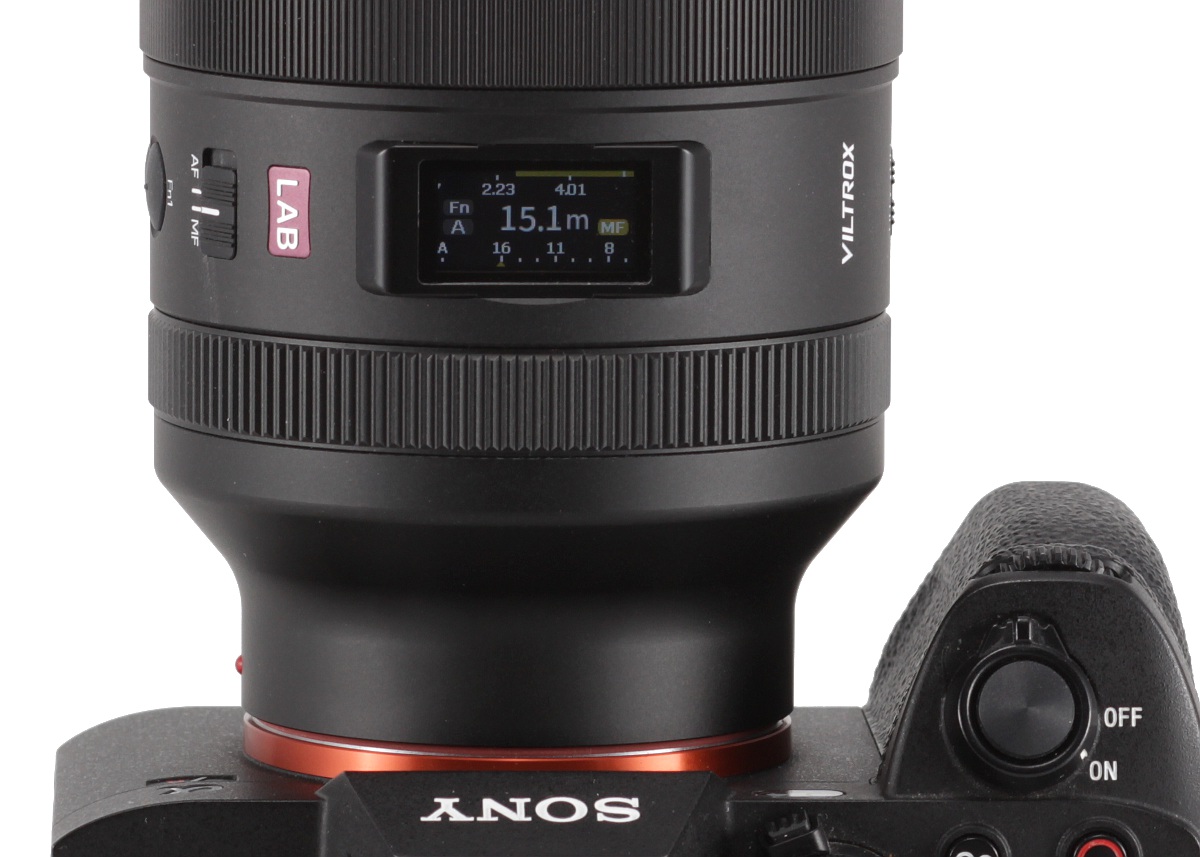
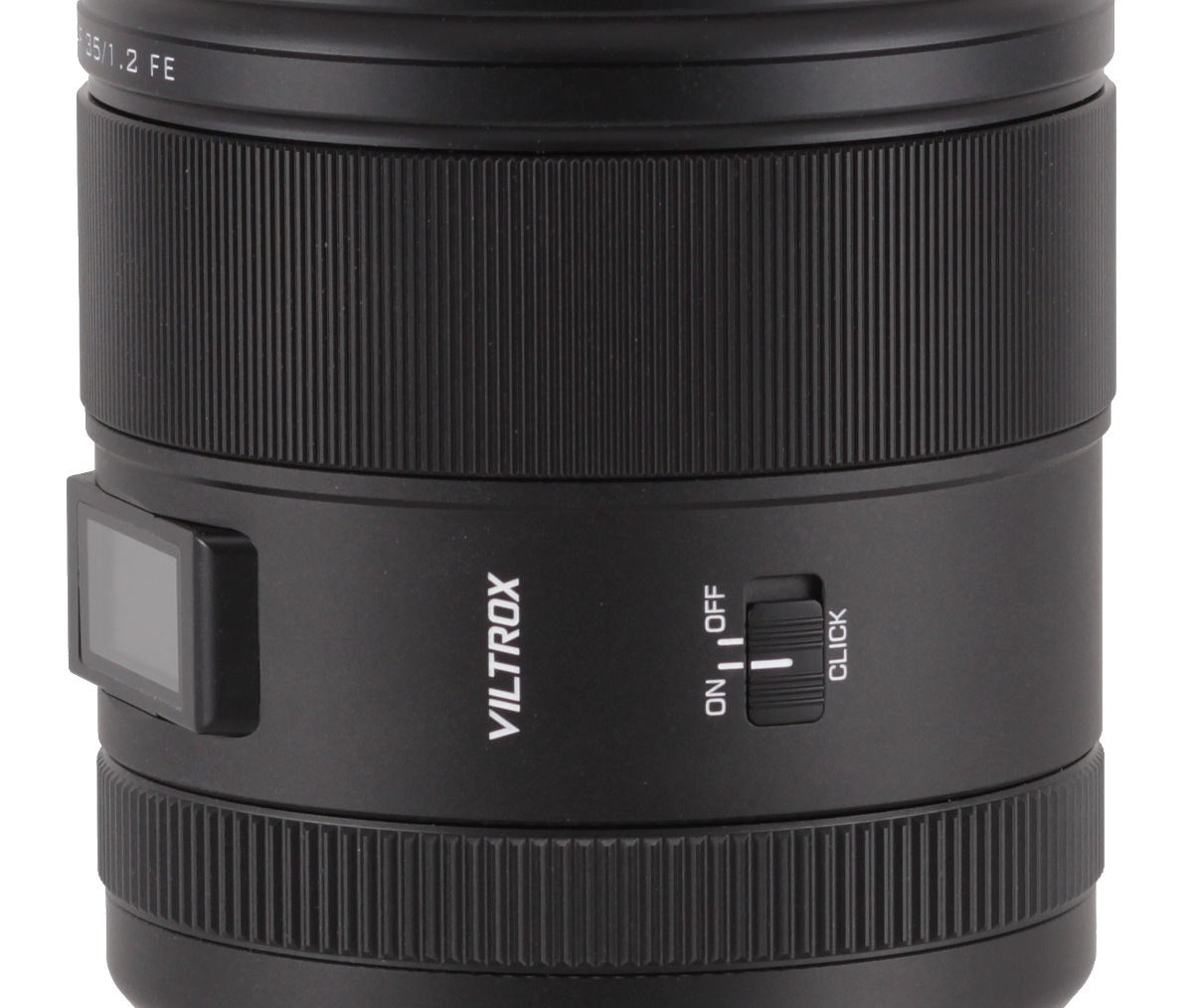
Further on, you find a liquid crystal display that is activated after switching the camera on. It features information about the working mode, aperture values, and distance from the aim. In the MF mode, additionally, you get the DOF value. On the one hand, I am an opponent of complicated, power-hungry, redundant electronics. Being an astrophysicist by trade and an astrophotographer by passion, I am simply allergic to every device that shines brightly at night, even if it doesn't have to do so. On the other hand, I find such a solution very convenient and useful. The display is stylish, clear and legible, facilitating your work significantly.
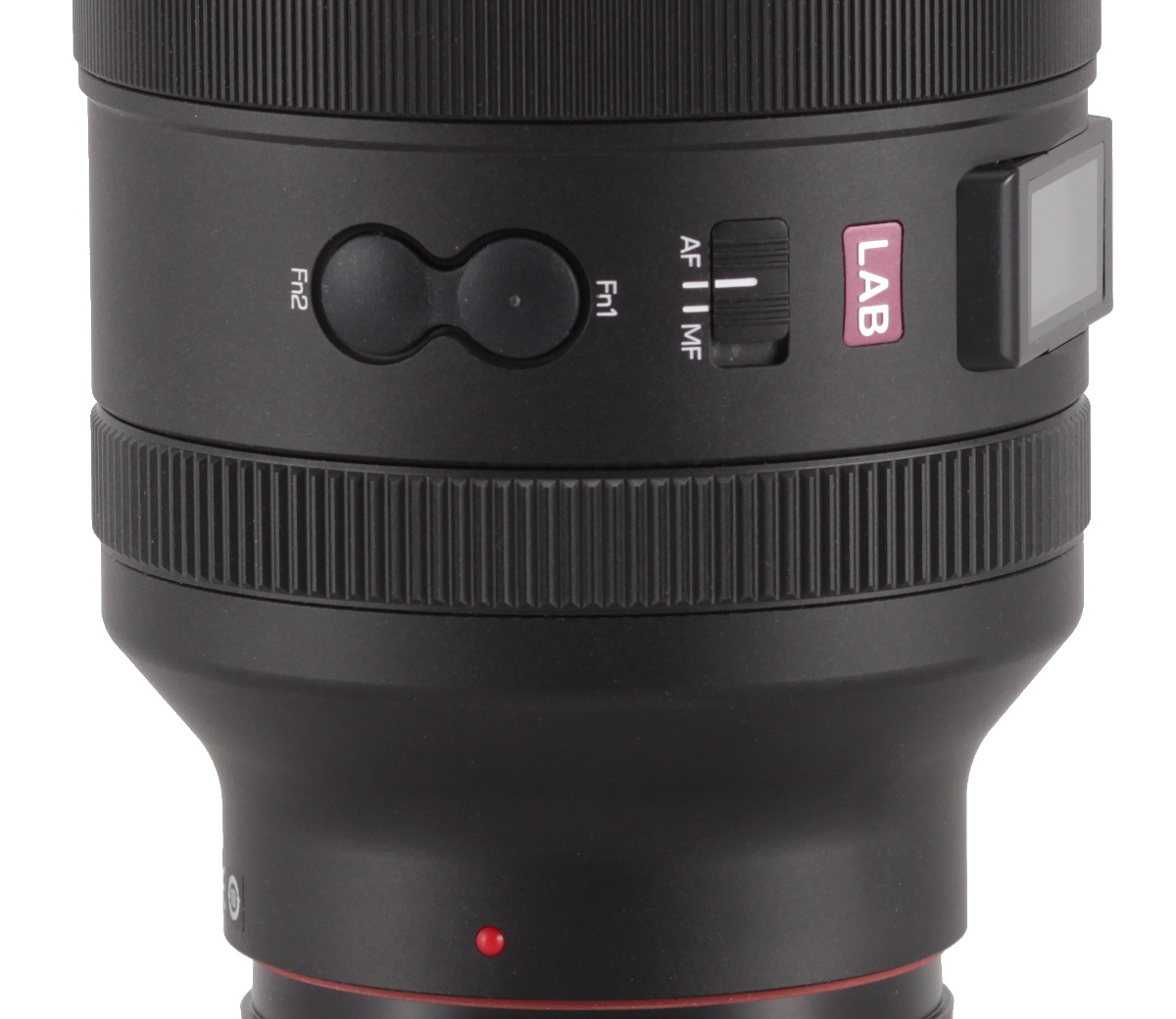
Looking from above, on the left side of the LCD, you find a red series mark (LAB), the AF/MF switch, and two programmable function buttons Fn1 and Fn2. On the other side of the display, you see the logo of the producer and the CLICK ON/OFF switch that allows you to change the aperture ring working mode.
A manual focus ring, as wide as 31 mm, almost completely covered by fine ribbing, is the next part of the lens. You won't find any markings on it, but in this case you don't need them because all useful info is shown by the LCD. The ring turns with a proper but rather slight resistance and running through the whole distance range needs a turn through an angle of about 220 degrees, a significant value, allowing you very precise settings.
Metal rings that increase their diameter and end up with the hood mount are the next parts. On one of them you can find an inscription 'AF 35/1.2 FE'.
The front element of the lens doesn't move, is slightly convex, 54 mm in diameter. It is surrounded by a part of the barrel with inscriptions and a non-rotating filter thread, 77 mm in diameter. Among the inscriptions surrounding the front element, you can also find information about the filter diameter, mentioned by us earlier, minimum focusing distance (0.34m/1.12ft) and another one, with basic parameters of the lens, and abbreviations used in the construction. VCM means Voice Coil Motor, ASPH and ED inform about using appropriate special glass elements, and IF stands for Internal Focus. At the end you also get 'Full Frame' ininscription, meaning that the lens was designed to cooperate with full frame detectors.
When it comes to the optical coconstruction, you deal here with 15 elements positioned in 10 groups. Among them you can find as many as five elements made of low dispersion ED glass, three elements made of high refraction index glass (HR) and two aspherical ones. The producers weren't skimpy when it comes to special elements. Inside you can find a round aperture with 11 diaphragm blades that can be closed down to a value of f/16 at the maximum.
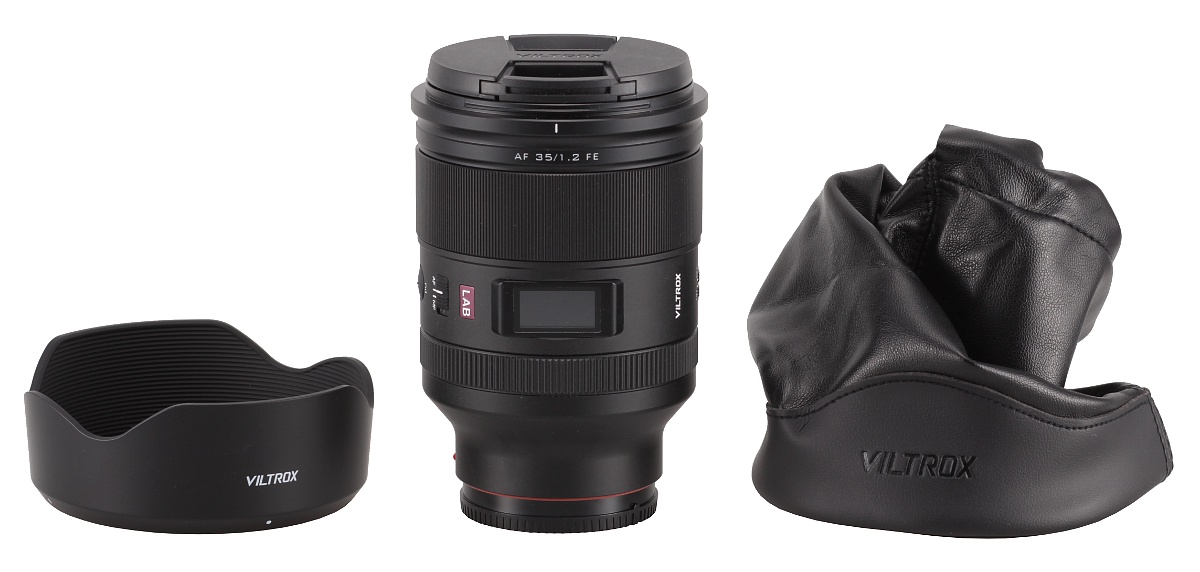
Buyers get in the box with the lens: both caps, a petal-type hood, and a soft pouch. The pouch is a bit more solid than popular nowadays 'cases' made of a piece of cloth that is just slightly thicker than your average optics cleaning cloth. Still in this class of equipment, with a lens being as heavy as the tested Viltrox, you might expect a case that is a bit stiffer, filled with foam that ensures proper protection of such an instrument.