Viltrox AF 35 mm f/1.2 LAB
5. Chromatic and spherical aberration
Chromatic aberration
Knowing that the optical construction of the tested lens features as many as five low dispersion glass elements, we expected at least good correction of longitudinal chromatic aberration. Indeed, such a performance we observed during our tests and crops, shown below, proves that much.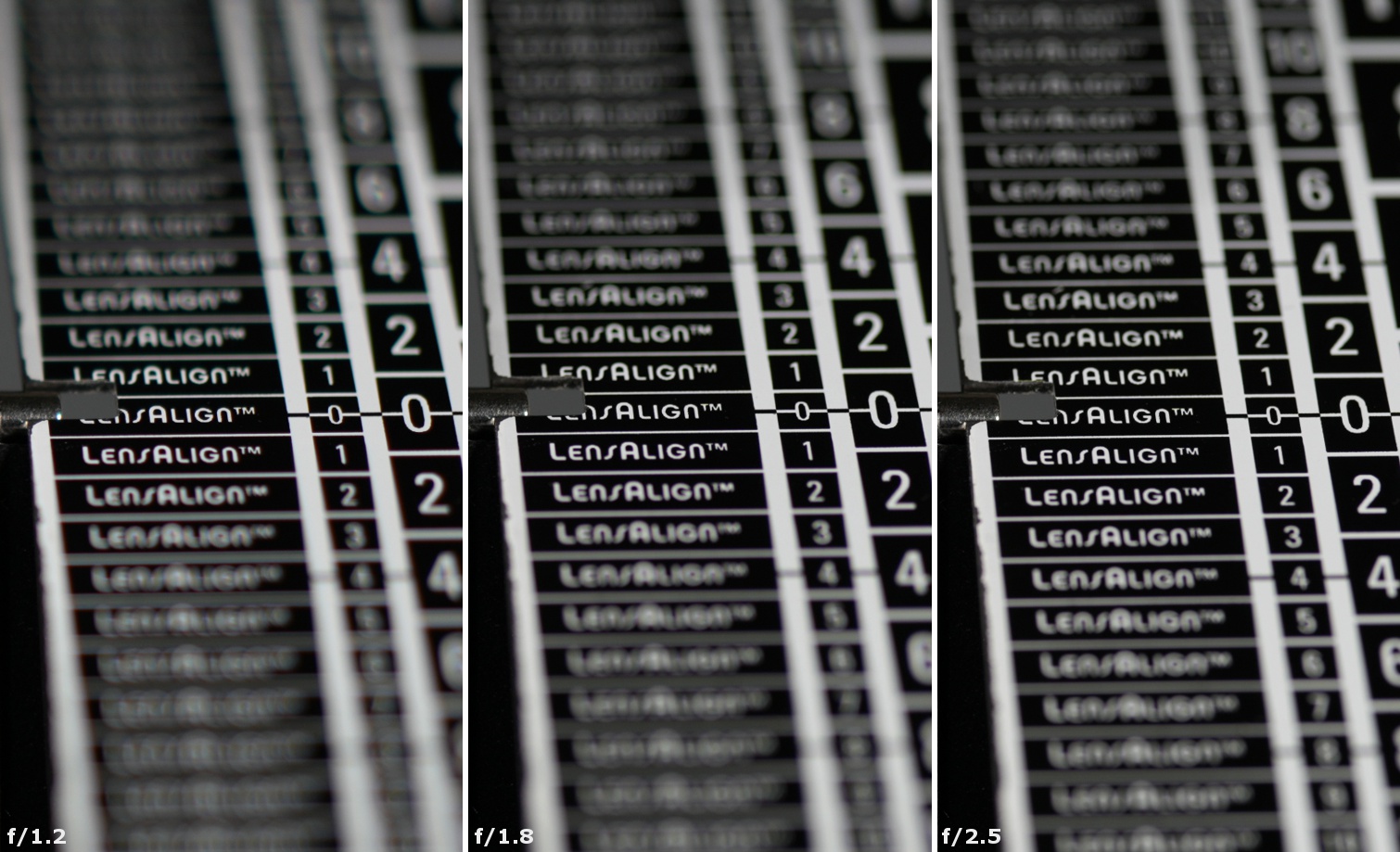 |
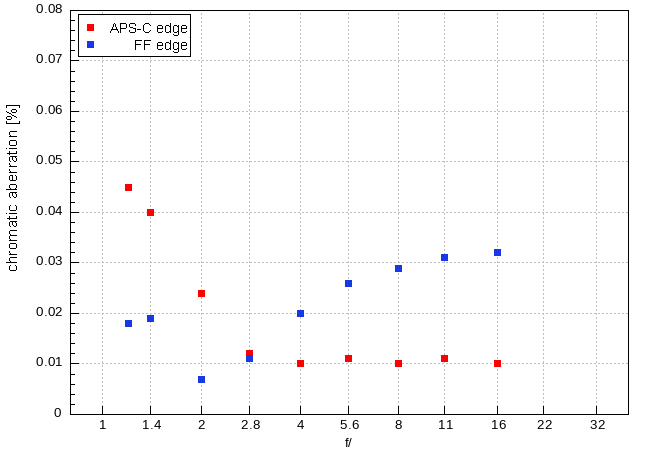
What about the correction of lateral chromatic aberration? A graph below shows the performance of the Viltrox AF 35 mm f/1.2 LAB depending on the used detector and aperture.
Please Support UsIf you enjoy our reviews and articles, and you want us to continue our work please, support our website by donating through PayPal. The funds are going to be used for paying our editorial team, renting servers, and equipping our testing studio; only that way we will be able to continue providing you interesting content for free. |
- - - - - - - - - - - - - - - - - - - - - - - - - - - - - - - - - - - - - - - - - - - - - - - -
The performance is very interesting indeed. On the edge of the APS-C/DX sensor aberration first decreases very quickly and then, up from f/2.8 it keeps a constant level of 0.01% that can only be called negligible. On the edge of full frame you also deal with an initial decrease, with the lens reaching a minimum value by f/2.0 but then aberration is consequently increasing. Even on a significant stopping down of the aperture, it gets to just near 0.03%, so it remains very low.
Overall, despite quite untypical performances, these results are worth our recognition, with very low levels noticed everywhere. The lens gets to a low level only near the maximum relative aperture and on the edge of the smaller APS-C/DX sensor.
| A7R IIIa, RAW, f/2.0 | A7R IIIa, RAW, f/11.0 |

|

|
Spherical aberration
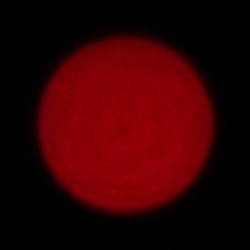
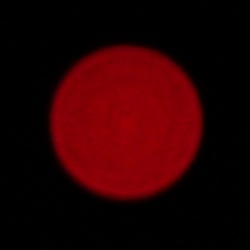
The first photos of this chapter don't show even the slightest traces of focus shift. Defocused circles of light, however, suggest that spherical aberration hasn't been corrected perfectly. The circle we got before the focus features soft edges and the one behind the focus has a slightly accented rim. Still, such effects can hardly be called distinct.
| A7R V, f/1.2, before | A7R V, f/1.2, after |
|
|
It's also worth remembering that the excellent image quality in the areas close to the maximum relative aperture and the lack of characteristic mist that appears in fast lenses with weak correction of spherical aberration prove that the tested Viltrox doesn't have any meaningful problems in this category. What's more, a slight level of this aberration might be left by the optics specialists deliberately, in order to guarantee a nicer look of out-of-focus images.