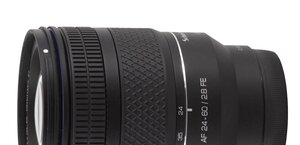
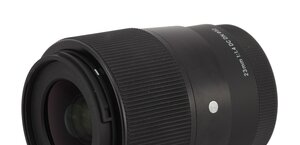
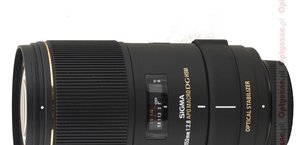
The Sigma A 17-40 mm f/1.8 DC doesn't have any direct rivals so we can compare it only to its reflex camera predecessor. The following chart presents a comparison between basic parameters of these two models.
As you can notice, despite the increase of the focal range the optical construction remains on a similar level of complexity. Still, the number of aperture blades increased and also the physical dimensions and weight were optimized - the new model is by a whooping 275 grams lighter, that's 34% less weight compared to the reflex camera version. You also can apply filters with a smaller diameter, that of 67 mm.
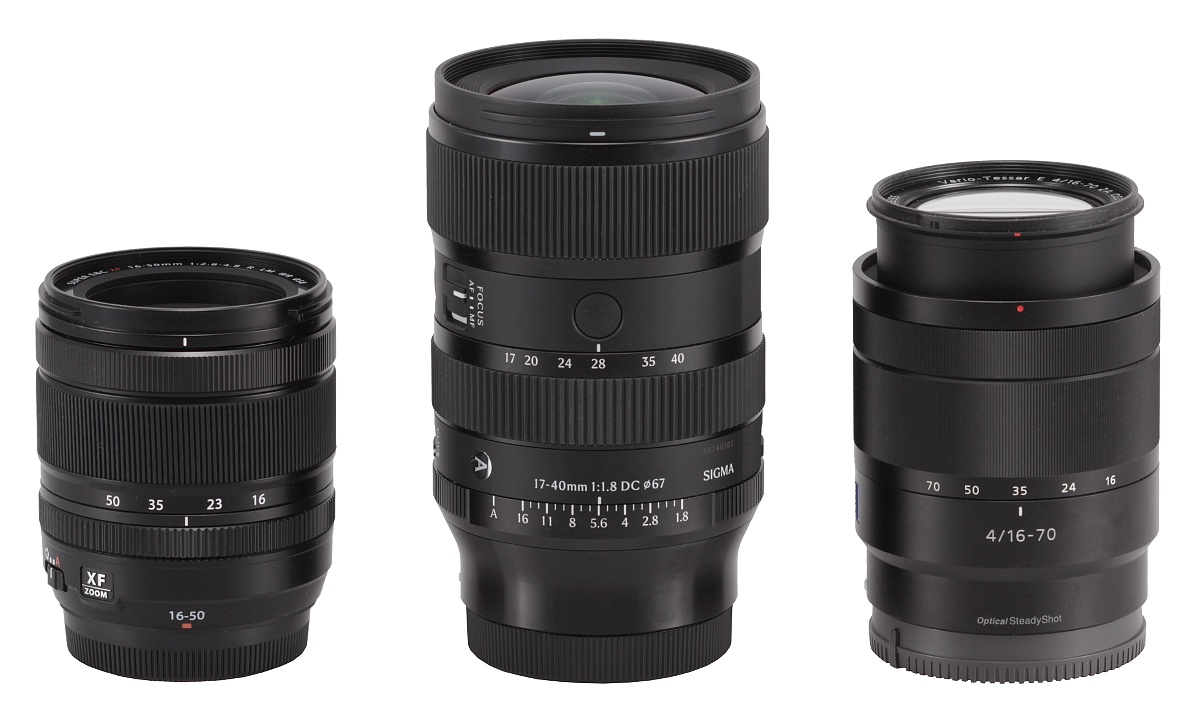
In the photo below the Sigma A 17-40 mm f/1.8 DC is positioned between two popular universal lenses from Fujifilm X and Sony E systems, the Fujinon XF 16-50 mm f/2.8-4.8 R LM, and the Sony Carl Zeiss Vario-Tessar T* E 16-70 mm f/4 ZA OSS.
Please Support Us
If you enjoy our reviews and articles, and you want us to continue our work please, support our website by donating through PayPal. The funds are going to be used for paying our editorial team, renting servers, and equipping our testing studio; only that way we will be able to continue providing you interesting content for free.
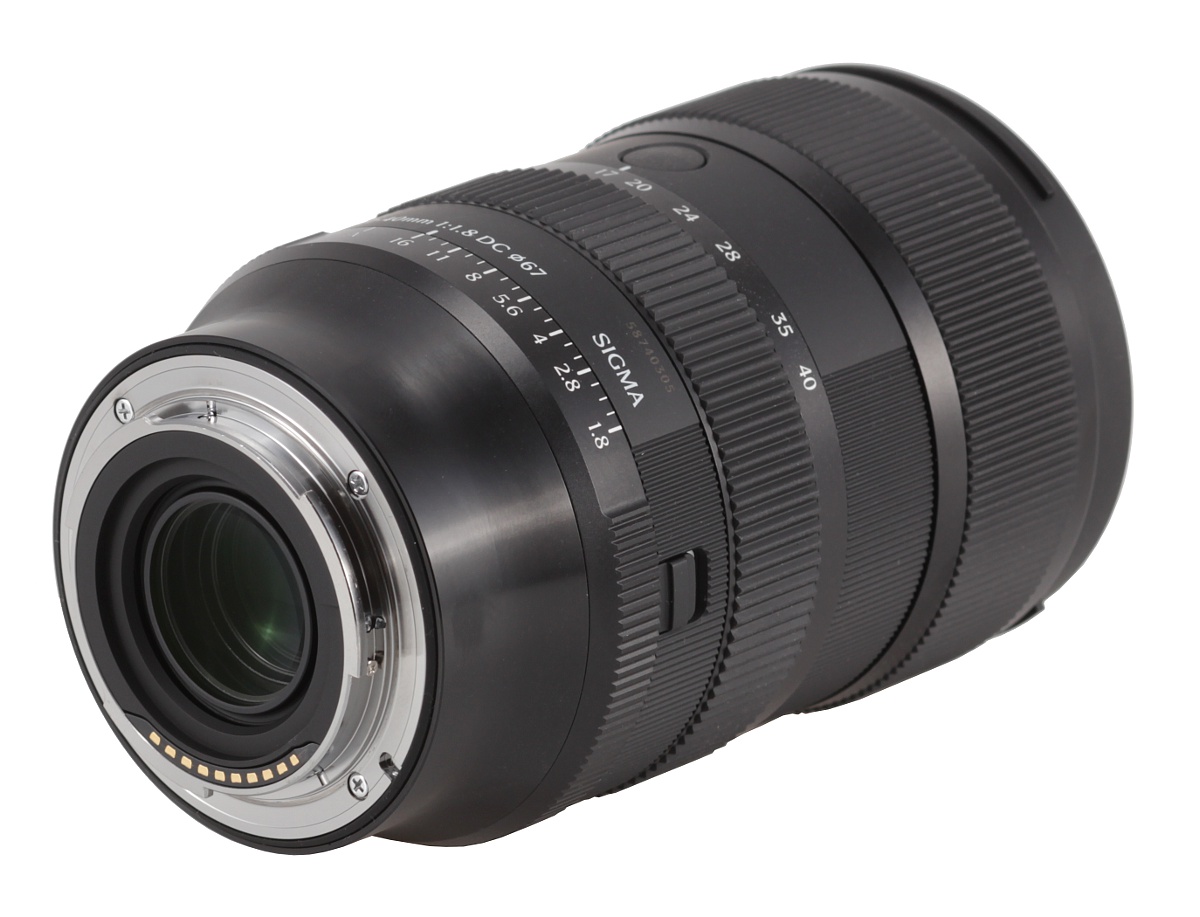
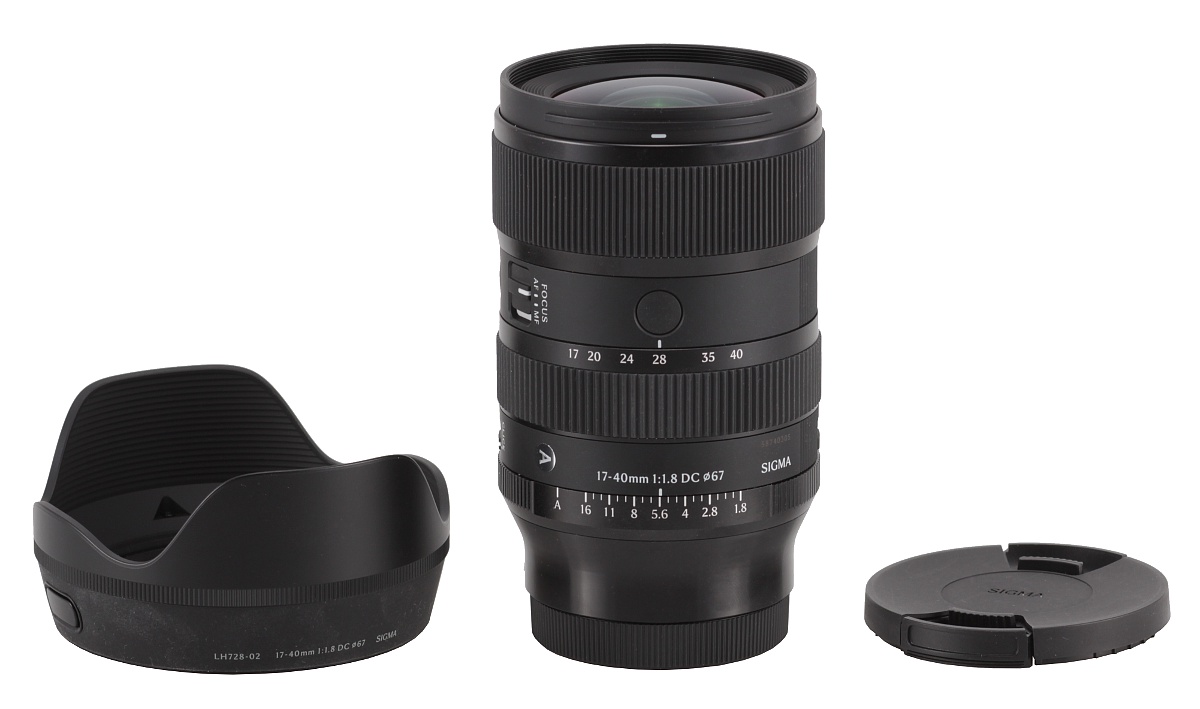
The tested lens starts with a metal mount which surrounds the contacts and a rear element of the lens, 23 mm in diameter. The element is set inside a movable tube; it is on the same level as the mount when the focal length is set at 17 mm and it hides almost 1 cm deep inside the barrel when you pass to 40 mm. Unfortunately this movement reveals a slit through which you can spot electronic parts inside so you can't speak about the lens being fully weather-sealed.
A black, smooth metal ring that quickly increases its diameter is the first element of the proper casing; on the ring you can find a white dot, making an alignment with a camera easier, the “025” symbol, marking the year of production, an inscription 'MADE IN JAPAN', and also the focusing mechanism working range, „0.28M/0.92FEET–∞”.
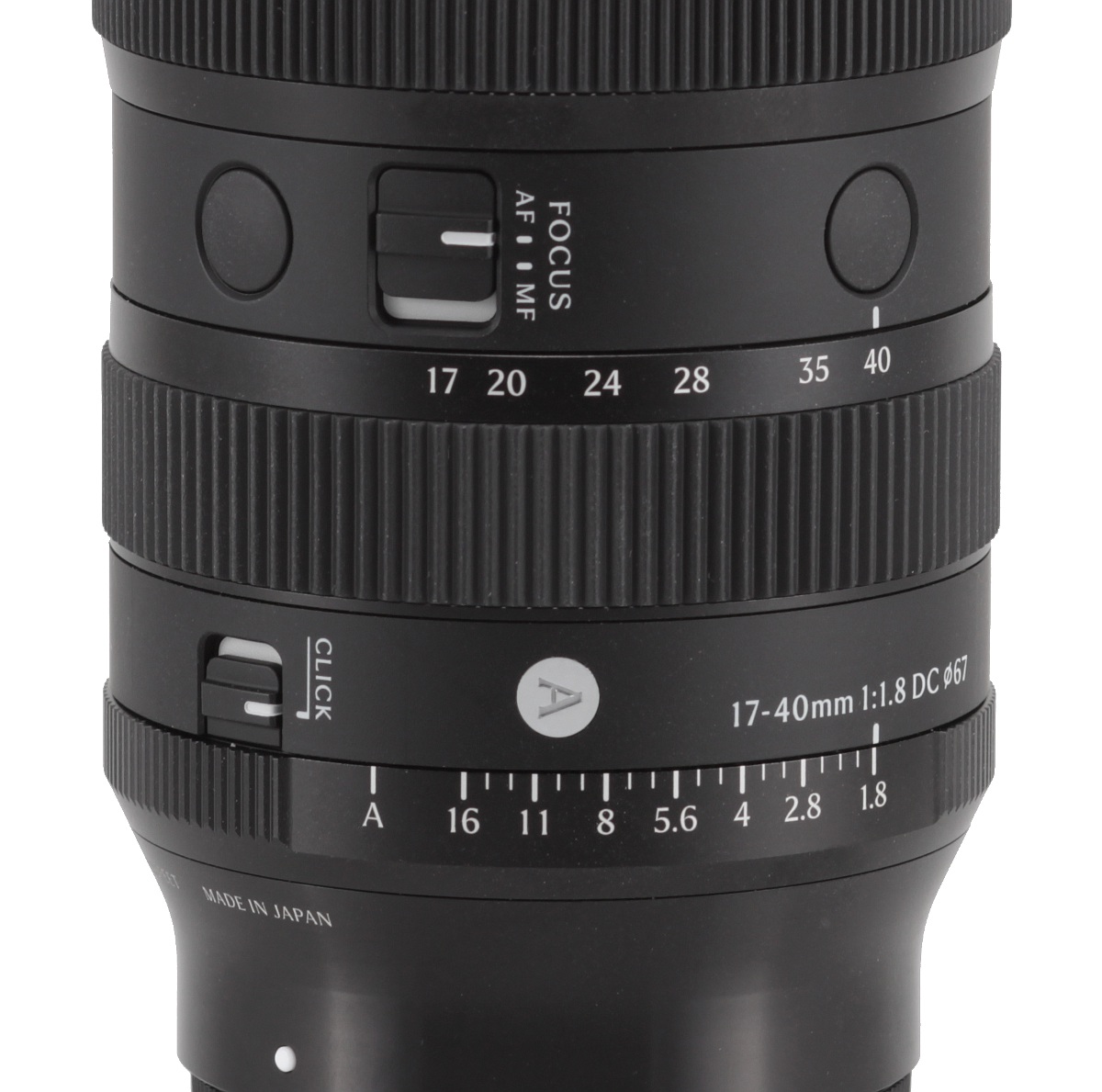
Then you see an aperture ring, 11 mm wide, most of its surface covered by ribbing, but it also features aperture markings from f/1.8 to f/16 and an 'A' value (automatic settings). The ring moves every 1/3 EV step but you can also switch it to a clickless mode, a nod towards filmmakers. Its performance is very comfortable, really without reproach.
Further on you find a part of the lens that is covered by plastics and doesn't move; on it you find the logo of the company, the name and parameters of the lens, its serial number, some fine ribbing, and two switches. The first of them, CLICK, situated on the left side looking from above, controls the aperture ring mode. On the other side you find the aperture ring lock switch; you can set it either in A position or in any other position ranging from f/1.8 to f/16.
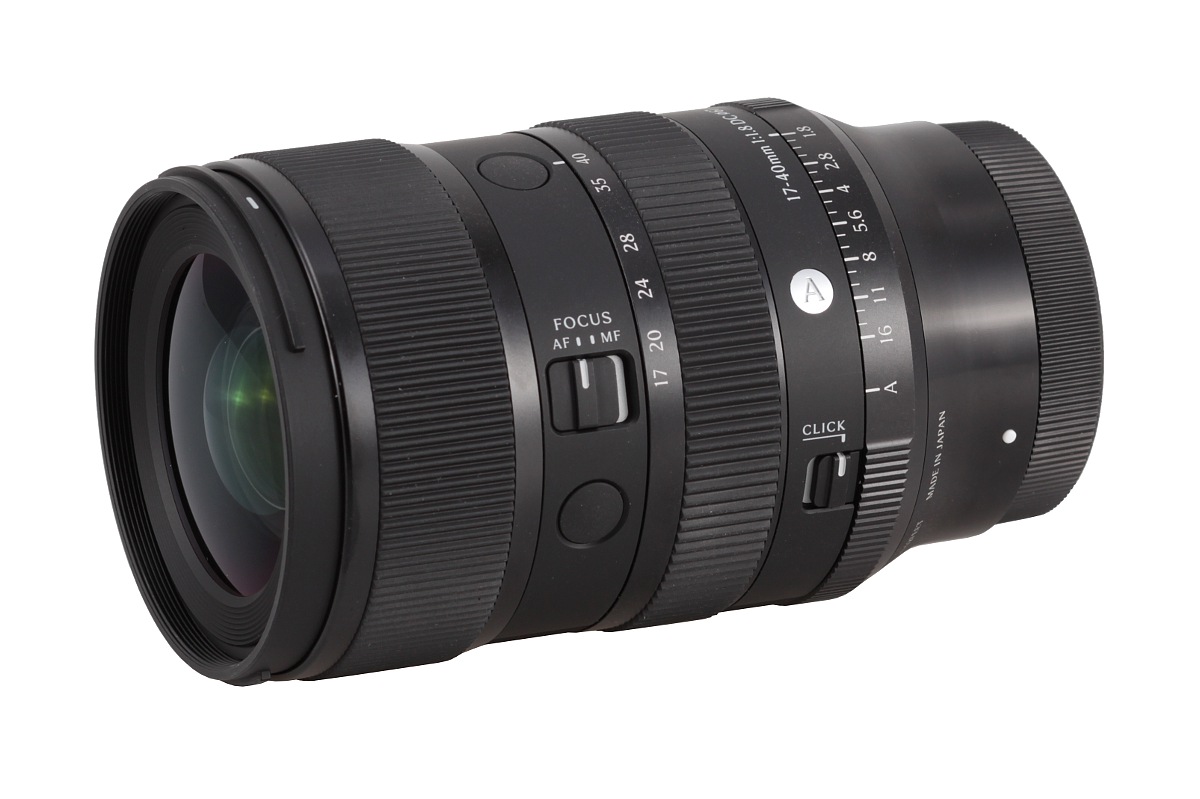
A zoom ring comes next; it is as wide as 21 mm, the majority of its surface taken by rubber ribbing. On the ring you see focal length markings at 17,20, 24, 28, 35, and 40 mm. The ring moves smoothly and is properly damped across its whole range.
Then you find an immobile part of the casing, partially covered by fine ribs. On this part you see an A letter, meaning the lens is qualified as an Art line device, and two round FOCUS LOCK buttons that, additionally, are programmable. There is also a FOCUS AF/MF switch that is used to select the focusing mechanism working mode.
A manual focus ring is the next part of the barrel. It is a focus-by-wire construction, 28 mm wide, almost completely covered by rubber ribbing. It focus throw depends on the speed of your turning. When you turn it quickly it amounts to an angle of about 200 deg; with slower movements you are able to reach even about 400 deg. Both these values allow you very precise settings.
The Sigma A 17-40 mm f/1.8 DC ends with a hood mount inside which you can find a non-rotating filter thread, 67 mm in diameter. The front element doesn't move, is slightly convex, 48 mm in diameter.
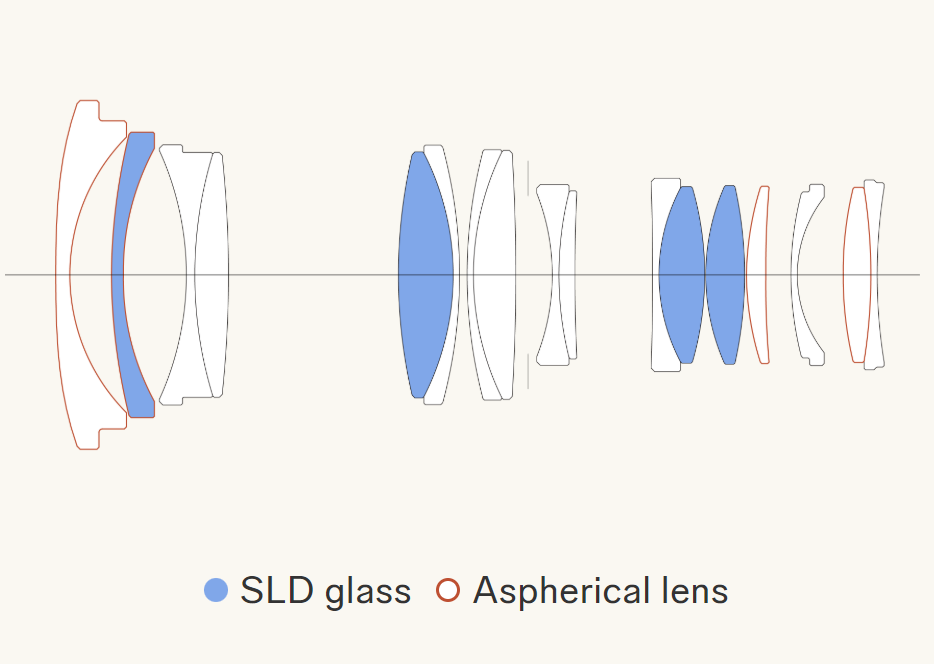
When it comes to the optical construction this lens features overall 17 elements that create 11 optical groups. You deal here with as many as four low dispersion SLD glass and also four aspherical elements, along with a round aperture with 11 diaphragm blades that can be closed up to a value of f/16 at the maximum.
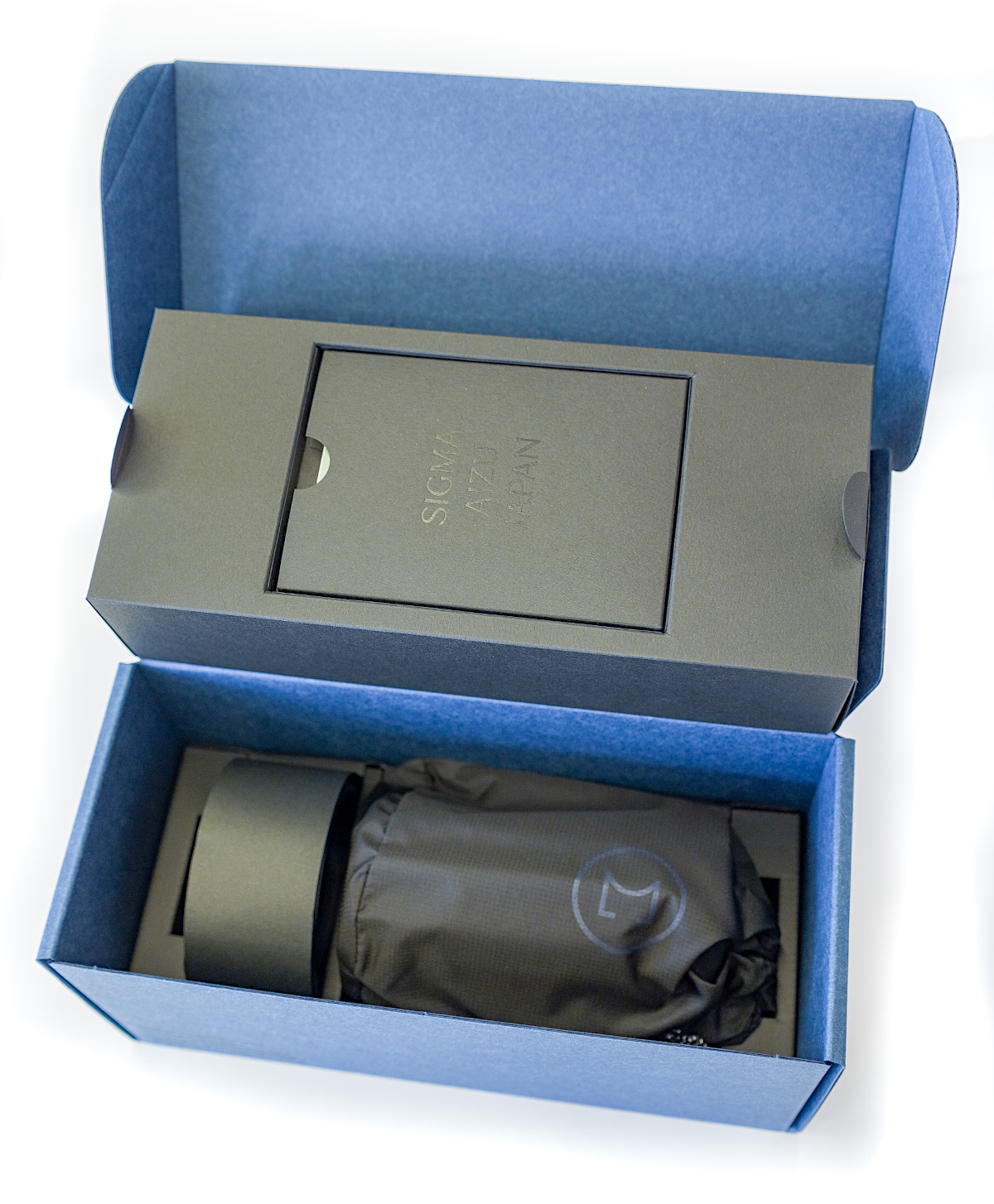
Buyers get in the box: two caps, a hood, and a soft pouch. Unfortunately I doubt that pouch has any protective qualities, especially compared to the solid cases Sigma used to add to its top-of-the-range products.
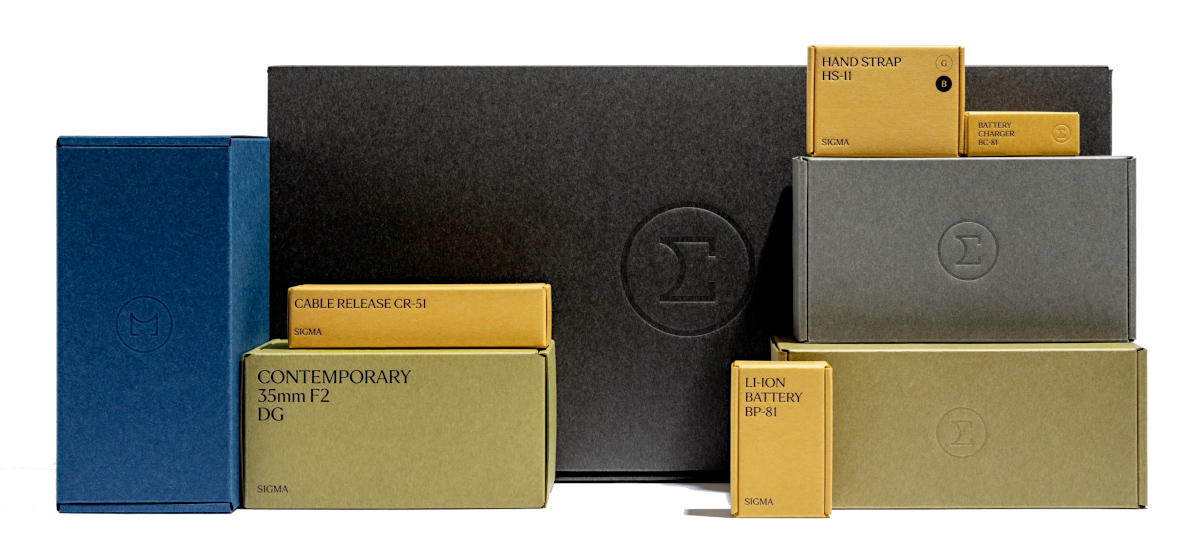
It's worth adding that up from 2025 Sigma products and some accessories, added to them in the box, feature new packaging. The boxes differ in colour, depending on the product and model offered: they are grey for cameras, blue for Art line lenses, graphite for Sports line lenses, khaki for Contemporary line lenses, and finally yellow for accessories.
Don't get me wrong - offering new, much more stylish packaging is completely fine, I do appreciate such a move and undoubtedly it'll be a hit. Still, I also fear that sometimes nice design means also lesser utility. Let's face it, even the nicest box sooner or later will be stored away in your cupboard or even thrown away whereas a good quality case is used all the time. That's why I think that the appearance of a box is not so important as a solid case that is able to protect your device. In order to defend Sigma a bit you can only add that nowadays most producers try to economize by offering you just a cloth pouch instead of a solid case. These pouches often are as thick as your average optics cleaning cloth. Unfortunately, this trend concerns also expensive, premium instruments.
Personally I feel nostalgic when I go down the memory lane to times when, with the first Sigma 70-300 mm f/4-5.6 APO DG Macro I bought, a cheap device costing about $150, I got a very solid case.