Tamron 16-30 mm f/2.8 Di III VXD G2
5. Chromatic and spherical aberration
Chromatic aberration
Tamron included many special glass elements in the optical construction of the tested lens; the result is such that longitudinal chromatic aberration is corrected very well. Photos below show that at 24 and 30 mm this aberration remains negligible, difficult to notice even at the maximum relative aperture.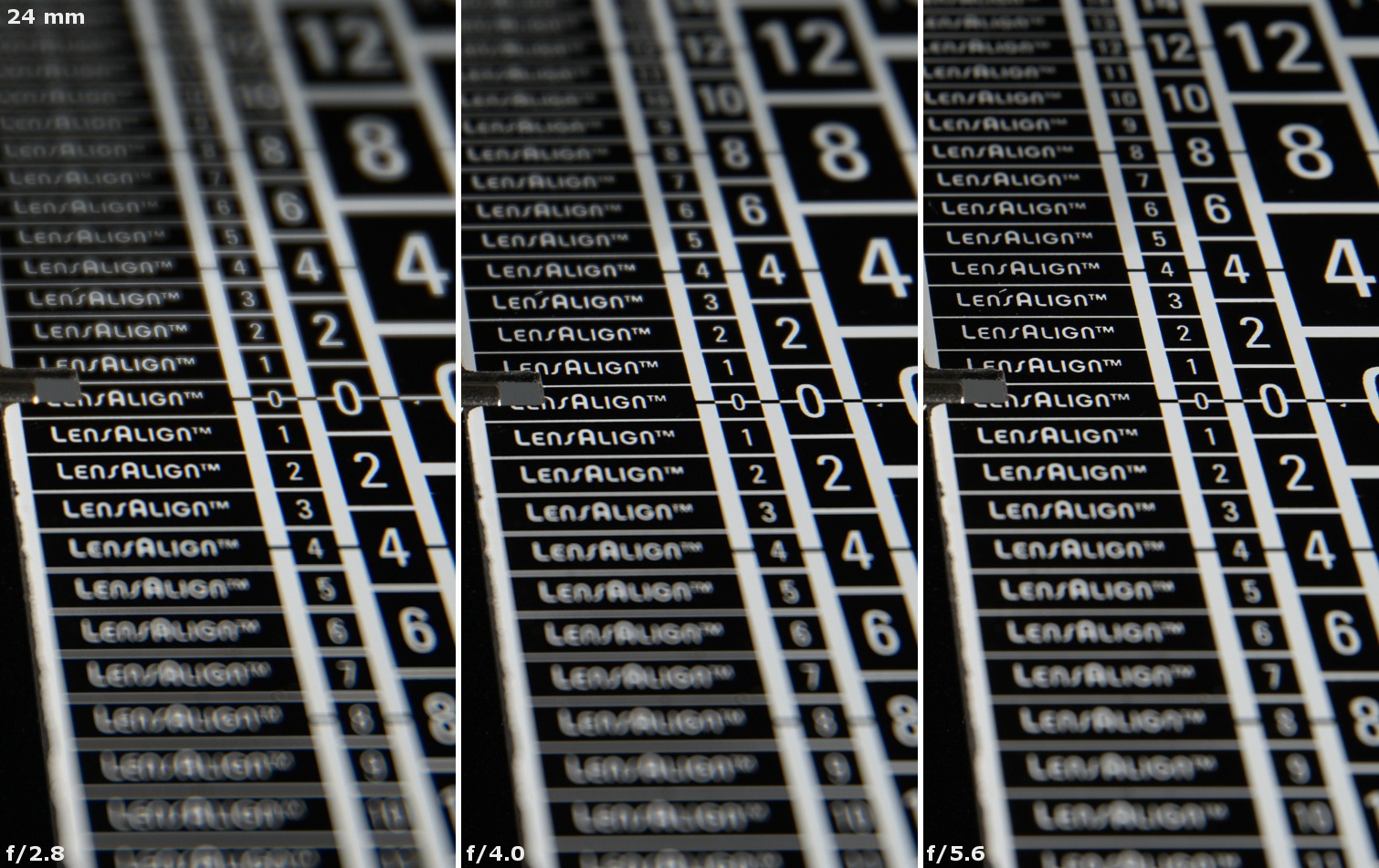 |
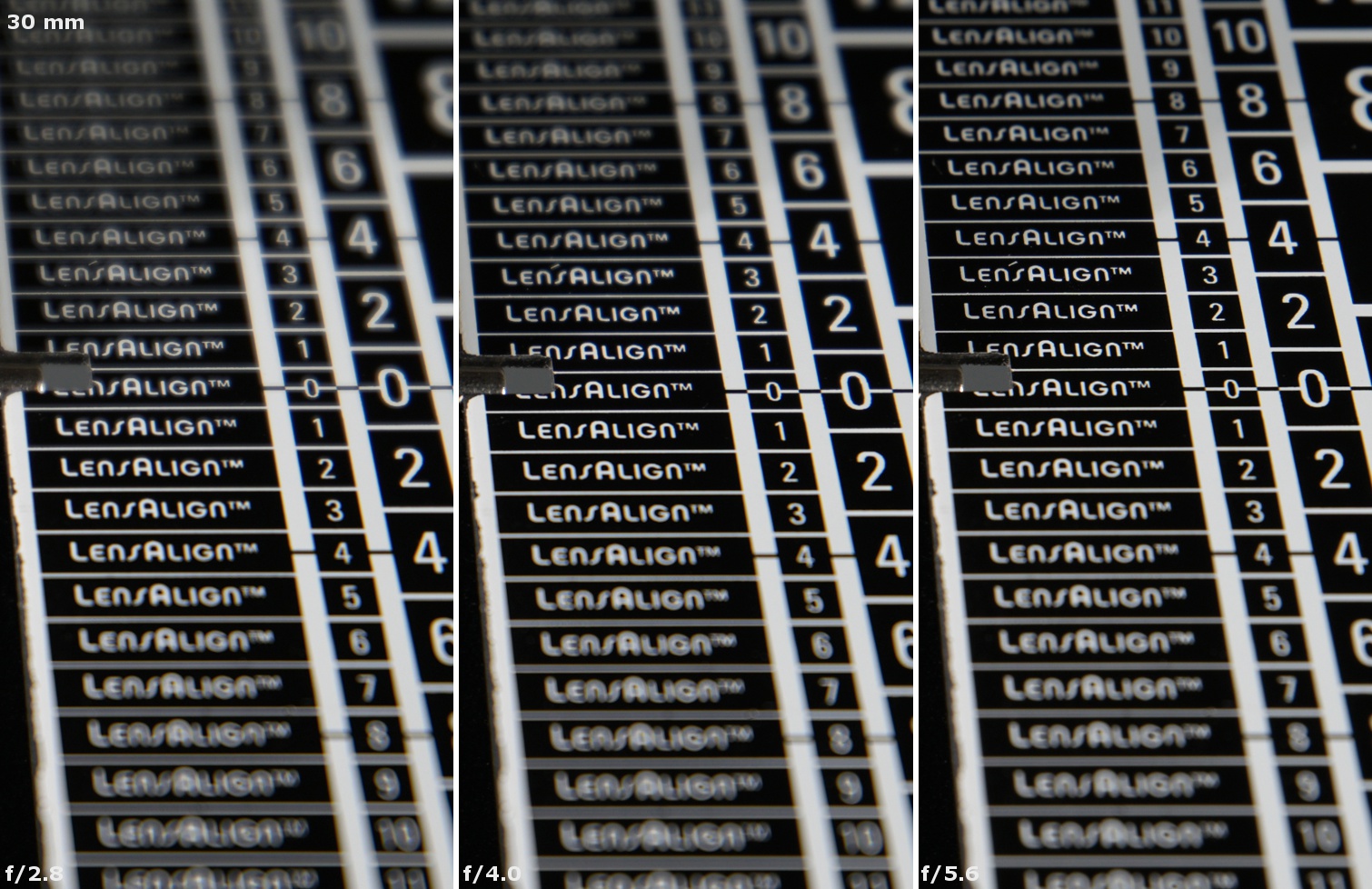 |
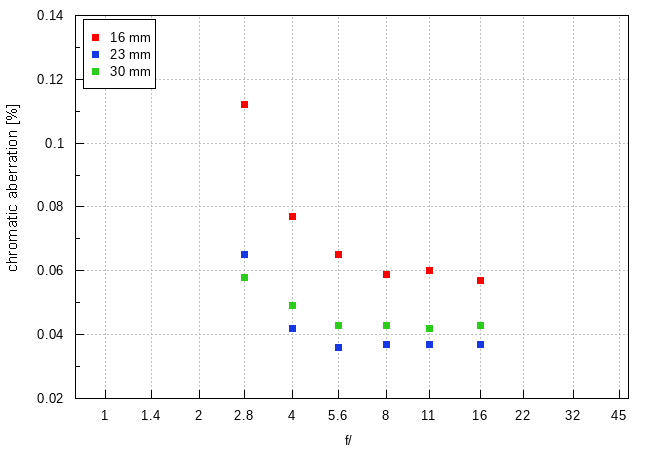
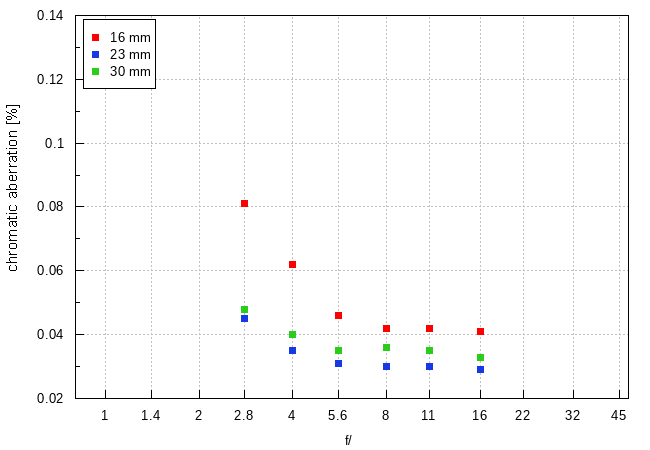
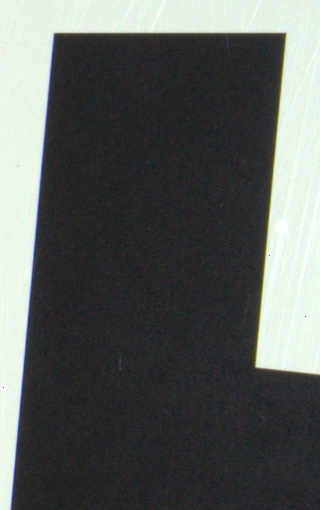
Now let's see how the lens performs when it comes to correction of lateral chromatic aberration. Graphs below present this performance depending on the focal length and aperture values, respectively on the edge of the APS-C/DX and on the edge of full frame.
Please Support UsIf you enjoy our reviews and articles, and you want us to continue our work please, support our website by donating through PayPal. The funds are going to be used for paying our editorial team, renting servers, and equipping our testing studio; only that way we will be able to continue providing you interesting content for free. |
- - - - - - - - - - - - - - - - - - - - - - - - - - - - - - - - - - - - - - - - - - - - - - - -
There are no problems whatsoever in the middle and at the longer end of the focal spectrum. In the area close to the maximum relative aperture chromatic aberration is low and on stopping down the aperture it can drop even to a very low levels.
The highest values can be observed at the shortest focal length where, at the maximum relative aperture, you deal with a medium level. Fortunately stopping down the aperture is very efficient in limiting this aberration so already near f/4.0 you see results that can be called low.
Overall the tested Tamron didn't have any weak points here and its performance in this category should be assessed very high. Of course we have to remind here that there are lenses that can perform even better – the Sony FE 16-35 mm f/2.8 GM II had results lower than 0.04% practically for all combinations of apertures and focal lengths.
| A7R IIIa, RAW, 16 mm, f/2.8 | A7R IIIa, RAW, 23 mm, f/8.0 |
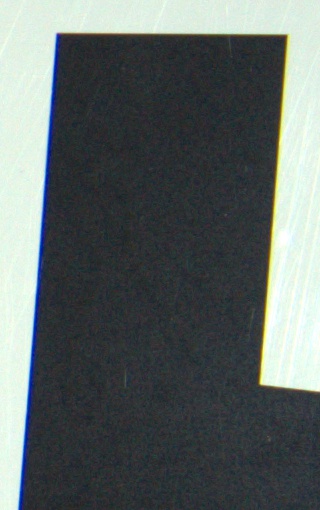
|
|
Spherical aberration
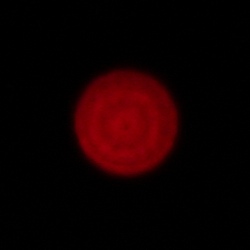
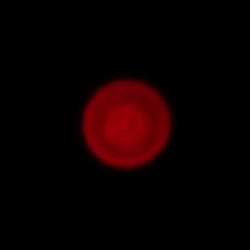
First photos from this chapter show a distinct focus shift effect. In both of them the depth of field moves towards greater distances on stopping down the aperture. Some problems with spherical aberration are confirmed also by defocused circles of light. There are some differences in images of the circle we got before and behind the focus – they are perhaps not that pronounced but they confirm that the tested Tamron didn't correct spherical aberration in a perfect way.
| A7R V, 30 mm, f/2.8, before | A7R V, 30 mm, f/2.8, after |
|
|