Viltrox AF 25 mm f/1.7 Air
8. Vignetting
| X-T2, JPEG, f/1.7 | X-T2, RAW, f/1.7 |
|
|
| X-T2, JPEG, f/2.0 | X-T2, RAW, f/2.0 |
|
|
| X-T2, JPEG, f/2.8 | X-T2, RAW, f/2.8 |
|
|
| X-T2, JPEG, f/4.0 | X-T2, RAW, f/4.0 |
|
|
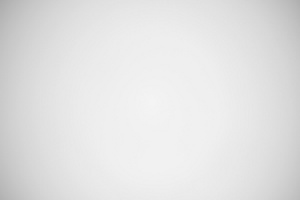
In case of JPEG files the situation looks very sensible indeed. At the maximum relative aperture vignetting reaches 26% (−0.88 EV), a really moderate result for the f/1.7 aperture, offered by the tested lens. By f/2.0 this aberration decreases to 20% (-0.66 EV), and by f/2.8 it amounts to 12% (-0.36 EV). By f/4.0 all problems end completely because our result in that place amounts to just 6% (-0.18 EV).
Please Support UsIf you enjoy our reviews and articles, and you want us to continue our work please, support our website by donating through PayPal. The funds are going to be used for paying our editorial team, renting servers, and equipping our testing studio; only that way we will be able to continue providing you interesting content for free. |
- - - - - - - - - - - - - - - - - - - - - - - - - - - - - - - - - - - - - - - - - - - - - - - -
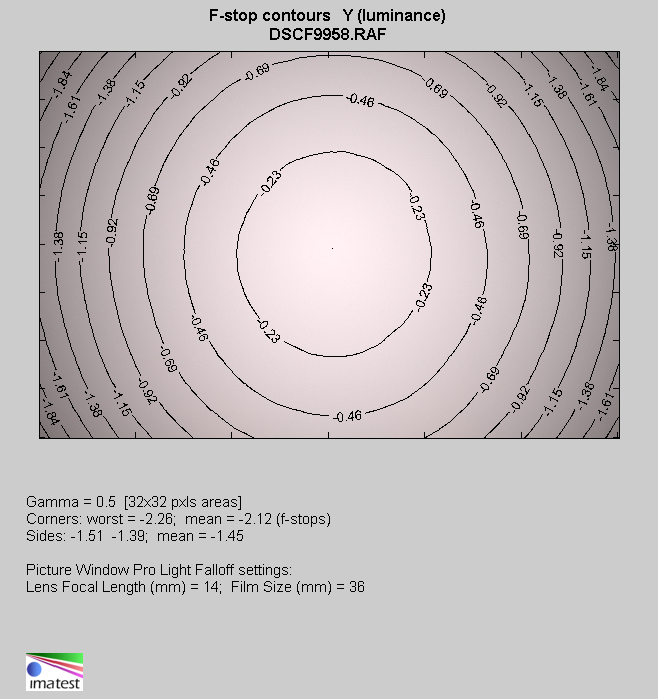
Still Fujifilm bodies are known for correcting JPEG files without asking for permission even if you attach to them third-party lenses. Only uncorrected and uncropped RAW files are able to show you the real level of this aberration. Here the results are noticeably higher – at the maximum relative aperture you have to take into account light fall-off reaching 52% (−2.12 EV). It is a high value but still you have to remember that you deal here with a relatively small lens that additionally provides a significantly wide angle of view.
By f/2.0 vignetting decreases to 47% (−1.82 EV), and by f/2.8 to 30% (−1.04 EV). By f/4.0 you have to tolerate a loss reaching 22% (−0.60 EV), and by f/5.6 the light fall-off amounts to 20% (-0.65 EV). Further stopping down doesn't have any measureable effect on this aberration.
| Fujifilm X-T2, RAW, f/1.7 |
 |