Viltrox AF 25 mm f/1.7 Air
5. Chromatic and spherical aberration
Chromatic aberration
Despite its affordable price, the optical construction of the Viltrox AF 25 mm f/1.7 Air features quite a lot of special elements – one element made of low dispersion ED glass, two made of glass with high refraction index. Small wonder the tested lens doesn't experience practically any problems with the correction of longitudinal chromatic aberration. Photos below show clearly that images reached at the maximum relative aperture show just slight colouring.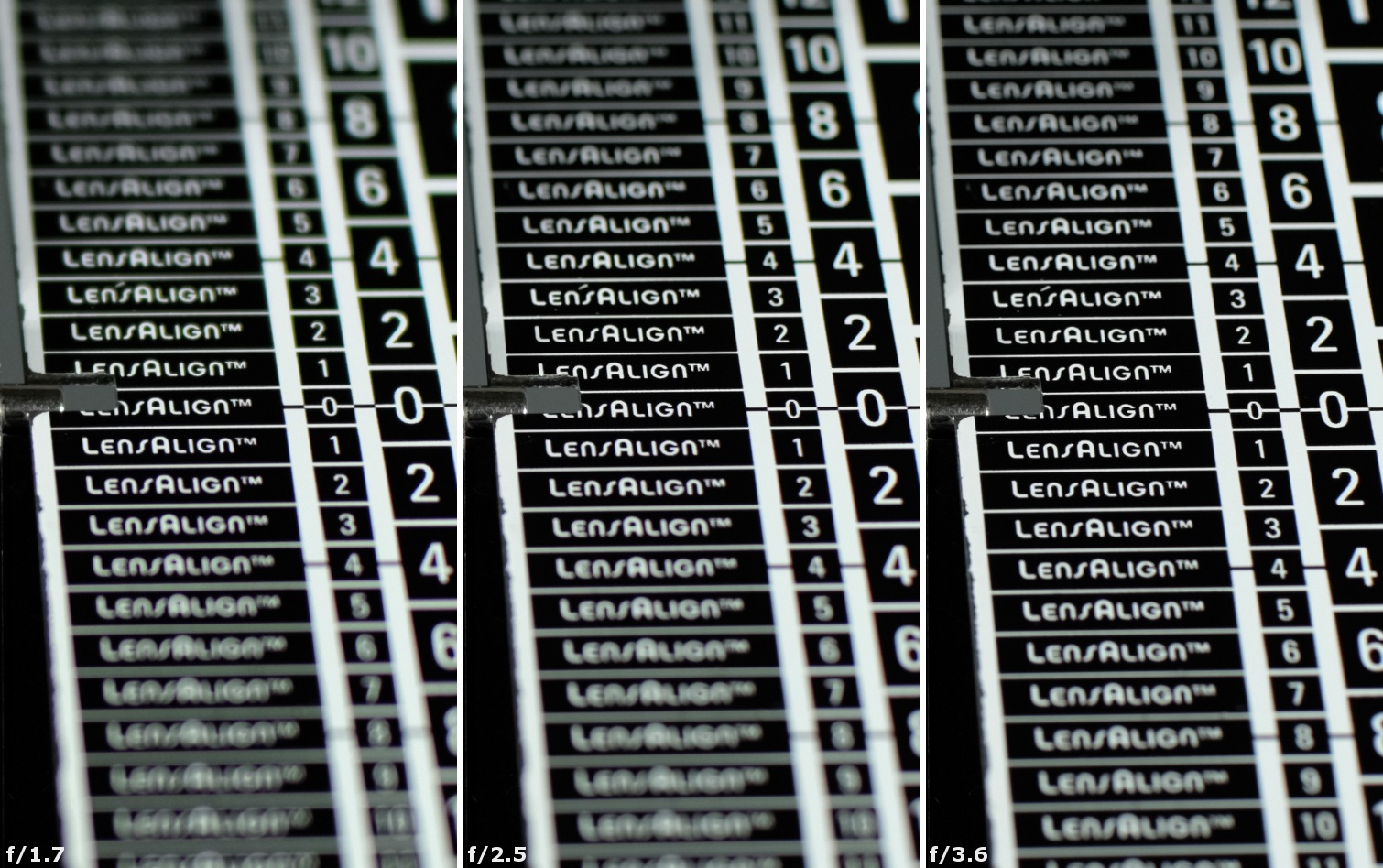 |
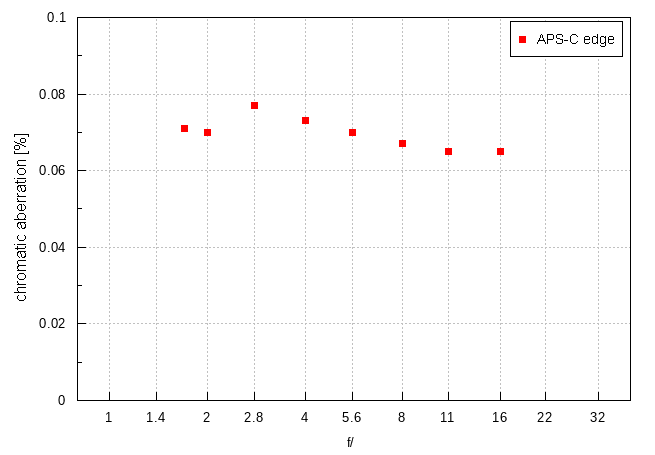
Now let's check how the Viltrox AF 25 mm f/1.7 Air corrects lateral chromatic aberration – an appropriate graph, showing its performance depending on aperture values you can find below.
Please Support UsIf you enjoy our reviews and articles, and you want us to continue our work please, support our website by donating through PayPal. The funds are going to be used for paying our editorial team, renting servers, and equipping our testing studio; only that way we will be able to continue providing you interesting content for free. |
- - - - - - - - - - - - - - - - - - - - - - - - - - - - - - - - - - - - - - - - - - - - - - - -
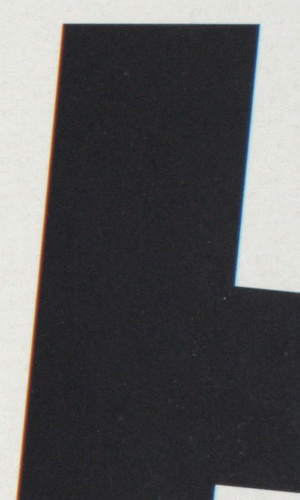
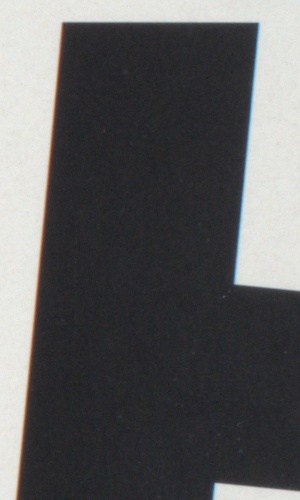
Here the results keep more or less a constant level near 0.07%, a value we still consider as low. Also in this testing category the small Viltrox fares well, not giving you any reason to worry.
| Fujifilm X-T2, RAW, f/2.8 | Fujifilm X-T2, RAW, f/11.0 |
|
|
Spherical aberration
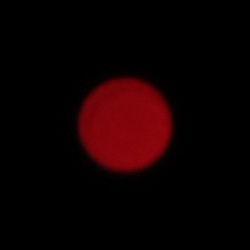
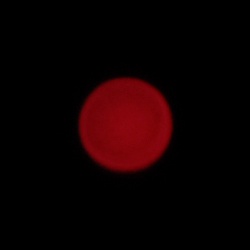
In first photos of this chapter you can notice slight focus shift. During stopping down of the aperture the depth of field shifts slightly toward greater distances.Effect of a similar scale you can observe in defocused circles of light reached before and behind the focus. A slight influence of spherical aberration is noticeable in a shape of a soft edge in the first circle and a slightly brighter rim of the second one.
It's clear that the producer of the tested Viltrox didn't correct spherical aberration in a perfect way, leaving it on a moderate level. This aberration's level cannot be very high because the effects, described above, are slight; at the same time the lens provides a very good image resolution in the frame centre up from the maximum relative aperture.
| Fujifilm X-T30, f/1.7, before | Fujifilm X-T30, f/1.7, after |
|
|