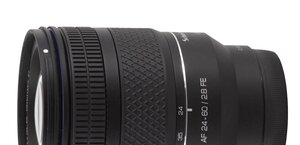
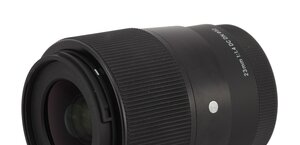
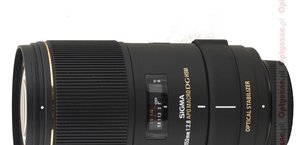
Our first chart presents a comparison between the tested Samyang and other contemporary 24-70 mm f/2.8. As you see, you gain here a lot – the 24-60 mm model is noticeably smaller and lighter than other classics. In some cases its weight is even two times lower than the weight of its rivals!
The second chart compares the Samyang 24-60 mm to other f/2.8 models, whose range, compared to 24-70 mm, has been limited from one or other end. As you see in this case, the dimensions and weight of the Samyang are already quite typical.
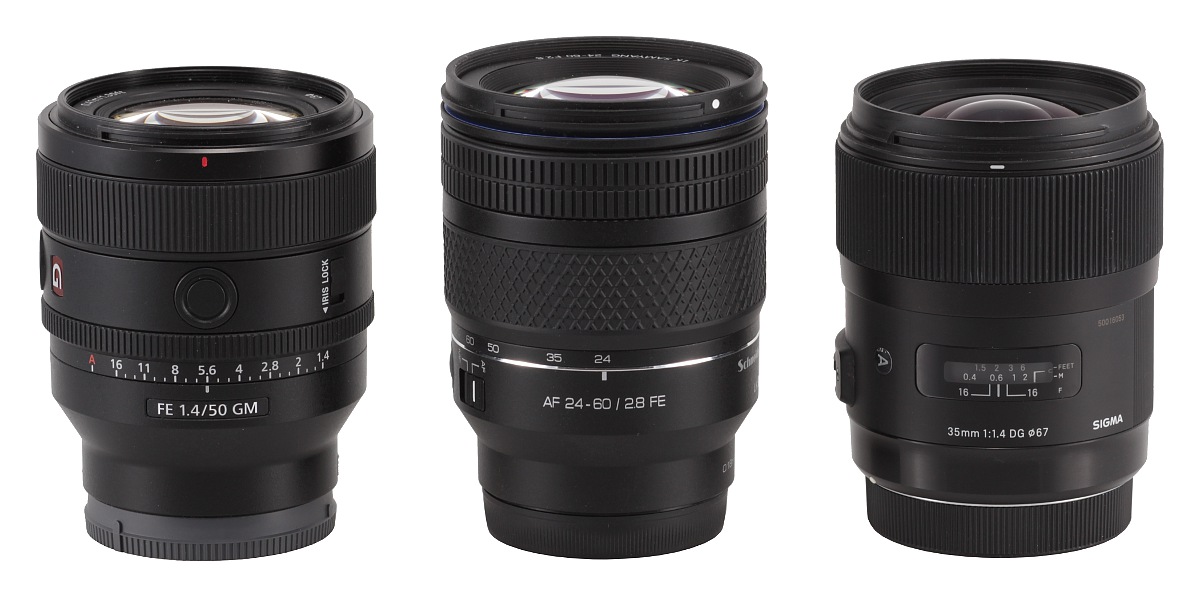
In the photo below, the Samyang AF 24-60 mm f/2.8 FE is positioned between the Sony FE 50 mm f/1.4 GM and the reflex camera Sigma A 35 mm f/1.4 DG HSM.
Please Support Us
If you enjoy our reviews and articles, and you want us to continue our work please, support our website by donating through PayPal. The funds are going to be used for paying our editorial team, renting servers, and equipping our testing studio; only that way we will be able to continue providing you interesting content for free.
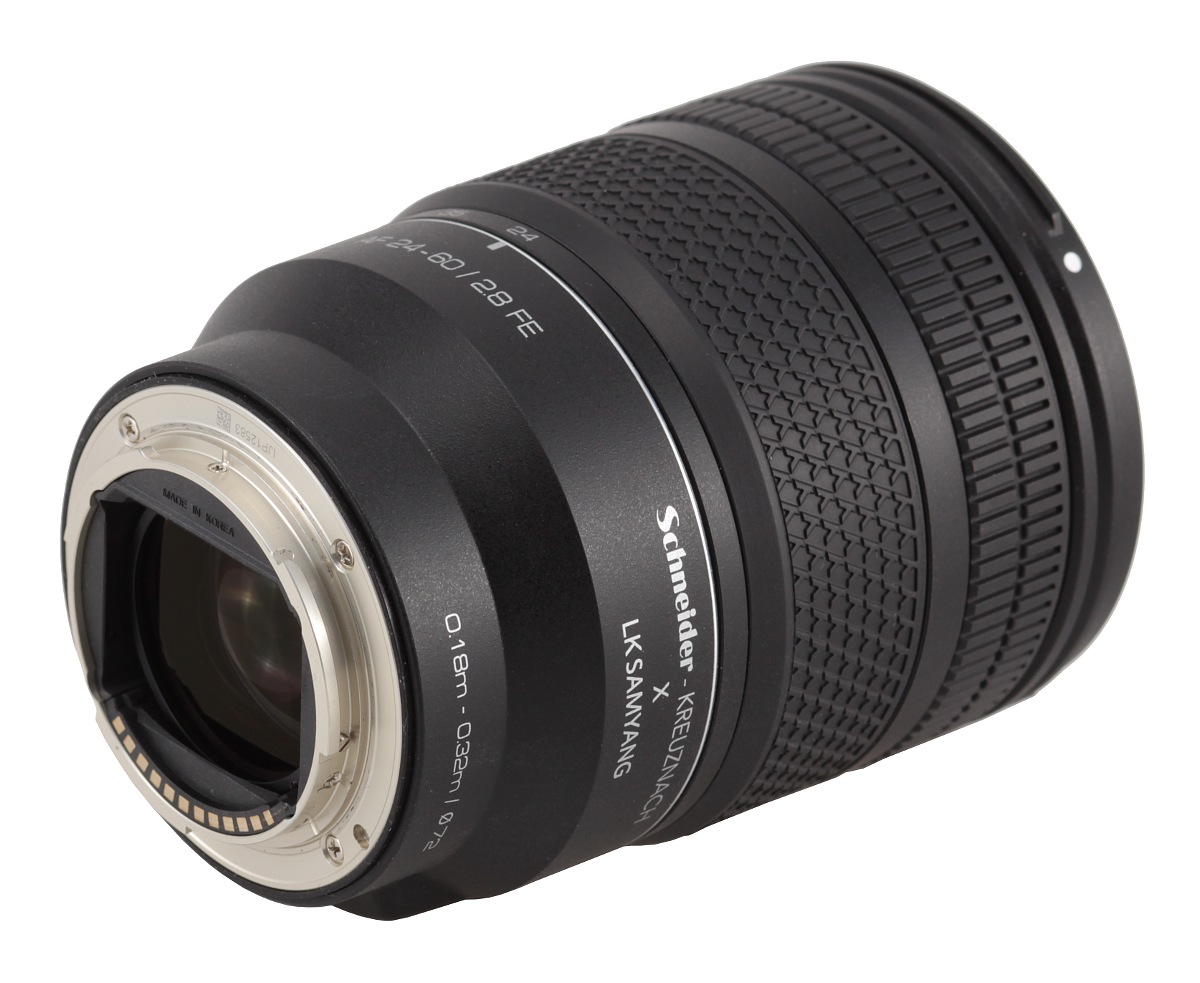
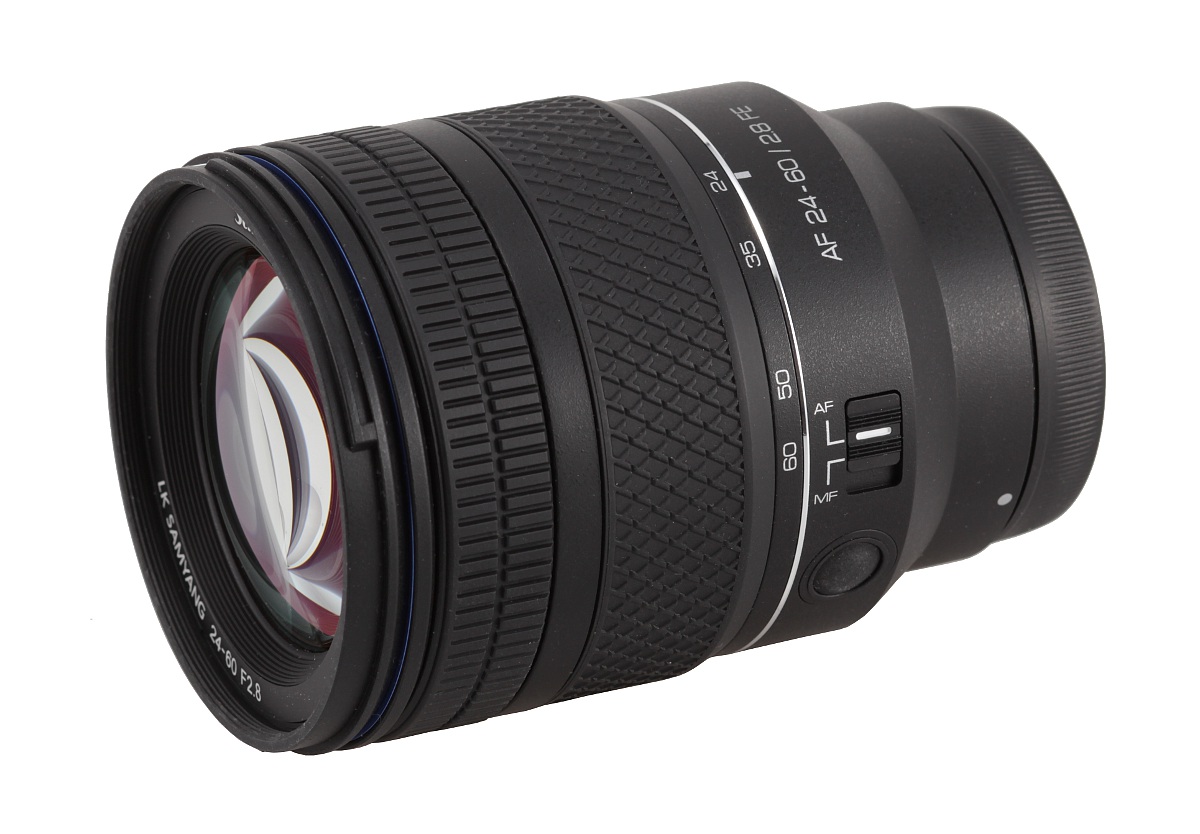
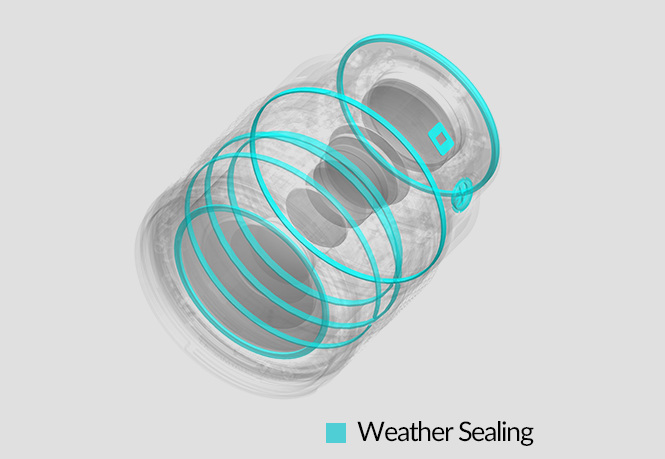
The tested lens starts with a metal mount that includes a contact plate and a 33x27 mm frame with information that the lens was produced in Korea. On the metal part right behind the mount there is also its serial number. Right under the frame you see a rear element of the lens, 31 mm in diameter, that changes its position – at 24 mm it is situated right under the frame and after passing to 60 mm it hides about 2 cm deep.The surrounding area is properly blackened and matted but when it is at its deepest, you can spot some electronic parts of the lens. You can't speak about proper protection of the interior and the lens being fully sealed.
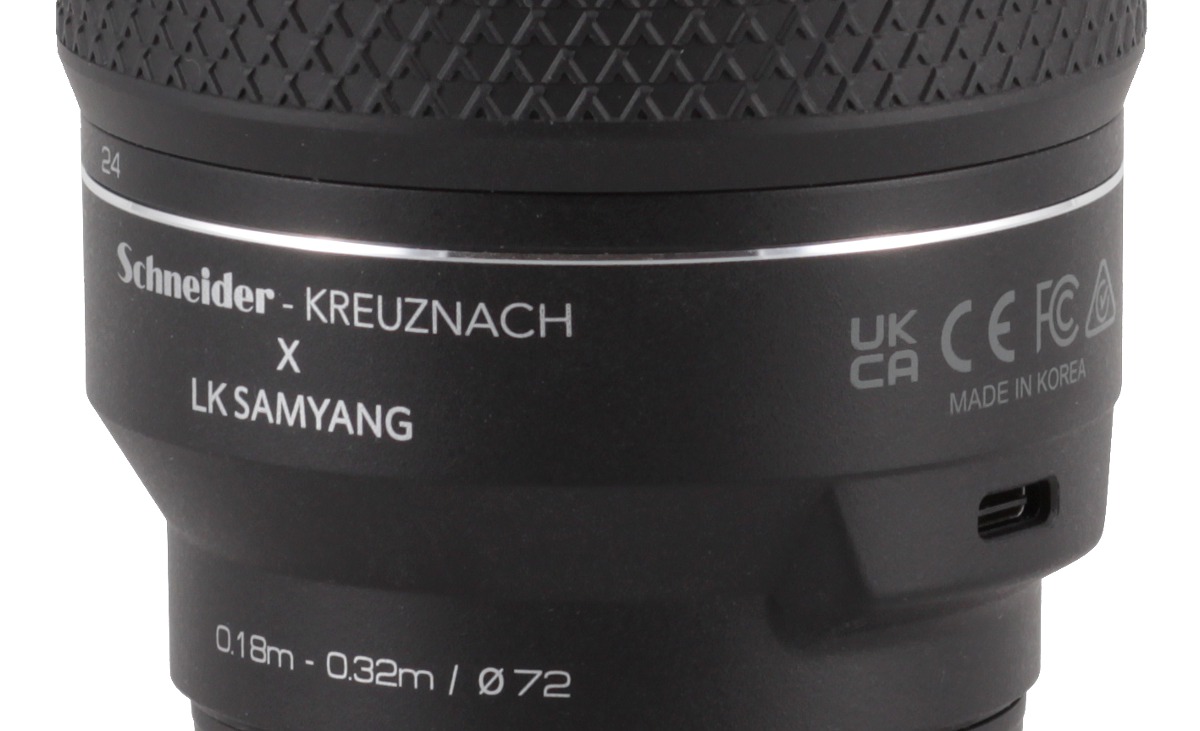
The proper body of the lens is covered by black plastics and starts with an immobile, smooth ring on which you can find a marker making an alignment with a camera easier, information about the filter diameter, that of 72 mm, and the minimum focusing distance (0.18m-0.32m).
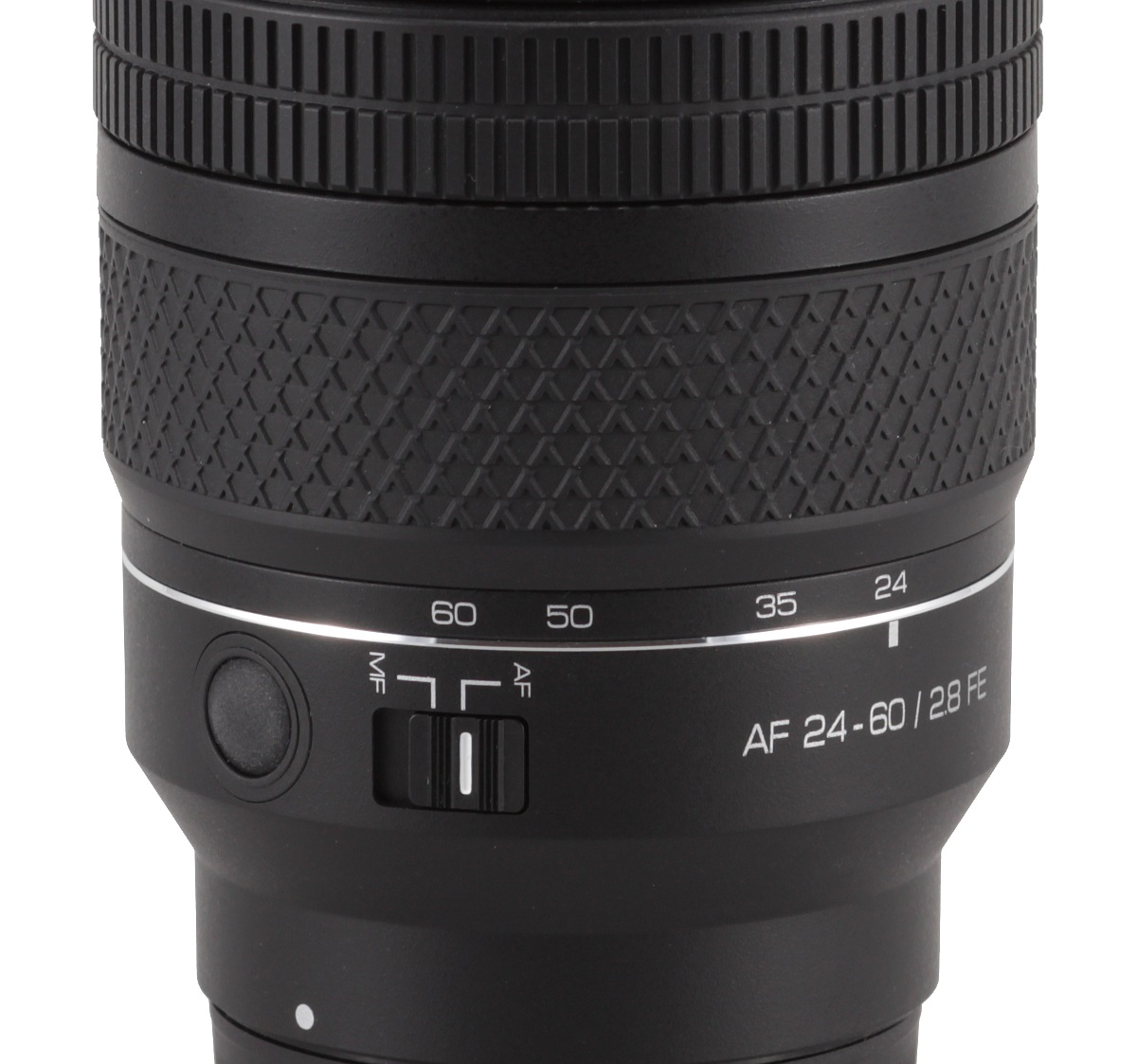
The ring increases its diameter very quickly and on that already enlarged part you see an inscription with the name and parameters of the lens. Looking from above, on the right side, there are logotypes of the producers, Schneider-Kreuznach and LK Samyang; on the left you find the AF/MF switch and a programmable FOCUS LOCK button. In the back there is another piece of information concerning the place of production and an unprotected USB port that is used for lens software upgrades.
A zoom ring, as wide as 30 mm, is another part of the lens. It is equipped with comfortable rubber ribbing and also focal length markings at 24, 35, 50, and 60 mm. It moves quite smoothly and is properly damped.
Further on you find an immobile part of the casing with a manual focus ring, 16 mm in diameter. It is almost completely covered by rubber ribbing a bit thicker thanin then case on the zoom ring. You can't find any distance scale of DOF scale on it. The ring moves smoothly, with a proper but not especially pronounced resistance, and it is a focus-by-wire construction. Its working range, amounting to 180-190 deg, doesn't depend on the focal length or on the speed of your turning. It's a value that allows you comfortable performance.
Turning the zoom ring from 24 to 60 mm makes the lens increase its length by about 26 mm as a plastic homogeneous tube ending with the front element system extends forward.
The front element is a bit convex, 52 mm in diameter, surrounded by a part of the casing with the names of the producers and basic parameters of the instrument, along with a non-rotating filter thread, 72 mm in diameter, and a hood mount.
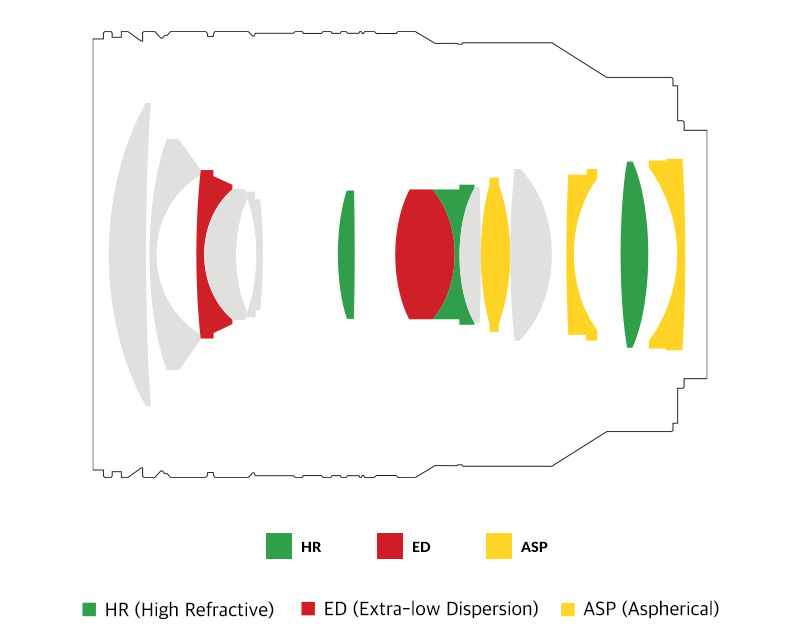
When it comes to the opticalconstruction,n you deal here with 14 elements positioned in 11 groups. The producers weren't skimpy when it comes to special glass – you deal here with two low dispersion ED glass elements, three aspherical ones, and as many as three elements made of glass with high refractive index (HR). Inside the construction there is also a round aperture with nine blades that can be closed down to a value of f/22.
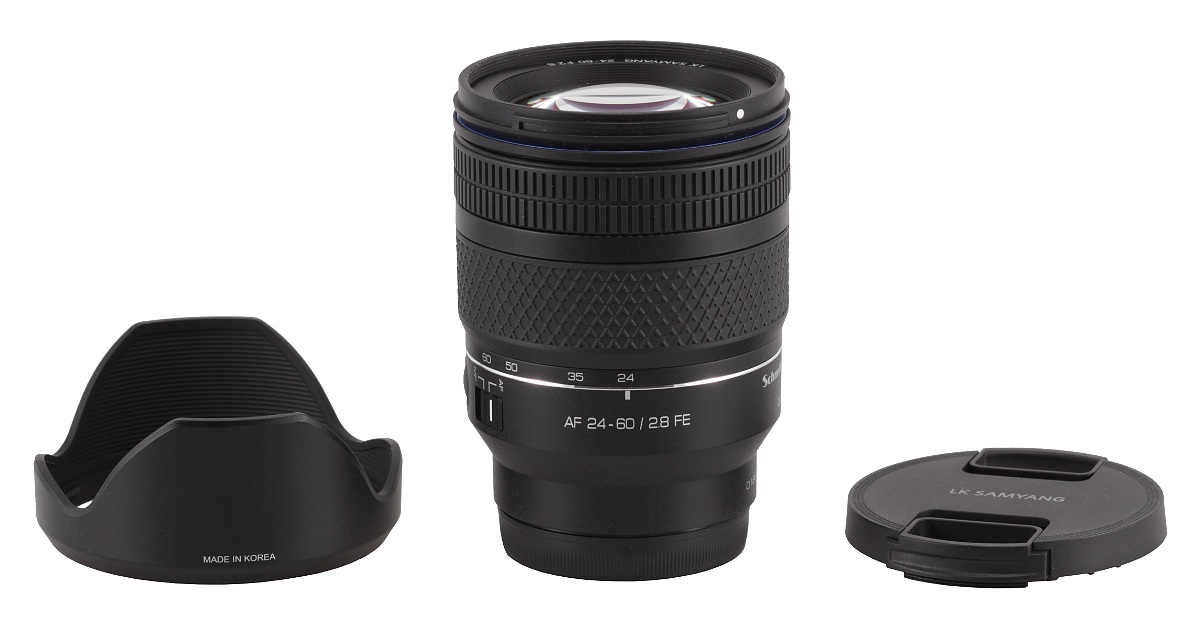
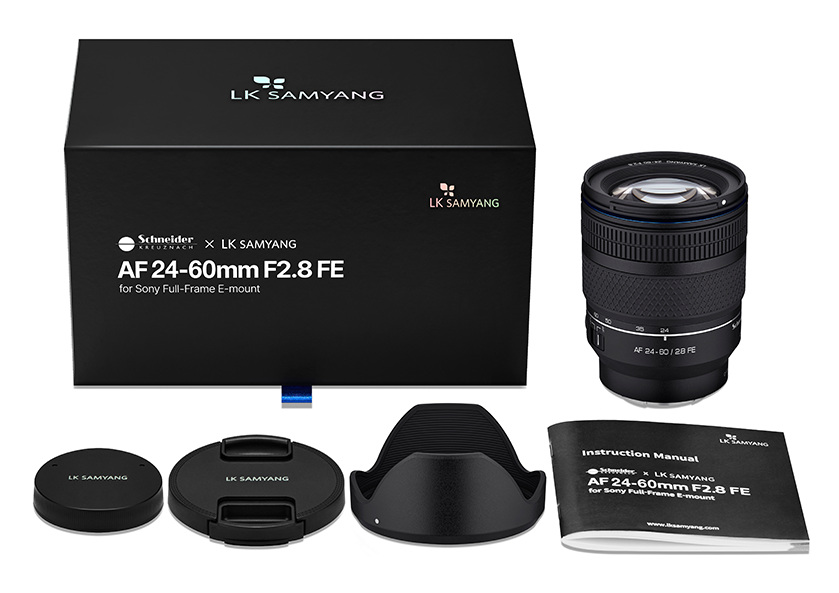
Buyers get in the box with the lens both caps and a petal-type hood.