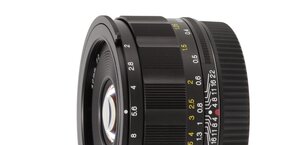
Voigtlander Septon 40 mm f/2 Aspherical
3. Build quality
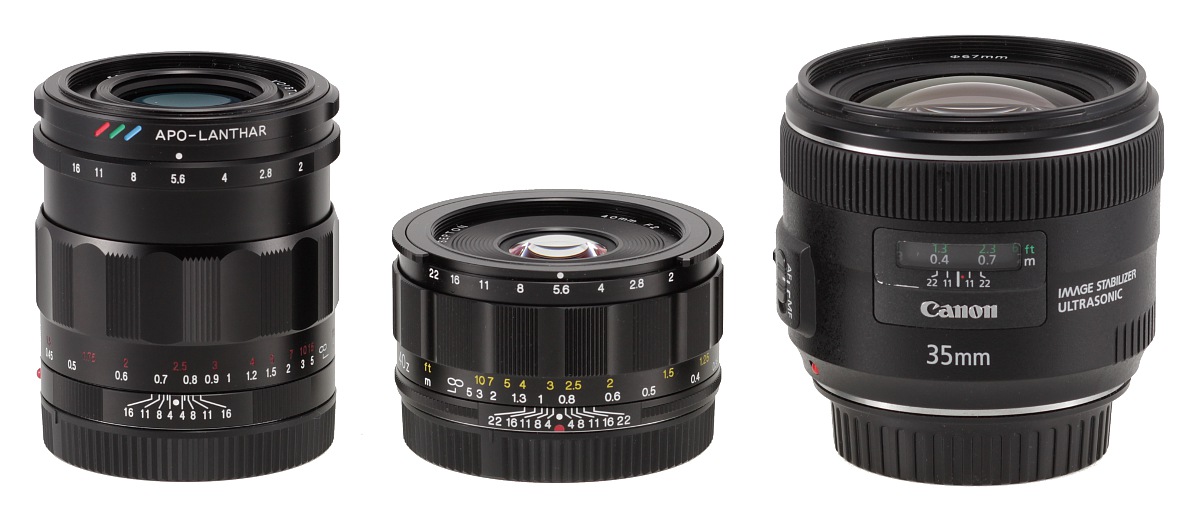
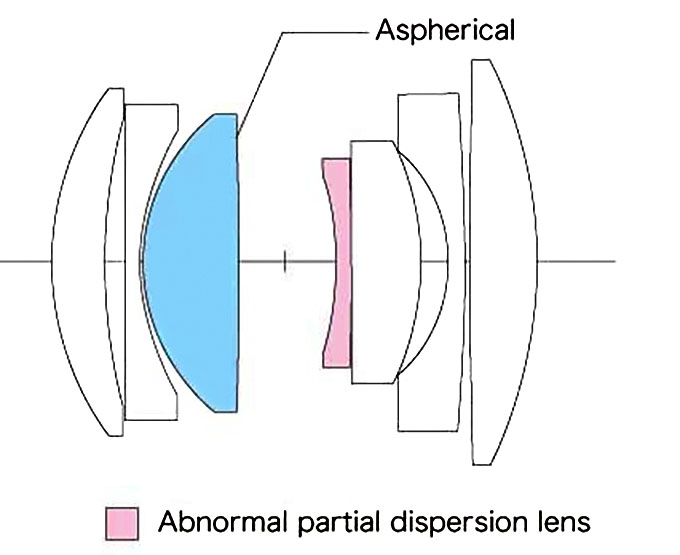
In terms of size, weight and optical complexity, the oldest lens in this group, the Batis 40 mm f/2 CF, stands out. The Septon ranks second in terms of weight, but this is mainly because its body is entirely metal and contains no plastic components. What's more, Voigtlander stands out by featuring as many as 10 aperture blades. The Batis and Nikkor offer shorter minimum focusing distances, while the Lumix performs similarly in this respect, with the TTArtisan bringing up the rear. Along with the Batis and TTArtisan, the Septon has the smallest filter diameter, at 52 mm.
 |
Please Support UsIf you enjoy our reviews and articles, and you want us to continue our work please, support our website by donating through PayPal. The funds are going to be used for paying our editorial team, renting servers, and equipping our testing studio; only that way we will be able to continue providing you interesting content for free. |
- - - - - - - - - - - - - - - - - - - - - - - - - - - - - - - - - - - - - - - - - - - - - - - -
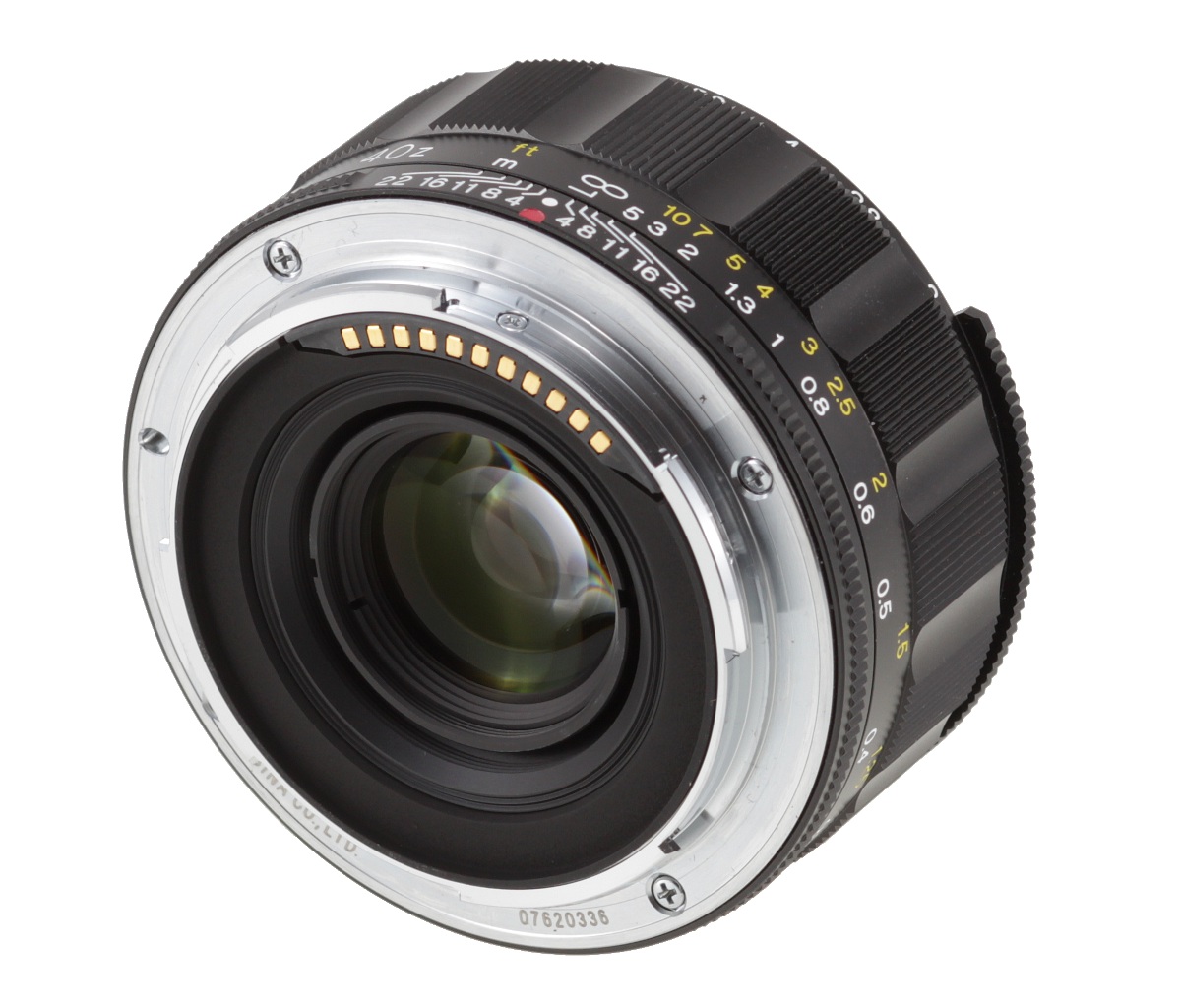
The tested lens starts with a metal mount surrounded by electrical contacts and a rear element with a diameter of 26 mm. The metal rim of the mount bears the lens's serial number and the inscription "COSINA CO., LTD.". The rear element is surrounded by a black, well-matted material. When focused at infinity, it sits a few millimetres below the level of the contacts. When we switch to the minimum focusing distance, it retracts to a depth of approximately 1.5 cm.
 |
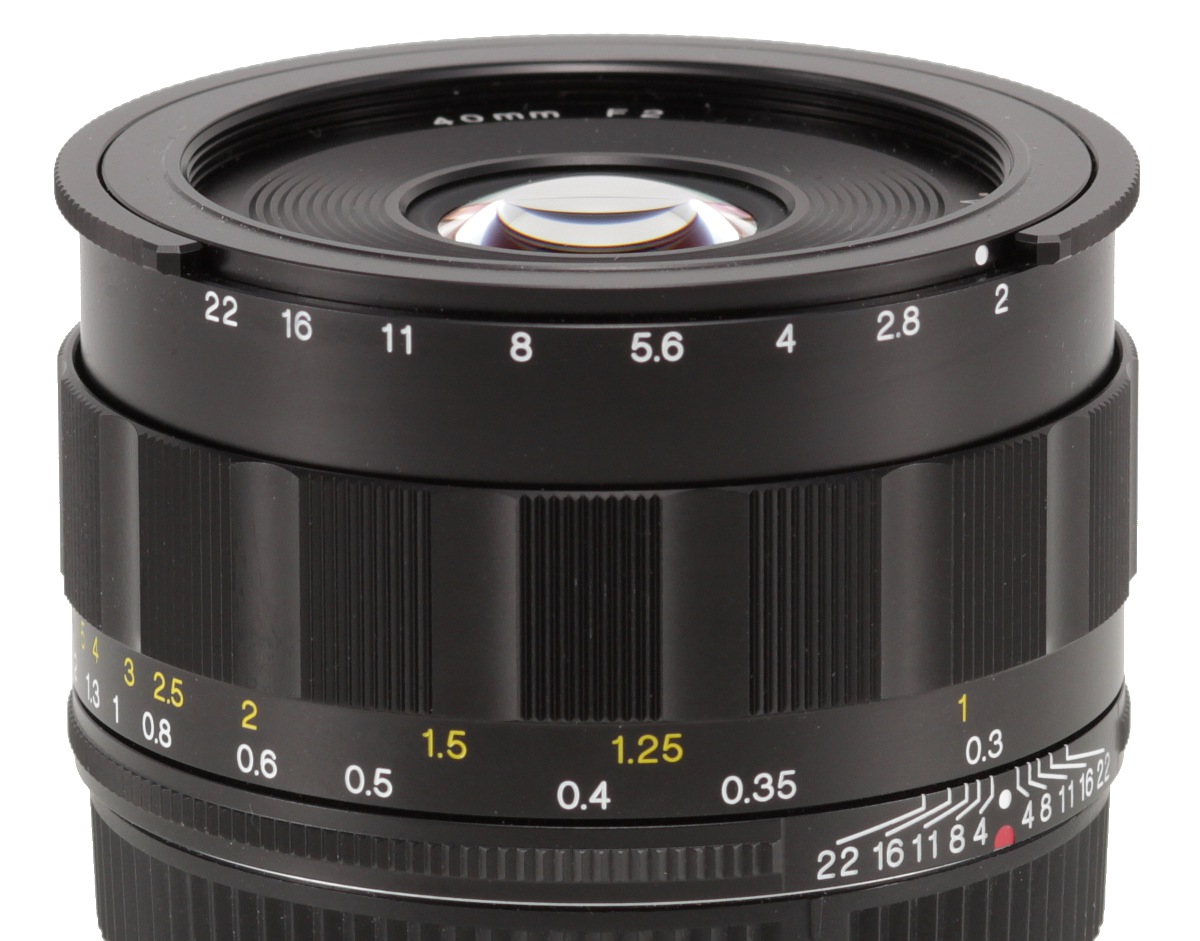
The largest part of the lens is the manual focusing ring, which is 22 mm wide. Its central section features prominent ridges with a fine texture and additional indentations for the fingers. Beneath it, we find a distance scale marked in both feet and meters. The ring operates smoothly and with appropriate resistance. Traversing the entire scale requires a rotation of approximately 160 degrees. This is a substantial value that allows for comfortable operation. The same ring also bears the number 40, indicating the lens's focal length, the letter Z referring to the mount, and the inscription "Lens made in Japan".
 |
The next component is a narrow aperture ring, which is only 4 mm wide. It features fine ridges to provide a better grip. The ring operates in 1/3 EV increments.
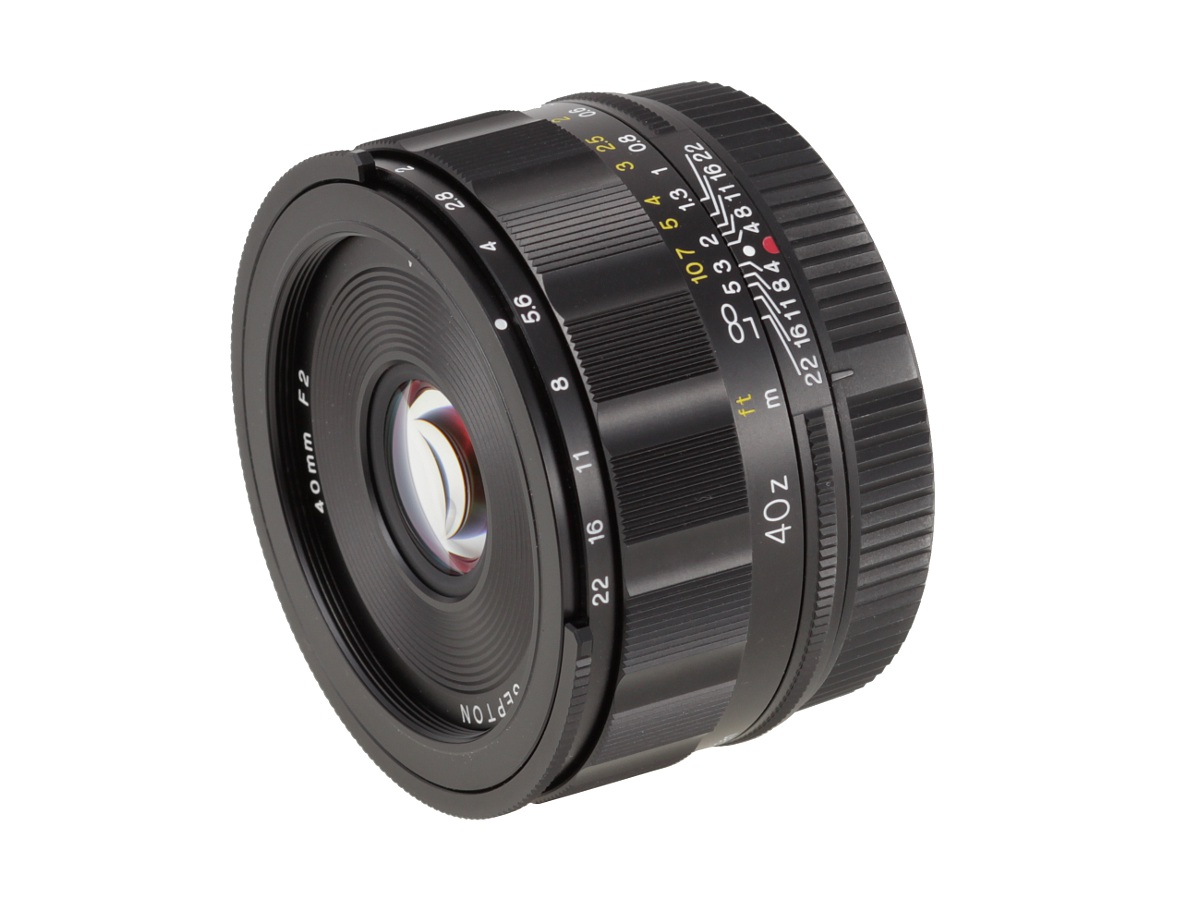 |
The front element has a diameter of 21 mm and is slightly convex. It is surrounded by a section of the barrel bearing inscriptions with the lens name and specifications, as well as a non-rotating 52 mm filter thread.
 |
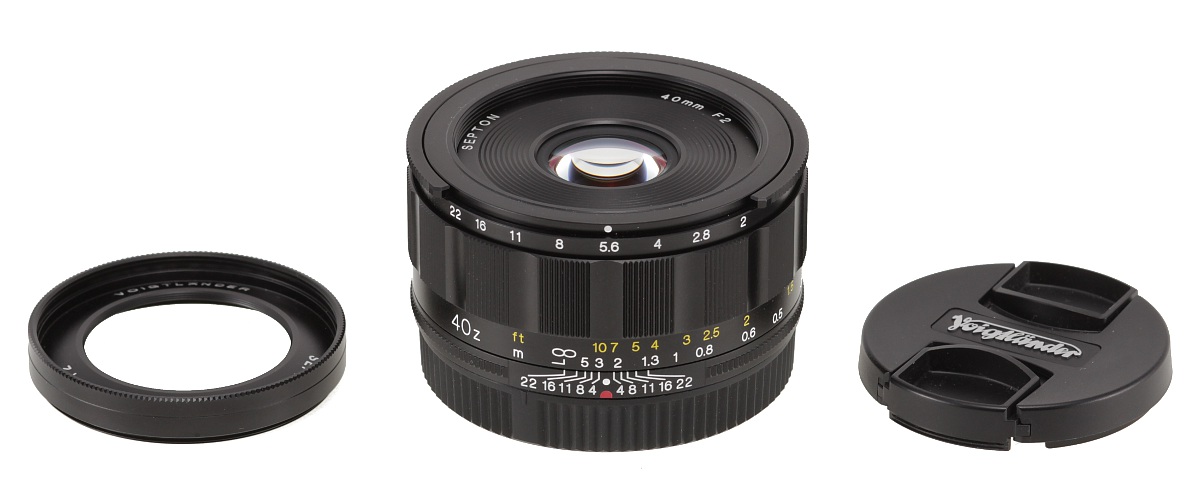
The package includes a metal lens hood and both caps.
 |