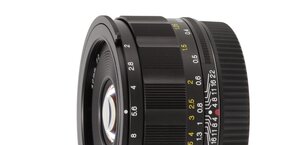
Voigtlander Septon 40 mm f/2 Aspherical
7. Coma, astigmatism and bokeh
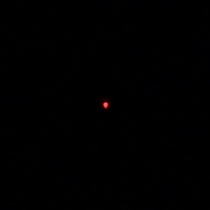
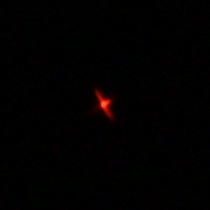
Stopping down helps reduce this aberration, but it remains clearly visible at f/2.8. The Septon has therefore failed spectacularly in this category.
| Centre, f/2.0 | APS-C/DX corner, f/2.0 | FF corner, f/2.0 |
|
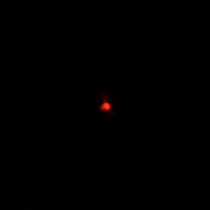
|
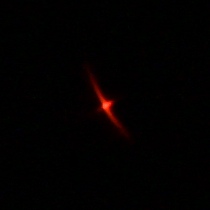
|
| Centre, f/2.8 | APS-C/DX corner, f/2.8 | FF corner, f/2.8 |
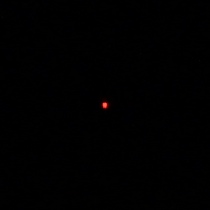
|
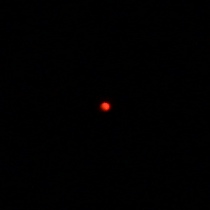
|
|
Please Support UsIf you enjoy our reviews and articles, and you want us to continue our work please, support our website by donating through PayPal. The funds are going to be used for paying our editorial team, renting servers, and equipping our testing studio; only that way we will be able to continue providing you interesting content for free. |
- - - - - - - - - - - - - - - - - - - - - - - - - - - - - - - - - - - - - - - - - - - - - - - -
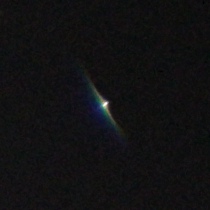
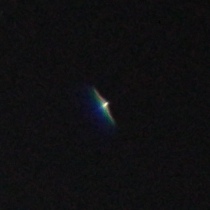
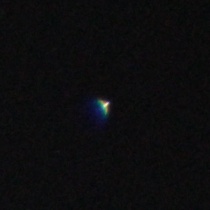
To provide a more complete picture of the lens's performance in this category, we also decided to present crops from photographs of the sky taken from the upper-right corner of the full-frame sensor. This time, however, we show shots taken at f/2.0, f/2.8 and f/4.0. In this case, coma looks just as disastrous as it does in the photographs of the LED. At the same time, we can see that a significant reduction in sagittal oblique spherical aberration occurs only at f/4.0. There, the length of the wings is reduced to much more acceptable proportions, although their width is still noticeable. This means that another higher-order aberration, tangential field curvature, is still not controlled to a satisfactory degree.
| FF corner, f/2.0 | FF corner, f/2.8 | FF corner, f/4.0 |
|
|
|
Astigmatism, understood as the mean difference between the horizontal and vertical MTF50 values, amounted to 10.7%. This value lies on the boundary between low and moderate levels, so there is no reason for us to complain.
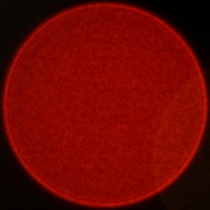
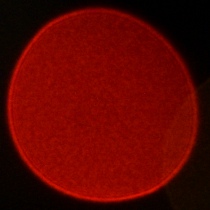
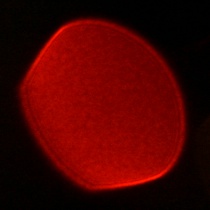
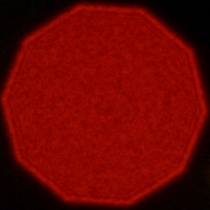
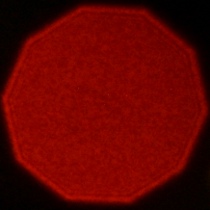
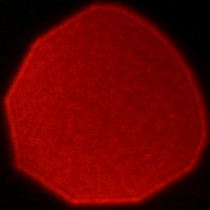
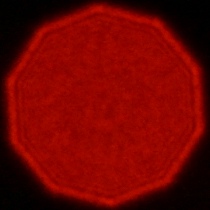
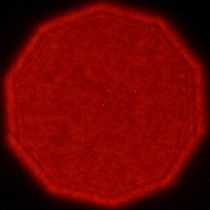
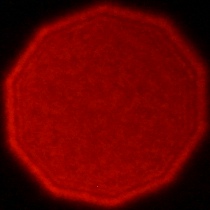
The appearance of out-of-focus images is relatively pleasing. The light distribution within the discs is even, while onion-ring bokeh is almost imperceptible, despite the use of a single aspherical element. The brighter rim is also not particularly noticeable. However, the manufacturer could do with improving the circularity of the aperture image.
For such a small lens, mechanical vignetting is not particularly objectionable. It is quite pronounced at f/2.0 and f/2.8, but disappears completely at f/4.0. Many considerably larger lenses have performed worse in this respect.
| Centre, f/2.0 | APS-C/DX corner, f/2.0 | FF corner, f/2.0 |
|
|
|
| Centre, f/2.8 | APS-C/DX corner, f/2.8 | FF corner, f/2.8 |
|
|
|
Centre, f/4.0 | APS-C/DX corner, f/4.0 | FF corner, f/4.0 |
|
|
|