Sigma S 200 mm f/2 DG OS
3. Build quality and image stabilization
The fact that you can't use classic filters is a serious flaw of the Sigma – all other models, presented in our chart, allow you to do so.
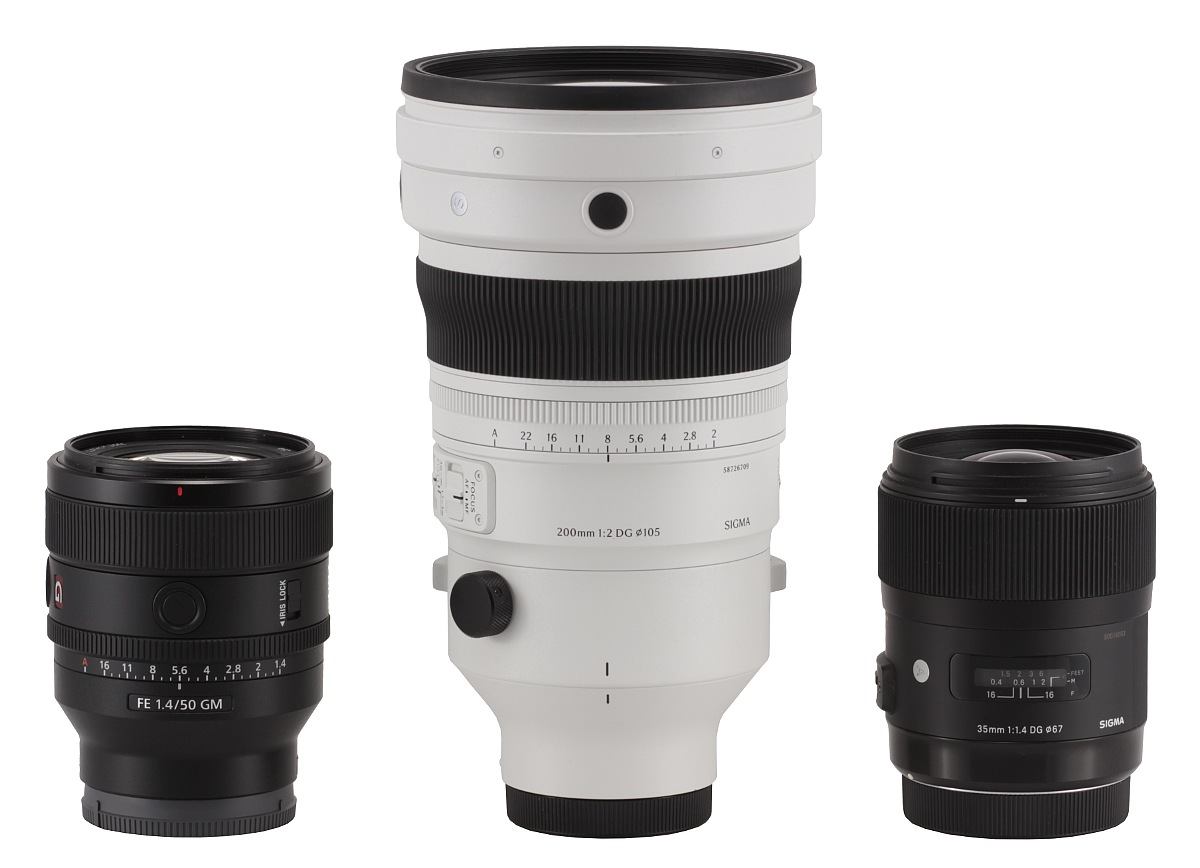
In the photo below the Sigma S 200 mm f/2 DG OS is positioned between the Sony FE 50 mm f/1.4 GM and the reflex camera Sigma A 35 mm f/1.4 DG HSM.
Please Support UsIf you enjoy our reviews and articles, and you want us to continue our work please, support our website by donating through PayPal. The funds are going to be used for paying our editorial team, renting servers, and equipping our testing studio; only that way we will be able to continue providing you interesting content for free. |
- - - - - - - - - - - - - - - - - - - - - - - - - - - - - - - - - - - - - - - - - - - - - - - -
 |
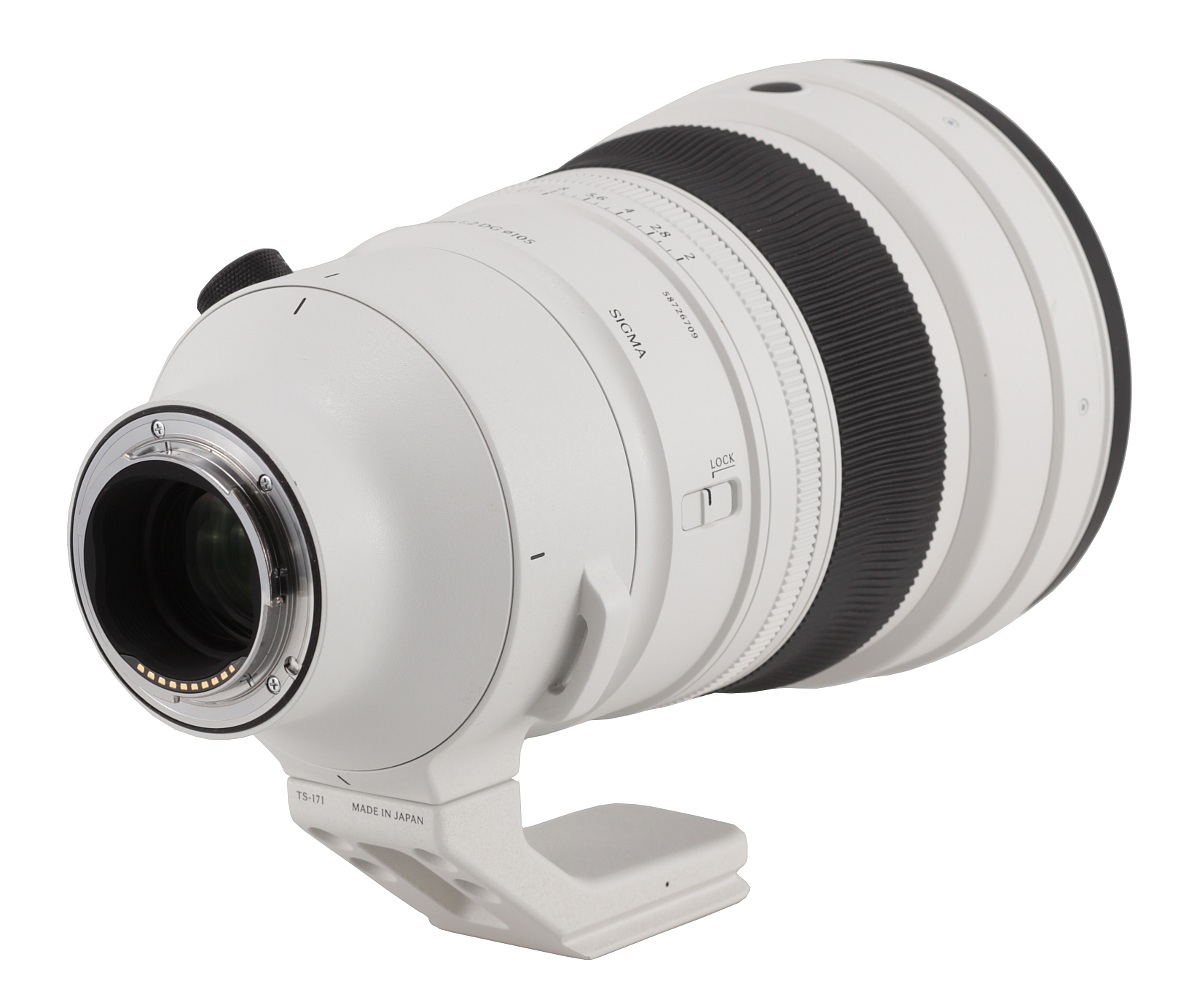 |
A very solid, even huge tripod adapter, is the next part. It can be turned easily but, unfortunately, you cannot remove it from the lens completely and even removing a part of it is not easy. It's true that at the bottom you can see four screws deeply set inside the barrel and the producer adds a special screwdriver but I doubt you would be willing to unscrew them and then put everything back on the regular basis. The problem is that in this kind of equipment an easily removable tripod adapter would be a big asset. Others producers can offer such a solution so I don't understand why Sigma didn't follow suit. I am sure many users of this lens intend to shoot handheld; an easily removable tripod adapter would allow you not only to reduce the weight of this instrument but also improve the ability to manipulate it. I really don't understand the reason behind a solution adapted by Sigma in this case as it is hardly functional.
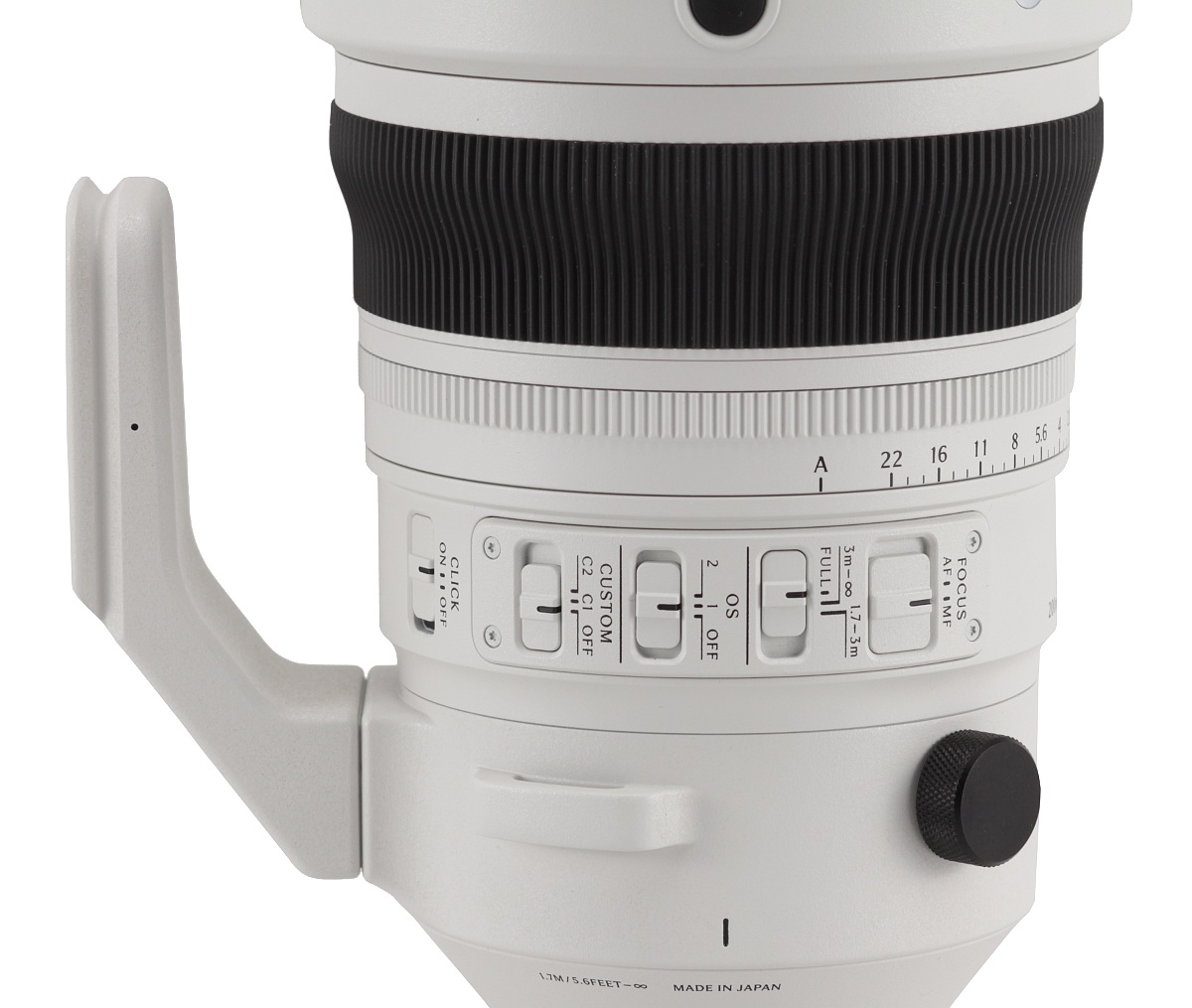 |
An aperture mode as wide as 19 mm, half of it covered by fine ribs, is the next part. The ring comes with focal markings from f/2 to f/22; you move between them every 1/3 EV step. There is also an A position that allows you to choose the aperture value automatically by the camera body. The ring can be declicked because its working move is controlled by the already mentioned switch.
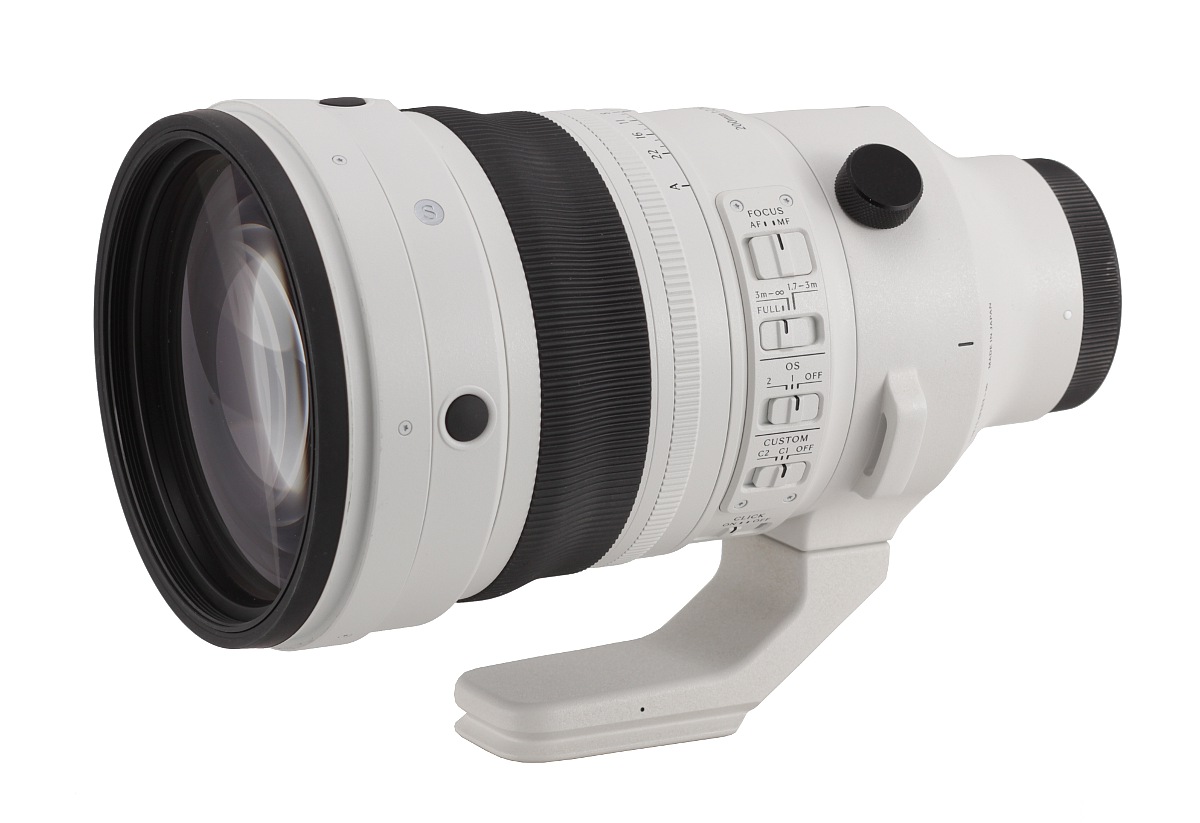 |
The close location of both important rings, one for setting aperture values and the other for manual focusing, might be a problem. While testing the lens it happened that I wanted to change the aperture value and touched by accident also the focus ring and shifted it slightly. I didn't find it especially nice.
Then you see a relatively narrow, immobile ring that immediately turns into the next part, this time with a more significant diameter. You can find there an 'S' letter meaning this instrument belongs to the 'Sport' series, and also three round FOCUS LOCK buttons that are, additionally, programmable.
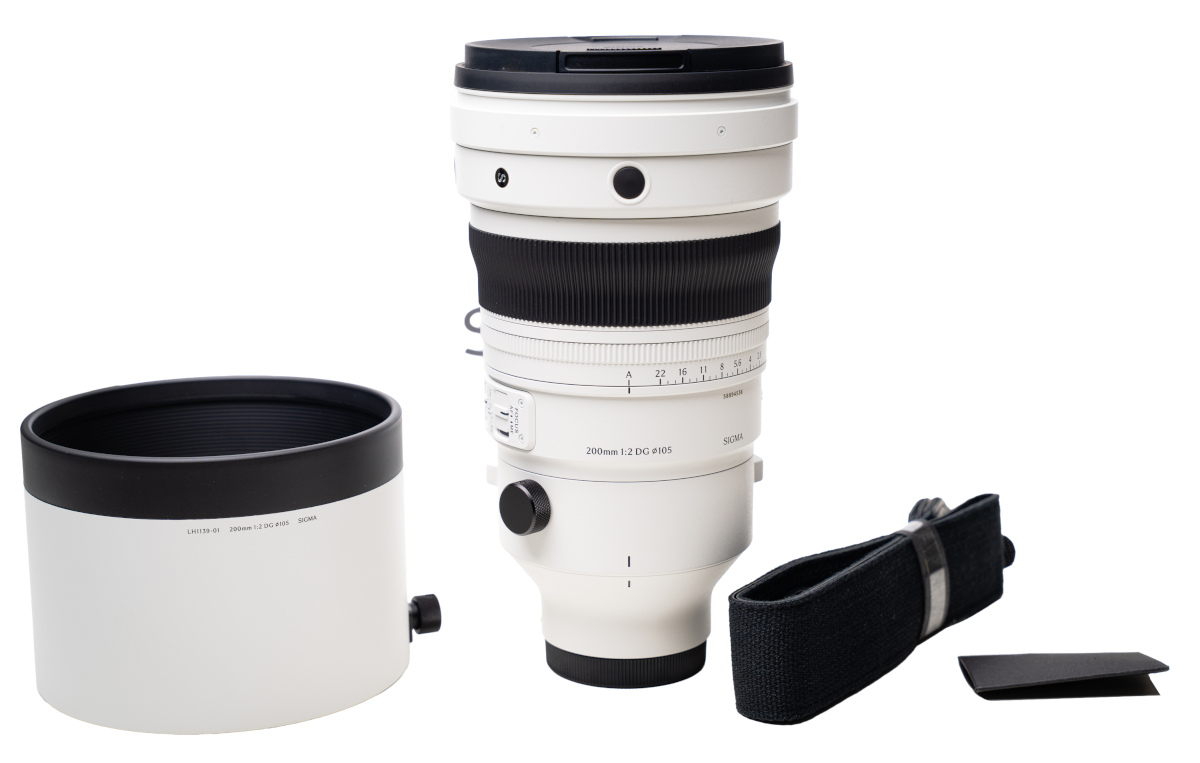
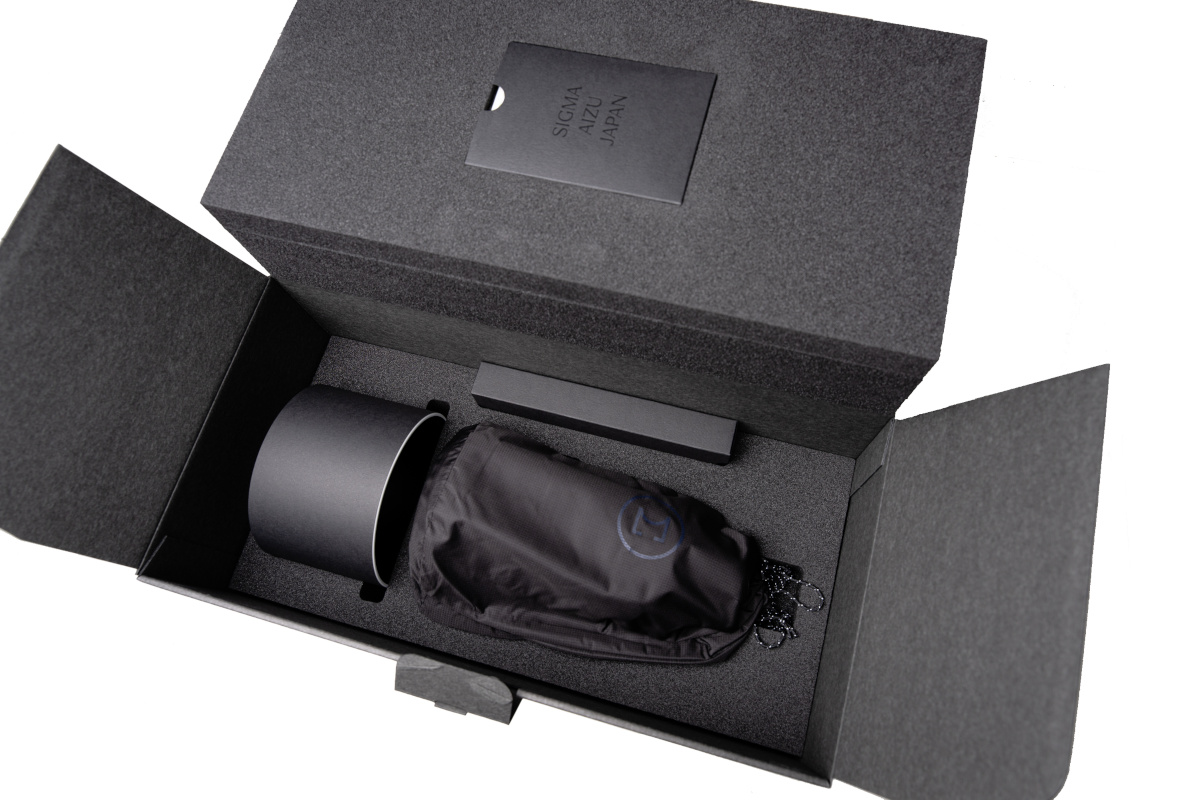
The next part of the lens is a part of the barrel with an even bigger diameter with the front element system. The front element itself doesn't move, is almost 99 mm in diameter, and surrounded by a non-rotating filter thread, 105 mm in diameter, and an edge where you can attach a hood added to the lens in the box.
 |
Apart from that Sigma declares that its lens is protected to withstand harsh outdoor conditions. Fixing junctions, the manual focus ring, zoom ring, non-standard switches and slot brackets are dust- and splash- proof. The front element is covered by a hydrophobic and oil resistant layer that makes it easier to clean.
 |
 |
 |
Optical stabilization
In the press release of the producer you find information that optical stabilization of the new Sigma is supposed to be as efficient as 6.5 EV.I honestly admit that I don't know how the producers come with such cosmic values. After all a firmly held 200 mm class lens should offer you mostly sharp images even without any stabilization at exposure time of 1/200 - 1/250 of a second. A stabilization unit as efficient as 6.5 EV would allow to extend that over 90 times! In practice it would mean that, with the help of such a mechanism, all photos taken at 1/2-1/3 of a second should be razor sharp. Try to achieve such a task on your own – I admit I failed.
Of course we decided to check that surprising declaration of the producer anyway. In order to do so we we took several dozen of photos at every exposure time ranging from 1/250 to 1/2 of a second with the stabilization switched on and off. The graph below shows the percentage of blurred photos depending on the exposure time expressed in EV with 0 EV being an equivalent of 1/200 of a second.
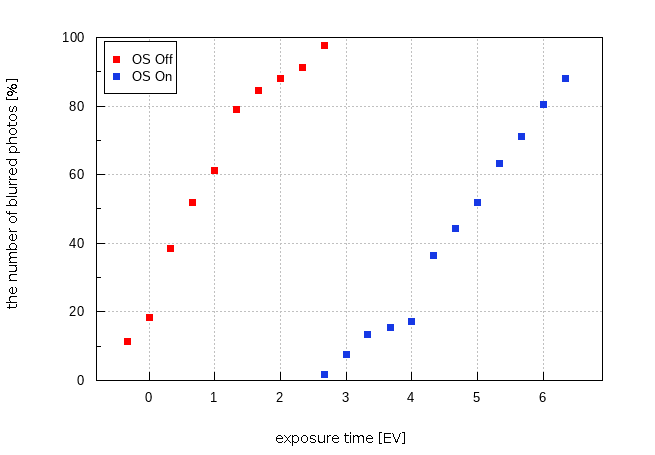
It's obvious that the 6.5 EV value is as real as a fairy tale because at 1/3 and 1/2 of a second our percentage of blurred photos amounts to over 80%. The maximum distance between both curves reaches 4.7 EV and such is, according to our measurements, the efficiency of stabilization unit of the Sigma 2/200.
Of course we should emphasize the fact that we criticize here only unreal declarations of the producer; the result of 4.7 EV is excellent – after all in our tests no lens managed to actually exceed 5 EV so far. The Sigma should be praised here because it performs as it befits a top-of-the-range, expensive lens.