Our database features many 85-90 mm as fast as f/2.0 so we managed to prepare the following chart. Still, the truth is that it would be difficult to draw any binding conclusion because this group of rivals i really varied. On the one hand you get the Canon macro lens, on the other the Zeiss and the Voigtlander, designed not for classic mirrorless cameras but for the Leica M rangefinder system.
As you see it would be difficult to consider these models as direct rivals of the Viltrox tested here. In reality it has to be compared not with 2/85 class models but rather with 1.8/85 devices. Fortunately there are many of them on the market because independent producers have launched plenty of them lately – it's enough to consult the following chart.
The Viltrox, even if its aperture is the slowest, remains an instrument optically complex – only the Meike features more elements. The Meike also offers you more aperture blades and the shortest minimum focusing distance but, with its significant physical dimensions, it might be a less popular choice than it seems. On the other side of the spectrum you get a shapely Samyang, tested by us not so long ago. As you see, the choice is really huge.
Please Support Us
If you enjoy our reviews and articles, and you want us to continue our work please, support our website by donating through PayPal. The funds are going to be used for paying our editorial team, renting servers, and equipping our testing studio; only that way we will be able to continue providing you interesting content for free.
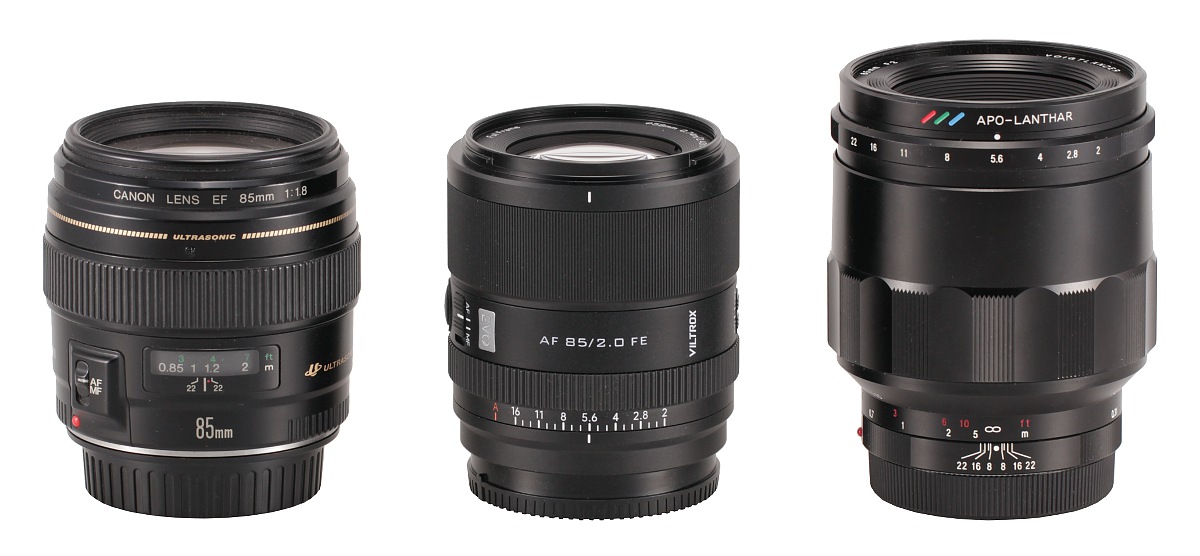
In the following photo the Viltrox AF 85 mm f/2 EVO is positioned between the reflex camera Canon EF 85 mm f/1.8 USM and the Voigtlander Apo-Lanthar 2/65 Macro, a lens definitely the biggest in this group. It also increases its dimensions as you focus and is devoid of any autofocus module but it offers a macro mode as the only device in this group.
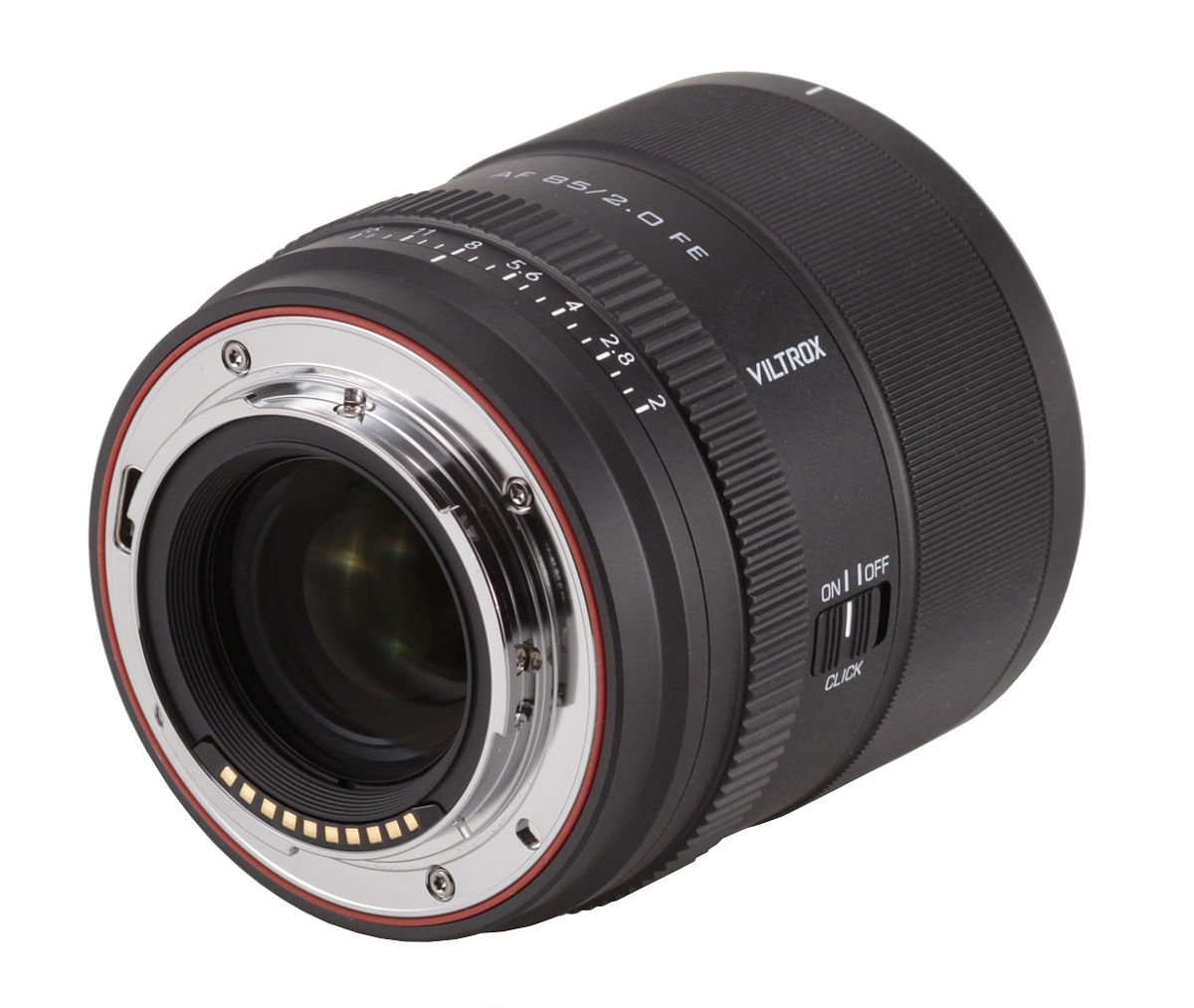
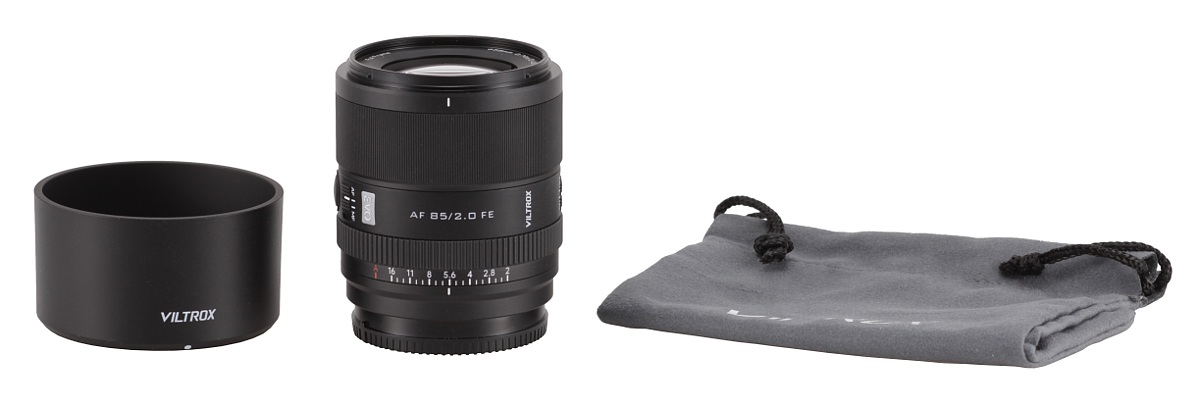
The tested lens starts with a metal mount with an USB-C port that allows you a very quick software upgrade. The mount surrounds contacts and a black, ribbed tube made of plastics inside which you see a rear element of the lens.The rear element doesn't move and is 30 mm in diameter. From this side everything looks very well.
A black ring made of metal that increases its diameter is the first part of the proper barrel of the Viltrox 2/85 EVO. On this ring you can find a red dot, making an alignment with a camera easier, a serial number, information about the place of production, China this time.
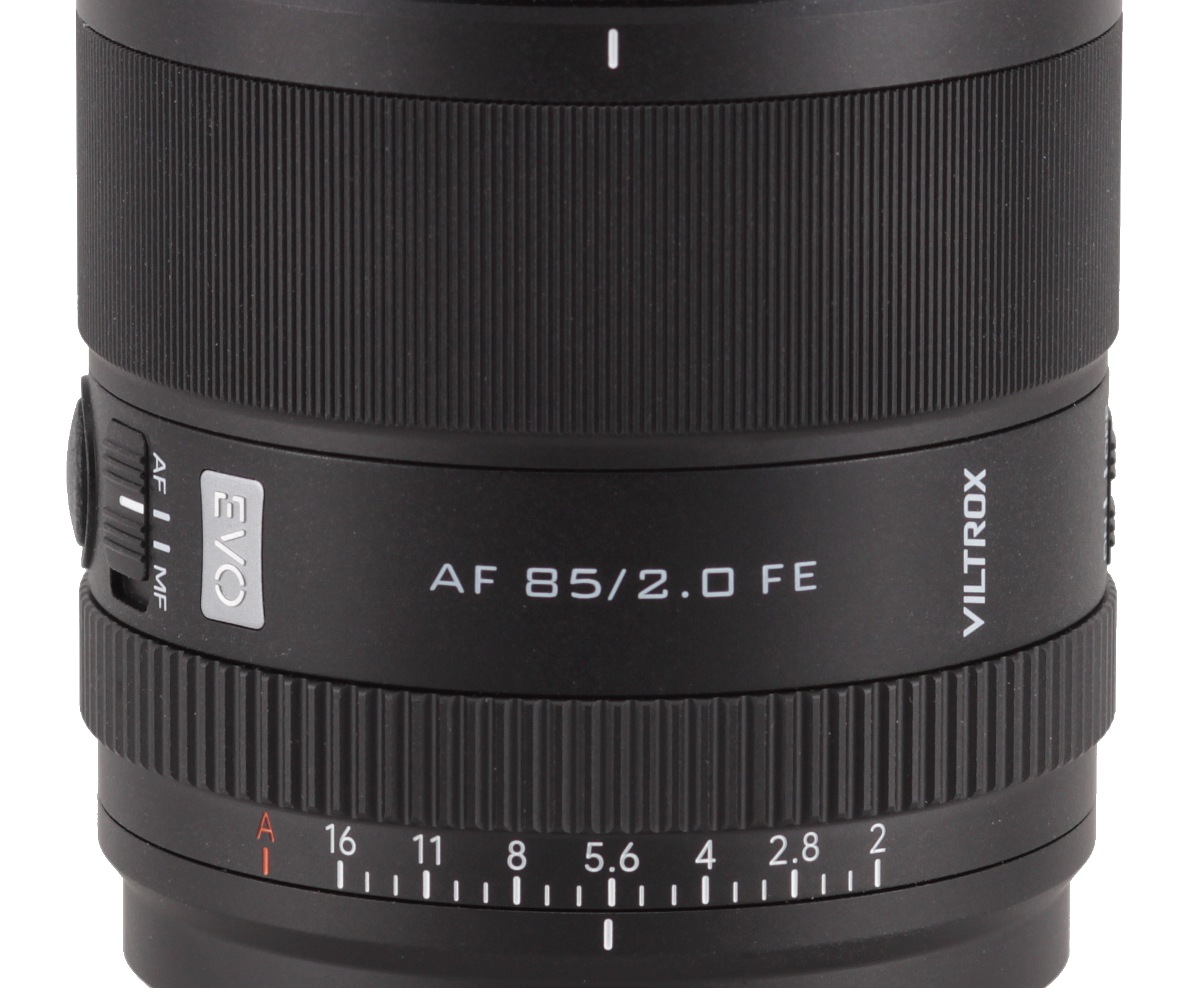
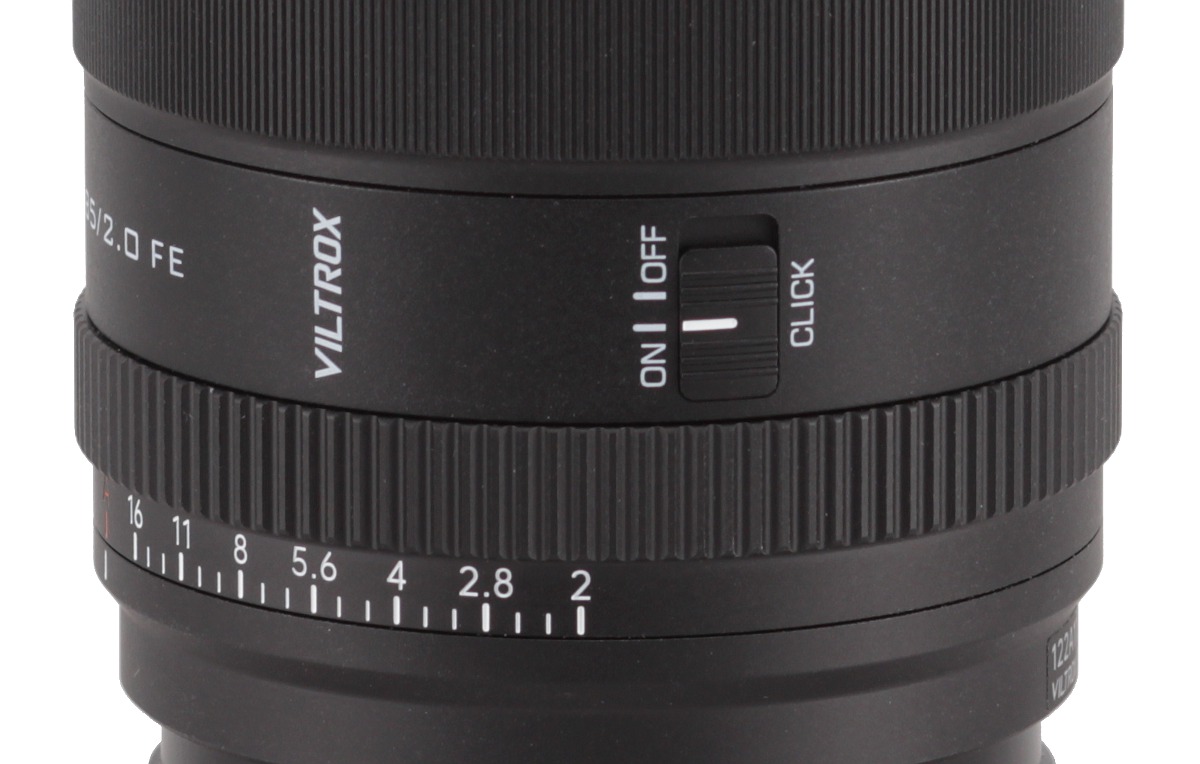
Then you find an aperture ring, ribbed and made of metal, that is 14 mm wide. On the ring there are aperture markings from f/2 to f/16 (every 1/3 EV step) and an automatic A value. The ring can work as clicked or declicked, it performs properly well, no complaints from this side.
Further on there is an inscription 'AF 85/2.0 FE' surrounded by the EVO badge from one side and the logotype of the producer from the other. On the side you also find an AF/MF switch and a round function button below. On the other side there is a CLICK ON/OFF switch used to control the aperture ring and change it from clicked to clickless.
A manual focus ring, as wide as 24 mm and almost completely covered by fine ribbing, is the next part. There are no distance or DOF markings on it. Its focus throw amounts to an angle of over 300 deg, a significant value, allowing you very precise settings.
Then you see a metal ring that decreases its diameter and ends with a hood mount.
The front element of the lens doesn't move, is slightly convex, 40 mm in diameter. It is surrounded by a part of the casing with inscriptions and a non-rotating filter thread, 58 mm in diameter. Among inscriptions that run around the front element you find also one informing you about the filter diameter, minimum focusing distance, (0.74m/2.43ft), and the next one, stating the basic parameters of the lens and abbreviations concerning different technologies used in the construction. In this case it's STM, meaning an ultrasonic stepping motor, ED, concerning special glass elements inside, and IF, meaning focus is set internally. Additionally there is 'Full Frame' inscription, informing you that the lens was designed to cooperate with full frame cameras.
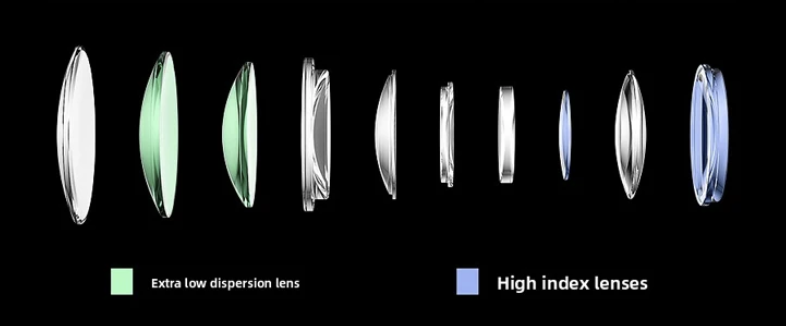
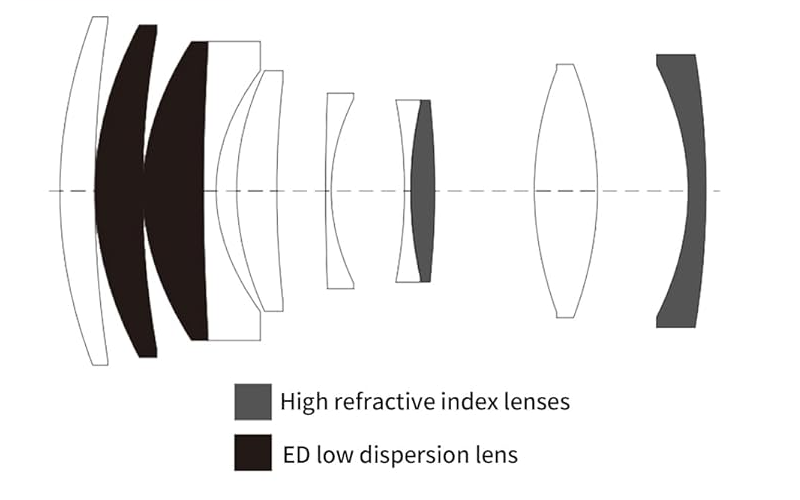
When it comes to optical construction you deal here with 10 elements positioned in 8 groups. The producers weren't skimpy when it comes to special elements and it's especially worth noticing as the price of this model is very affordable, reaching $275. Inside you can find two elements made of low dispersion ED glass, and two elements made of high refraction index (HR) glass. Along all these elements there is also a round aperture with nine diaphragm blades that can be closed to a value of f/16 at the maximum.
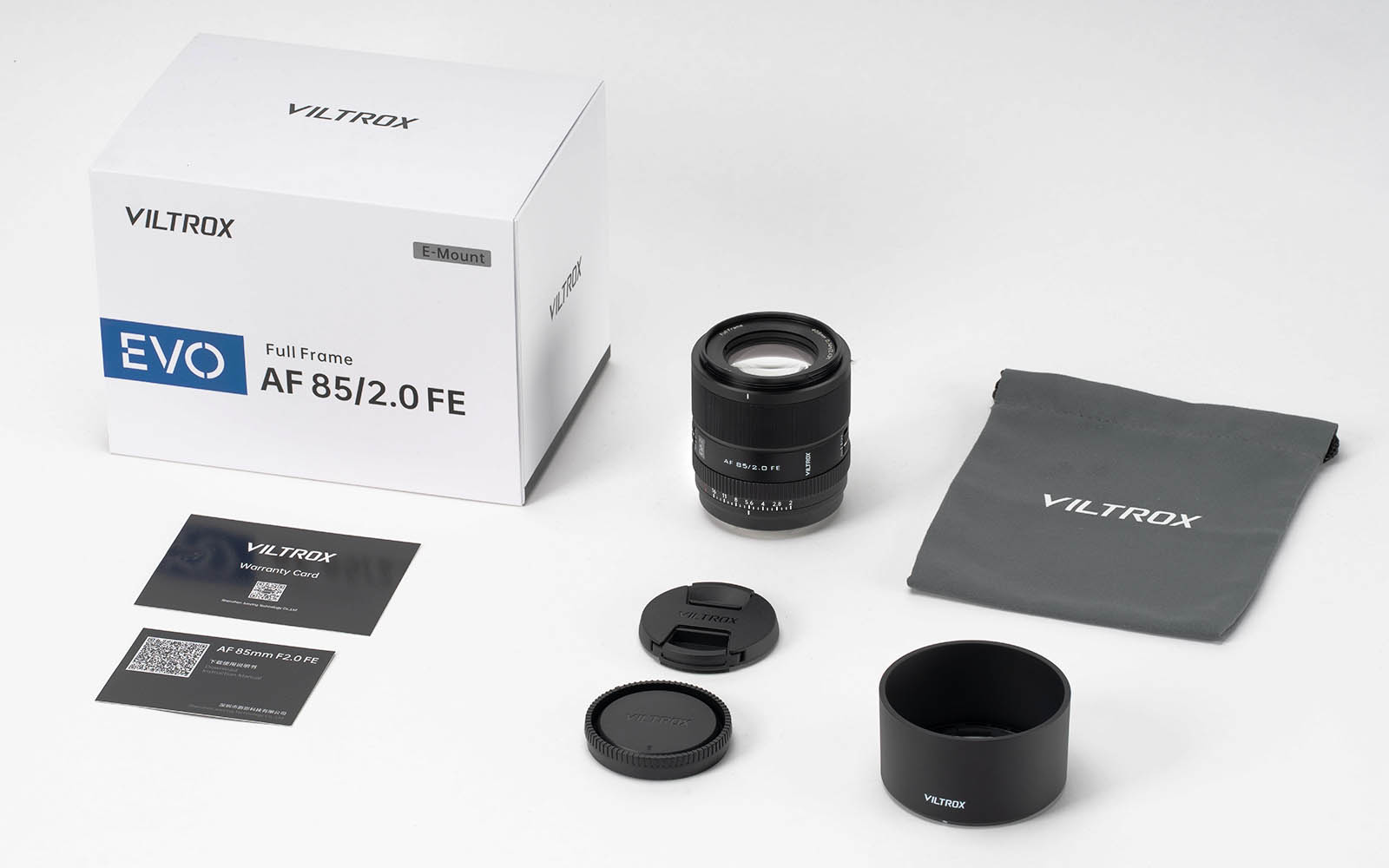
Buyers get in the box along the lens both caps, a hood and a soft pouch with doubtful protective properties.