Nikon Nikkor Z 35 mm f/1.2 S
3. Build quality
It's clear that the tested Nikkor is here the biggest and second heaviest lens. In this area only the older Sigma manages to defeat it, and the newer Sigma is significantly lighter. The instruments produced by Leica and Voigtlander seem simply tiny, when compared to the rest.
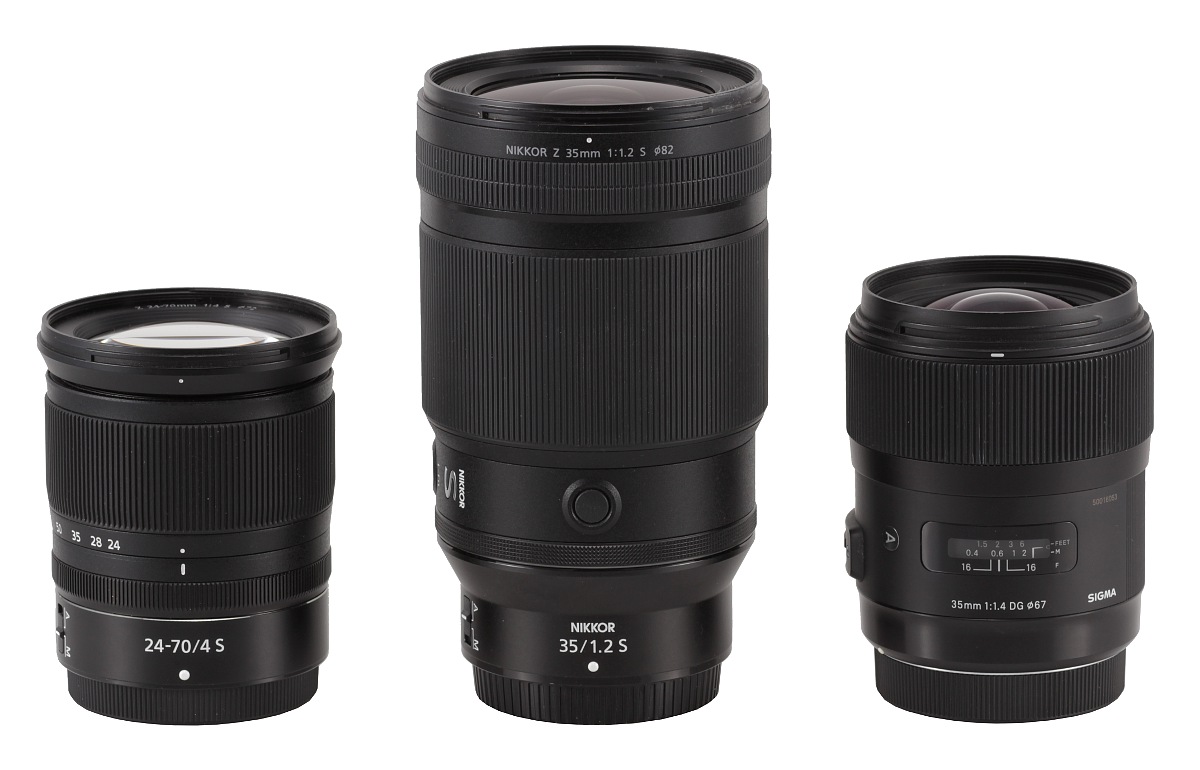
In the photo below, the Nikkor Z 35 mm f/1.2 S is positioned between the Nikkor Z 24-70 mm f/4 and the reflex camera Sigma A 35 mm f/1.4 DG HSM. It's worth noticing that the Nikkor is significantly bigger than the Sigma, and you should remember that the same Sigma, when launched on the market, was considered to be quite big and heavy.
Please Support UsIf you enjoy our reviews and articles, and you want us to continue our work please, support our website by donating through PayPal. The funds are going to be used for paying our editorial team, renting servers, and equipping our testing studio; only that way we will be able to continue providing you interesting content for free. |
- - - - - - - - - - - - - - - - - - - - - - - - - - - - - - - - - - - - - - - - - - - - - - - -
 |
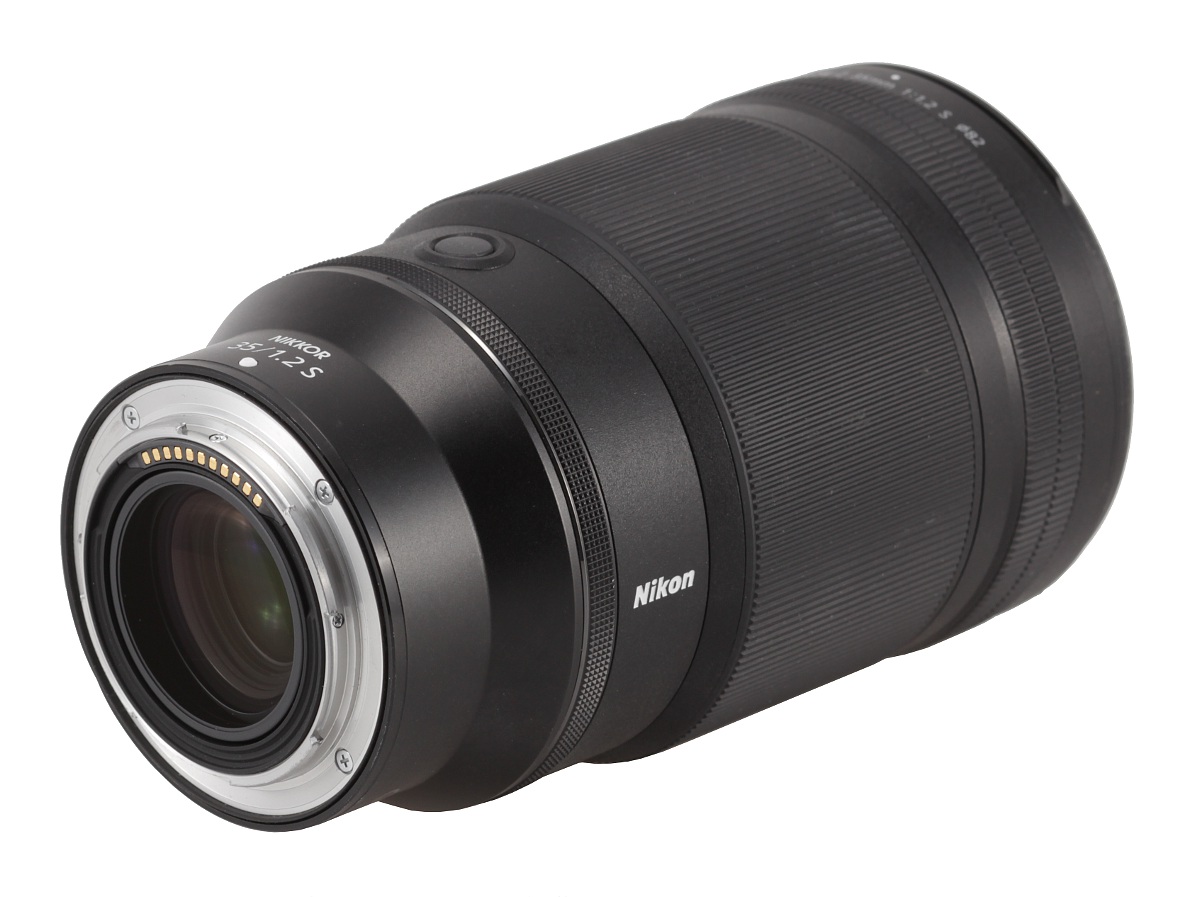 |
Further on you find a ribbed control ring as wide as 7 cm. It can be used to clickless setting of parameters, selected by the user, such as aperture, ISO, or exposure compensation. It turns smoothly and is properly damped.
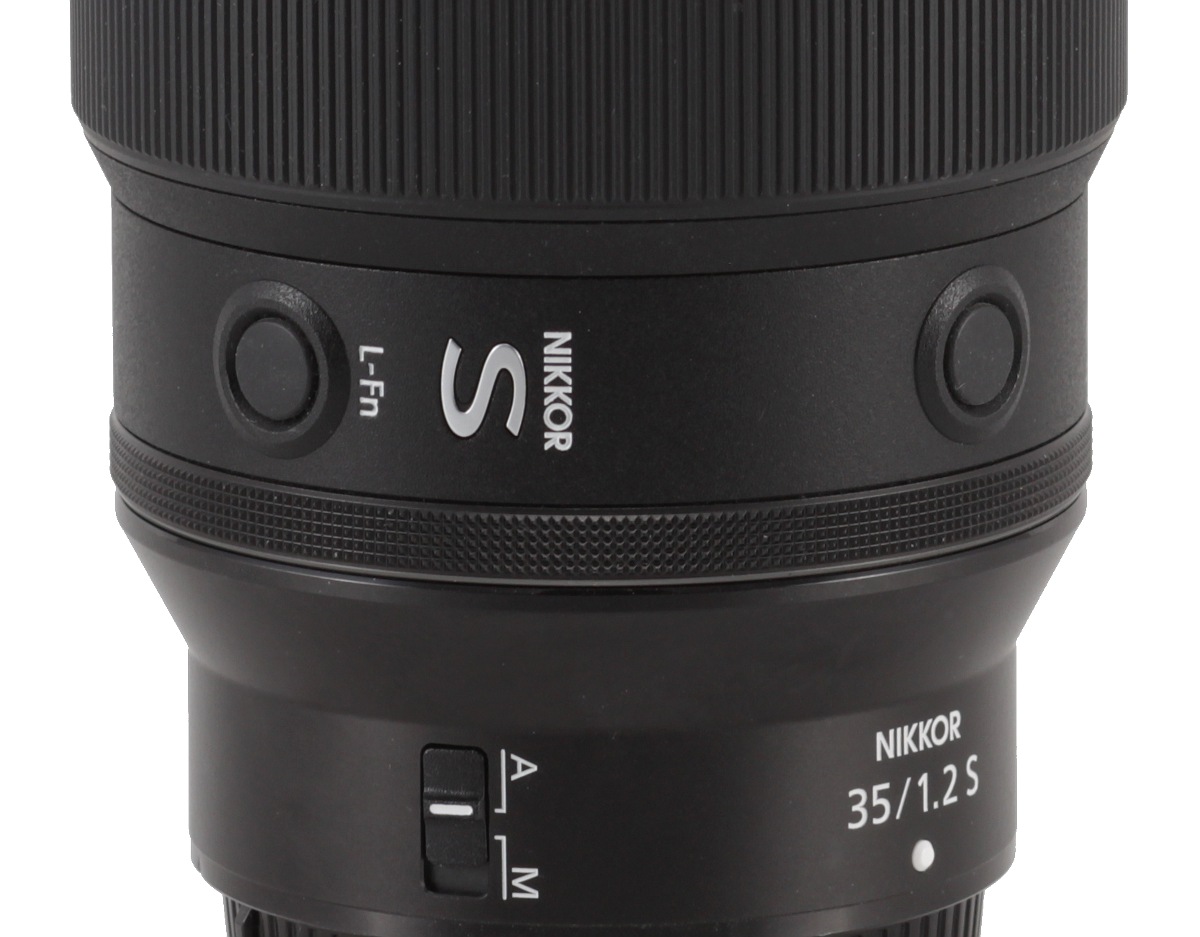 |
A manual focus ring, as wide as 57 mm, covered by rubber ribbing, is the biggest part of the lens. It is a focus-by-wire construction, it moves smoothly and is properly damped. You can't find any distance scale or DOF scale on it and its focus throw amounts to about 130 degrees when you move the ring fast and to about 180 degrees when you move it slowly. These are significant values, allowing you very precise settings.
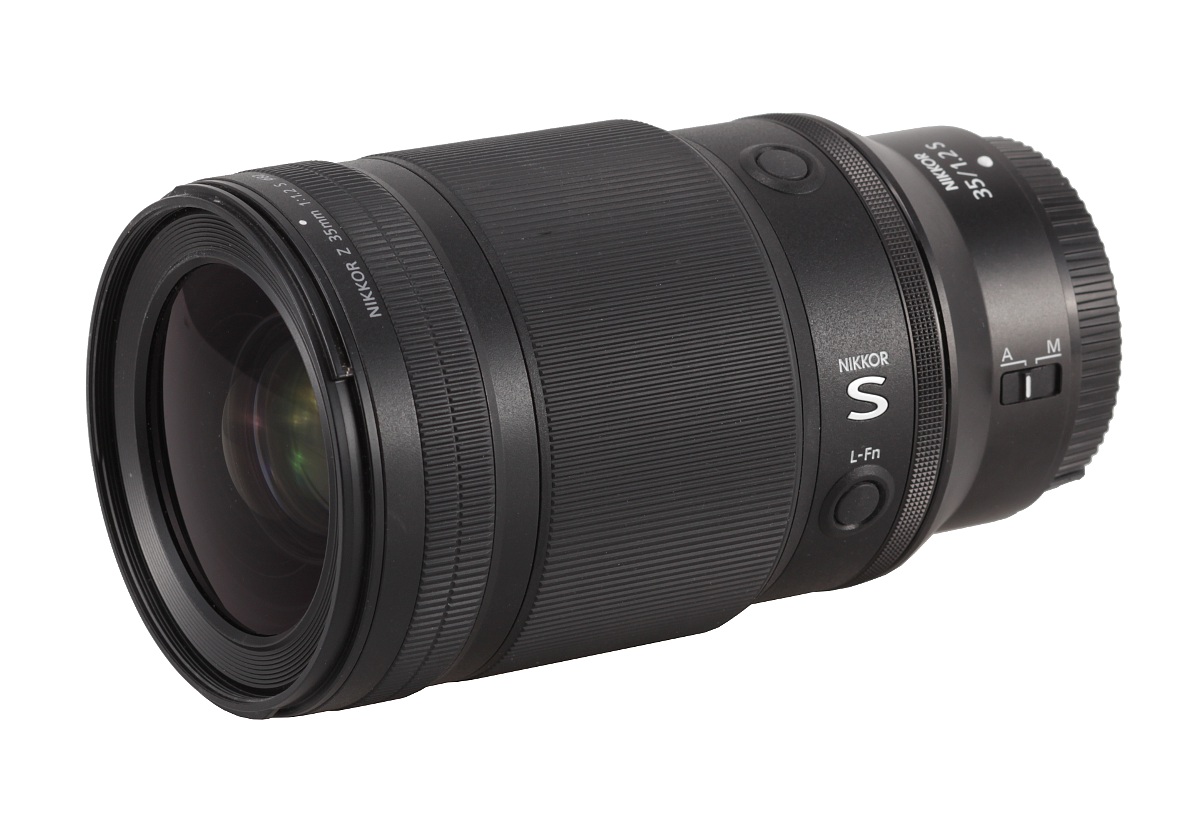 |
The front element doesn't move, is slightly convex, 62 mm in diameter. It is surrounded by a ribbed tube and a non-rotating filter thread, 82 mm in diameter.
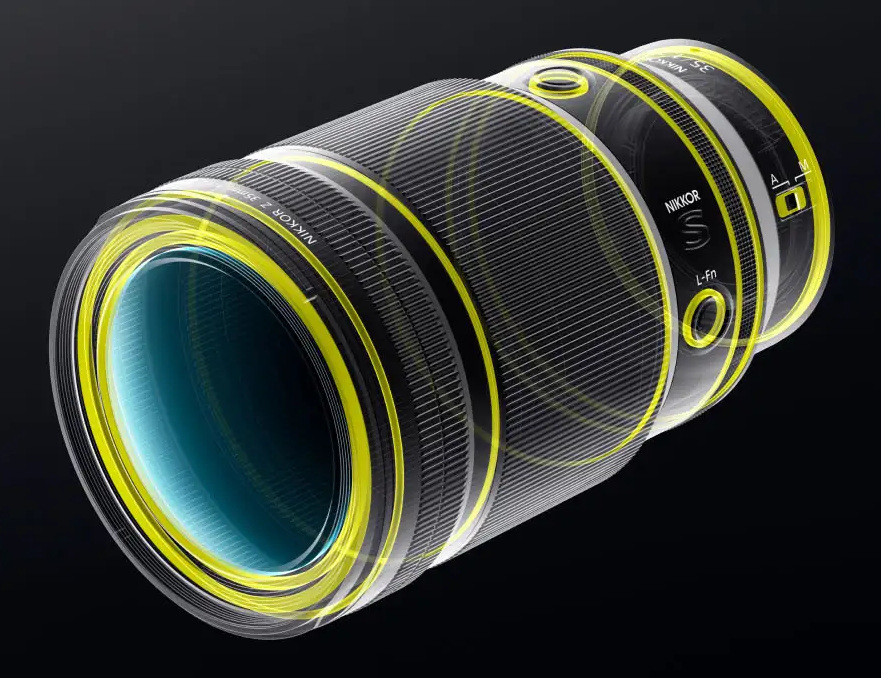 |
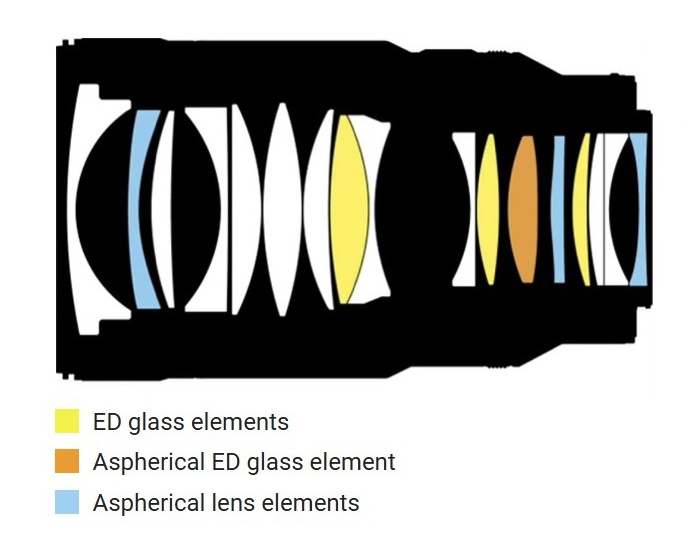
It's worth mentioning the fact that we tested this lens during the biggest cold wave in Poland at the end of January and the beginning of February 2026, with temperatures outside dropping below -15 deg C and the apparent temperature being below -20 deg C. In such harsh conditions the lens performed admirably well – everything worked without a hitch.
 |
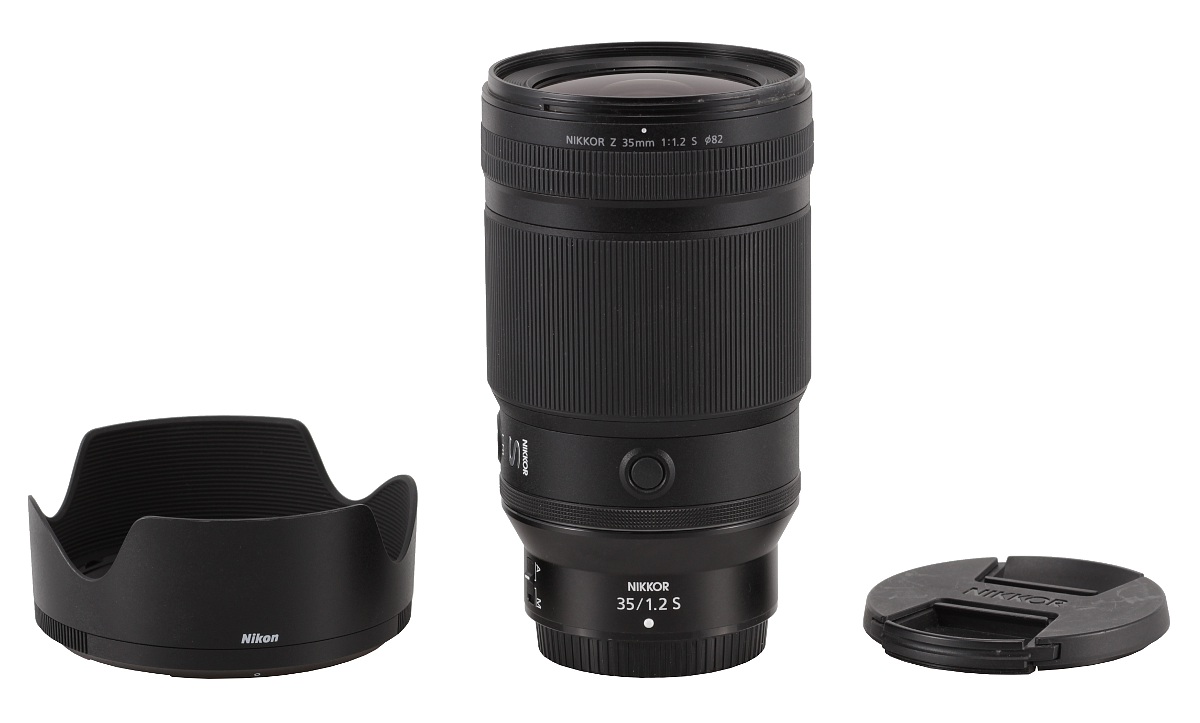
Buyers get in the box with the lens: both caps, a petal-type hood, and a soft pouch. The pouch is so flimsy that I doubt it can protect the lens in any way. I admit at this price-point and class of equipment, I would expect something definitely more solid and stylish.
 |