Nikon Nikkor Z 35 mm f/1.2 S
5. Chromatic and spherical aberration
Chromatic aberration
When it comes to 1.2/35 class parameters and longitudinal chromatic aberration, they are very difficult to correct. Still, the photos below prove very clearly that the tested Nikkor manages this task very well. Even at the maximum relative aperture it would be difficult to notice any colouring of out-of-focus images – it means that the aberration, described here, is kept firmly in check.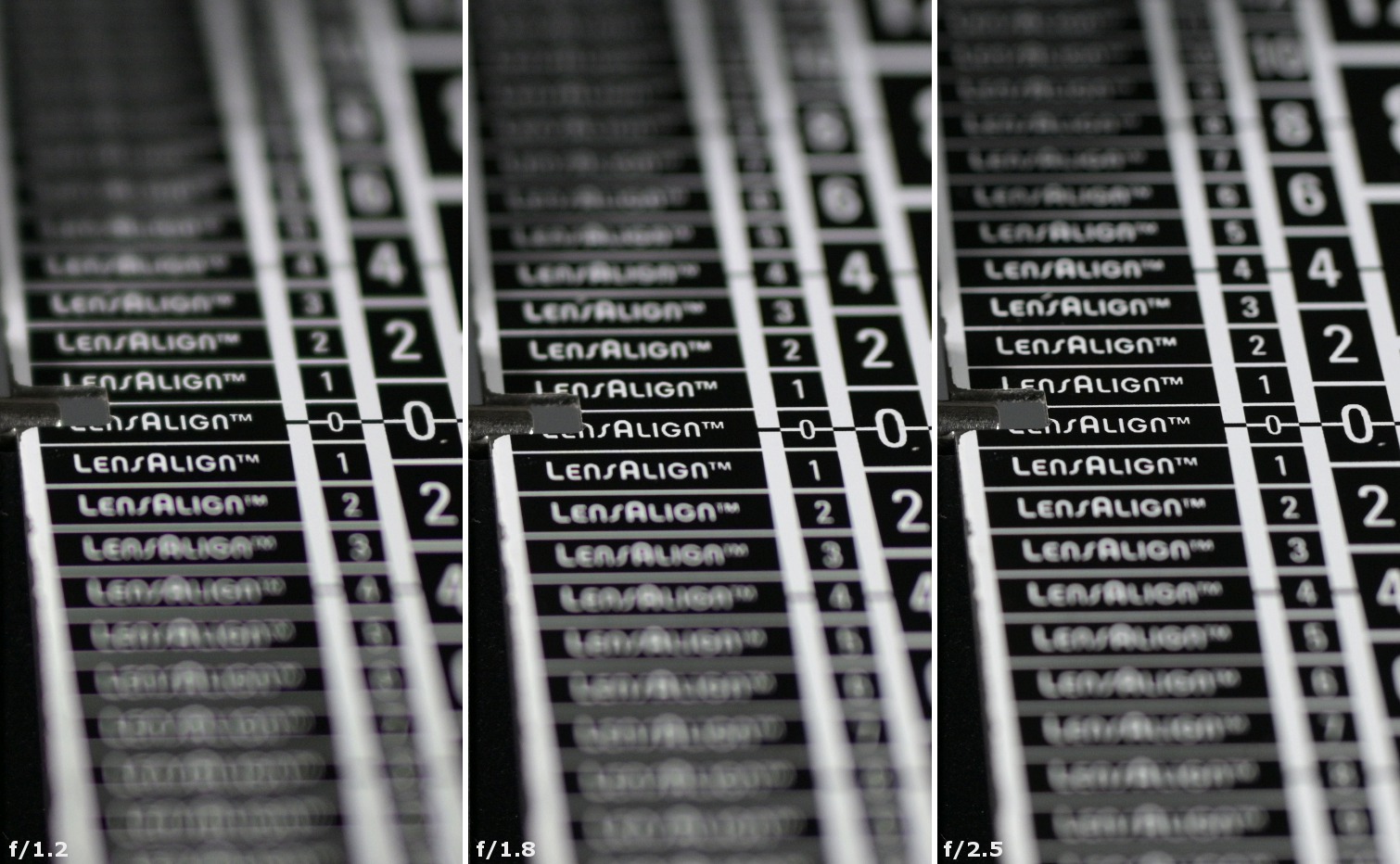 |
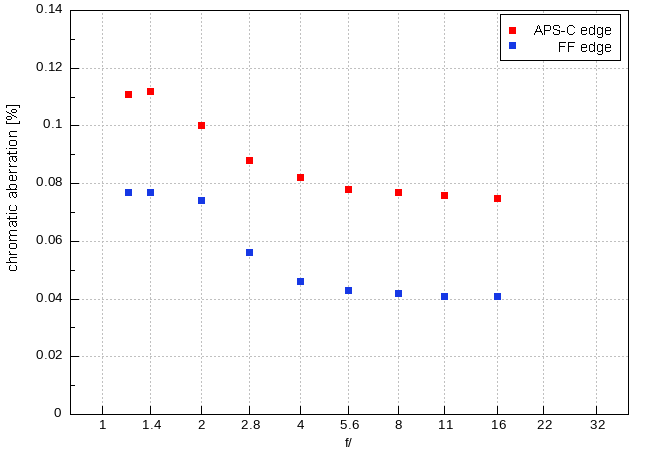
Now let's check the correction of lateral chromatic aberration – its performance depending on the used detector and aperture value presents a graph shown below.
Please Support UsIf you enjoy our reviews and articles, and you want us to continue our work please, support our website by donating through PayPal. The funds are going to be used for paying our editorial team, renting servers, and equipping our testing studio; only that way we will be able to continue providing you interesting content for free. |
- - - - - - - - - - - - - - - - - - - - - - - - - - - - - - - - - - - - - - - - - - - - - - - -
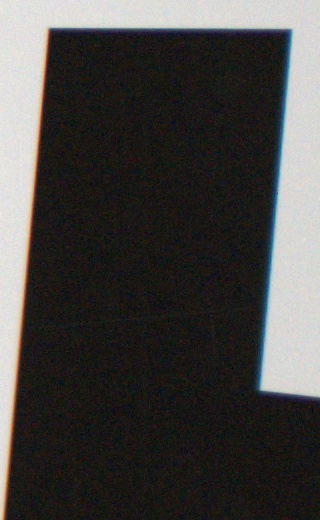
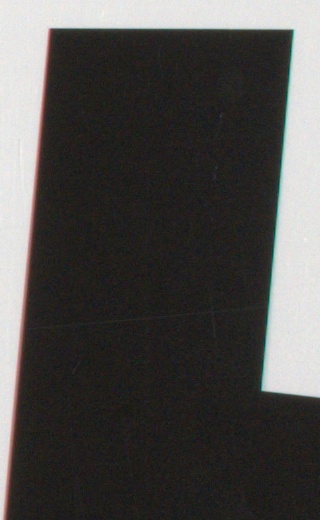
On the edge of full frame you don't get any reasons to complain. The aberration, described here, decreases with stopping down of the aperture but even at the maximum relative aperture it doesn't exceed low levels.
A performance on the edge of the APS-C/DX sensor is a kind of surprise. In the wide area close to the maximum relative aperture, you deal with medium values that, in some circumstances, can make themselves felt in real life photos. Only stopping down the aperture to near f/4.0 can reduce the lateral chromatic aberration to low levels.
To sum up, it would be difficult to call it a more serious slip-up but you could expect something better from an instrument with such dimensions, weight, and price. Especially that the much cheaper Viltrox was able to perform here noticeably better.
| Nikon Z8, 35 mm, RAW, f/1.2 | Nikon Z8, 35 mm, RAW, f/11.0 |
|
|
Spherical aberration
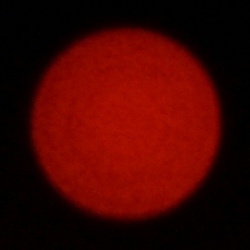
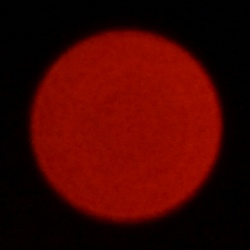
First photos of this chapter don't feature any focus shift effect between f/1.2 and f/1.8 but some shift toward greater distances can be noticed after stopping down by another 1 EV.A slight influence of spherical aberration is visible when it comes to defocued circles of light we got before and behind the focus. The first of these circles features a slight, gradual brightness loss when you move towards the edges of the frame and the second circle is devoid of this effect.Fortunately,y there is no distinct, bright rim.
Both effects, described above, suggest that the constructors of the Nikkor optics left a small level of spherical aberration, perhaps in order to ensure a better appearance of out-of-focus images.
| Nikon Z8, 35 mm, f/1.2, before | Nikon Z8, 35 mm, f/1.2, after |
|
|