The following chart presents a comparison between basic parameters of the tested Viltrox and other 1.4/50 models designed for full frame mirrorless cameras.
The Viltrox AF 50 mm f/1.4 Pro is here a lens almost the biggest and the heaviest too- only the huge, expensive Lumix S Pro is able to defeat it in these aspects. Along with the Lumix, the Viltrox features also the widest filter diameter. When it comes to the minimum focusing distance it occupies the last position with the Sigma. It is optically most complex for a change.
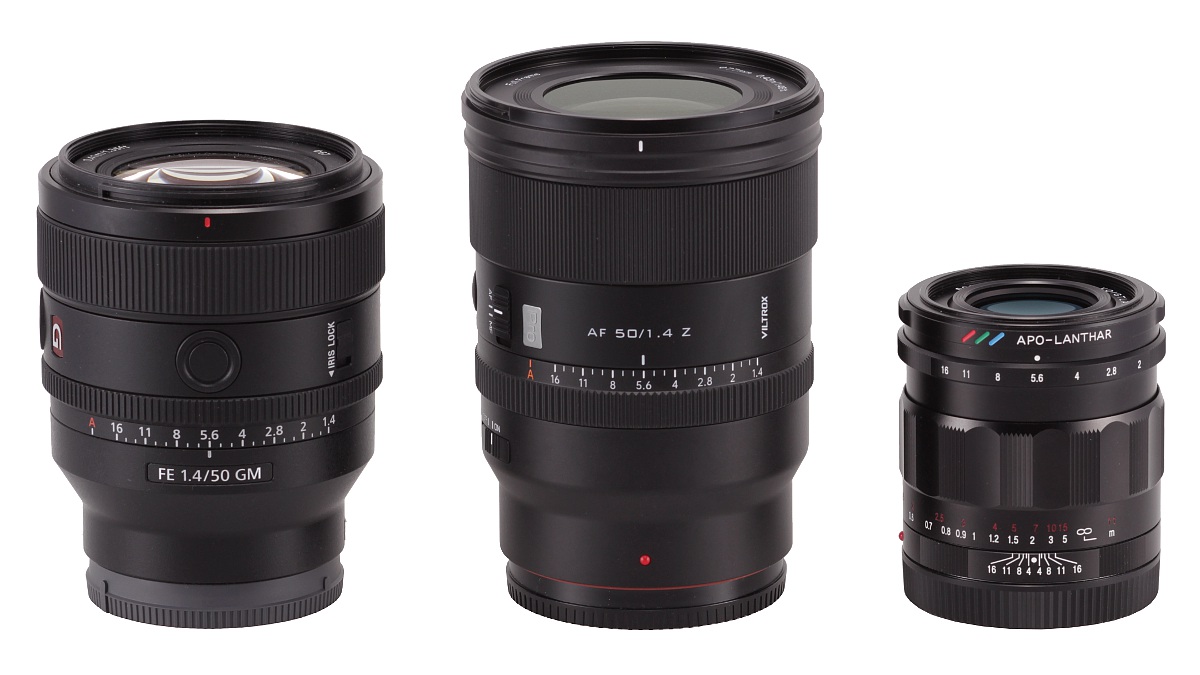
In the photo below the Viltrox AF 50 mm f/1.4 Pro is positioned between the Sony FE 50 mm f/1.4 GM and the Voigtlander Apo Lanthar 2/50. It's worth comparing the Viltrox to the Sony because these two are direct rivals.
Please Support Us
If you enjoy our reviews and articles, and you want us to continue our work please, support our website by donating through PayPal. The funds are going to be used for paying our editorial team, renting servers, and equipping our testing studio; only that way we will be able to continue providing you interesting content for free.
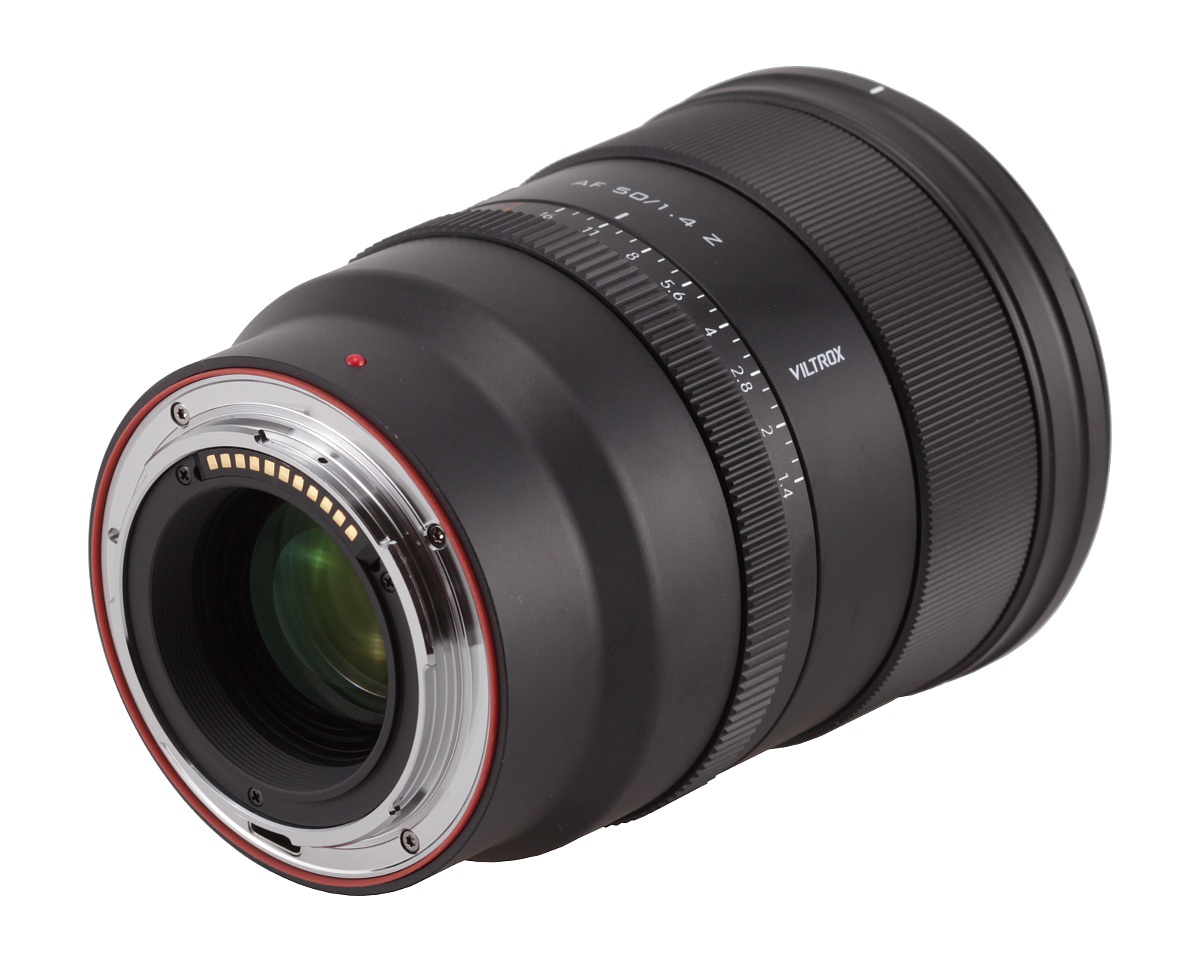
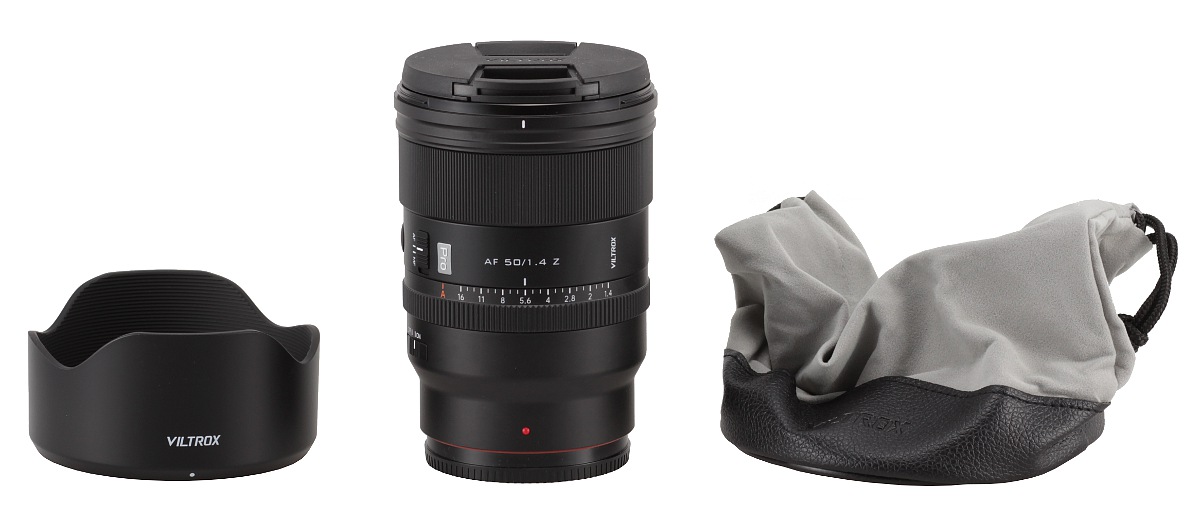
The tested lens starts with a metal mount with an USB-C port that allows you a quick software upgrade. The mount also features a rubber gasket and it surrounds contacts and a dark, matte, properly blackened sleeve. Inside the sleeve, about 1 cm deep, is situated an immobile rear element, 23 mm in diameter. From this side everything looks properly well.
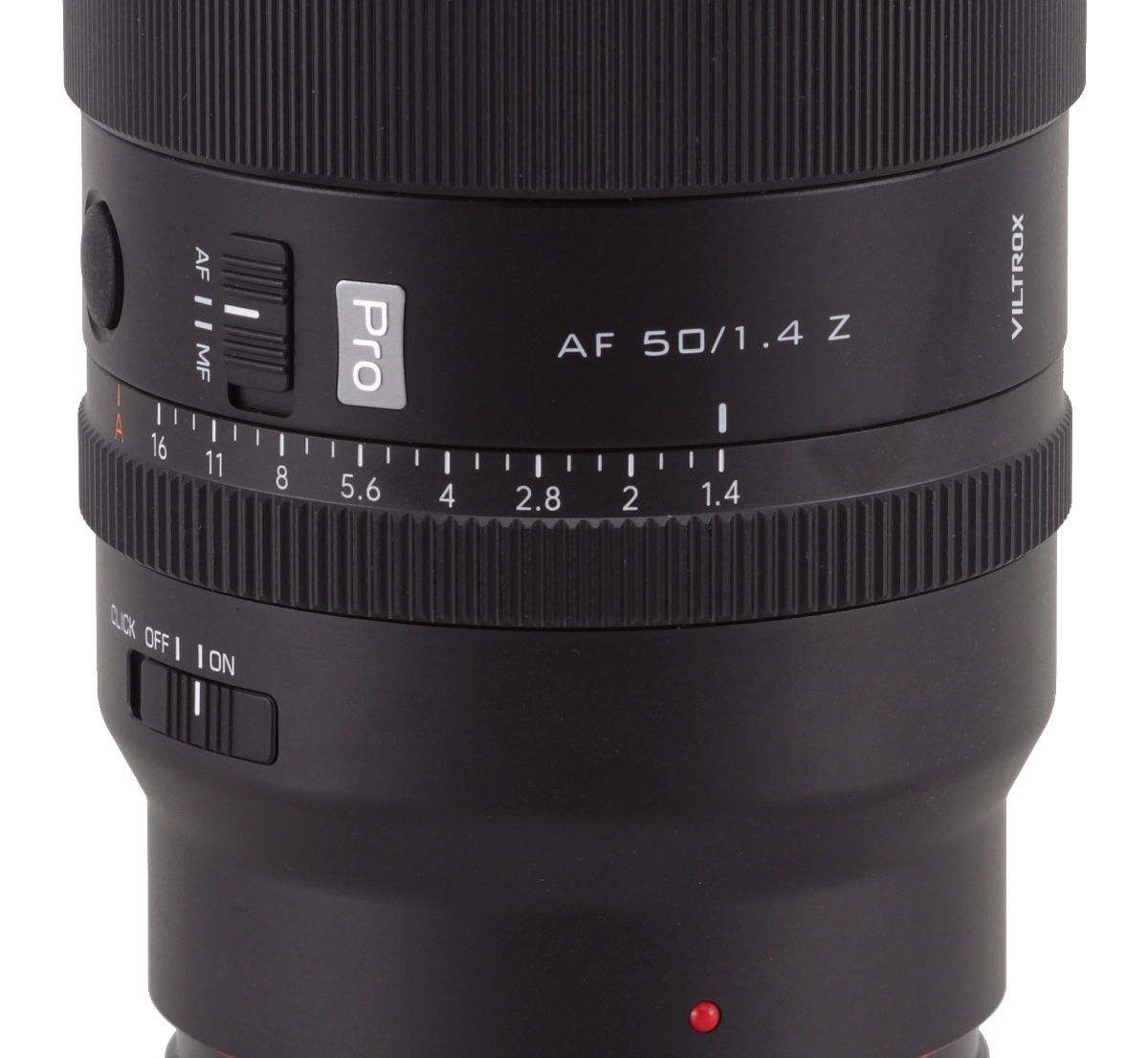
A black ring made of metal that increases its diameter is the first part of the proper barrel of the Viltrox 1.4/50. On this ring you can find a red dot, making an alignment with a camera easier, a serial number, information about the place of production, China this time, and the CLICK ON/OFF switch that is used to change the aperture ring mode from clicked to declicked.
Then you find the aforementioned aperture ring, ribbed and made of metal, that is 14 mm wide. On the ring there are aperture markings from f/1.4 to f/16 (every 1/3 EV step) and an automatic A value.
Further on there is an inscription 'AF 50/1.4 Z' surrounded by the Pro badge from one side and the logotype of the producer from the other. On the side you also find an AF/MF switch and a round function button.
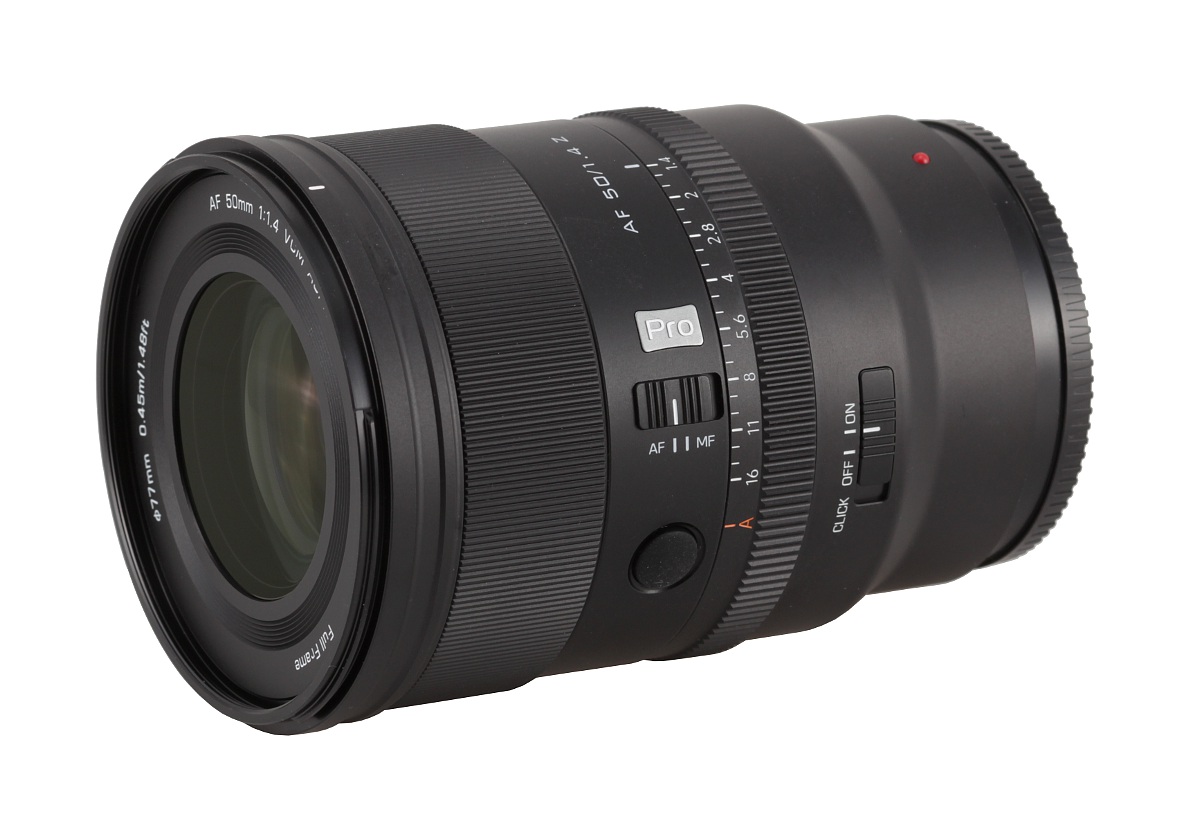
A manual focus ring, as wide as 24 mm and almost completely covered by fine ribbing, is the next part. It is a focus-by-wire construction and there are no distance or DOF markings on it. Its focus throw amounts to an angle of about 120 deg when you move it faster and about 300 deg when you turn it slowly; both are significant values, allowing you very precise settings and a proper comfort of work.
Then you see a metal ring that increases its diameter and ends with a hood mount.
The front element of the lens doesn't move, is slightly convex, 46 mm in diameter. It is surrounded by a part of the casing with inscriptions and a non-rotating filter thread, 77 mm in diameter. Among inscriptions that run around the front element you also find one informing you about the filter diameter, minimum focusing distance, (0.45m/1.48ft), and the next one, stating the basic parameters of the lens and abbreviations concerning different technologies used in the construction. In this case it's VCM, meaning an voice coil motor, used in the lens's autofocus, ASPH and ED, concerning special glass elements inside, and IF, meaning focus is set internally. Additionally there is a 'Full Frame' inscription, informing you that the lens was designed to cooperate with full frame cameras.
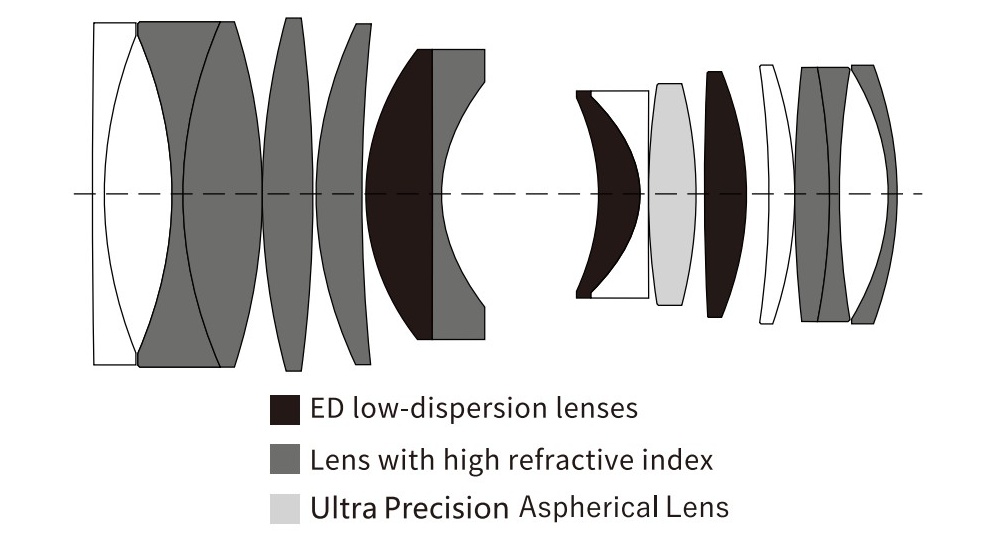
When it comes to optical construction, you deal here with 15 elements positioned in 11 groups. The producers weren't skimpy when it comes to special elements: inside you can find one aspherical element, three made of low dispersion ED glass, and as many as eight elements made of high refraction index glass. Along with all these elements, there is also a round aperture with 11 diaphragm blades that can be closed to a value of f/16 at the maximum.
According to the producer, the body of the lens is made of durable aluminum. The whole construction is also weather-sealed and protected against dust and humidity.
Buyers get in the box along with the lens both caps, a hood and a case with a hardened bottom.