Viltrox AF 50 mm f/1.4 Pro
6. Chromatic and spherical aberration
Chromatic aberration
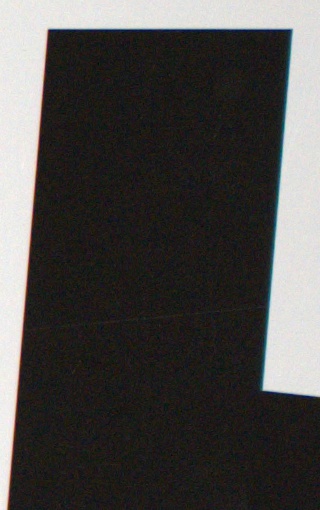
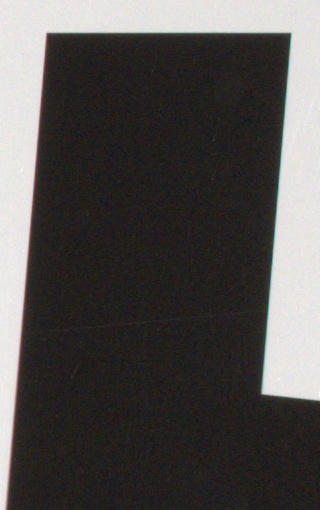
The optical construction of the Viltrox AF 50 mm f/1.4 Pro features as many as three low dispersion ED glass and eight high refractive index elements. This fact made us think that the tested lens wouldn't have any problems with the correction of longitudinal chromatic aberration. Photos below show clearly that we were right.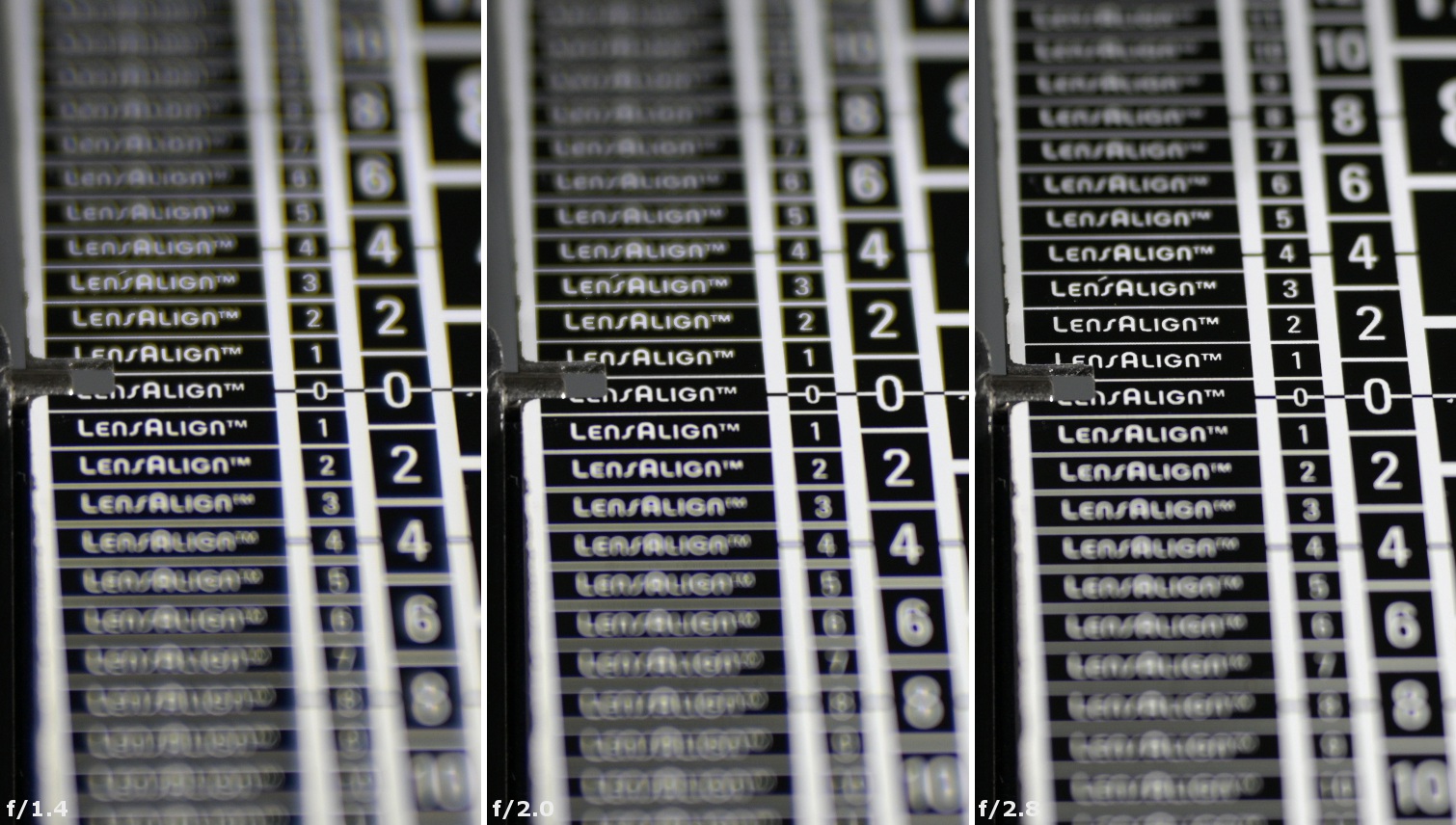 |
Now let's check how the Viltrox AF 50 mm f/1.4 Pro corrects lateral chromatic aberration – an appropriate graph you can find below.
Please Support UsIf you enjoy our reviews and articles, and you want us to continue our work please, support our website by donating through PayPal. The funds are going to be used for paying our editorial team, renting servers, and equipping our testing studio; only that way we will be able to continue providing you interesting content for free. |
- - - - - - - - - - - - - - - - - - - - - - - - - - - - - - - - - - - - - - - - - - - - - - - -
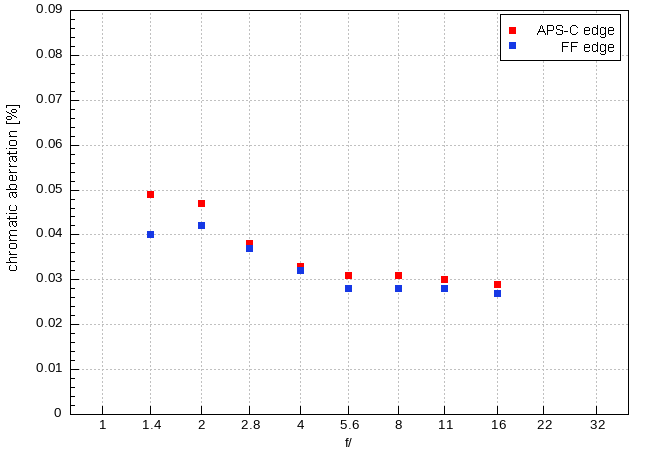
The results are praiseworthy. In areas close to the maximum relative aperture you deal with values ranging from 0.04 to 0.05% so on the borderline between low and very low levels. A more significant stopping down can reduce them to just very low values. A round of applause!
It's worth noticing that in this category the bar is raised very high by the rivals of the tested lens, with an exception of the Nikkor Z 50 mm f/1.4 and the Samyang AF 50 mm f/1.4 FE II. The Panasonic Lumix S Pro 50 mm f/1.4, the Sigma A 50 mm f/1.4 DG DN, and the Sony FE 50 mm f/1.4 GM have results as good or even better than the Viltrox.
| Z8, RAW, f/1.4 | Z8, RAW, f/11.0 |
|
|
Spherical aberration
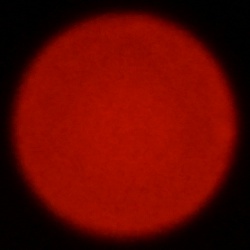
First photos of this chapter do feature focus shift effects. What's interesting, their level is very slight on passing from f/1.4 to f/2.0, but it increases significantly on further stopping down the aperture to f/2.8.Problems with spherical aberration are also visible in the appearance of out-of-focus circles of light we produced before and behind the focus. The first of the circles has normal edges, but the second one – a tad brighter rim. These two are classical symptoms of spherical aberration that is not corrected in a perfect way.
Excellent resolution results in the frame centre and lack of characteristic 'mist' near the maximum relative aperture indicate that the spherical aberration level can't be high.
| Z8, f/1.4, before | Z8, f/1.4, after |
|
|