LensTip.com

Lens review

Sigma C 15 mm f/1.4 DC

21 May 2026
Maciej Latałło

3. Build quality

The following chart presents a comparison of basic parameters of the tested lens to its predecessor and other models from this class designed to cooperate with APS-C sensors.

It's obvious that guaranteeing small dimensions and low weight was a priority here. The new model is distinctly smaller and almost two times lighter than its predecessor. Its optical construction is also noticeably simpler. When it comes to physical dimensions, the new Sigma is similar to the Sony. In this comparison, the smallest and the lightest is the Viltrox but it had it easier with the slowest aperture.

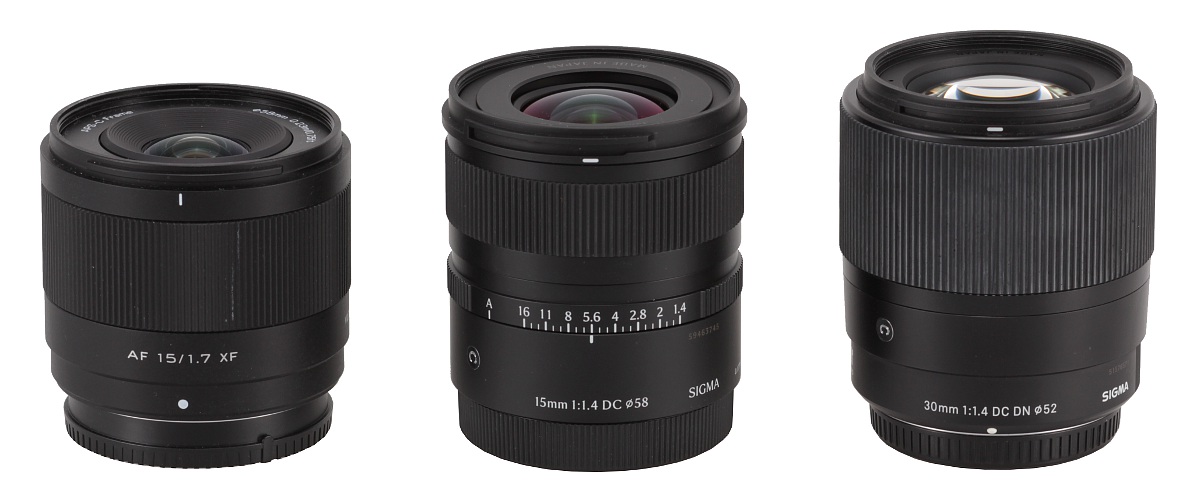
In the photo below, the Sigma C 15 mm f/1.4 DC is positioned between the already mentioned VIltrox AF 15 mm f/1.7 Air, and the Sigma C 30 mm f/1.4 DC DN.


Please Support Us

If you enjoy our reviews and articles, and you want us to continue our work please, support our website by donating through PayPal. The funds are going to be used for paying our editorial team, renting servers, and equipping our testing studio; only that way we will be able to continue providing you interesting content for free.

- - - - - - - - - - - - - - - - - advertisement - - - - - - - - - - - - - - - - -

- - - - - - - - - - - - - - - - - - - - - - - - - - - - - - - - - - - - - - - - - - - - - - - -
Sigma C 15 mm f/1.4 DC - Build quality

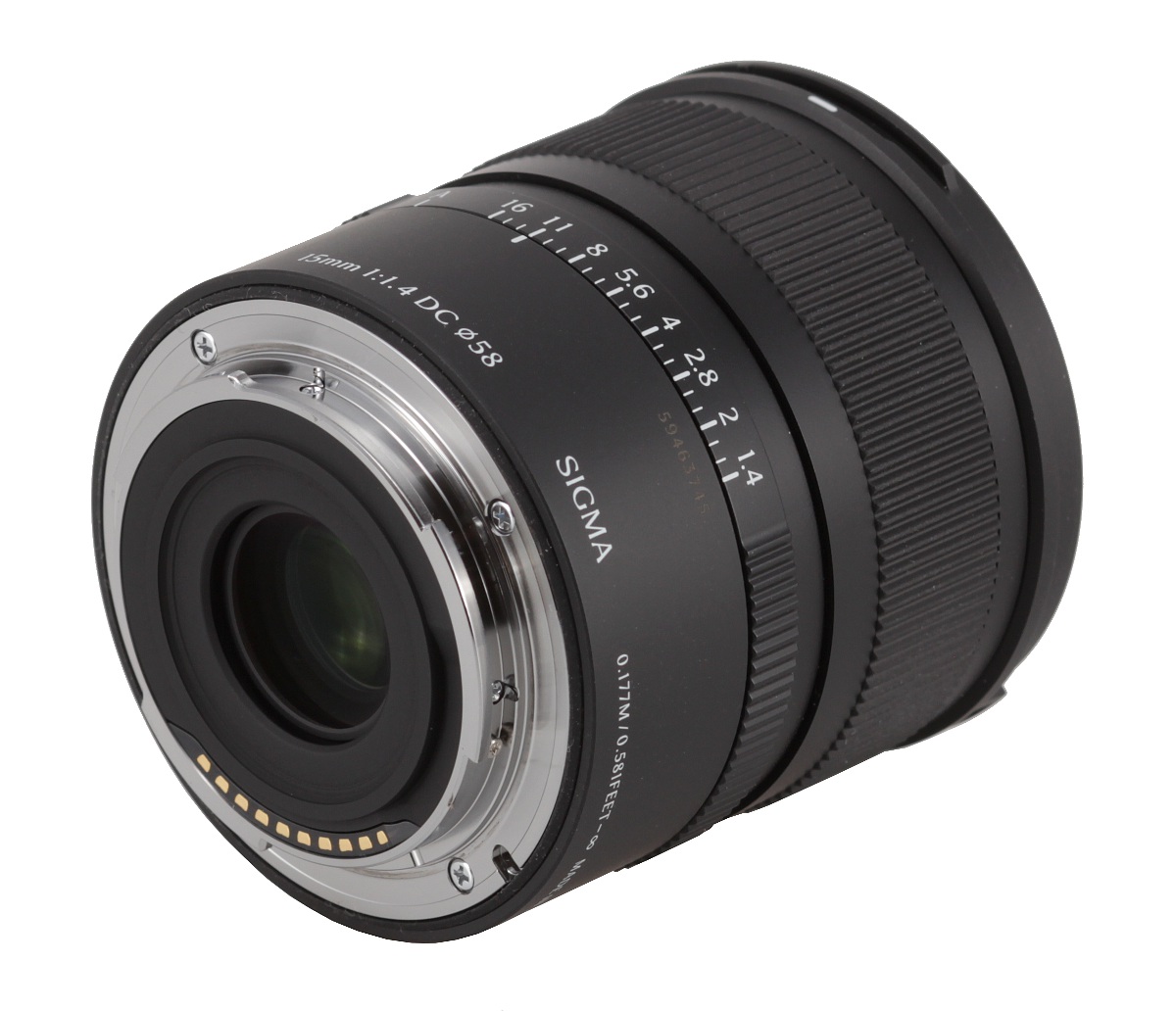
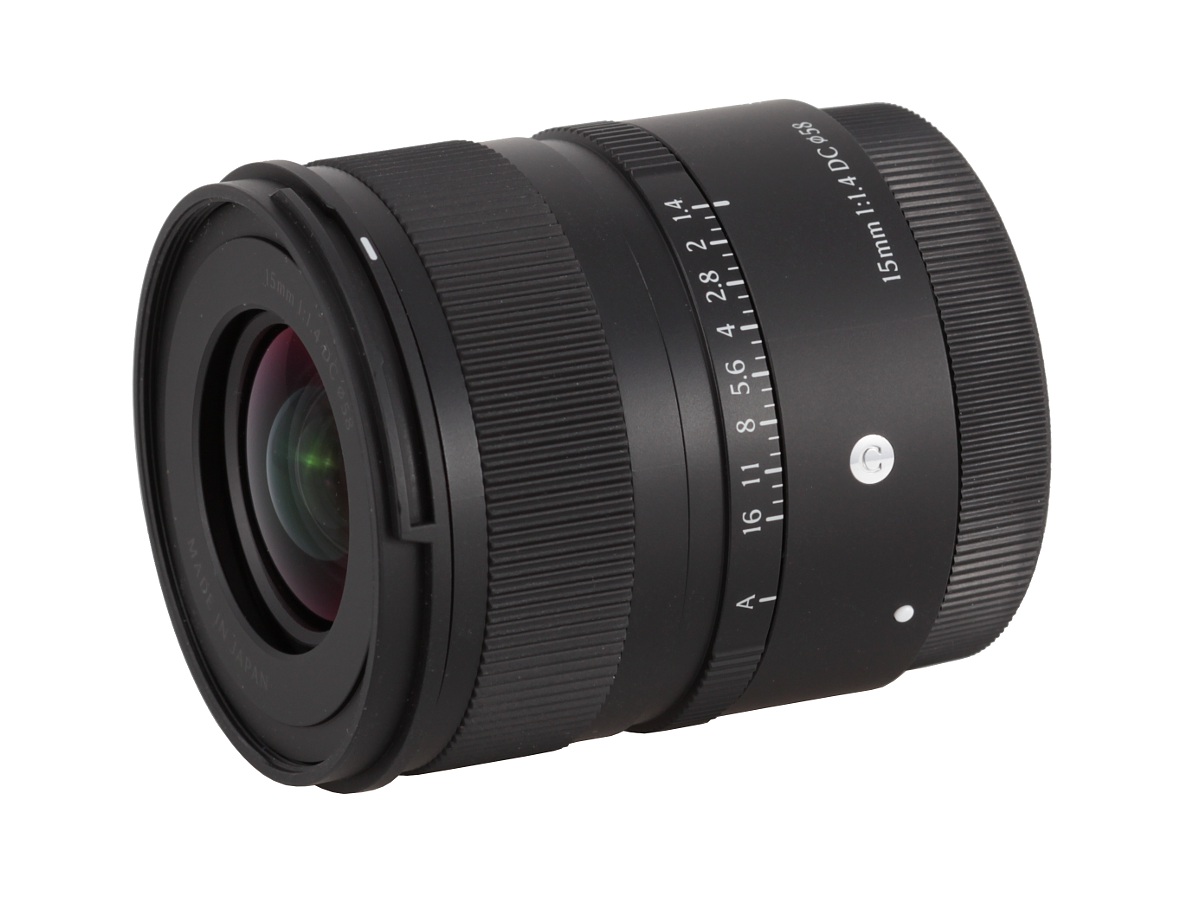
The tested lens starts with a metal mount that surrounds contacts and a rear element, 19 mm in diameter. This element, situated right below the level of contacts, doesn’t move and is situated inside a dark, well-matted tube. The lens seems to be completely sealed from this side and everything looks as it should.

Sigma C 15 mm f/1.4 DC - Build quality

The next part is a black, smooth, immobile ring made of plastic. It features inscriptions with the name, parameters of the lens, a Contemporary series mark, a white dot making an alignment with a camera easier, 026 meaning the model year, information concerning the focus range (0.177M/0.581FEET – ∞), and the country where it was produced (MADE IN JAPAN).

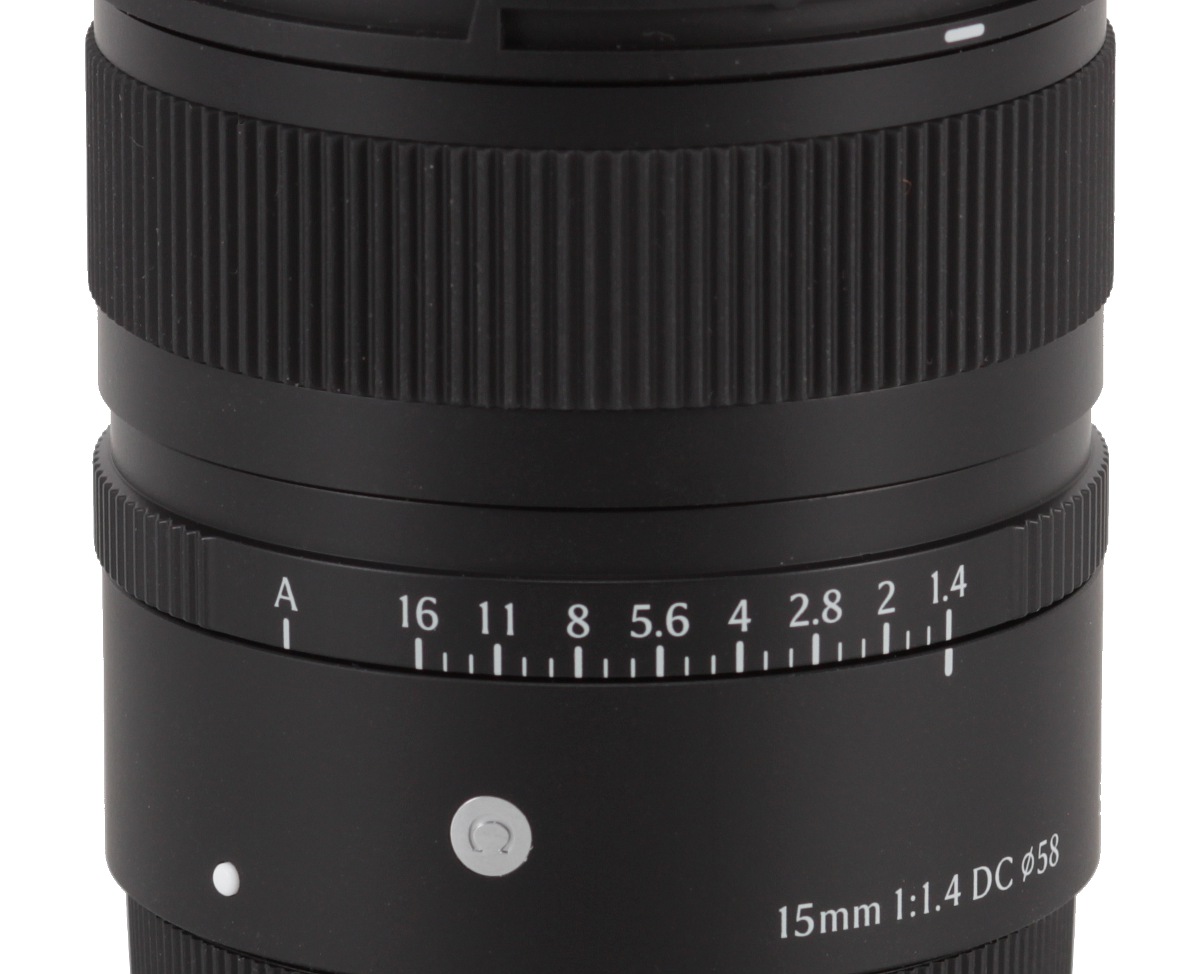
Further on you see an aperture ring, as wide as 6 mm, the majority of its surface covered by ribbing that allows you a firmer grip. In the middle of the ring, you see aperture markings from f/1.4 to f/16 and also an 'A' position that means the automatic mode. The ring moves properly well every 1/3 EV, but it cannot be declicked, a slight disappointment for fans of video recording.
Sigma C 15 mm f/1.4 DC - Build quality

A manual focus ring, as wide as 26 mm, is the biggest part of the lens. There are no distance or depth of field markings on its surface, which is partially covered by rubber ribs.

It is a focus-by-wire instrument that performs exceedingly well. Its resistance is noticeable, but when you break it, the ring turns smoothly and comfortably. Overall, you get an impression of working with mechanisms from a high-end, premium segment. Running through the whole distance range needs a turn through an angle of about 270 deg if you move the ring fast. When you turn it slowly you are able to reach even near 900 deg. These are very high values, allowing you very precise settings.
Sigma C 15 mm f/1.4 DC - Build quality

A slightly enlarged ring with a rim and a hood mount is the last part of the lens.

The front element is slightly convex, immobile, 31 mm in diameter. It is surrounded by a part of the barrel with dark inscriptions stating basic parameters of the lens and information about the production country. Then you see a non-rotating filter thread, 58 mm in diameter.
Sigma C 15 mm f/1.4 DC - Build quality

There is a curious thing – this ring with dark inscription, going around the front element, can sometimes jump away, obscuring the field of view. I noticed it while taking photos for the vignetting test because, at some point, the imaging circle lost its symmetry. On a more significant stopping down, one of the frame corners became completely dark. The ring could be pressed back with a finger and then everything got back to normal. I suppose Sigma didn't add enough glue in this place. It is hardly a big problem, but you don't buy a brand new lens, produced in Japan to boot, to find out it has a slip-up to patch.

Sigma C 15 mm f/1.4 DC - Build quality

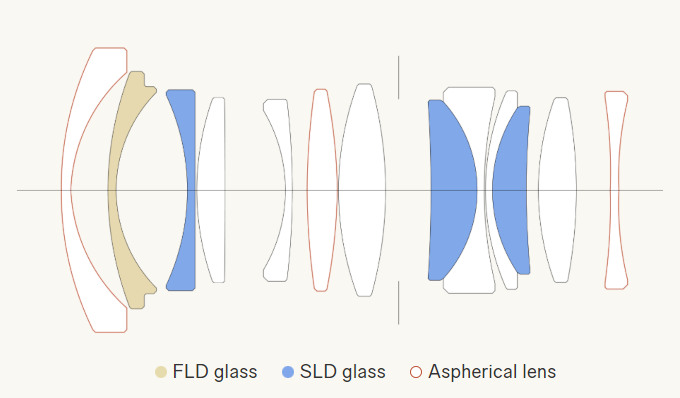
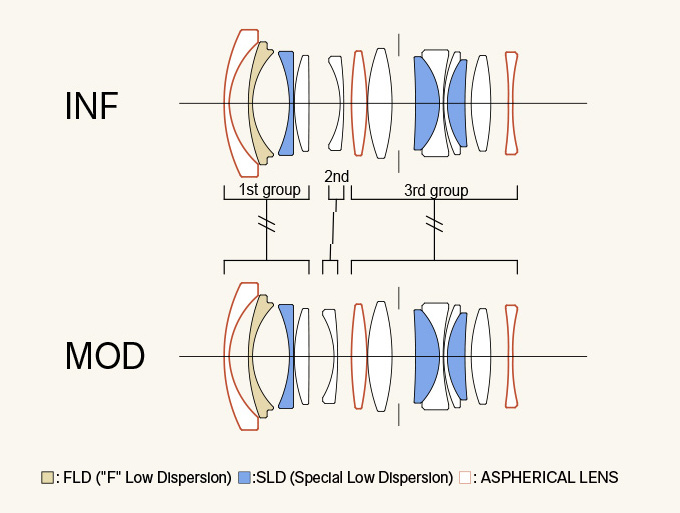
When it comes to the optical construction, the lens features as many as 13 elements positioned in 11 optical groups. Among them you can find three low dispersion SLD elements, one FLD element and three aspherical ones. Inside there is also a round aperture with nine blades that can be closed down to a value of f/16 at the maximum.

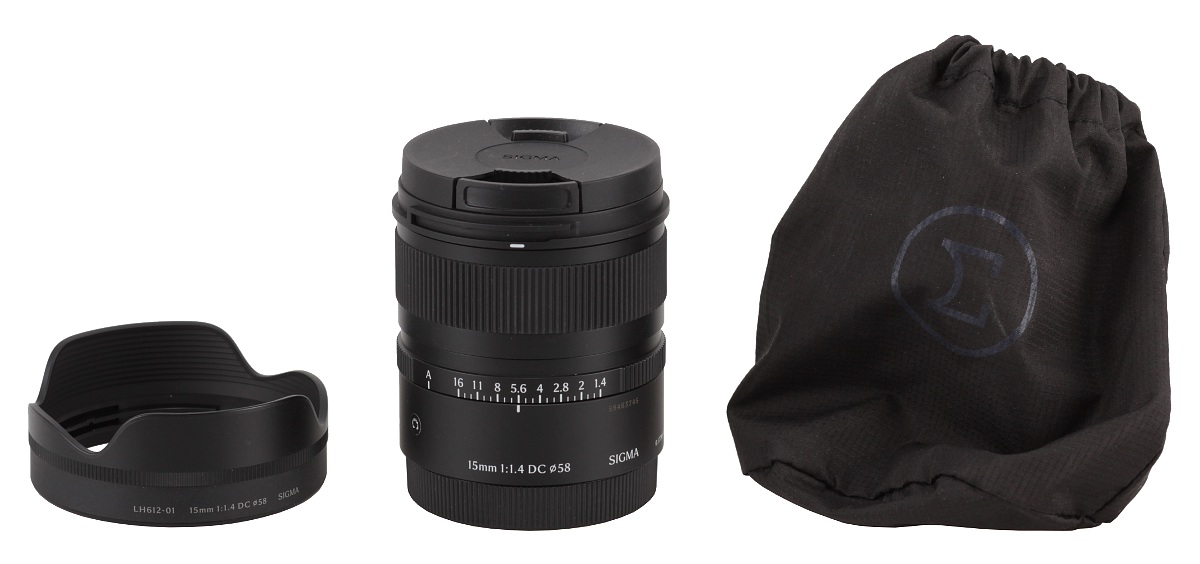
Buyers get in the box with the lens: both caps, a petal-type hood, and a soft pouch.
Sigma C 15 mm f/1.4 DC - Build quality