Panasonic Lumix S 100 mm f/2.8 Macro
10. Autofocus and focus breathing
Autofocus
The autofocus of the lens under review, when paired with the Panasonic Lumix S1R II, operates completely silently and fairly quickly for a macro lens. Traversing the entire focusing range and confirming focus typically takes around 0.8–0.9 seconds, which is a very reasonable time considering the range of distances the system has to cover.
Limiting the focusing range to 0.5 m–∞ reduces the focusing time to a very good value of around 0.4 seconds.
Please Support UsIf you enjoy our reviews and articles, and you want us to continue our work please, support our website by donating through PayPal. The funds are going to be used for paying our editorial team, renting servers, and equipping our testing studio; only that way we will be able to continue providing you interesting content for free. |
- - - - - - - - - - - - - - - - - - - - - - - - - - - - - - - - - - - - - - - - - - - - - - - -
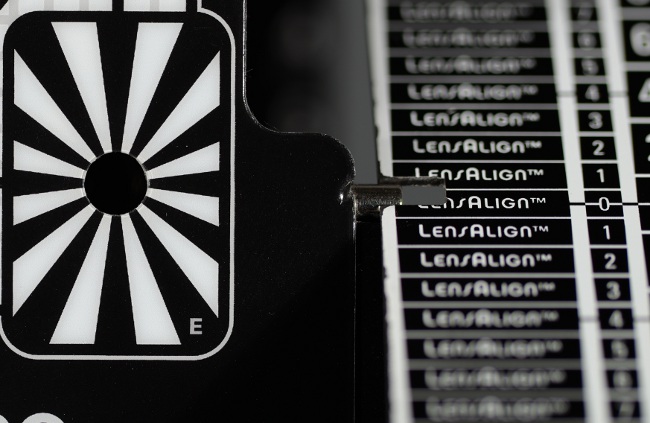
Autofocus accuracy was very good. We encountered virtually no problems, regardless of whether we were working outdoors or in the studio.
We also noticed no tendency for the autofocus to focus in front of or behind the intended subject.
| Panasonic S1R II, 100 mm, f/2.8 |
 |
Focus Breathing
We test lens breathing, i.e. changes in the content of the recorded frame during refocusing, by manually shifting focus from infinity to the minimum focusing distance with the aperture stopped down and checking how much the lens's field of view changes as a result.
We consider changes in framing of 0–5% to be small. Between 5 and 10%, we classify the level as moderate. These are also generally the maximum values that breathing compensation algorithms available in some camera bodies can handle. Between 10 and 15%, we consider breathing to be high, while values above 15% are classified as very high.
The test recording for the lens under review is shown below:
Based on the recording above, by comparing frames captured before and after refocusing, we can estimate that the focus breathing of the lens under review is around 76%. This is therefore absolutely enormous, although we should note that it is still one of the better results among the macro lenses we have tested in this respect. Models such as the Nikon Nikkor Z MC 105 mm f/2.8 VR and the Venus Optics Laowa FFII 90 mm f/2.8 CA-Dreamer Macro 2x have easily exceeded 100%.
Naturally, this raises the question whether it is possible to design a macro lens with no focus breathing at all. The answer is yes. There are cinema macro lenses in which this issue has been corrected, if not completely, then at least to visually acceptable levels. In photographic lenses, correcting this drawback is apparently sacrificed in favor of other advantages, presumably including smaller size and lower weight.