Nikon Nikkor Z 180-600 mm f/5.6-6.3 VR
10. Autofocus and focus breathing
Autofocus
The autofocus of the Nikkor Z 180-600 mm f/5.6-6.3 VR joined with the Nikon Z7 is completely noiseless. Its speed depends on the focal length. At 180 mm going through the whole focal range and confirming the focus takes about 0.4-0.5 of a second, a good result. At the maximum focal length this time can be doubled to about 1 second, a result that might be also a reason to complain. Of course you can always use the focus limiter and set it at a range from 6 meters to infinity. It shortens the focusing time very effectively.When it comes to the accuracy of the autofocus I have unfortunately many negative remarks. On the one hand I might feel a bit spoiled because in previous tests I attached the Nikkors Z 400 mm f/4.5 VR and the Z 600 mm f/6.3 VR to the Nikon Z7 camera, and all these models performed exceedingly well. On the other hand I also compared this one to the Sigma S 150-600 mm f/5.6-6.3 DG DN OS joined with the Sony A6400 and here the brandname Nikon set lost as well. Mind you the Sigma is a lens by about $500 cheaper and a product of an independent company. What's more, it cooperated with the Sony A6400 so a body that is over six years old and even at the time of its launch it didn't belong to these models which AF module makes you bowled over. You have to admit the bar wasn't raised especially high and still the Z7 + the 180-600 mm set wasn't able to jump high enough and lost this duel.
Many times the performance of the tested lens was nothing but frustrating. Examples? You can stand several meters from a sparrow sitting on a fence in open air and during a sunny day, in other words having perfect lighting conditions, and still focusing lasts several dozen very frustrating seconds. The lens is of the opinion that photographing the forest wall situated several dozen meters behind the sparrow is a definitely better idea. You struggle to persuade it otherwise and meanwhile the sparrow flies away and you are left with nothing.
Please Support UsIf you enjoy our reviews and articles, and you want us to continue our work please, support our website by donating through PayPal. The funds are going to be used for paying our editorial team, renting servers, and equipping our testing studio; only that way we will be able to continue providing you interesting content for free. |
- - - - - - - - - - - - - - - - - - - - - - - - - - - - - - - - - - - - - - - - - - - - - - - -
After some time, more experienced and wiser, I often set the focus at for example well-lighted, properly contrasted bark of a tree that was close to the photographed bird, and then I slightly moved my frame at the proper object. Such a ruse often provided good results whereas an attempt to set the autofocus on the bird, without initial setting the focus close to it, often resulted in a failure.
My conclusions? While taking photos with the Nikkor Z 180-600 mm f/5.6-6.3 VR you have to be not only patient but also tolerant, taking into account the fact that many interesting shots will pass you by. Mind you even with the confirmation of focus your shot might still be a tad fuzzy.
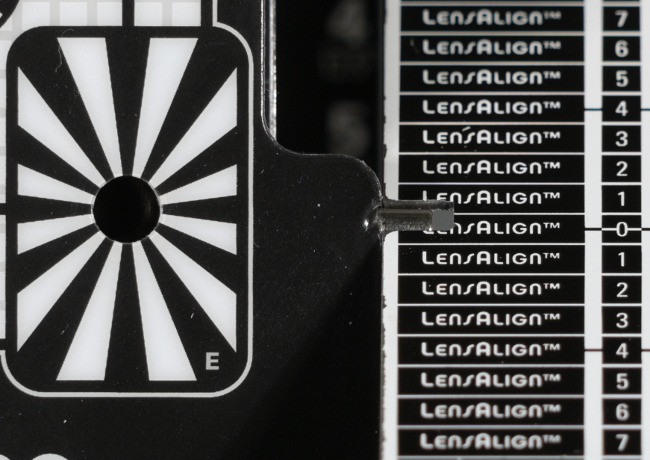
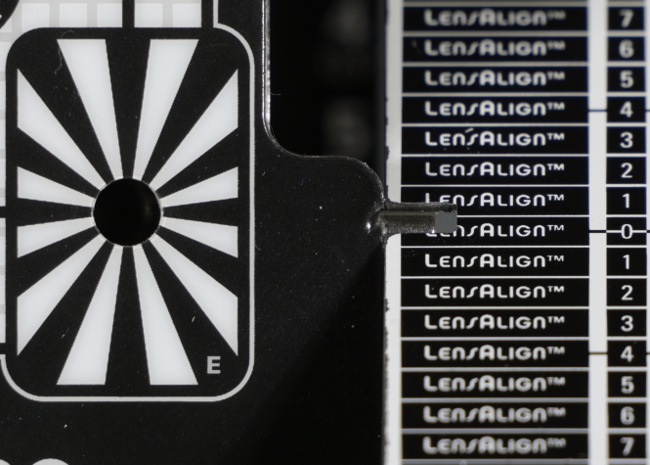
Photos below show that the tested lens didn't have any noticeable problems with front or back focus tendencies.
| Nikon Z7, 300 mm, f/5.6 |
 |
| Nikon Z7, 600 mm, f/6.3 |
 |
Focus breathing
Focus breathing tests show reframing images as you oversharp them. We conduct the test by manually passing from the minimum focusing distance to infinity with the aperture stopped down; then we check how the field of view of the lens changed as a result.A frame change ranging from 0 to 5% we consider to be low. Between 5 and 10% you can speak about medium levels. Usually such values constitute also the maximum efficiency level of any breathing compensation algorithms, present in some bodies. Between 10 and 15% focus breathing is high, above 15% its level can be called very high.
The test video of the Nikkor lens is shown below: