Sony FE 400-800 mm f/6.3-8 G OSS
6. Distortion and field of view
Field of view
A full frame rectilinear 400-800 mm lens should give you a range of angles of view from 6.19 to 3.10 degrees. In their official specification Sony states that the offered range of angles of view changes from 6.17 at 400 mm to 3.17 at the 800 mm focal length. We managed to check these declarations by taking photos of a starry sky and transforming the pixel layout (X,Y) from the photo into the equatorial coordinate system (right ascension and declination), which locates a star on a celestial sphere.In case of the 400 mm focal length we used 42 stars for our transformation and they were spread evenly in the photo. The average mesh-fitting error amounted to just 6 seconds of arc. We got a result of 5.79 deg with an error that doesn't exceed 0.05 of a degree. As you see our result is distinctly narrower than the official declaration and it reflects rather 428 mm, not 400 mm focal length.
In case of the 800 mm focal length we used 28 stars and the average mesh-fitting error amounted to just 1 second of arc. The field measured by us amounted to 3.03 deg with a measuring error on a level of 0.03 deg. In this case the result is also a tad lower than the declared one. As a result the precise value of the maximum focal length of the Sony 400-800 mm, assuming full rectilinearity, amounts to 817 mm.
Distortion
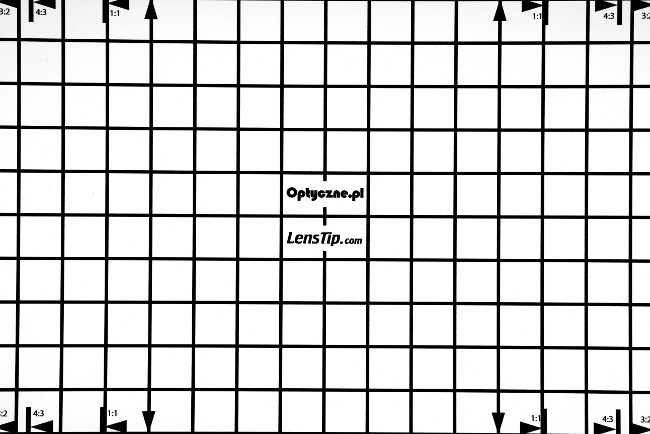
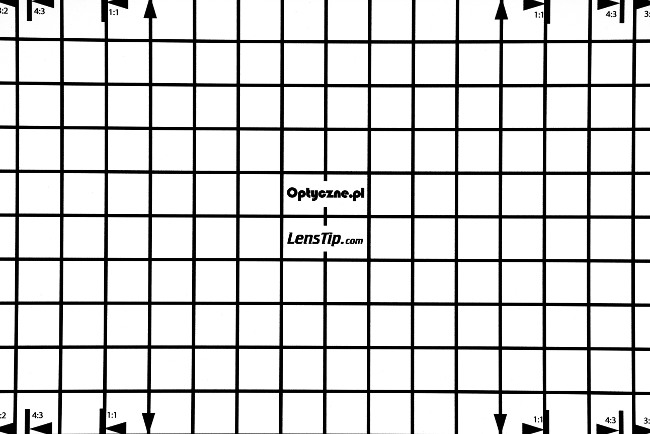
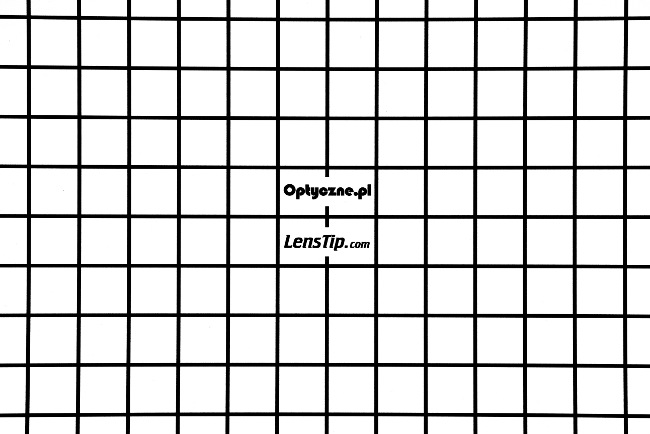
In case of the smaller APS-C detector distortion doesn't provide us any more serious reasons to complain. At all focal lengths distortion doesn't exceed a level of +1%. The precise values, reached by us at 400, 600, and 800 mm, amount to, respectively: +0.88%, +0.92% i +0.90%.
Please Support UsIf you enjoy our reviews and articles, and you want us to continue our work please, support our website by donating through PayPal. The funds are going to be used for paying our editorial team, renting servers, and equipping our testing studio; only that way we will be able to continue providing you interesting content for free. |
- - - - - - - - - - - - - - - - - - - - - - - - - - - - - - - - - - - - - - - - - - - - - - - -
| Sony A7R IIIa, APS-C, JPEG, 400 mm | |||
|
|||
| Sony A7R IIIa, APS-C, JPEG, 600 mm | |||
|
|||
| Sony A7R IIIa, APS-C, JPEG, 800 mm | |||
|
|||
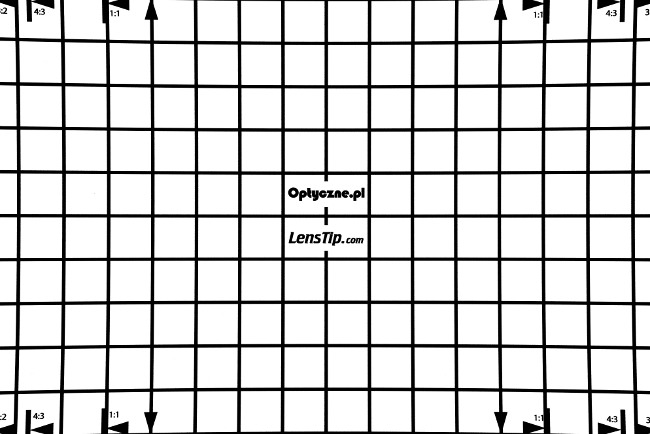
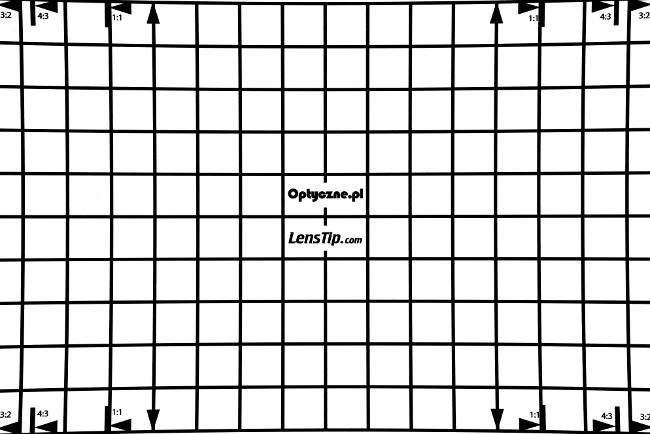
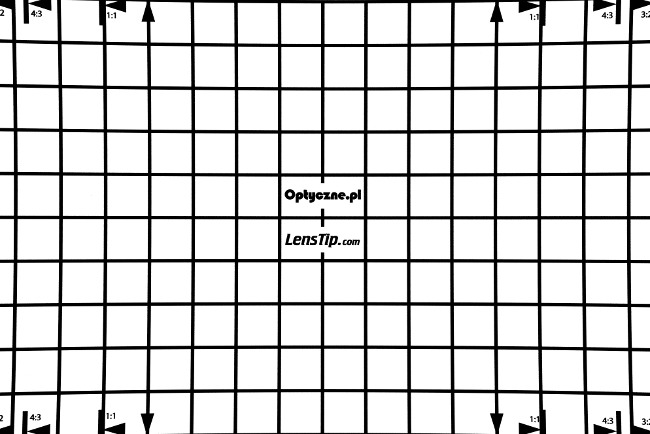
On full frame there are far more problems and it is perfectly understandable. At 400 mm you deal with pincushion distortion of +2.08%. It is perhaps not an especially high level but if you remind yourself that the real value of the shortest focal length amounts to 428 mm and if you additionally want to correct distortion to zero, the result in a form of a cropped image will make the minimum focal length of the tested lens increase to 440 mm or even higher.
At the 600 mm focal length distortion increases slightly to +2.26% and at 800 mm it decreases to +2.09%.
In this category the Sony 400-800 mm could have performed a tad better. From a lens with a zoom ratio amount to two you can expect distortion below +1%. The Nikkor Z 180-600 mm f/5.6-6.3 VR is a fine example that a lens can fare in this category really well. Despite 3.33x zoom ratio it could correct distortion to just fractions of a percent.
| Sony A7R IIIa, FF, JPEG, 400 mm | |||
|
|||
| Sony A7R IIIa, FF, JPEG, 600 mm | |||
|
|||
| Sony A7R IIIa, FF, JPEG, 800 mm | |||
|
|||