Leica APO-Summicron-SL 75 mm f/2 ASPH.
3. Build quality
It's immediately clear that Leica deals with their two full frame systems differently. Rangefinder Leica M cameras are supposed to be small, inconspicuous photojournalistic devices so they cannot be joined with big, heavy lenses. Apart from that some lenses are so huge that they would cover the viewfinder itself. That's why the APO-Summicron-M 75 mm f/2.0 is a relatively small, lightweight model but also not as optically advanced as contemporary standards dictate. In case of the Leica SL system there are no such limitations and, accordingly, there are far fewer compromises.
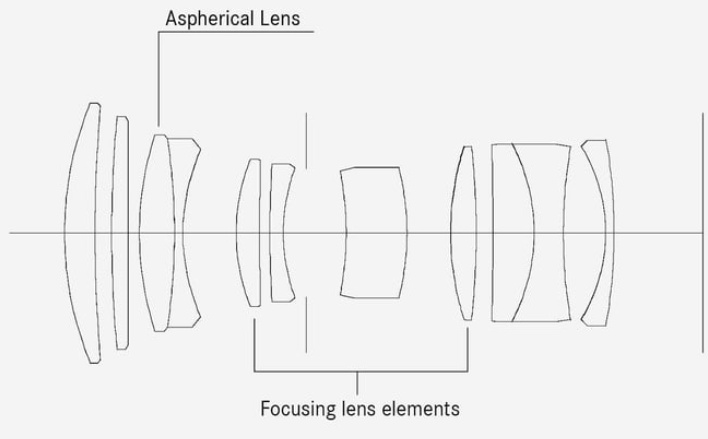
As a result it's clear that the optical construction of the new APO-Summicron is far more advanced that the construction of the model designed for rangefinder Leica M system. Still, the new model remains less complex than the smaller and ligher Sigma 2/65, an interesting thing to notice. It seems it's not a coincidence this Sigma was included in our resolution record-breakers list for a very long time.
Please Support UsIf you enjoy our reviews and articles, and you want us to continue our work please, support our website by donating through PayPal. The funds are going to be used for paying our editorial team, renting servers, and equipping our testing studio; only that way we will be able to continue providing you interesting content for free. |
- - - - - - - - - - - - - - - - - - - - - - - - - - - - - - - - - - - - - - - - - - - - - - - -
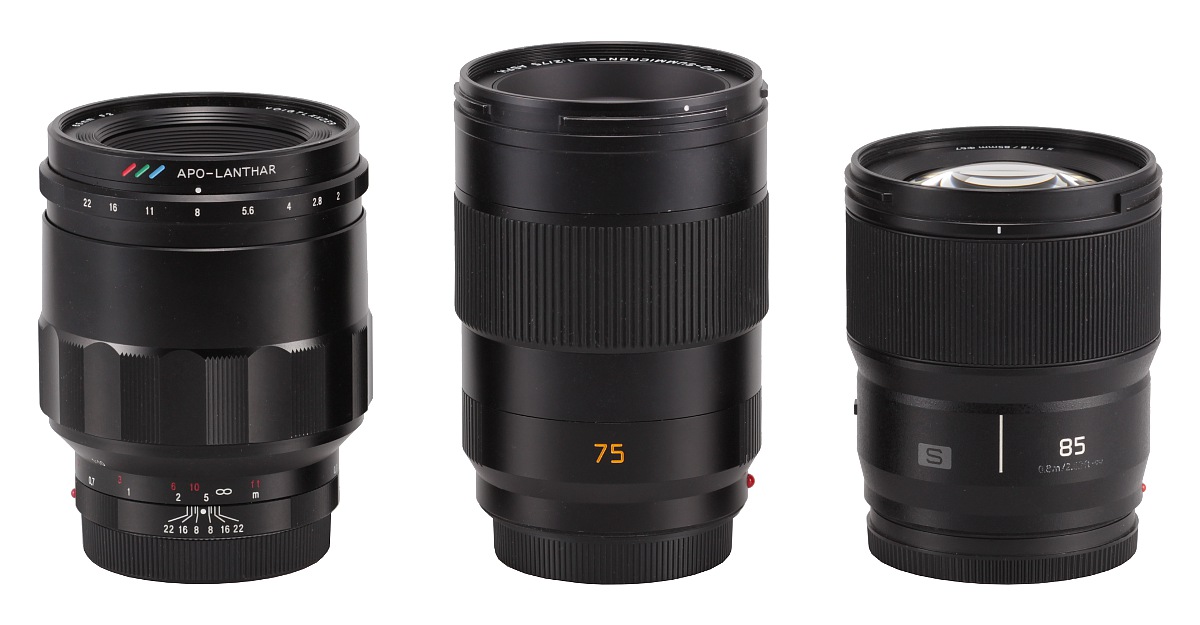
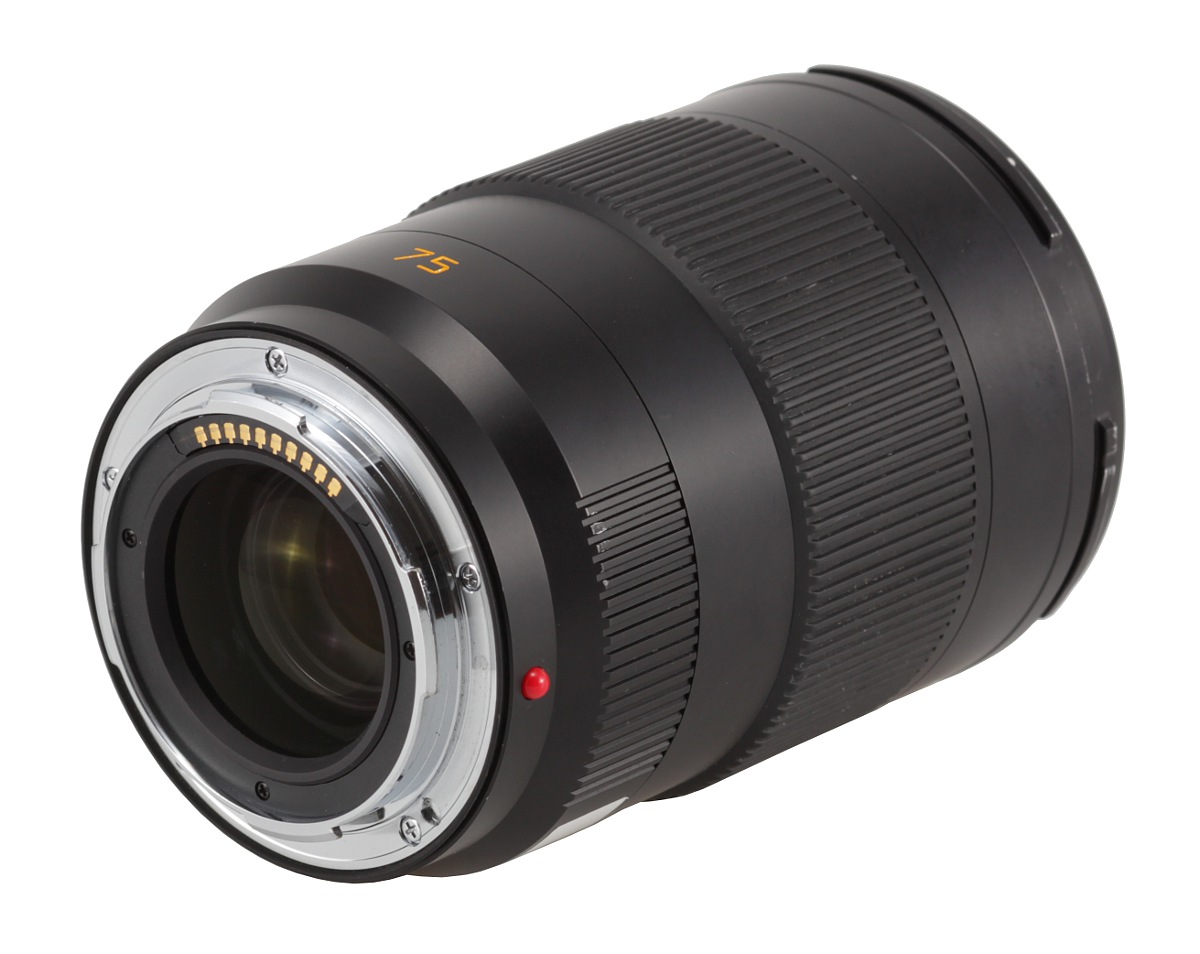
The APO-Summicron-SL 75 mm f/2 ASPH. is here evidently the biggest and the heaviest lens. It is also the most expensive. Instead you get, among other things, a short minimum focusing distance. Only the Voigtlander Apo-Lanthar 65 mm f/2 Aspherical 1:2 Macro is better in this category but here you deal with a macro lens that, additionally, increases its dimensions when you get closer to the 1:2 mapping scale.
In the following photo the Leica APO-Summicron-SL 75 mm f/2 ASPH. is positioned between the aforementioned Voigtlander 2/65 and the L mount version of the Panasonic S 85 mm f/1.8.
 |
 |
 |
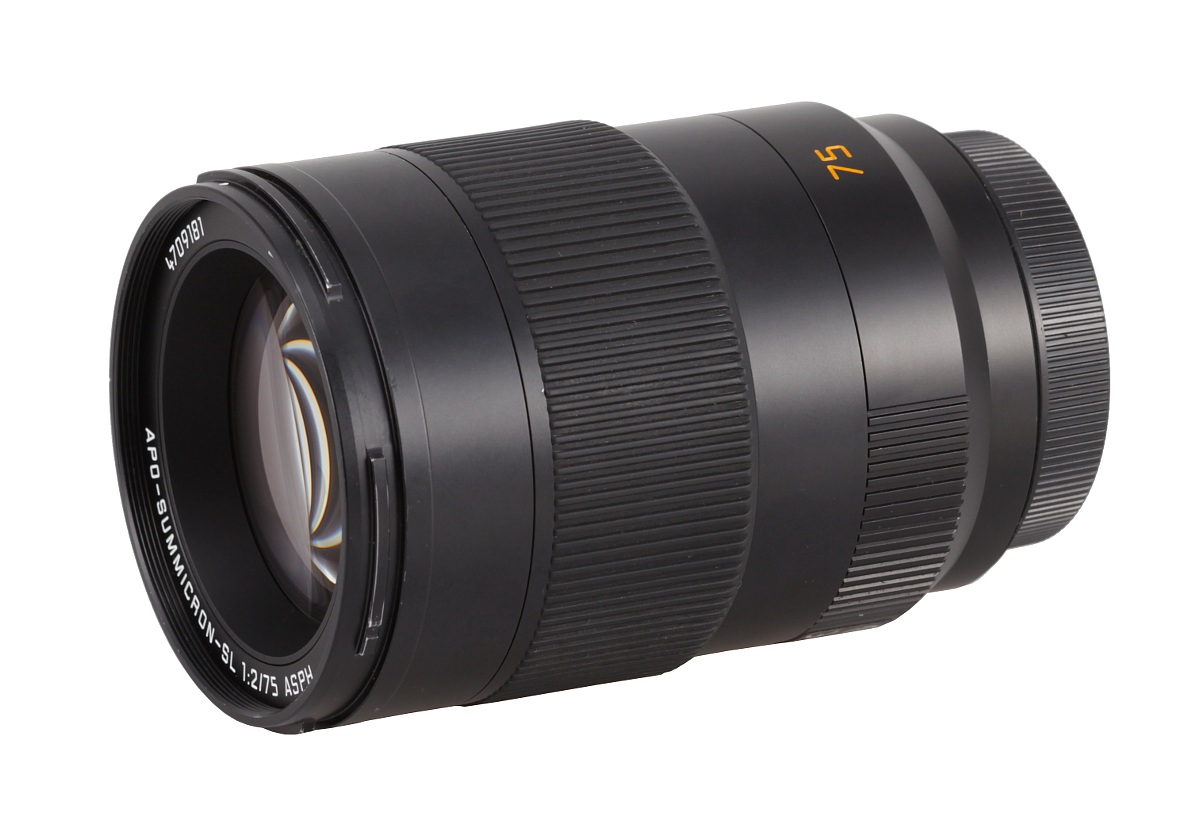 |
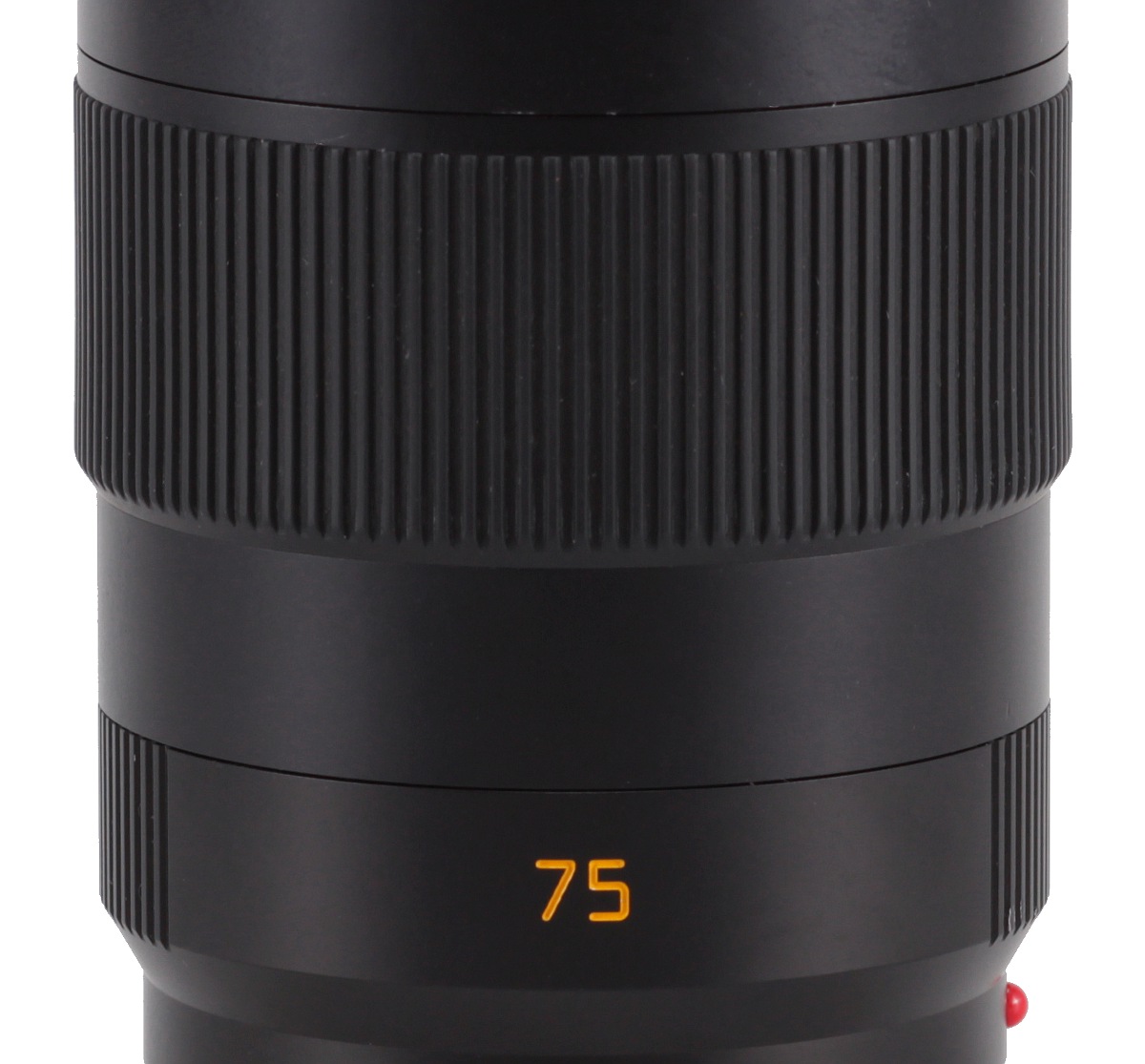
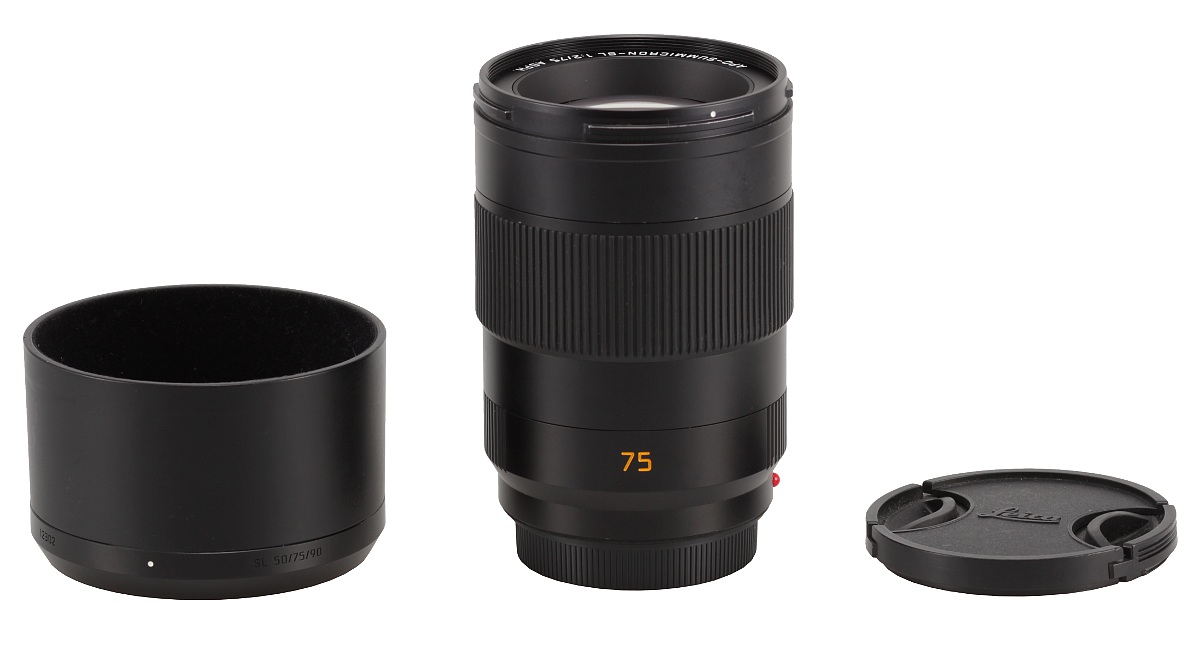
The front element is 49 mm in diameter, slightly convex and immobile. The producers inform us that it is covered by AquaDura coatings that protect it from dirt, humidity and make cleaning easier. The element is hidden inside the black, matted tube about 1 cm deep. It is also surrounded by a part of the casing with inscriptions stating the name, parameters, and the serial number of the instrument. Then you find a non-rotating filter thread, 67 mm in diameter.
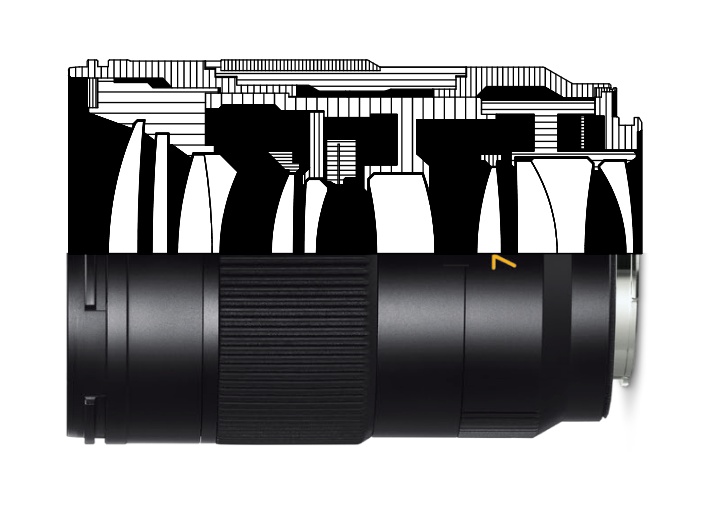 |
When it comes to optical construction you deal here with 11 elements positioned in 9 groups. Among them one element is aspherical in shape and some other elements are made of different kinds of special glass with anomalous partial dispersion. Inside you also find a round aperture with nine blades that can be stopped down to a value of f/22 at the maximum.
 |
 |