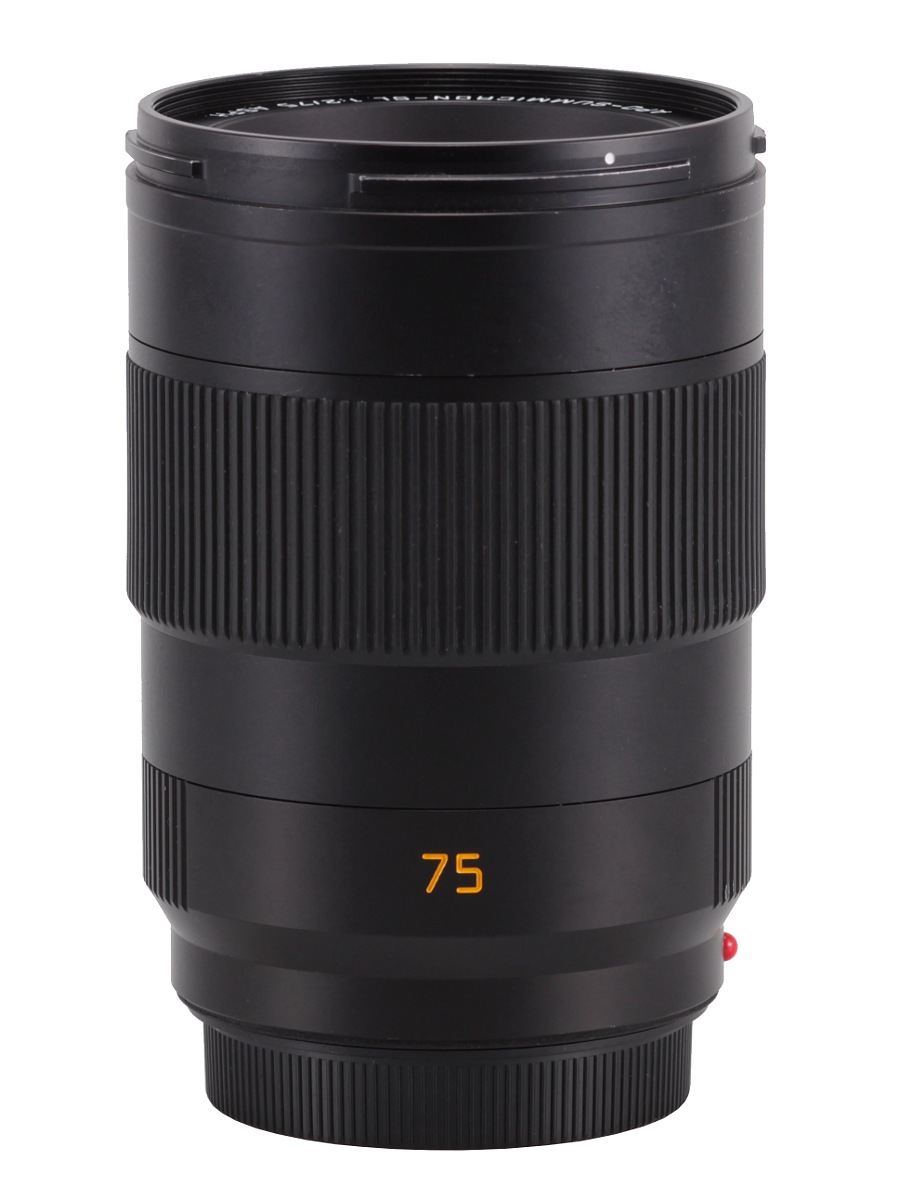
Leica APO-Summicron-SL 75 mm f/2 ASPH.
1. Introduction
The first Summicron, a successor of the foldable Summitar with lanthanum glass, was launched in 1953, a tad before the launch of the Leica M camera that took place in 1954. It was a collapsible lens consisting of 7 elements positioned in 6 groups, offered with an M39 threaded mount. Not long afterwards, in 1956, that line was supplemented by the Summicron 2/50, also with 7 elements positioned in 6 groups, but already in a classic barrel and the Leica M mount.
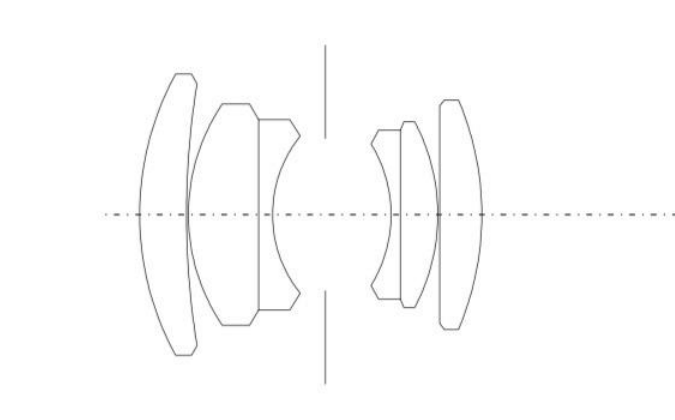 Summicron-M's 2/50 lens desing from 1994. |
Please Support UsIf you enjoy our reviews and articles, and you want us to continue our work please, support our website by donating through PayPal. The funds are going to be used for paying our editorial team, renting servers, and equipping our testing studio; only that way we will be able to continue providing you interesting content for free. |
- - - - - - - - - - - - - - - - - - - - - - - - - - - - - - - - - - - - - - - - - - - - - - - -
During that time Leica has been producing Summicrons of different mount variants and different focal lengths. The most classic models came with 2/28, 2/35, 2/50, and 2/90 parameters. In the line-up you can also find instruments with less common mounts like the Leica Q (APO-Summicron 43 mm f/2 ASPH) or the Leica S (Summicron-S 100 mm f/2 ASPH).
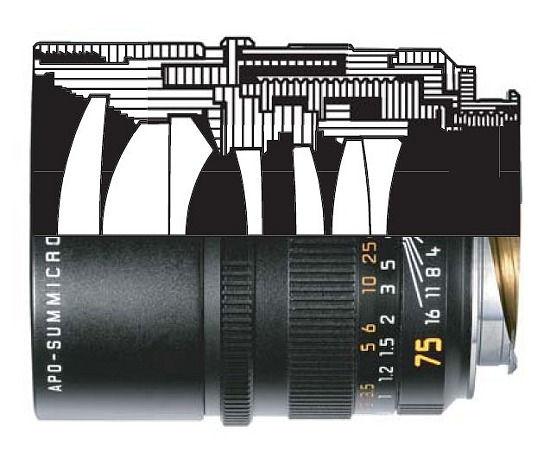 Leica APO-Summicron-M 75 mm f/2 ASPH. |
When it comes to the 75 mm focal length its history is rather short. Leica started to produce lenses with such untypical parameters only in 2005 (most likely starting the production in 2004) and immediately they launched one APO model so the APO-Summicron-M 75 mm f/2 APSPH, a construction consisting of 7 elements in 5 groups. In this lens they used special types of glass, among them fluorite (element 2) and anomalous partial dispersion glass with a high refractive index (element 4 that also features an aspherical surface).
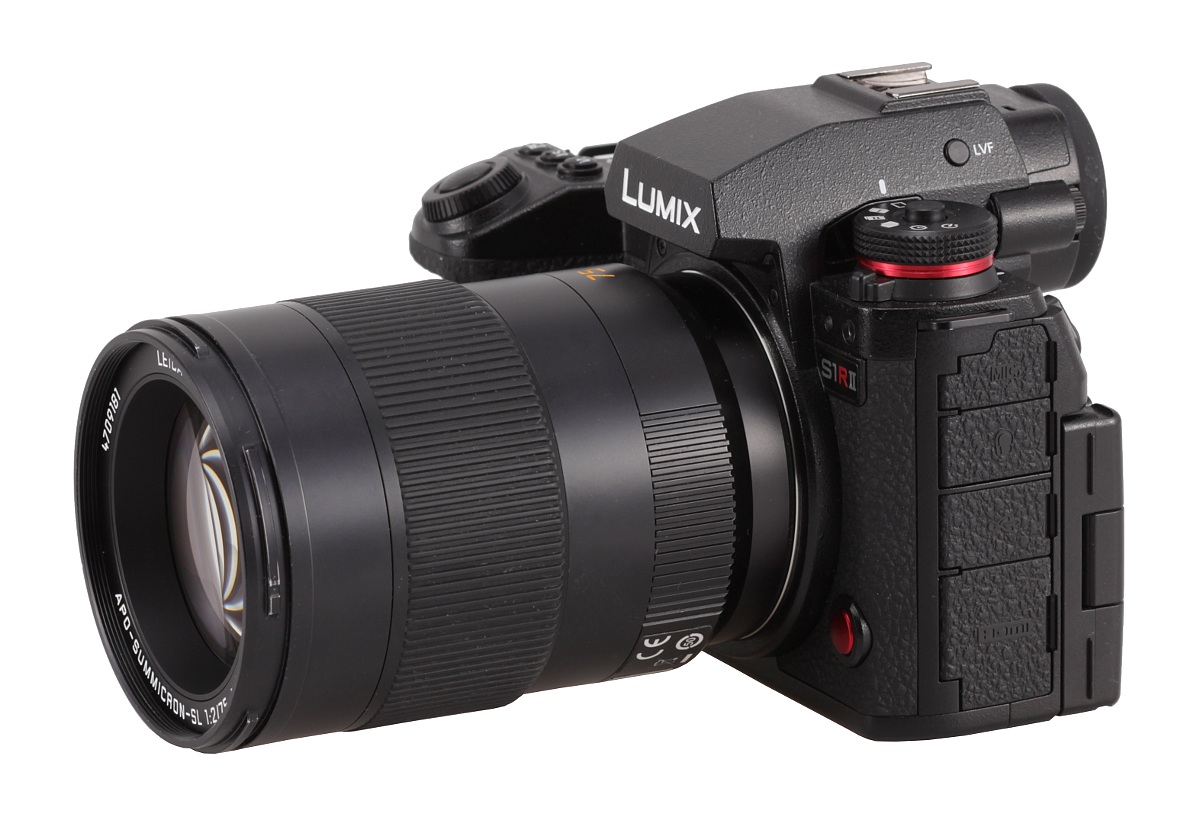
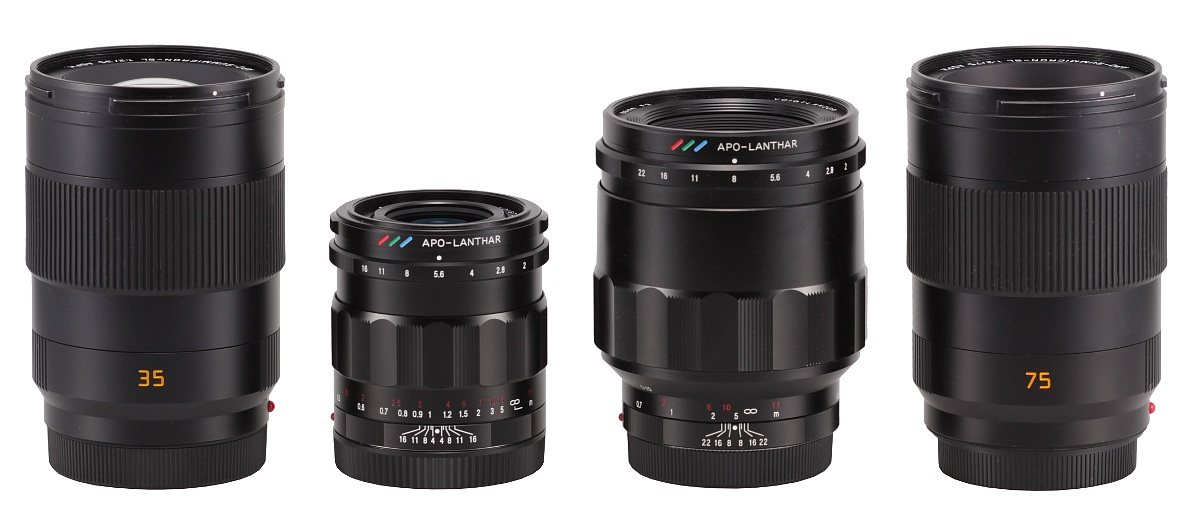 Leica APO-Summicron-SL 35 mm f/2, Voigtlander Apo-Lanthar 50 mm f/2, Voigtlander Apo-Lanthar 65 mm f/2 Macro and Leica APO-Summicron-SL 75 mm f/2. |
As you can notice, classic 2/28, 2/35, 2/50, 2/75 and 2/90 parameters were complemented by the ultra wide angle Super-APO-Summicron-SL 21 mm f/2 ASPH. What's more, in the timeline of Leica SL future launches we've seen also the APO-Summicron-SL 24mm f/2 ASPH but officially it has't been launched yet.
 |
 |
You are also invited to get acquainted with our test procedure, described in the article "How do we test lenses?" If you feel it’s still not enough, please go to our FAQ section where you can find some further explanation.