Sigma C 20-200 mm f/3.5-6.3 DG
3. Build quality
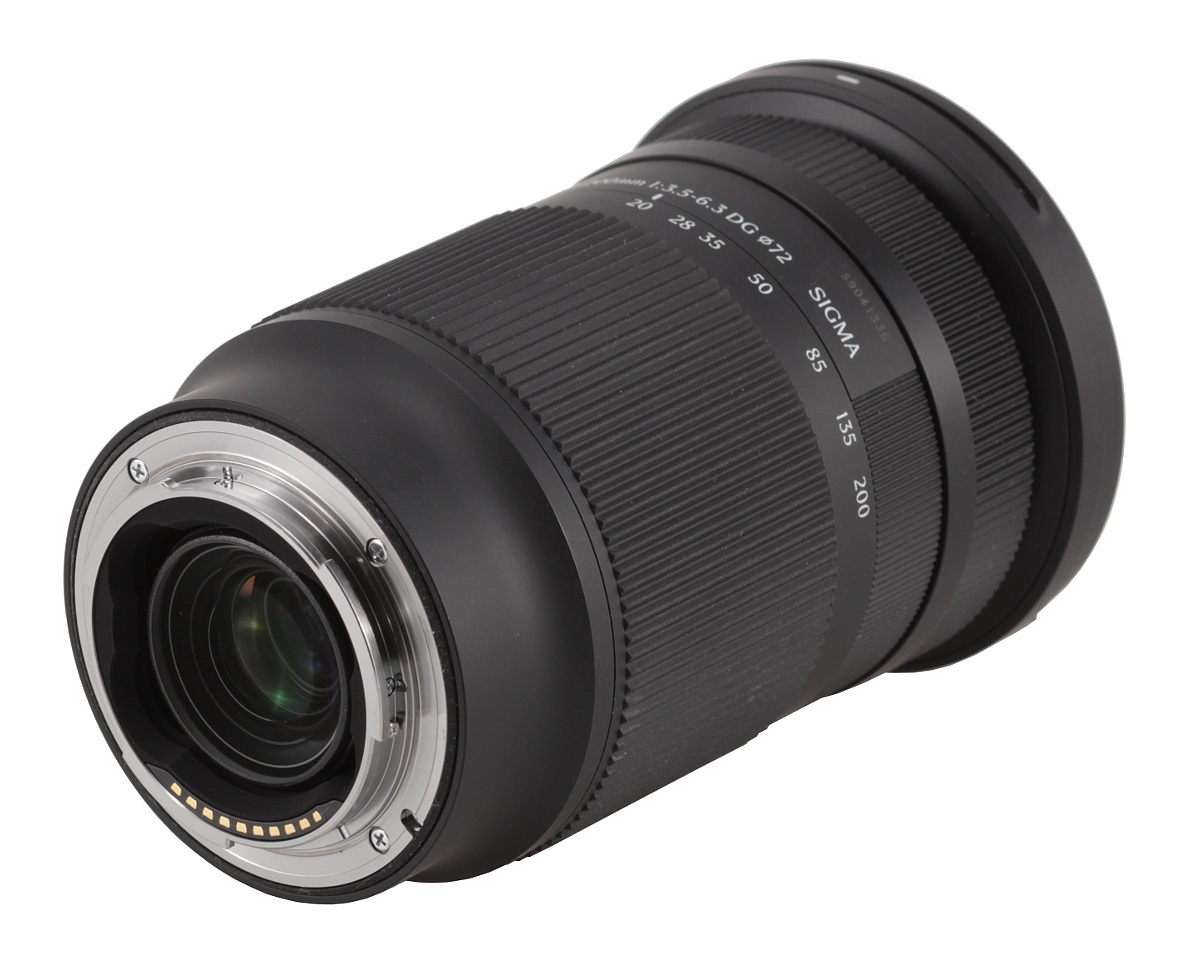
Meanwhile we got a shapely, handy lens which length in folded position doesn't exceed 12 centimeters and weight reaches just 550 grams, so, roughly, two times less than my expectations.
The following chart presents a comparison between the tested Sigma and other full frame superzooms. Of course in their case the shortest focal length amounts to as much as 24-25 mm and they offer the maximum focal length of 240 mm. All of them are heavier than the Sigma, and only the Nikkor Z 24-200 mm f/4-6.3 VR is very slightly shorter. It's worth adding that the Sigma and the Tamron are the only models without an optical image stabilization module, a fact that allows to simplify their optical construction, limit the weight and dimensions of the lens. Also the Sigma along the Tamron stick out in a positive way in this group with their minimum focusing distance.
Please Support UsIf you enjoy our reviews and articles, and you want us to continue our work please, support our website by donating through PayPal. The funds are going to be used for paying our editorial team, renting servers, and equipping our testing studio; only that way we will be able to continue providing you interesting content for free. |
- - - - - - - - - - - - - - - - - - - - - - - - - - - - - - - - - - - - - - - - - - - - - - - -
As we've already mentioned this aspect, it's worth adding one more important fact - in the 28-85 mm range the Sigma offers you a very sensible 1:2 mapping scale, providing a quite nice substitute of a macro mode. It increases the flexibility of this lens.
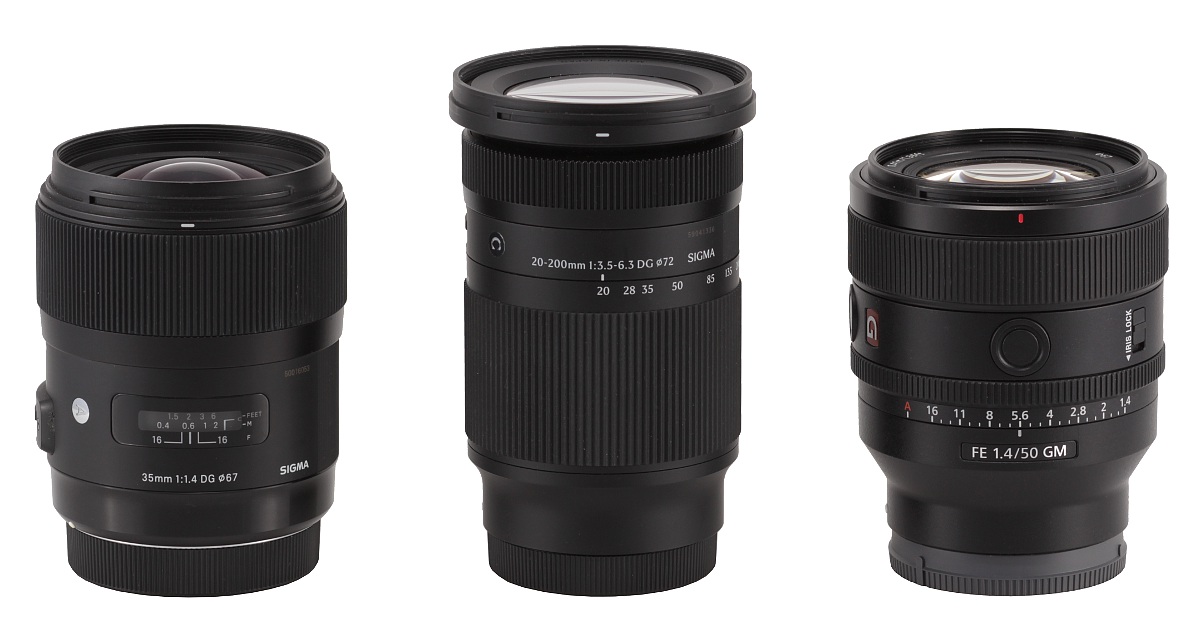
In the photo below the Sigma C 20-200 mm f/3.5-6.3 DG is positioned between the reflex camera Sigma A 35 mm f/1.4 DG HSM and the Sony FE 50 mm f/1.4 G.
 |
 |
 |
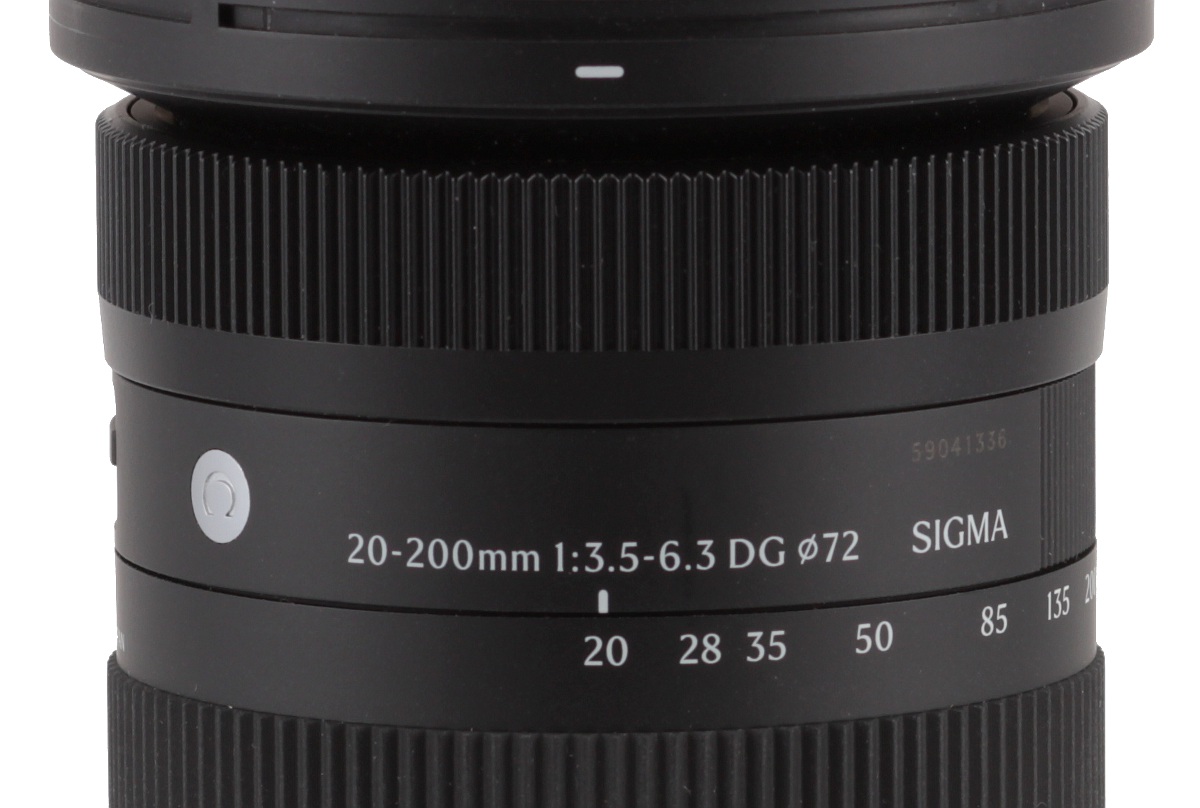 |
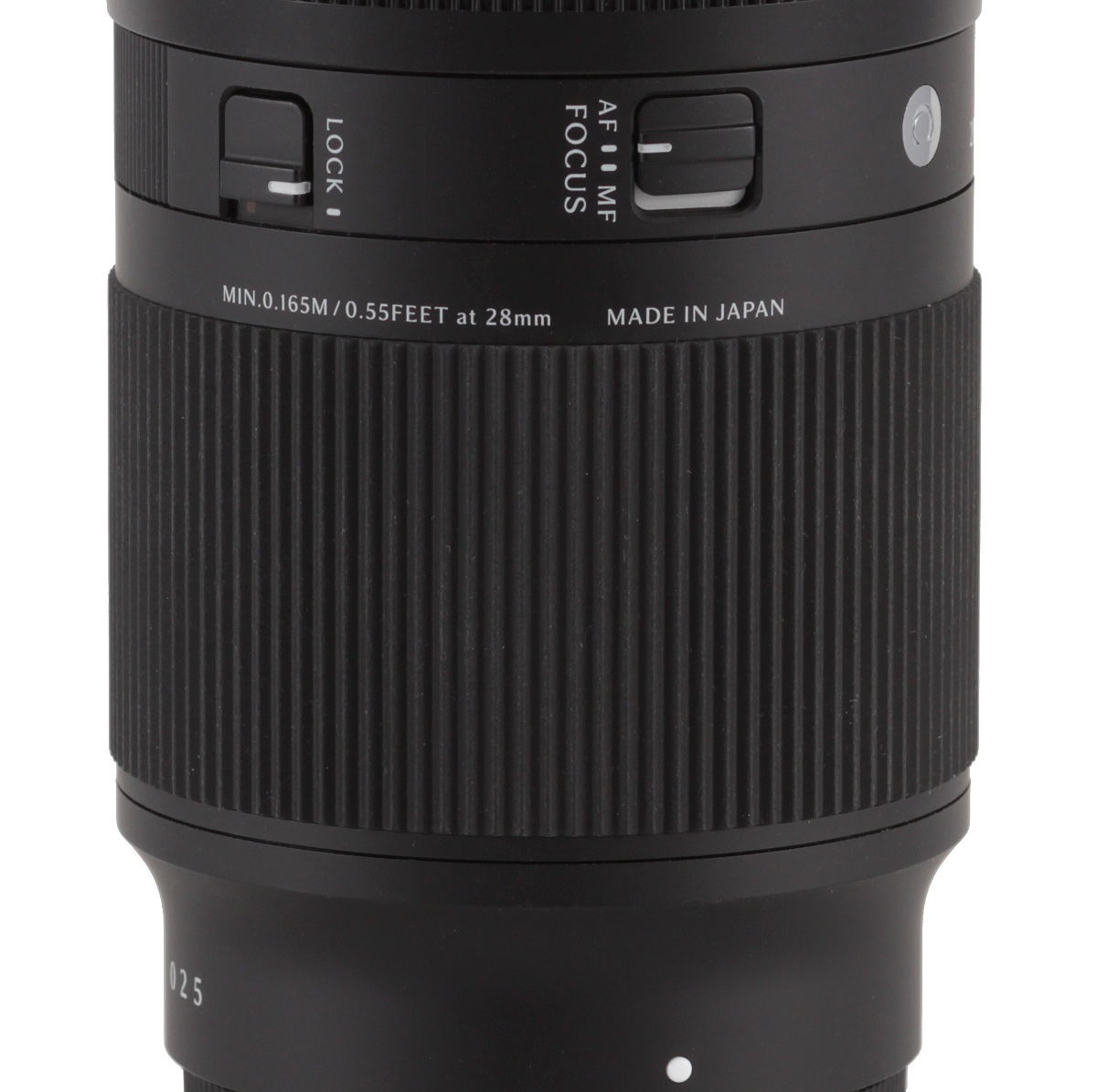
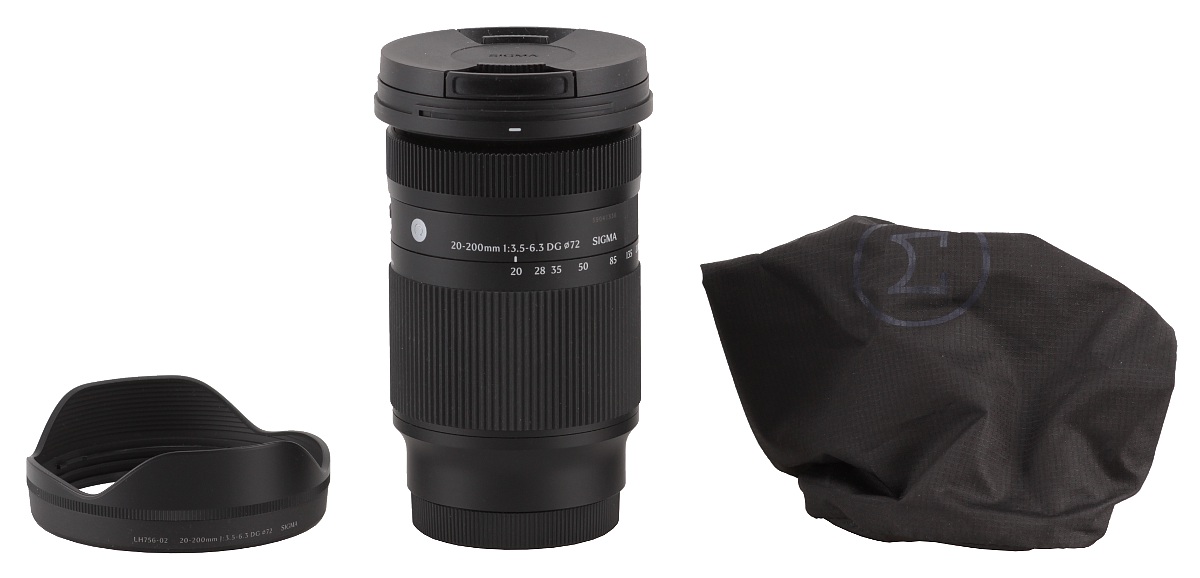
An immobile part of the casing, partially covered by fine ribbing, is next; it features the name and parameters of the lens, the logo of the producer, the serial number, a silver C letter meaning the lens belongs to the Contemporary line, and also two switches. The first one, AF/MF, controls the focus ring modes, and the second one, LOCK, blocks the zoom ring at 20 mm in order to prevent an uncontrollable change of dimensions of the lens.
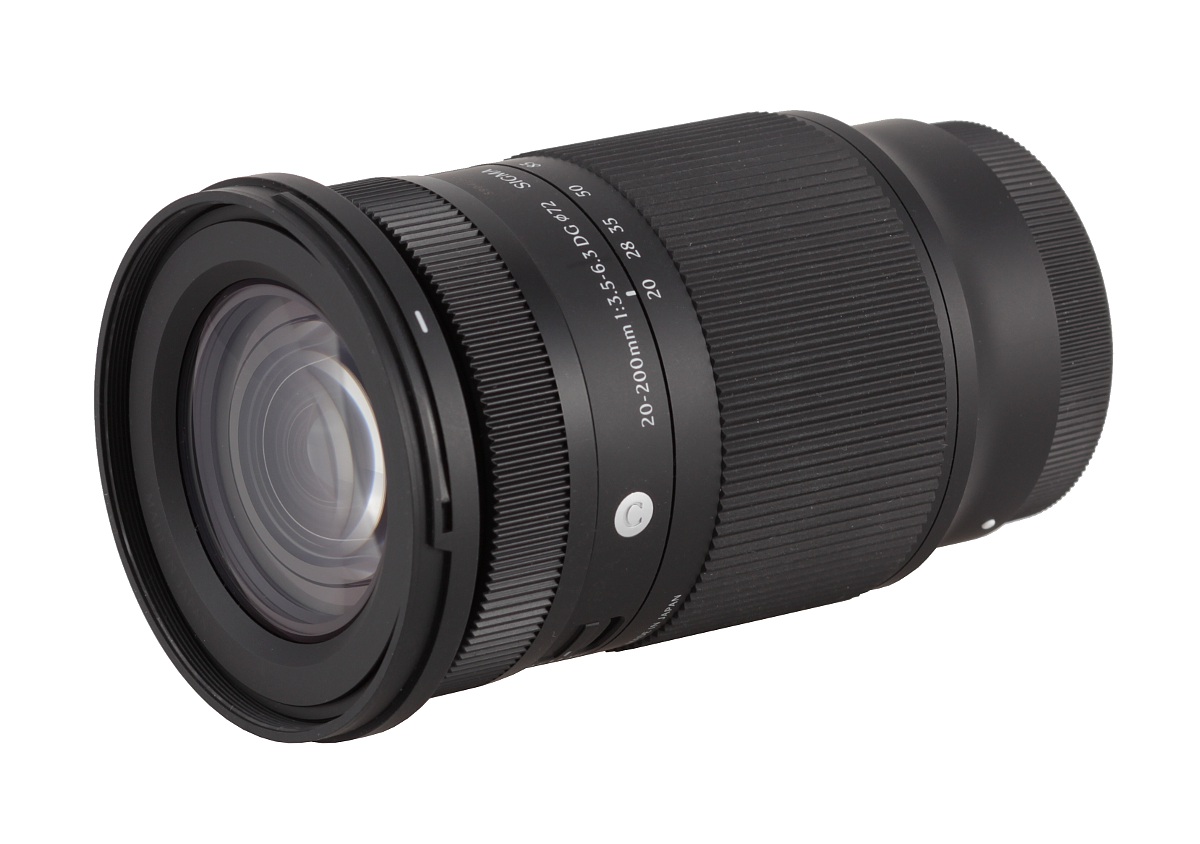 |
The Sigma C 20-200 mm ends with a hood rim inside which you find a non-rotating filter thread, 72 mm in diameter. The front element is slightly convex, 50 mm in diameter. As you increase the focal length the whole optical system extends on a homogeneous tube covered by plastics. During this operation the length of the lens increases by 7 cm.
When you increase the focal length the lens gets slower and quite fast to boot. At the shortest focal length you get the f/3.5 aperture, at 22 mm it decreases to f/4.0, at 29 mm the aperture is f/4.5, at 38 mm it drops to f/5.0, at 51 mm to f/5.6 and from the 83 mm upwards the aperture available amounts to f/6.3. Here you get to know the price you have to pay for small dimensions of the tested instrument.
 |
 |
 |