Sigma C 20-200 mm f/3.5-6.3 DG
6. Distortion and field of view
Field of view
A rectilinear 20-200 mm lens should give you on full frame angles of view ranging from 94.5 to 12.3 degrees. In their official specification the producer states such range of angles exactly. Still, we decided to take a reality check. In order to do so we took photos of a starry sky and saved them as uncorrected JPEG files. Then we transformed the pixel layout (X,Y) from the photo into the equatorial coordinate system (right ascension and declination), which locates a star on a celestial sphere. That way we were able to measure the field very precisely, and exactly as it should be done, for rays of light coming from infinity.For 20 mm focal length our transformation was based on positions of 266 stars spread evenly across the frame. An average mesh-fitting error amounted to as much as 7 minutes and 57 seconds of arc. We got a result of 100.3 degrees with a measurement error on a level of 0.2 of a degree. The result is by almost 6 degrees higher than the value stated in official specifications. It's clear the producers left quite a lot of spare field for distortion correction, a very good move, in a moment we'll explain why it is going to be needed. It's worth mentioning the fact that such a field value is an equivalent of the perfectly distortion corrected 18 mm focal length.
In case of corrected JPEG files our transformation was based on 214 stars. This time an average mesh-fitting error was noticeably lower and amounted to 1 minute and 53 seconds of arc. The result we got amounted to 96.49 deg with an error on a level of 0.05 deg. Here the field is also a tad wider than stated in specifications but this time the spare area is narrower, reaching almost 2 degrees.
Please Support UsIf you enjoy our reviews and articles, and you want us to continue our work please, support our website by donating through PayPal. The funds are going to be used for paying our editorial team, renting servers, and equipping our testing studio; only that way we will be able to continue providing you interesting content for free. |
- - - - - - - - - - - - - - - - - - - - - - - - - - - - - - - - - - - - - - - - - - - - - - - -
At 200 mm focal length and uncorrected JPEG files we used the positions of 31 stars and an average mesh-fitting error decreased to just 4 seconds of arc. The angle of view, measured by us, amounted to 12.2 deg with an error not exceeding 0.1 of a degree. Here the field of view is, within the measuring error, in accordance with the field stated in official specifications.
Distortion
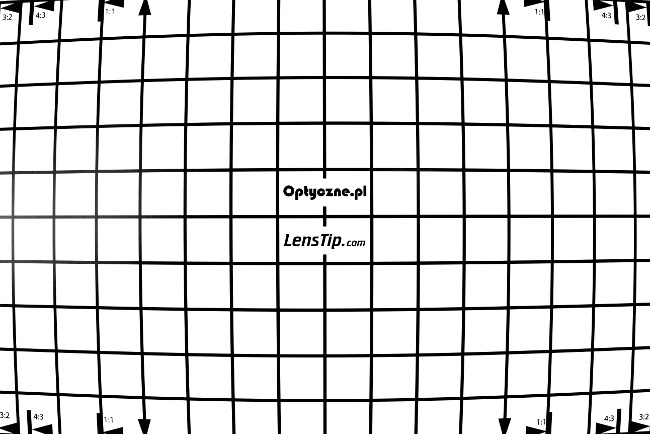
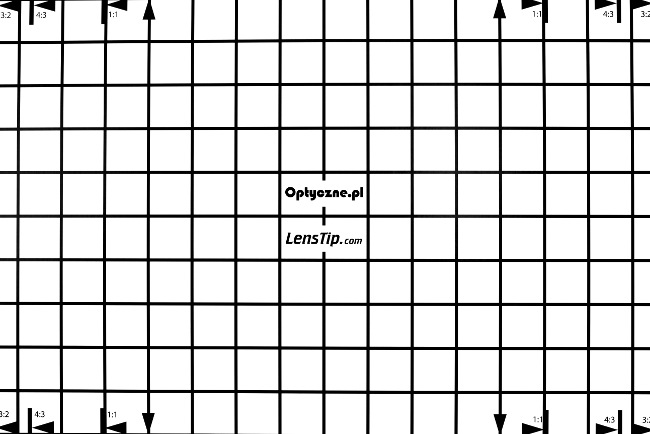
In a lens of this type you can always expect some compromises and, from some time, many optics producers look for compromises when it comes to distortion correction. They simply allow camera software to perform the task usually performed by the optics of the lens. The spare field of view, described by us earlier, visible both in files before distortion correction and also after this operation might suggest that there will be a lot of problems in this category.A confirmation of such expectations appears very soon, already on the smaller sensor of the APS-C/DX format. Here, at the shortest focal length, you deal with huge barrel of -5.02%. It is a bad result, especially if you remember that you get an angle of view of less than 71 degrees.
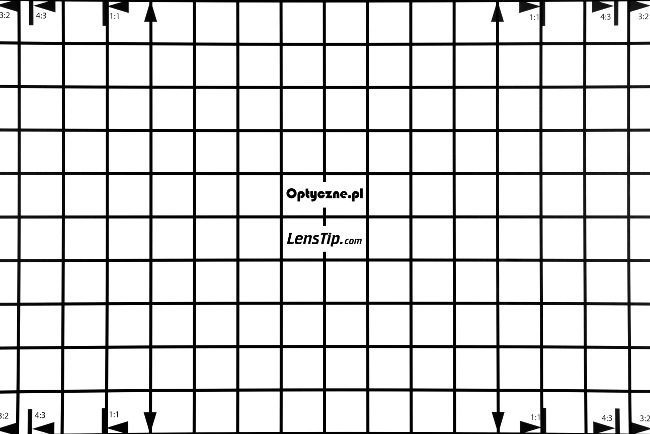
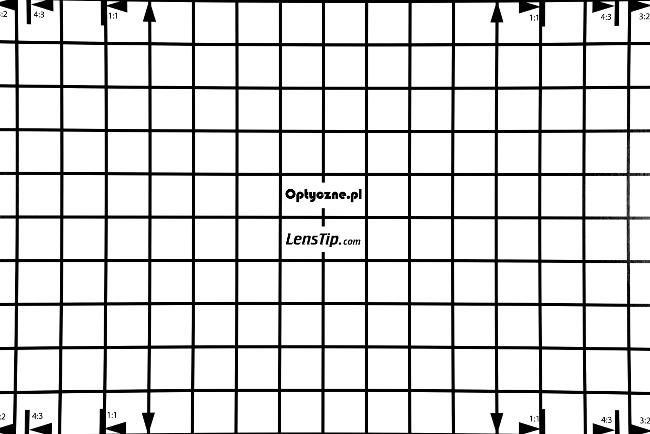
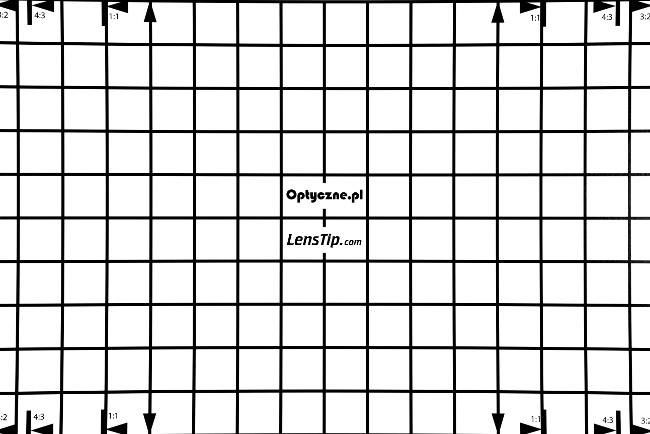
At 35 mm focal length distortion decreases to -0.44%, then it gets zero, it changes the sign, and starts to increase. Because of that, at 50 mm, you deal with a level of +0.87% and at 100 mm it increases to +1.45%. Then the increase is stopped so at 200 mm distortion reaches a very similar level of +1.35%.
| Sony A7R IIIa, APS-C, JPEG, 20 mm | |||
|
|||
| Sony A7R IIIa, APS-C, JPEG, 35 mm | |||
|
|||
| Sony A7R IIIa, APS-C, JPEG, 50 mm | |||
|
|||
| Sony A7R IIIa, APS-C, JPEG, 100 mm | |||
|
|||
| Sony A7R IIIa, APS-C, JPEG, 200 mm | |||
|
|||
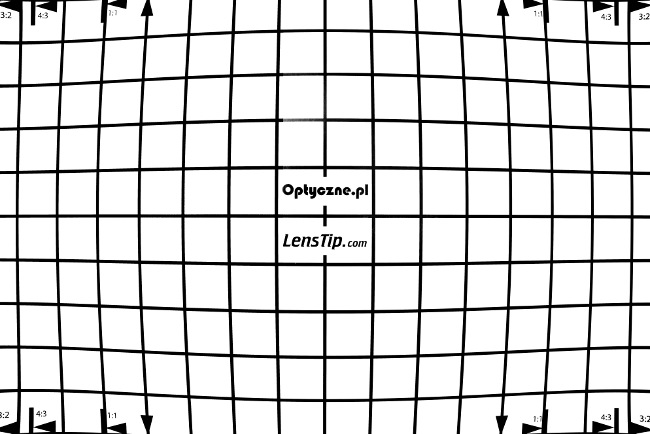
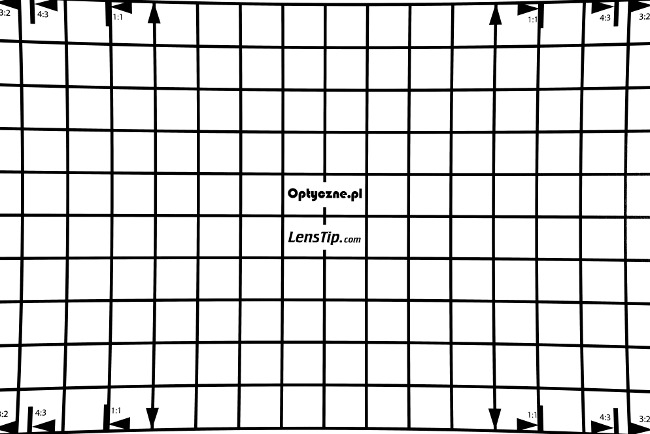
After passing to full frame you see other compromises the producers tried to employ. In order to keep barrel deformations in check and not let them rise to monstrous levels they introduced very distinct moustache distortion. I admit I haven't seen such vicious moustache for a very long time.
A result? Deformations at 20 mm are higher than on the APS-C/DX sensor but not as high as you would expect, reaching -6.97%. It is a very high result but still it was reached by averaging out the measurements across the frame. The real level of barrel distortion can be measured in an area limited by 1:1 markings – here our result amounts to as much as -8.55%. Believe me, it is bad.
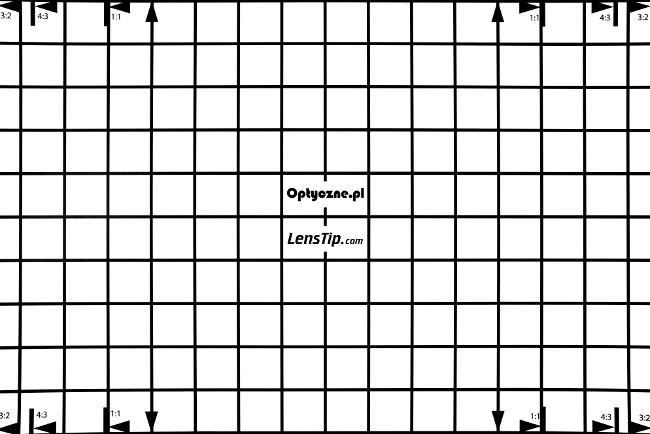
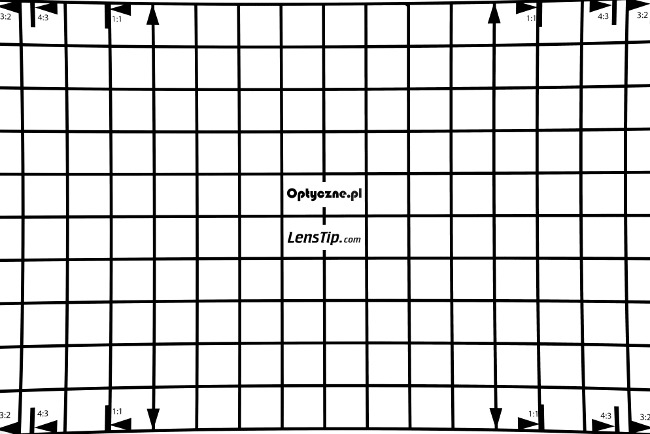
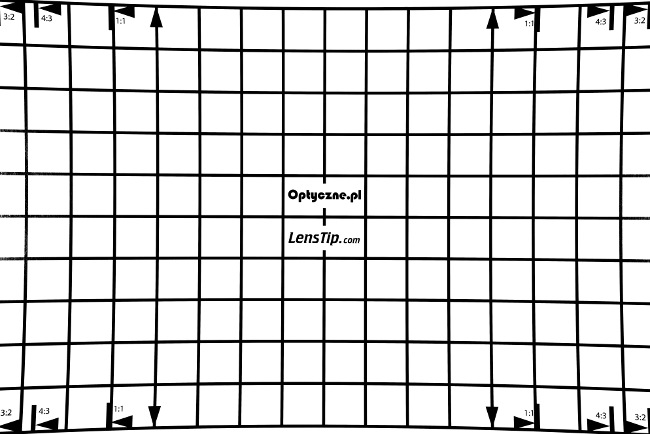
At 35 mm focal length the deformations are practically zero, with a result of +0.10% but even in this place you still can find a very slight trace of moustache and it is responsible for the final decrease of this result. At 50 mm you can notice fully-fledged pincushion, as it reaches +2.38% and, what's even worse, at 100 mm it is increased to a high value of +3.48%. At the maximum focal length distortion decreases slightly and reaches +3.21%.
This performance is nothing we would like or appreciate but we expected it to be so nevertheless. A lens of this type has to features compromises and it was a given that the producers would look for an opportunity to include them in the distortion correction category.
| Sony A7R IIIa, FF, JPEG, 20 mm | |||
|
|||
| Sony A7R IIIa, FF, JPEG, 35 mm | |||
|
|||
| Sony A7R IIIa, FF, JPEG, 50 mm | |||
|
|||
| Sony A7R IIIa, FF, JPEG, 100 mm | |||
|
|||
| Sony A7R IIIa, FF, JPEG, 200 mm | |||
|
|||
Of course it's worth remembering that you get enough of spare field of view to reach values declared in the specifications even after distortion correction. What's interesting, this reserve is even a tad bigger than necessary.
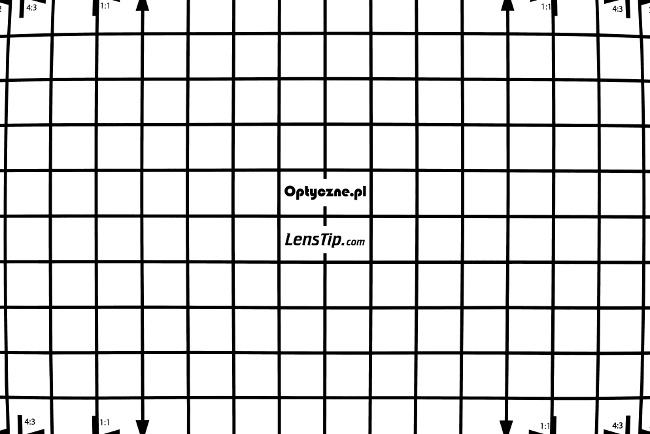
At the 20 mm focal length and for corrected files barrel distortion decrease to just -0.61%. If you are a purist, and you get annoyed by even the lowest distortion level, you still get almost 2 degrees of spare field in order to correct these deformations once again.
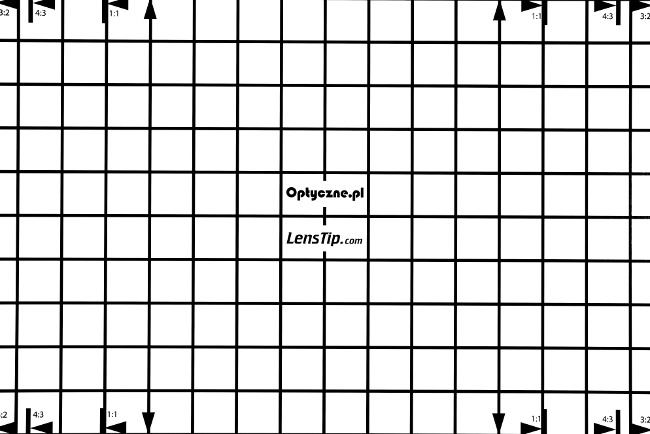
At 200 mm focal length distortion after correction decreases to an imperceptible level of +0.24% that, within measuring error, brushes against zero.
As always in such a case we have to remember that even after guaranteeing an appropriate surplus of field of view the correction of such huge geometric deformations has its price in a form of wasting a significant number of pixels and limiting an effective image resolution.
| Sony A7R IIIa, FF, JPEG CORR, 20 mm | |||
|
|||
| Sony A7R IIIa, FF, JPEG CORR, 200 mm | |||
|
|||