Voigtlander Apo Lanthar 28 mm f/2 Aspherical
3. Build quality
As you can notice, this group is not big but certainly diverse. Next to small, shapely constructions such as both Voigtlanders and the Sony model, you also get such a huge instrument as the Leica APO-Summicron-SL 28 mm f/2 ASPH.
The Apo Lanthar sticks out with the number of aperture blades, but its minimum focusing distance lags a bit behind the rest.
Please Support UsIf you enjoy our reviews and articles, and you want us to continue our work please, support our website by donating through PayPal. The funds are going to be used for paying our editorial team, renting servers, and equipping our testing studio; only that way we will be able to continue providing you interesting content for free. |
- - - - - - - - - - - - - - - - - - - - - - - - - - - - - - - - - - - - - - - - - - - - - - - -
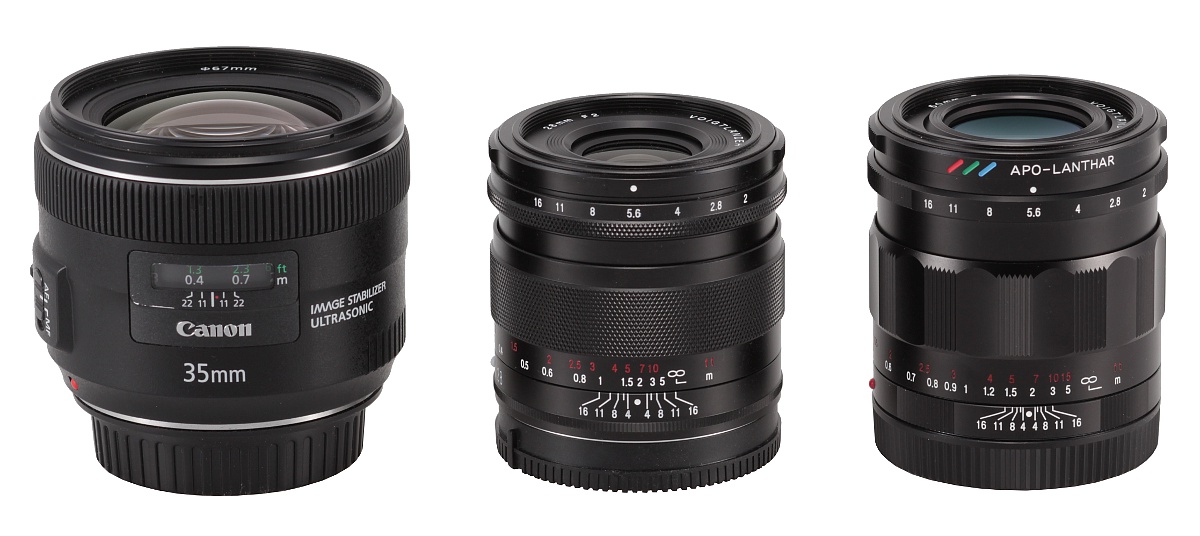
In the photo below, the Voigtlander Apo Lanthar 28 mm f/2 Aspherical is positioned between the reflex camera Canon EF 35 mm f/2 USM and the Apo Lanthar 2/50. It's interesting that the 2/28 model, despite the widest angle of view and the same aperture fastness, is the smallest instrument in this group.
 |
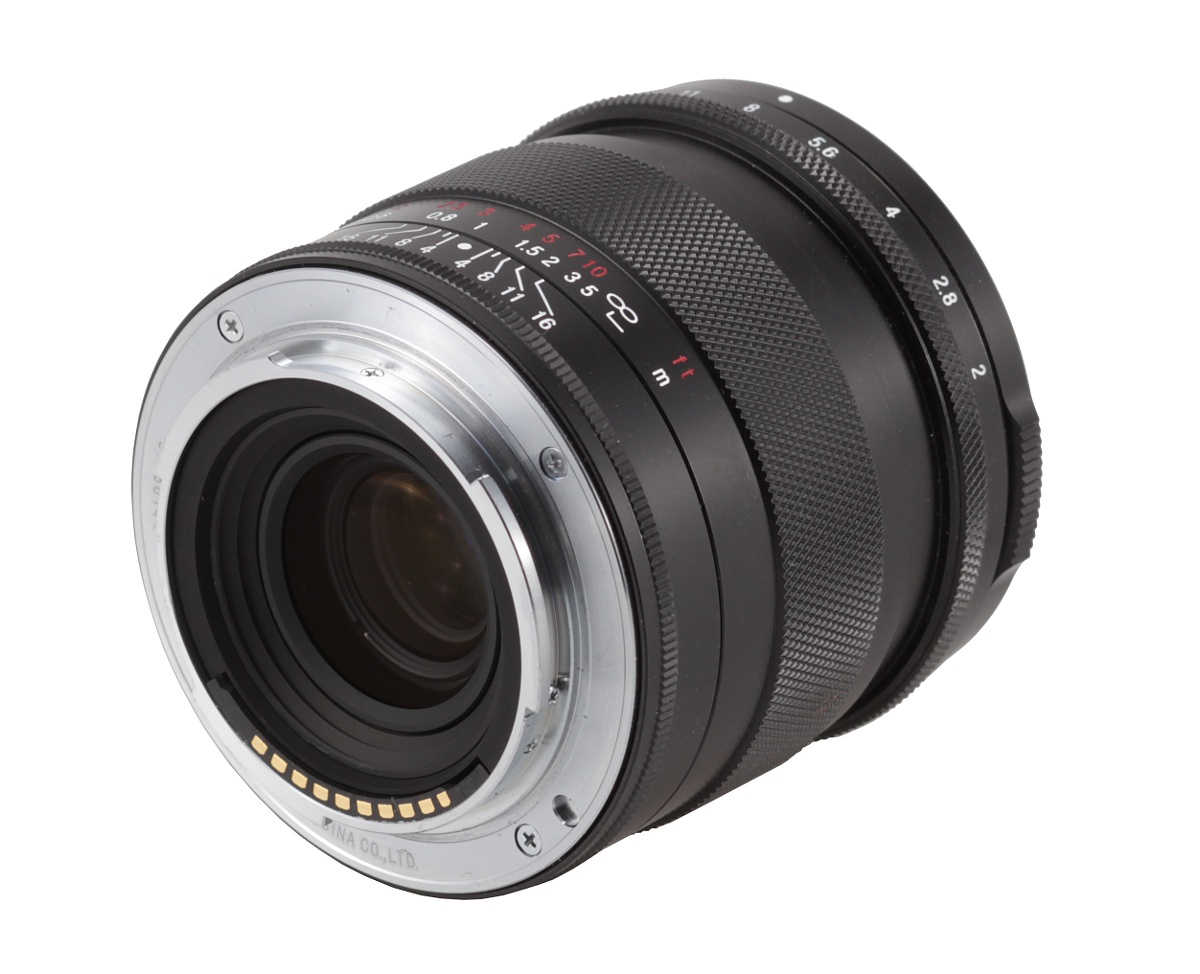 |
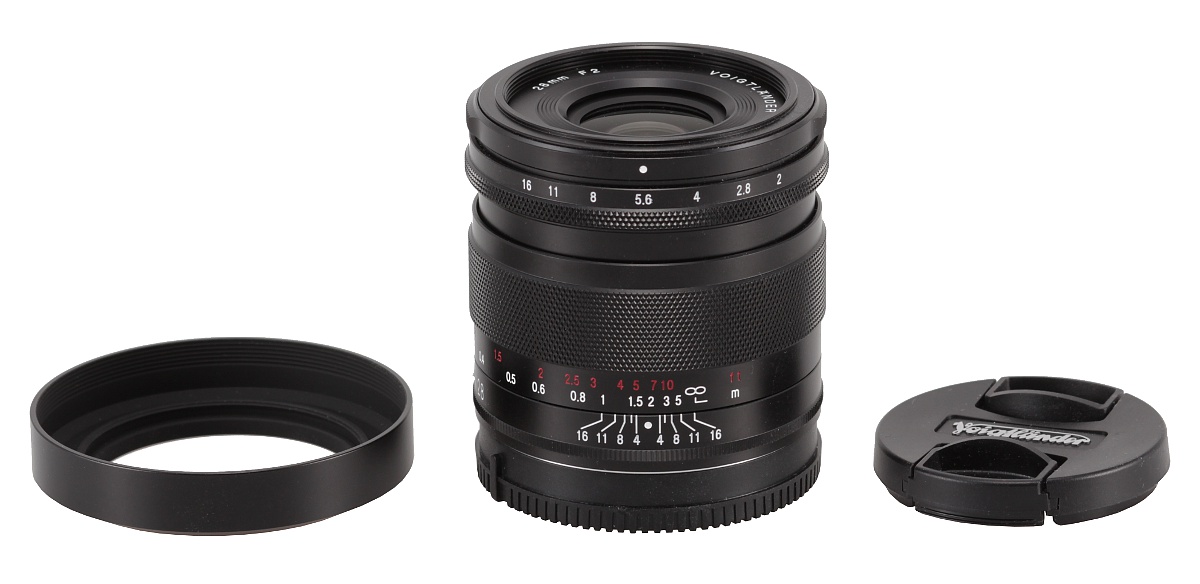
A manual focus ring takes up most of the space on the body of the lens, as it is 23 mm wide. The middle of the ring features distinct ribbing with well pronounced grooves for a better grip. Underneath, you see a distance scale expressed in feet and meters. The ring moves evenly and is properly damped; running through the full distance scale needs a turn through an angle of as much as 140 degrees or so, more than enough for comfortable focusing.
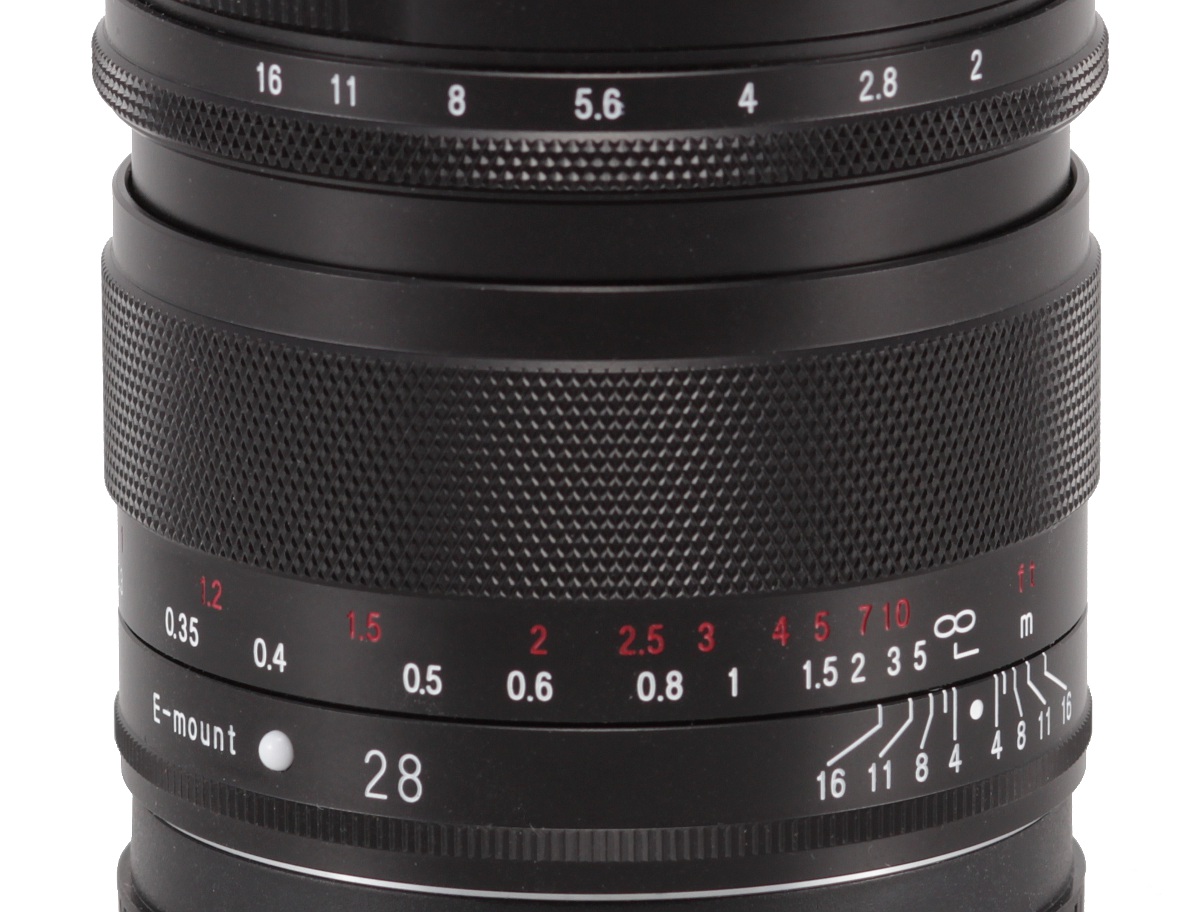 |
An aperture ring, as wide as 14 mm, is the next part of the barrel. It is covered by fine ribbing for a better grip and it moves every 1/3 EV step.
The lens ends with an immobile part of the barrel but without a typical hood mount because in this case the hood is of the screw-in type.
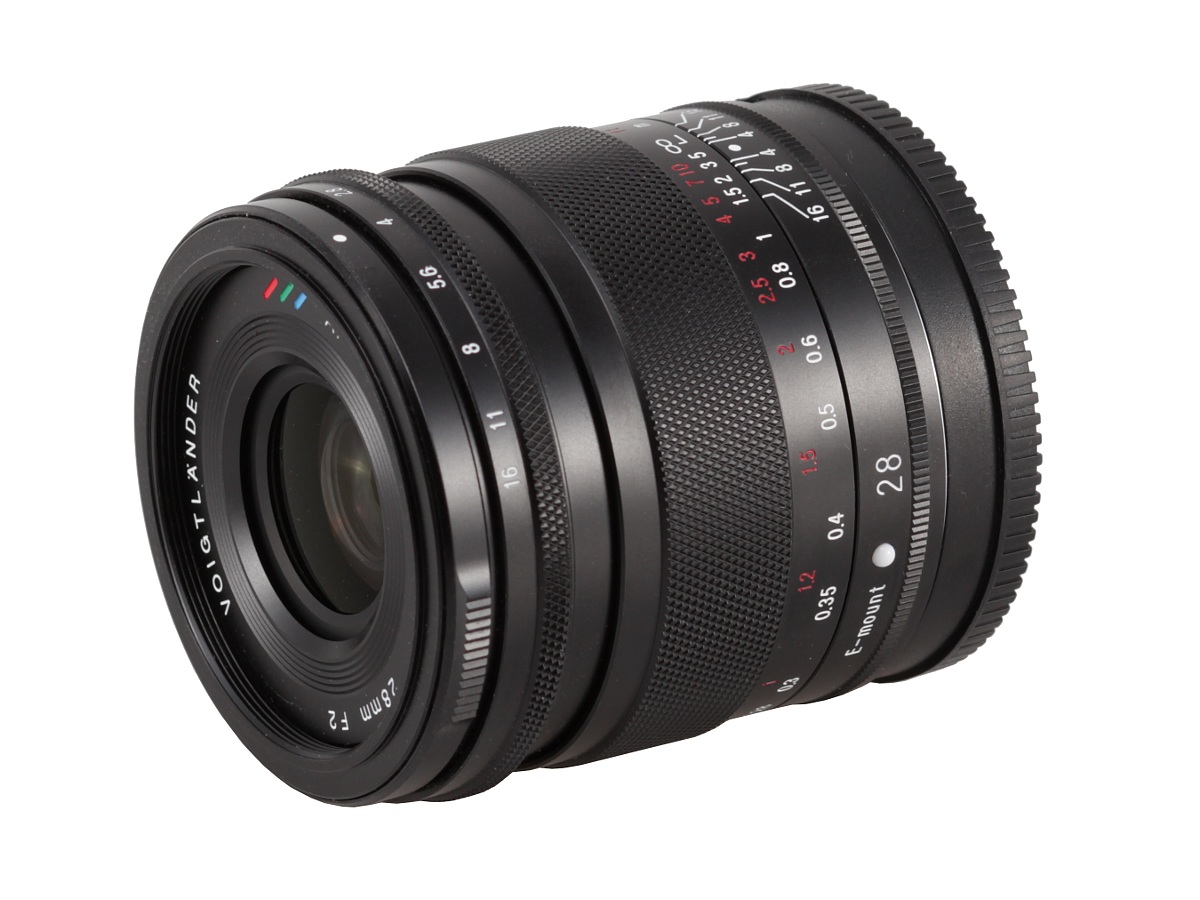 |
I had an opportunity to test this lens during the worst cold snap that came to Poland at the turn of January and February 2026, with temperatures outside falling below -15°C and the apparent temperature being well below -20°C. In these harsh conditions the lens fared exceedingly well, with both rings moving very smoothly. To be honest, the performance outdoors was comparable to the performance in our studio. Of course, moving the narrow aperture ring in thick gloves might be a challenge; mine were, fortunately, relatively thin and I didn't notice any discomfort.
 |
Buyers get in the box with the lens a metal hood and both caps.
 |