This table shows a comparison of the basic parameters of 1.4/85 class lenses available for the Sony FE mount. As you can see, the Aurora is one of the lighter models here, with only the Samyang weighing less. Its size is fairly typical for this group of lenses, but interestingly, it has the smallest filter thread size. It also stands out from its competitors with a 15-blade aperture.
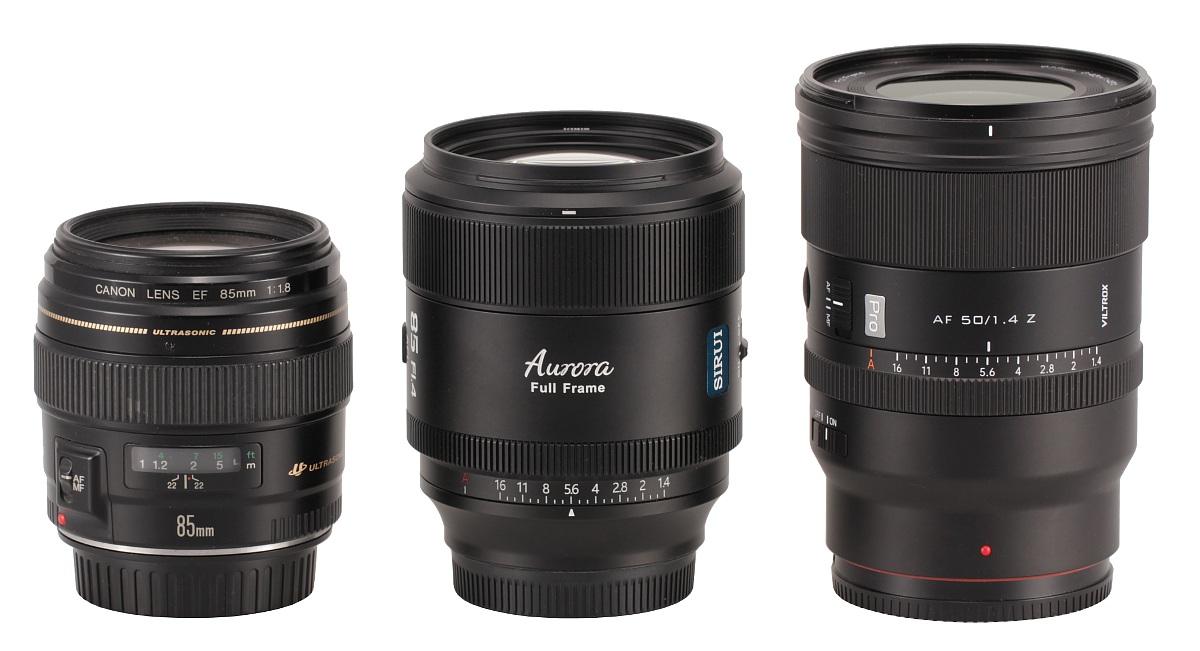
In the photo below, the Sirui Aurora 85 mm f/1.4 stands between the DSLR Canon EF 85 mm f/1.8 USM and the Viltrox AF 50 mm f/1.4 Pro for the Nikon Z mount.
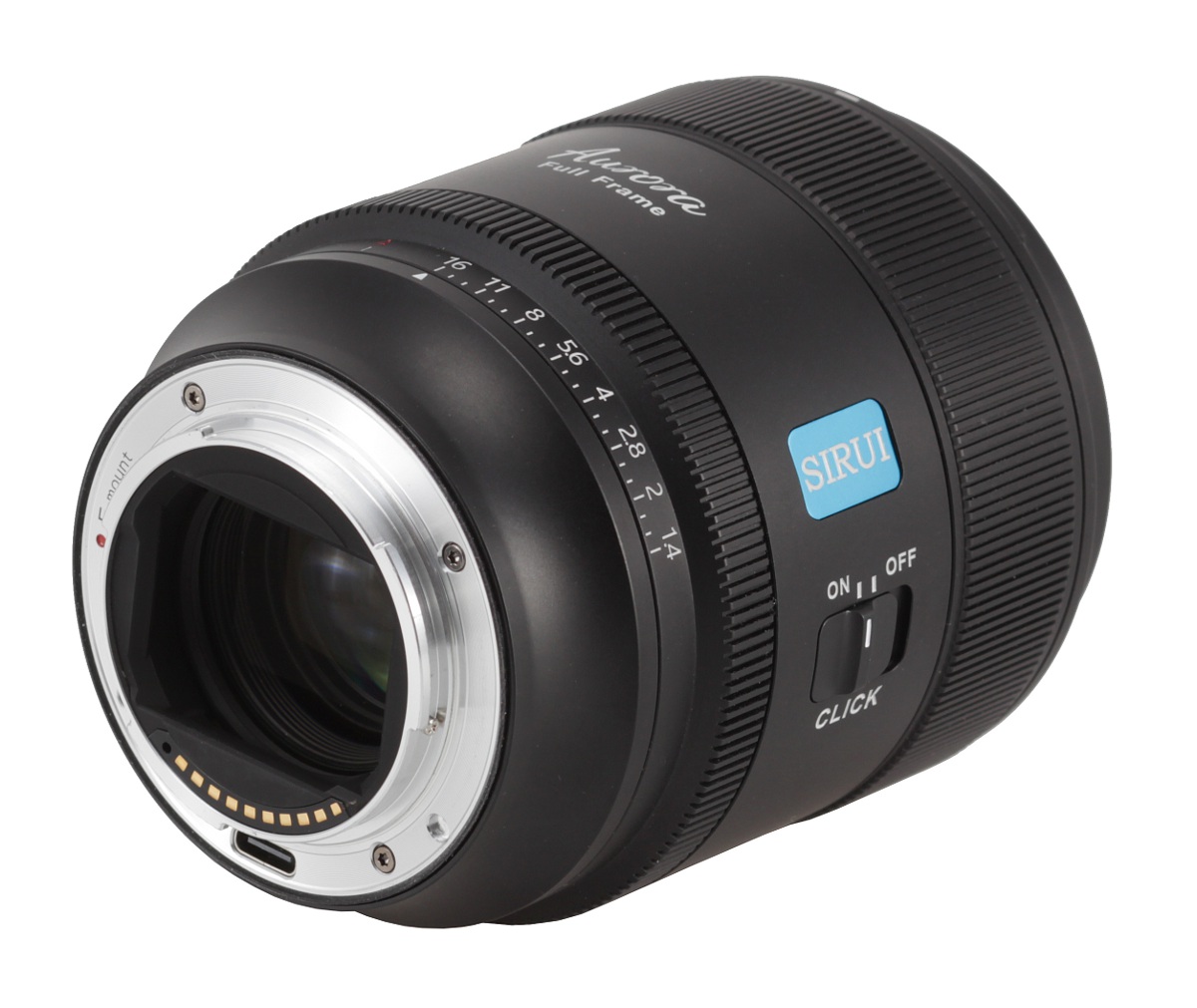
The tested lens starts with a metal mount, which features a USB-C port used for communication with a computer, firmware updates, and programming the buttons, as well as the mount designation (E-mount in our case). The mount surrounds the contacts and a black, plastic frame measuring 33 × 27 mm. Beneath the frame is a barrel containing a rear, fixed lens element with a diameter of 30 mm. Everything here is properly blackened and matte-finished.
Please Support Us
If you enjoy our reviews and articles, and you want us to continue our work please, support our website by donating through PayPal. The funds are going to be used for paying our editorial team, renting servers, and equipping our testing studio; only that way we will be able to continue providing you interesting content for free.
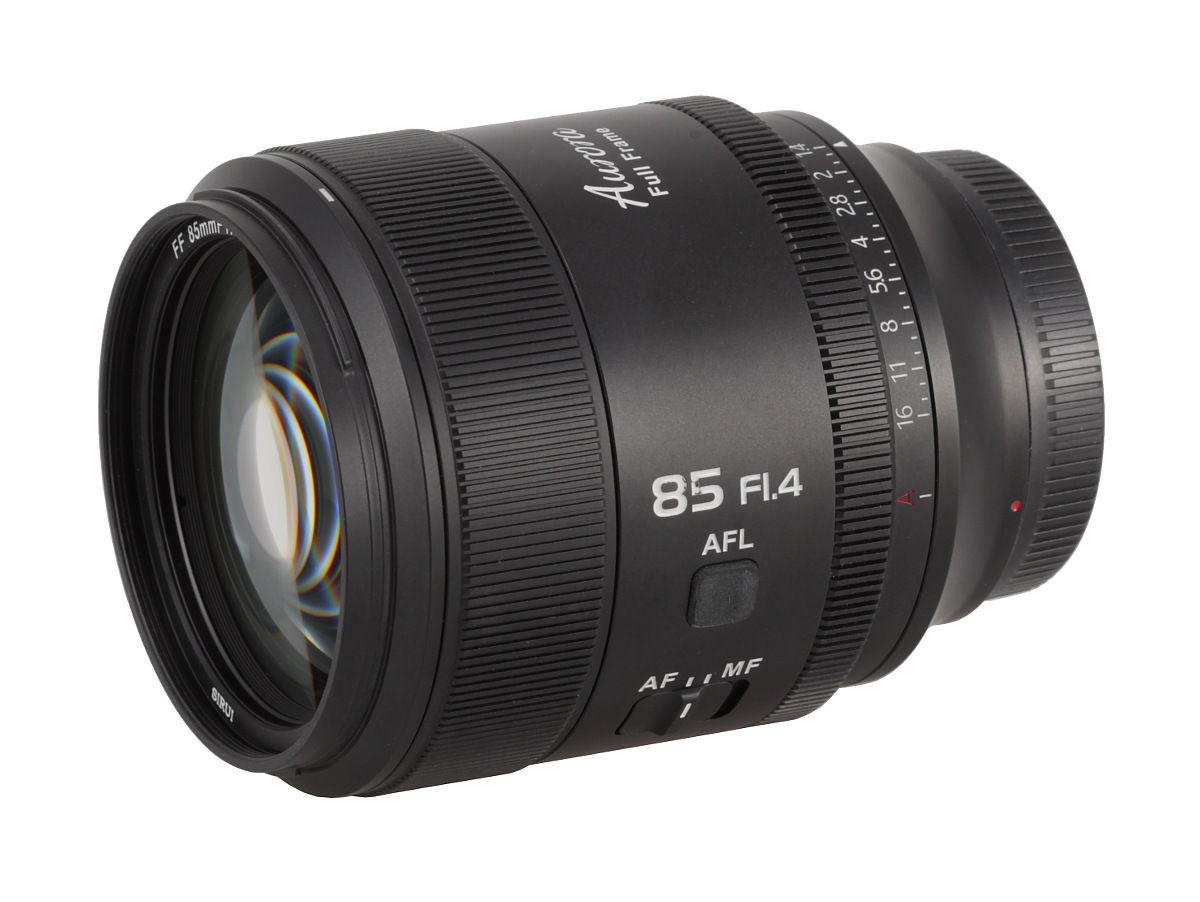
The lens body proper begins with a metal ring that expands in diameter. A red dot has been placed on it to facilitate mounting the lens on the camera, along with the serial number.
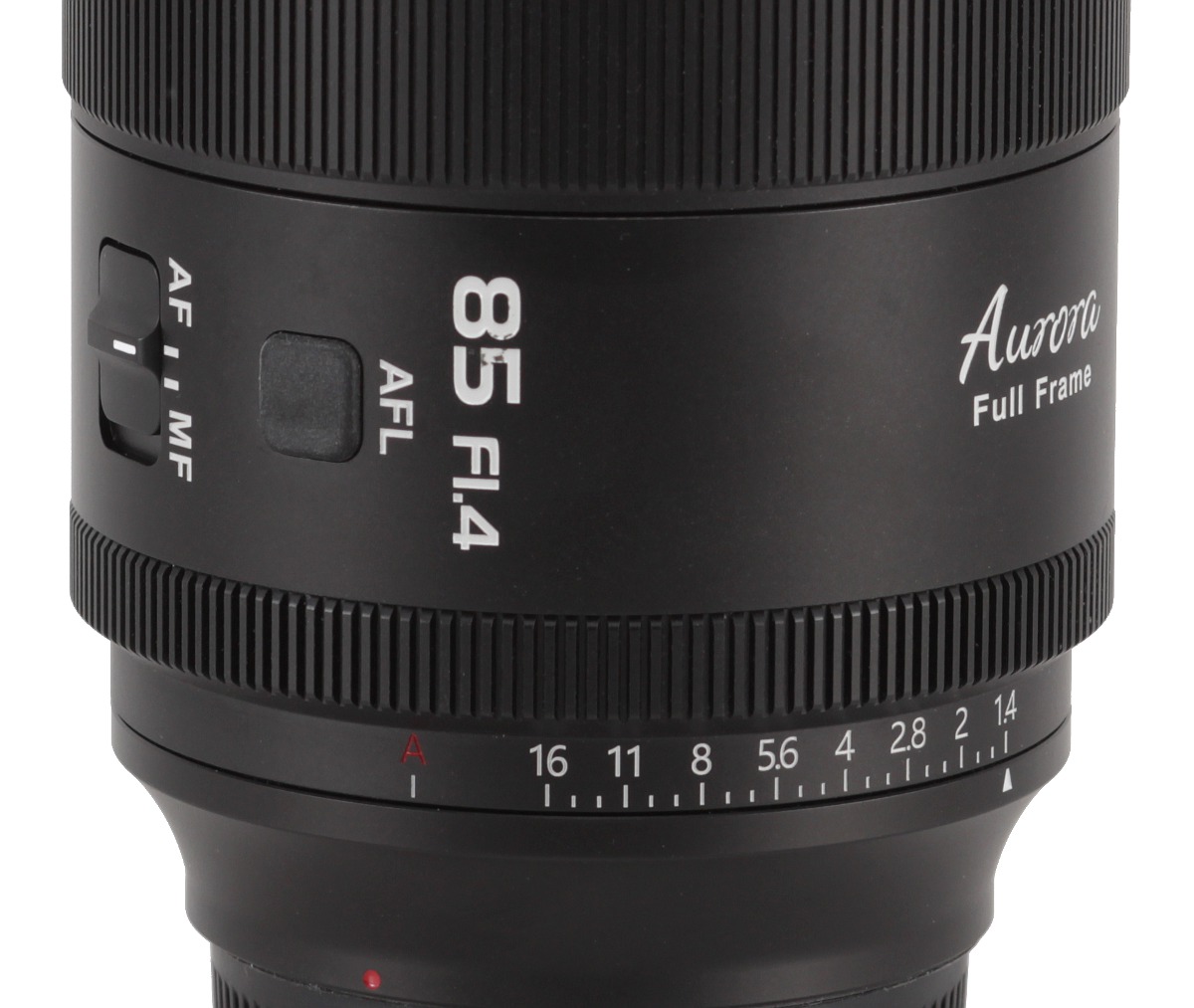
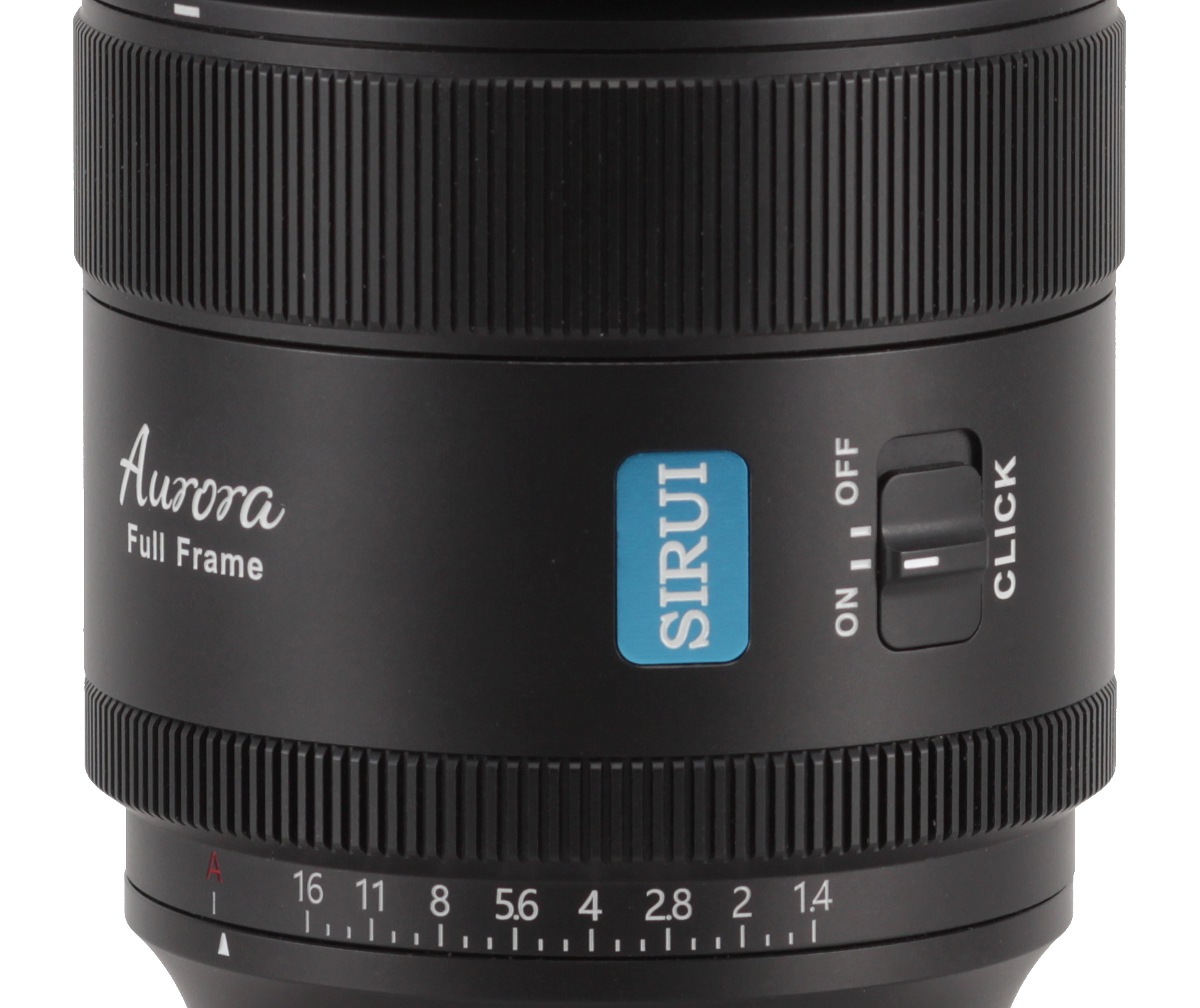
The next element is the aperture ring, which is 17 mm wide. Its upper section features a metal ribbed grip, while the lower section is marked with aperture values from f/1.4 to f/16 in 1/3 EV increments, as well as the automatic A setting.
The aperture ring operates properly and with an appropriate amount of resistance. It can be set to either clickless or clicked operation.
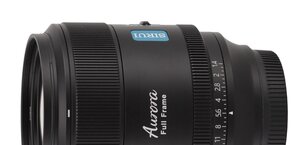
Next, we come across a fixed section of the lens barrel, 30 mm wide. It features an inscription with the lens name and specifications (incidentally, it is made with rather poor-quality paint, as it has already started to peel and flake off), a turquoise plate with the manufacturer’s logo, and a series of switches.
Looking from above, on the right-hand side we have the CLICK ON/OF switch, which is used to select the operating mode of the aperture ring. On the left, there is a programmable AFL button and an AF/MF switch for selecting the operating mode of the focusing mechanism.
Moving further, we find the 23-mm-wide manual focusing ring. It is almost entirely covered with a rubberized ribbed grip and has no depth-of-field or distance scale. It operates electronically, with a slight amount of resistance that nevertheless remains within acceptable limits.
Covering the entire focusing range, even when turning the ring quickly, requires a rotation of approximately 530–540 degrees. This is a very large value, allowing for highly precise adjustments. However, it is worth noting that such a large rotation angle may be excessive for videographers. When operating the ring, the hand has to be repositioned several times, which can look unattractive in the final footage, as the focus does not shift smoothly but rather in noticeable steps.
The final element of the SIRUI 1.4/85 is a metal ring that tapers in diameter and ends with a bayonet mount for attaching the lens hood.
The front element is slightly convex, has a diameter of 58 mm, and is set inside a small, black, ribbed barrel. It is additionally surrounded by a section of the lens barrel bearing the lens specifications and a non-rotating 67 mm filter thread.
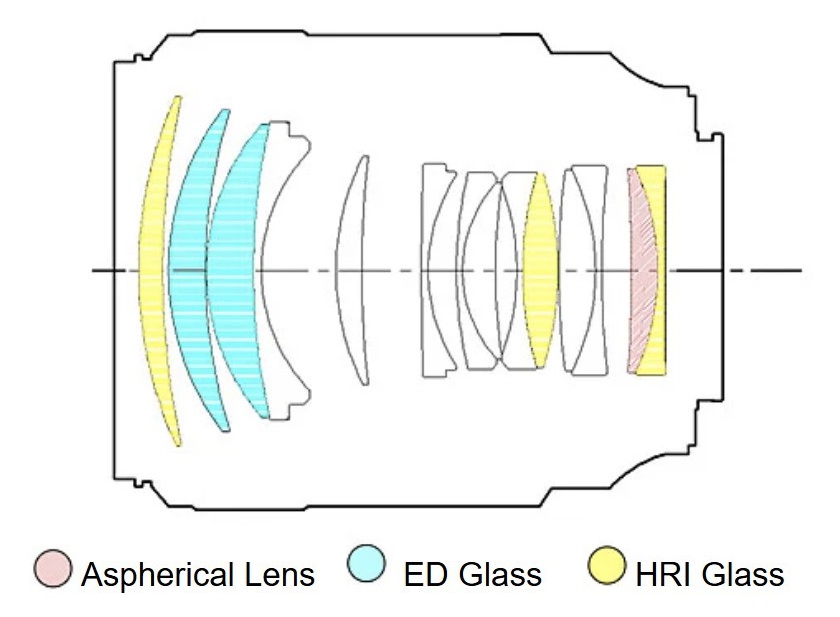
In terms of optical construction, we are dealing with 14 elements arranged in 9 groups. The number of special elements is particularly impressive. Two elements made of Extra-low Dispersion (ED) glass are used in the front section of the optical system. In addition, there are three elements made of High Refractive Index (HRI) glass and one aspherical element. Inside, we also find a circular 15-blade aperture, which can be stopped down to a maximum of f/16. We will see how this performs in practice in the next chapter.
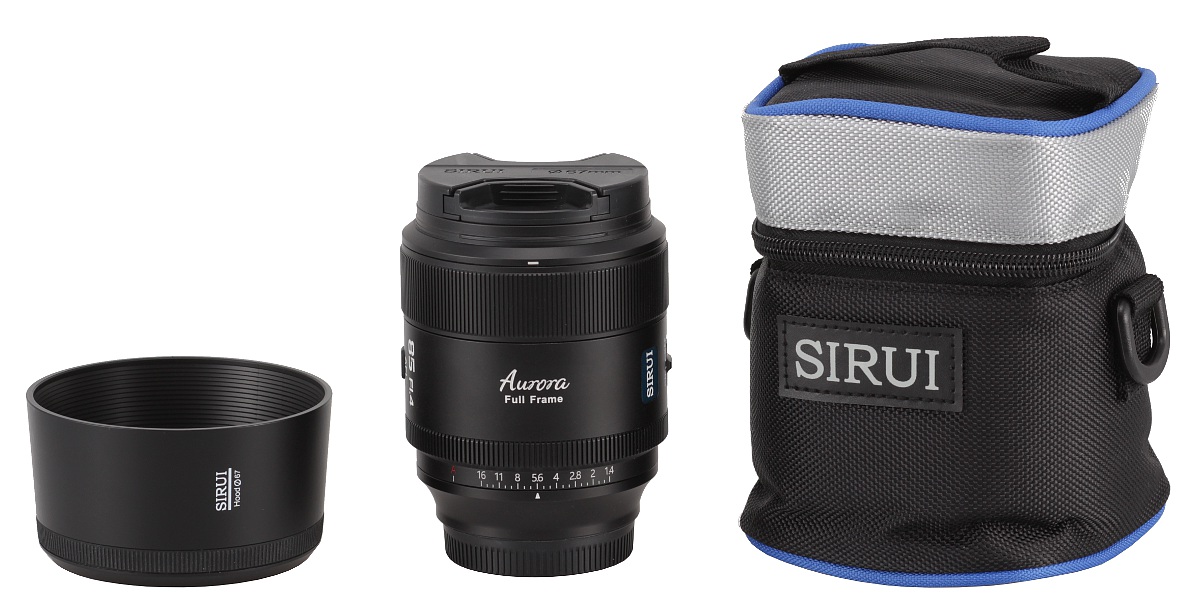
For a reasonably priced lens, the standard accessories are quite impressive. The lens comes with both caps, a lens hood, and a fairly sturdy carrying case. This is a rarity nowadays, as most manufacturers have stopped including good-quality cases in the box, either omitting them altogether or replacing them with pouches of questionable protective value.