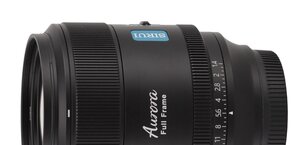
Sirui Aurora 85 mm f/1.4
5. Image resolution
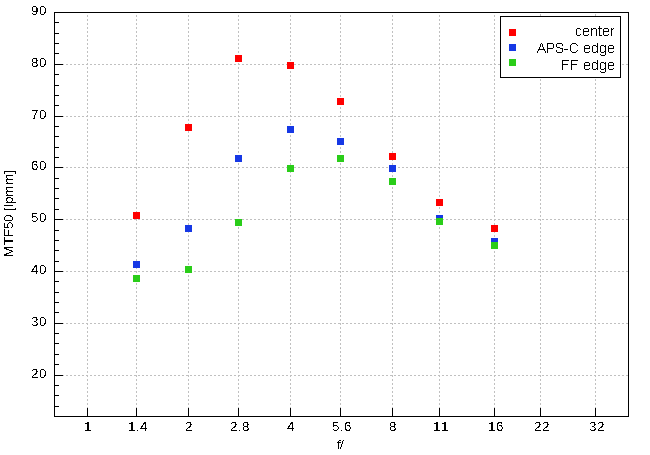
Let us see how the performance of the SIRUI Aurora 85 mm f/1.4 compares in this context, both at the center of the frame, at the edge of the APS-C/DX sensor, and at the edge of the full-frame sensor.
Please Support UsIf you enjoy our reviews and articles, and you want us to continue our work please, support our website by donating through PayPal. The funds are going to be used for paying our editorial team, renting servers, and equipping our testing studio; only that way we will be able to continue providing you interesting content for free. |
- - - - - - - - - - - - - - - - - - - - - - - - - - - - - - - - - - - - - - - - - - - - - - - -
When it comes to the center of the frame, there are no weak points here. Even at the maximum aperture, the results exceed 50 lpmm, putting them safely above the level we consider acceptable. At the same time, stopping down the aperture allows the SIRUI to reach an excellent level of over 81 lpmm. We can also see the effect mentioned in the previous chapter. Stopping down from f/11 to the nominal f/16 value only slightly reduces the resolution, and the result at f/16 reaches 48.3 lpmm, which is a good few lpmm too high.
We can use the actual aperture values determined in the previous chapter to compare the performance of the SIRUI Aurora 1.4/85 with its competitors, such as the Viltrox AF 85 mm f/1.4 Pro and the Meike AF 85 mm f/1.4 FF.
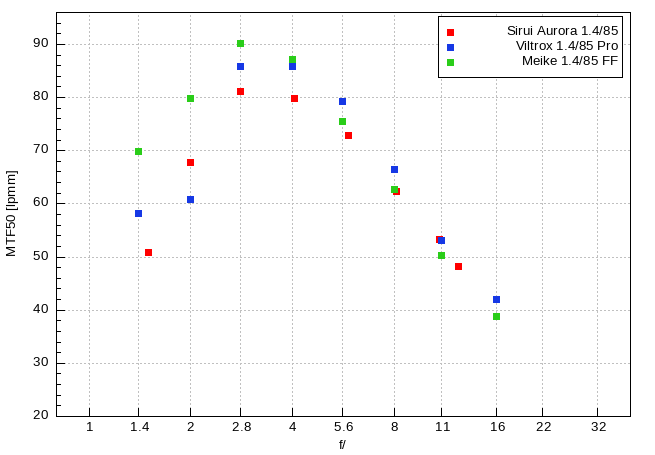
Sirui performs the worst in this comparison, but it certainly cannot be criticized for that. The competition was particularly strong here, as both lenses belong to the select group of the sharpest lenses we have had the opportunity to test on the Sony FE mount.
Let us now return to the first graph in this chapter and discuss the behavior of the tested lens at the edge of the frame. The APS-C/DX sensor edge narrowly escaped our criticism, as the resolution at the maximum aperture reaches 41.4 lpmm, placing it right on the borderline of what we can consider an acceptable level. Unfortunately, the same cannot be said for the full-frame edge, where at f/1.4 we recorded a result of 38.7 lpmm, meaning that the image quality there is insufficient. As a consolation, stopping down the aperture to around f/2.0 eliminates this problem.
In summary, in terms of resolution, the SIRUI Aurora 1.4/85 performs very well in the center of the frame and at the edge of an APS-C/DX sensor, but at the very edge of a full-frame sensor, around the maximum aperture, it struggles somewhat. This is a little disappointing, as most of its competitors do not suffer from this issue, although it is worth noting that the SIRUI is cheaper than they are.
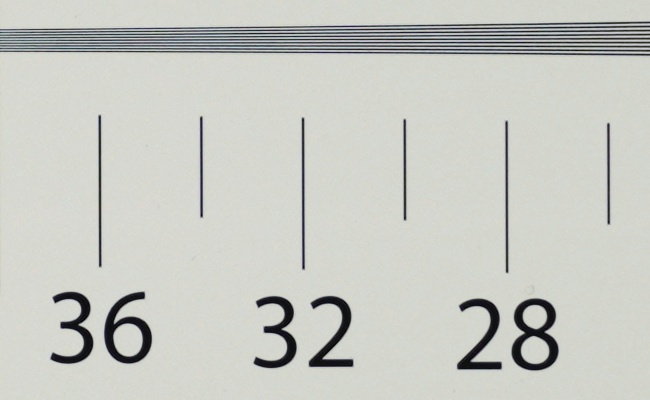
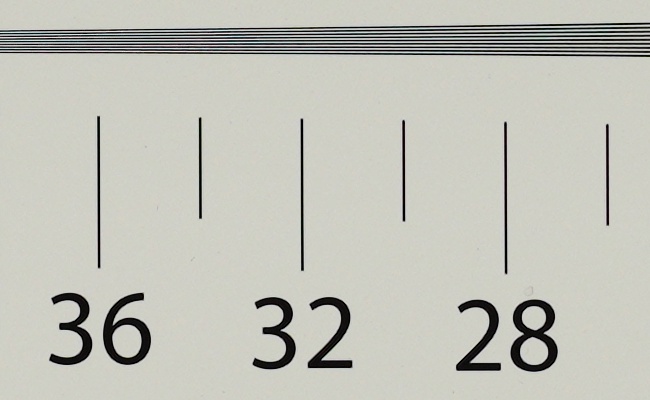
At the end of this chapter, as usual, we present crops from photographs of our resolution test chart, taken from JPEG files recorded simultaneously with the RAW files used for the analysis above.
| A7R IIIa, JPEG, 85 mm, f/1.4 |
 |
| A7R IIIa, JPEG, 85 mm, f/2.8 |
 |