Sony FE 200-600 mm f/5.6-6.3 G OSS
3. Build quality and image stabilization
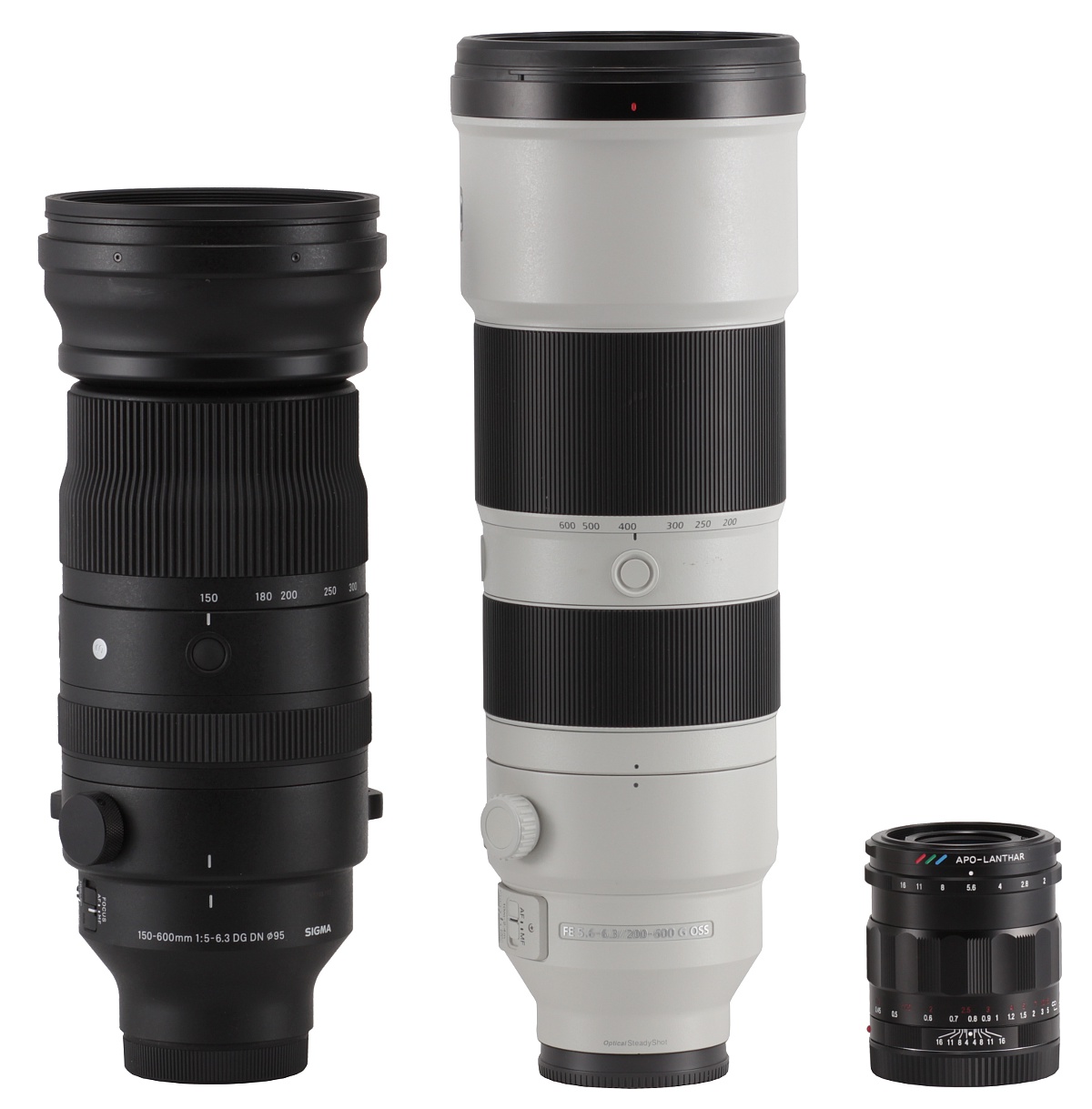
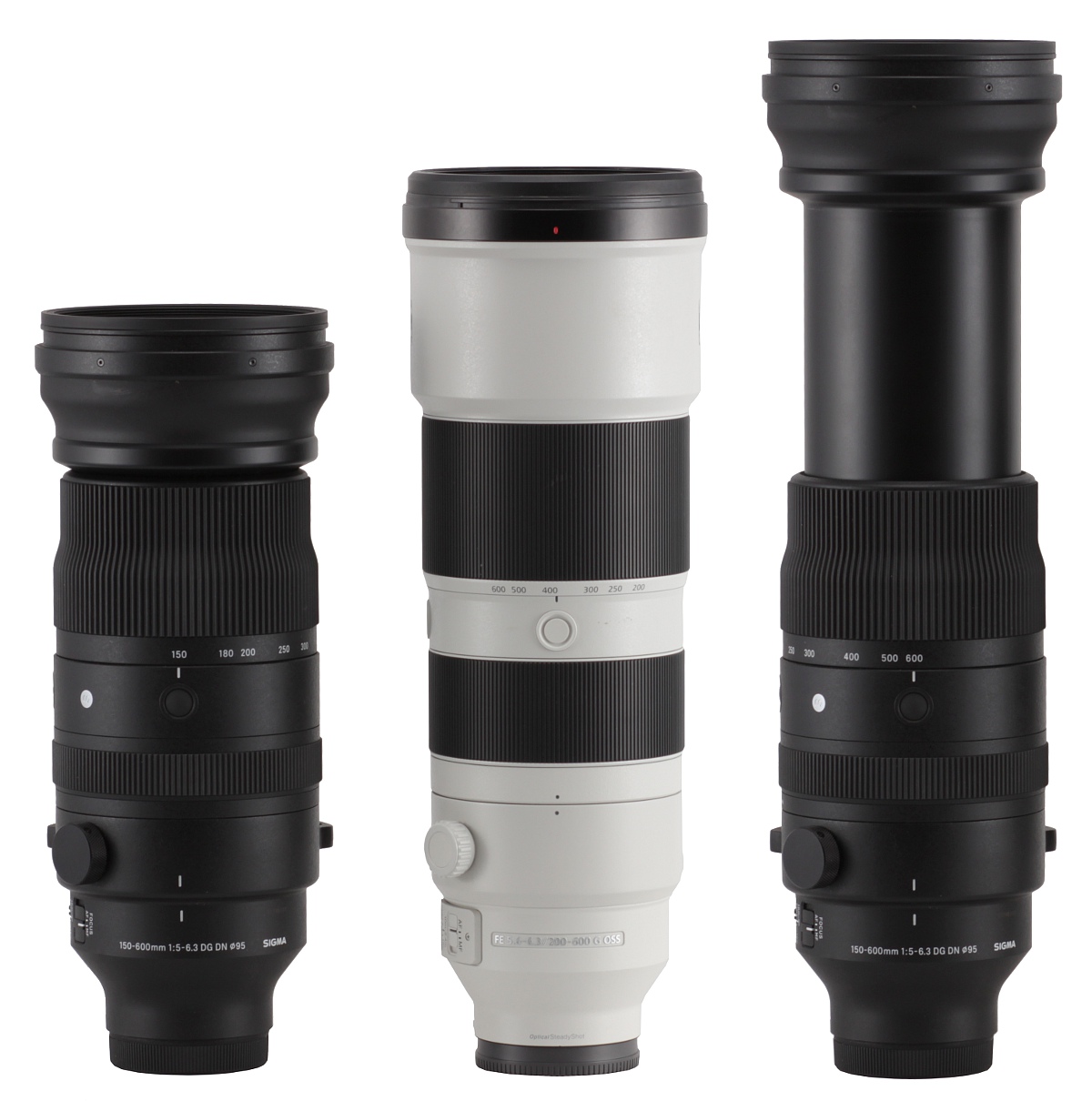
In the following photo the Sony FE 200-600 mm f/5.6-6.3 G OSS is positioned between the Sigma S 150-600 mm f/5-6.3 DG DN OS in folded position and the Voigtlander Apo-Lanthar 2/50.
 |
Please Support UsIf you enjoy our reviews and articles, and you want us to continue our work please, support our website by donating through PayPal. The funds are going to be used for paying our editorial team, renting servers, and equipping our testing studio; only that way we will be able to continue providing you interesting content for free. |
- - - - - - - - - - - - - - - - - - - - - - - - - - - - - - - - - - - - - - - - - - - - - - - -
 |
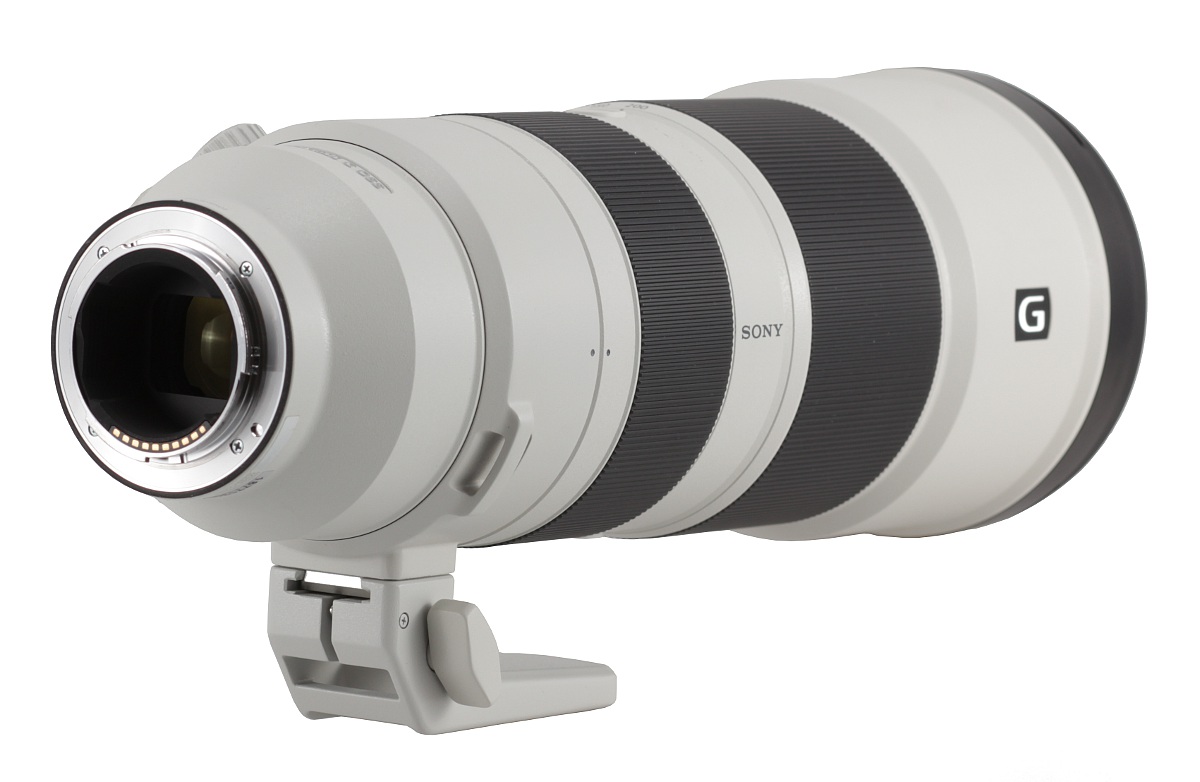 |
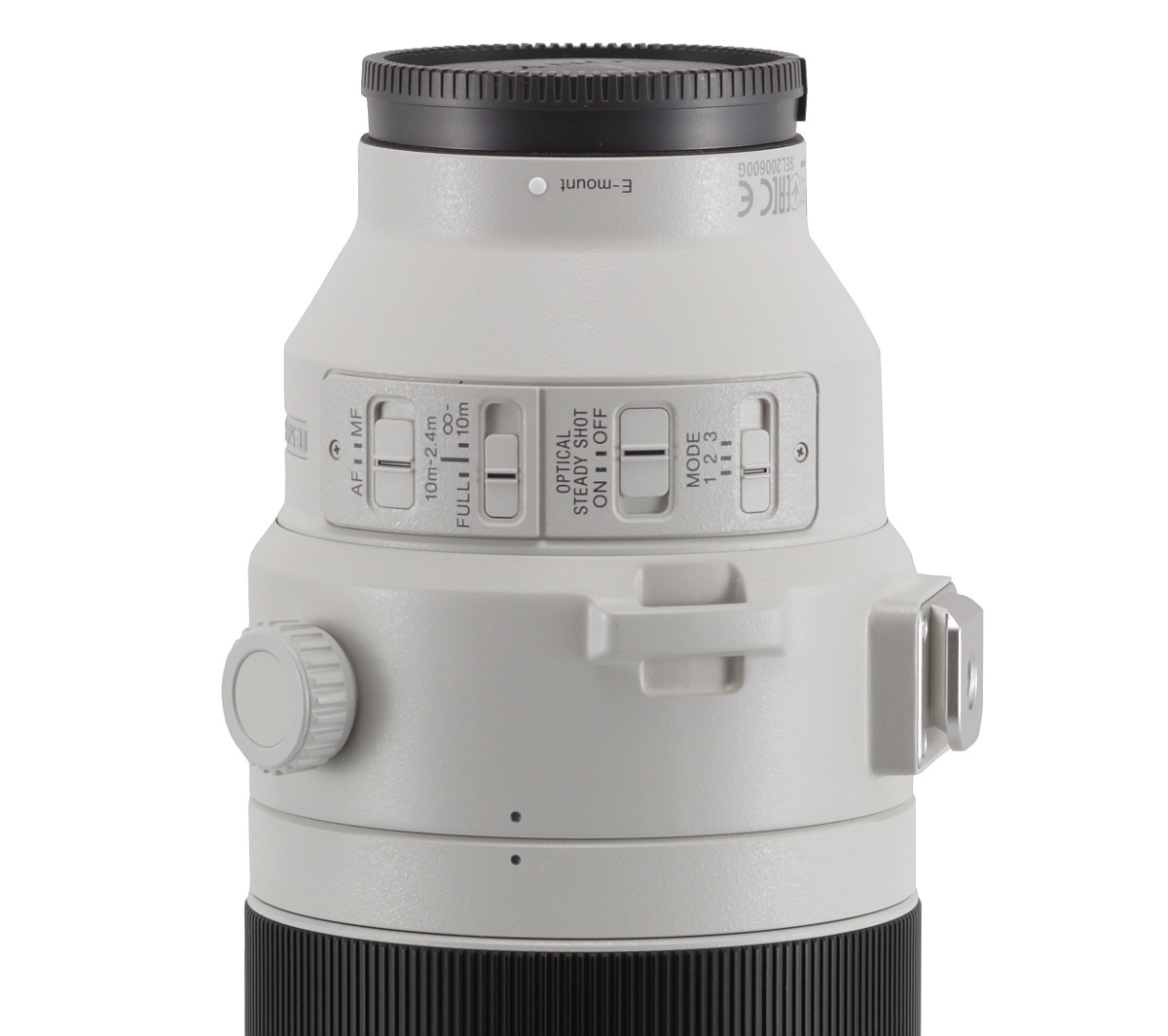
Then the said ring increases its diameter noticeably and on this enlargened part you find the name and parameters of the lens along with a whole array of different switches positioned on the left. The first of them, marked as AF/MF, is used to control the autofocus mechanism mode and the second one allows you to choose an autofocus range. The producers offer you three options: FULL, from 2.4 to 10 meters and from 10 meters to infinity. The third switch, OSS ON/OFF, controls optical image stabilization, and the fourth one (MODE 1,2,3) allows you to choose a stabilization working mode.
 |
Then you find a manual focus ring, quite wide because 39 mm in diameter, almost completely covered by black, rubber ribs nice to the touch. The ring is a focus-by-wire construction. It moves quite smoothly with a slight but still acceptable resistance. Running through the whole distance range needs a turn through an angle of about 260 degrees and it depends very weakly on the speed of your turning. Still, this value allows you quite precise settings.
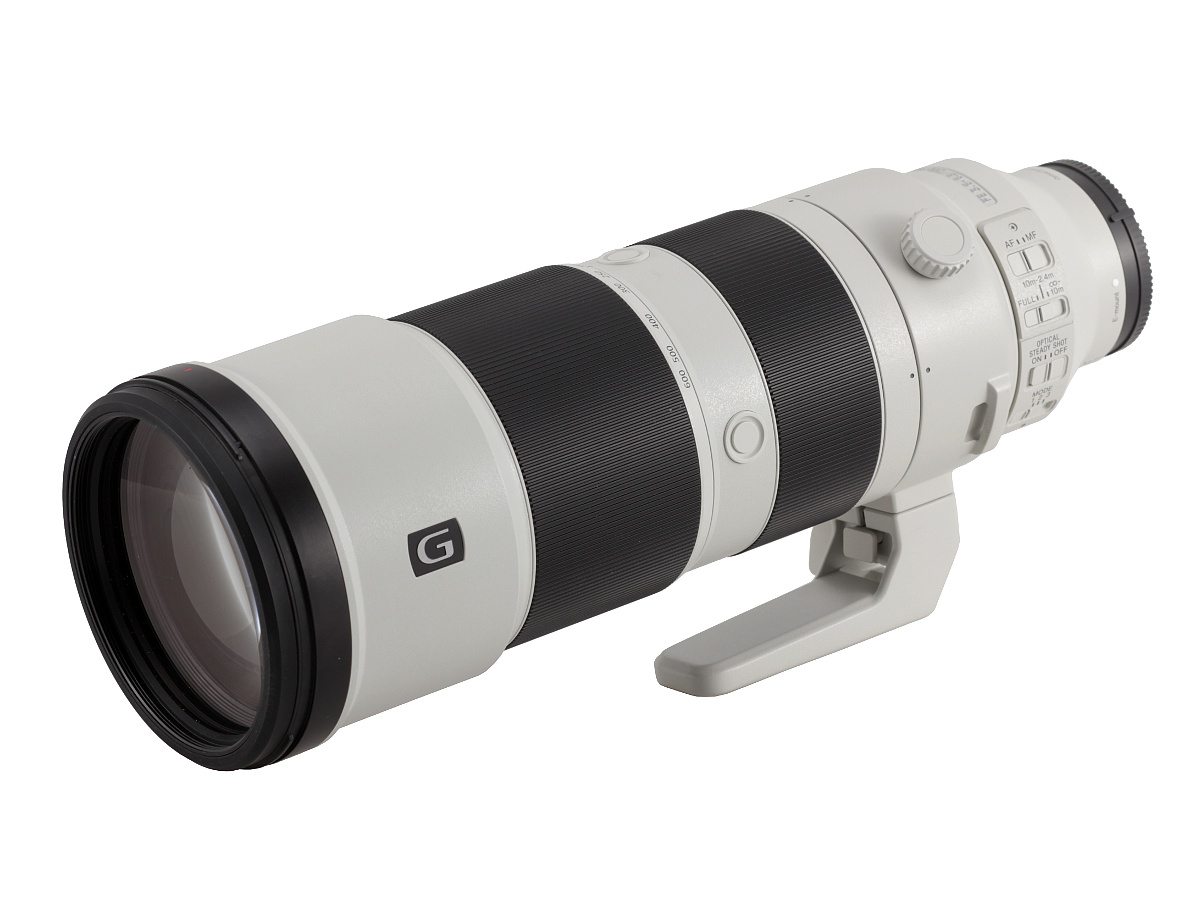 |
The ring moves quite smoothly but, in our opinion, its resistance could have been a tad more pronounced. The ring is so loose that a focal length lock switch would be a nice addition here, even though that the lens doesn't change its dimensions through an extendable front element system. The lens set at 200 mm in a vertical position collapses on its own and it changes the focal length into near 300 mm. If you want to take a photo of something high over your head and use the shortest focal lengths you have to stabilize the ring with your finger or a bit of adhesive tape.
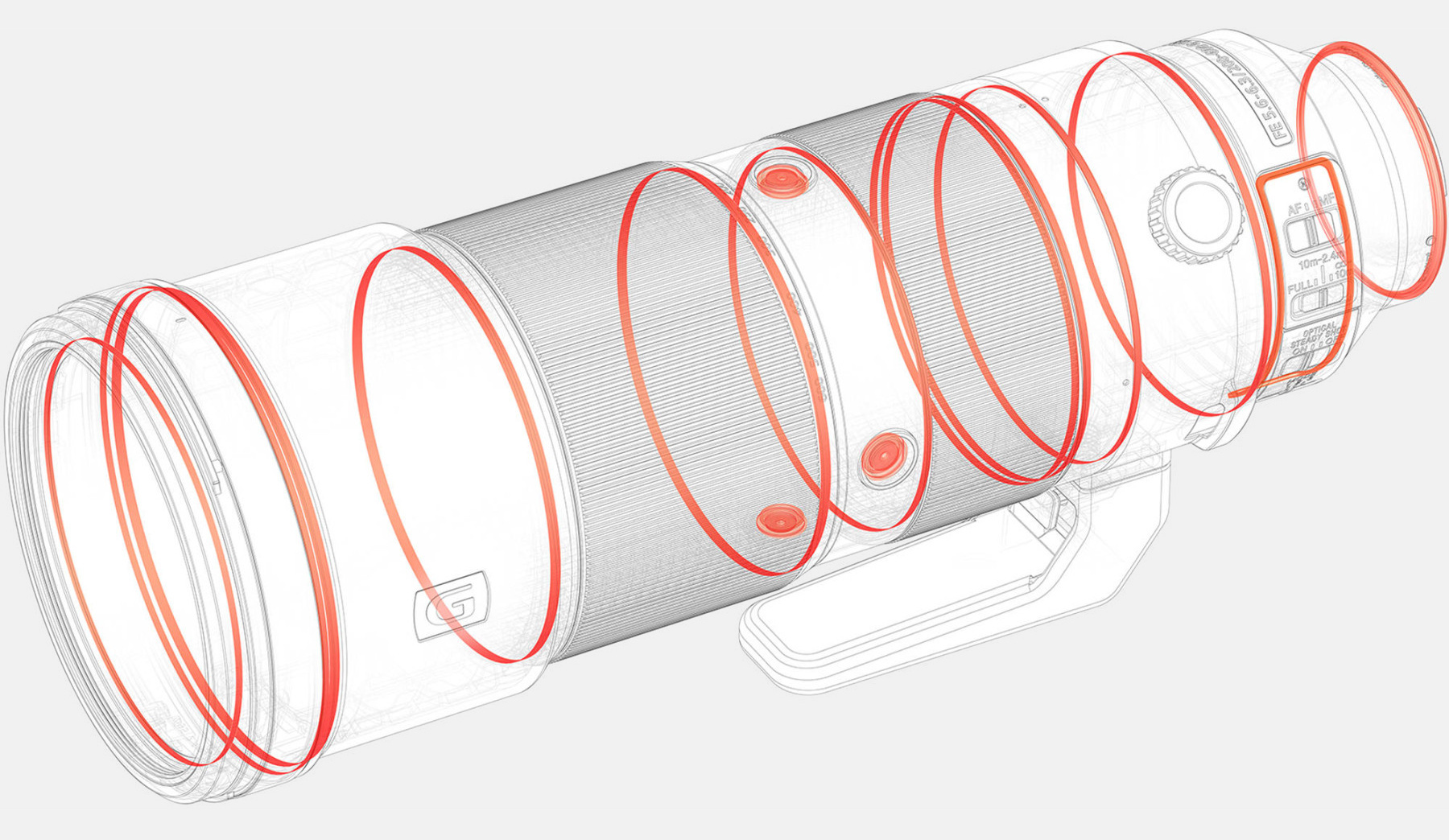 |
The front element doesn't move, is almost 90 mm in diameter and is surrounded by a non-rotating filter thread, 95 mm in diameter. The construction of the lens is completely closed – both zooming and focusing are performed inside.
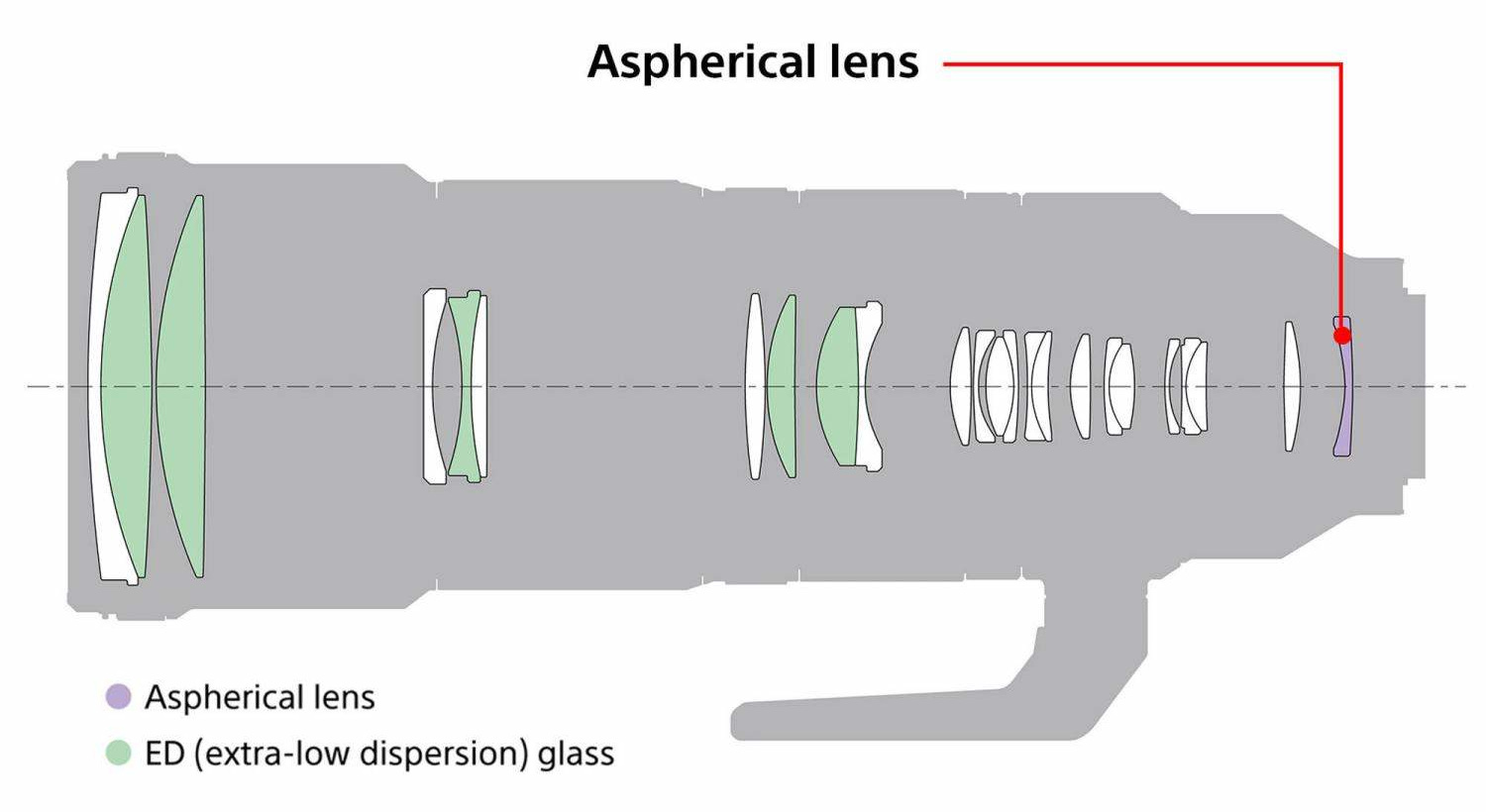 |
Buyers get in the box with the lens: both caps, a huge hood, a removable tripod adapter, and a case with stiff bottom.
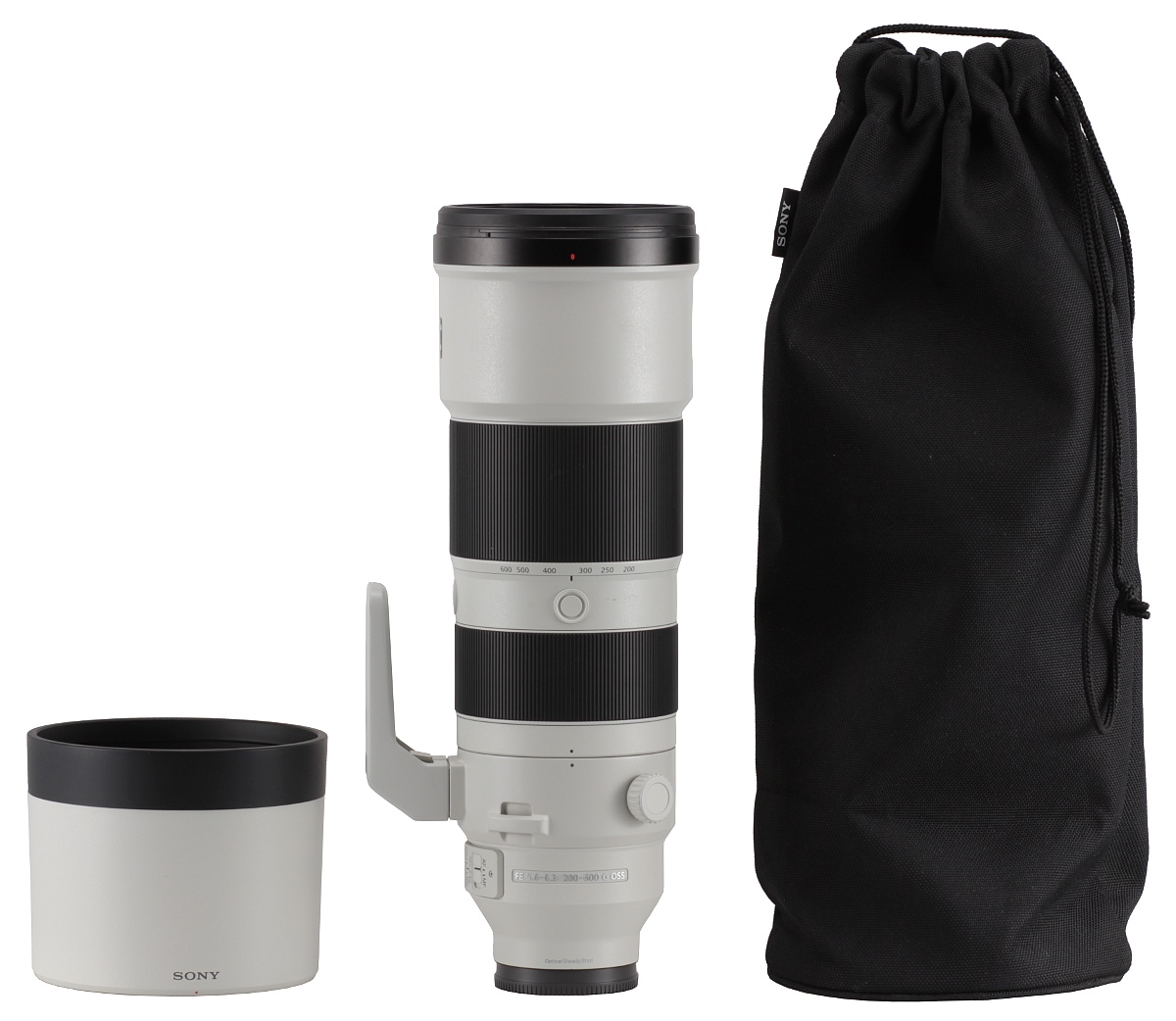 |
Optical stabilization
The OSS acronym in the name and on the barrel of the lens indicates that it is equipped with an optical image stabilization mechanism. We decided to check its efficiency and, in order to do so we took several dozen photos with exposure times ranging from 1/800 to 1/8 of a second and the stabilization switched on and off. For every set of photos we determined a percentage of out-of-focus shots; then we presented it in a form of a graph of exposure time which was expressed in EV (with 0 EV being an equivalent of 1/640 of a second).
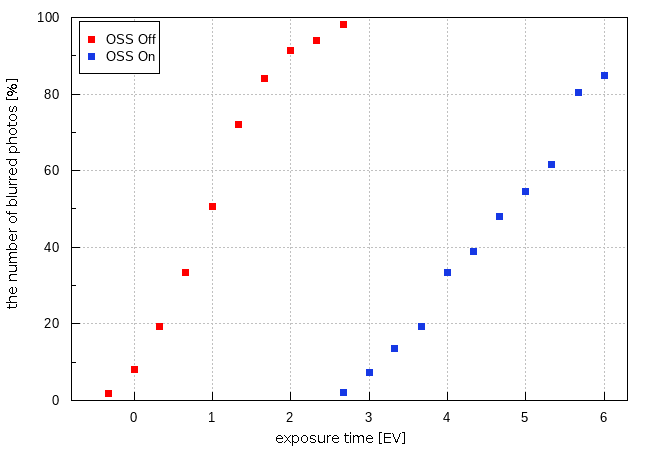
The maximum distance between both curves indeed reaches 4 EV and such is, in our view, the real efficiency of the stabilization mechanism of the tested lens. It is an excellent result that allows you to use the lens even in weak lighting conditions.