Samyang AF 14-24 mm f/2.8 FE
5. Chromatic and spherical aberration
Chromatic aberration
A big number of special elements, used in the optical construction of the tested Samyang, performs as it should: we didn't notice practically any problems with longitudinal chromatic aberration. This aberration remains properly checked even at the maximum relative aperture.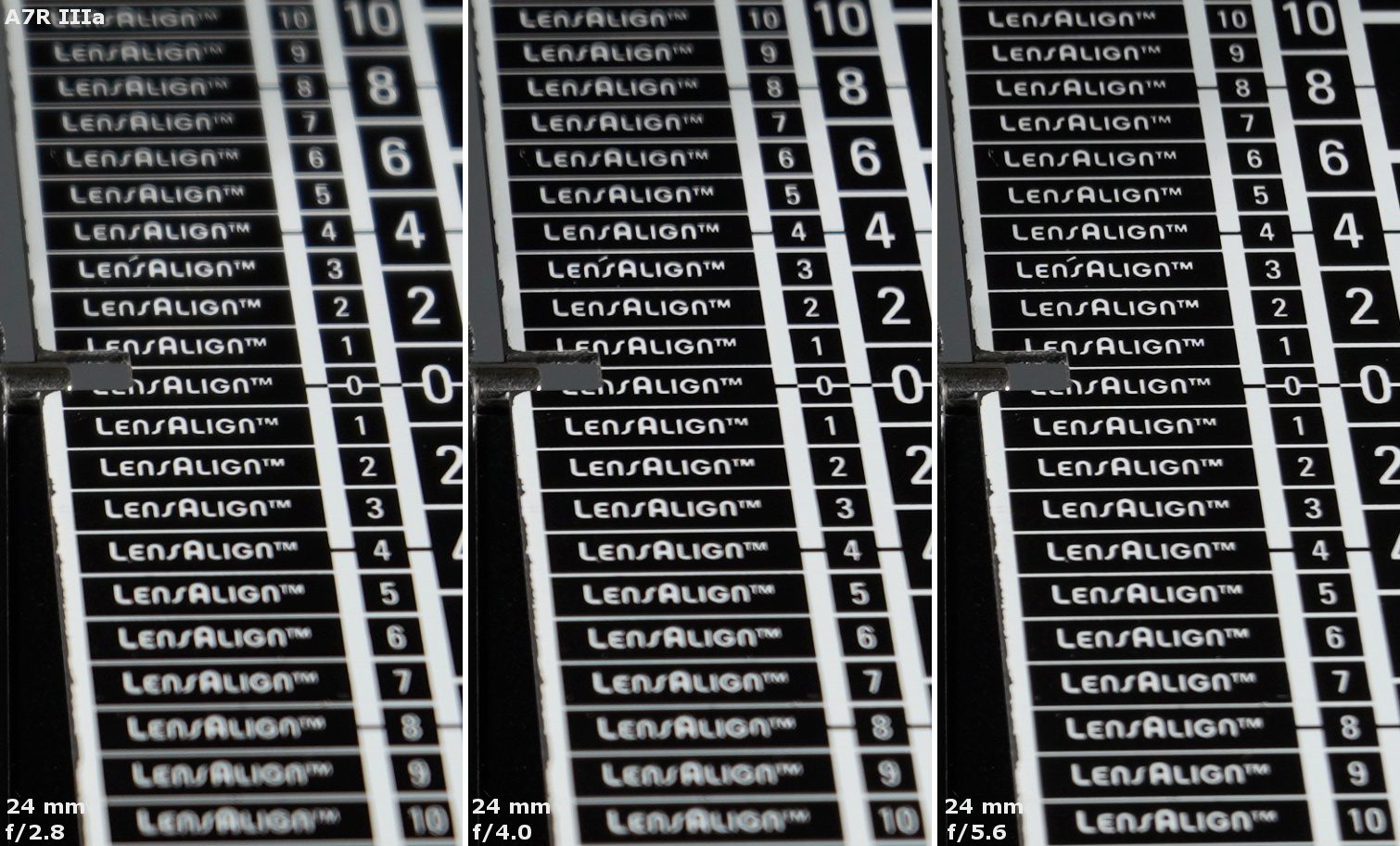 |
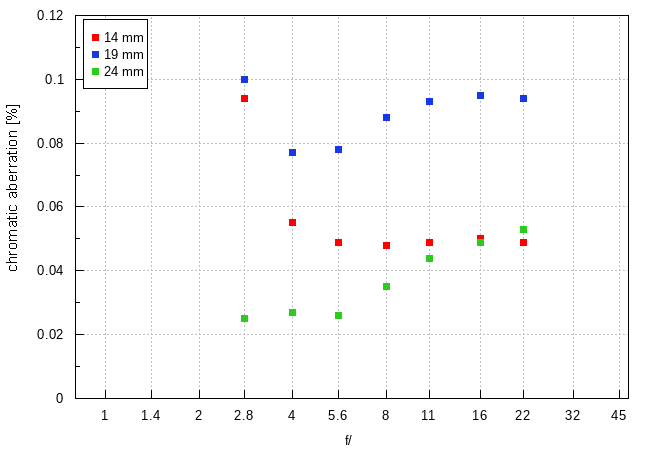
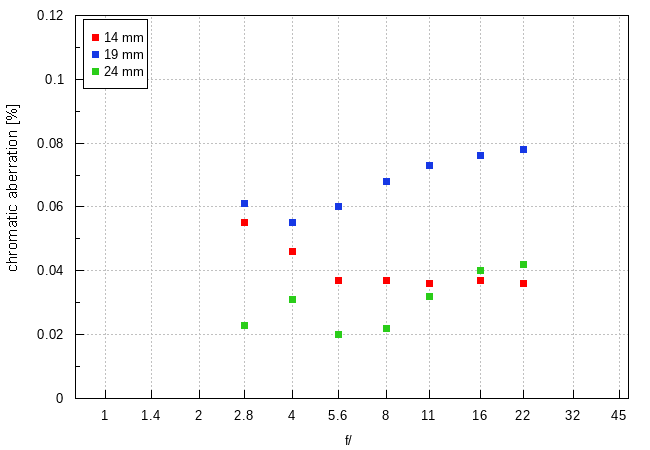
Now let's take a closer look at the correction of lateral chromatic aberration – graphs below present the performance of te Samyang depending on focal length and aperture values respectively for the edge of the APS-C/DX sensor and for the edge of full frame.
Please Support UsIf you enjoy our reviews and articles, and you want us to continue our work please, support our website by donating through PayPal. The funds are going to be used for paying our editorial team, renting servers, and equipping our testing studio; only that way we will be able to continue providing you interesting content for free. |
- - - - - - - - - - - - - - - - - - - - - - - - - - - - - - - - - - - - - - - - - - - - - - - -
The longest focal length fares the best here – you observe values on a level of 0.04% or lower and it means that the level of this aberration is very low. At the 14 mm focal length you deal with a tad higher level of lateral chromatic aberration: on the edge of full frame the aberration is on the borderline of very low and low values and on the edge of the APS-C/DX sensor it is low with an exception of f/2.8 where it approaches medium levels. The fact that the combination of such a wide angle of view and good aperture fastness is properly corrected in this regard really should be praised and appreciated.
What's interesting, the weakest results you see in the middle of the focal range. At the edge of full frame you see low values that turn into medium when you pass to the edge of the APS-C/DX sensor.
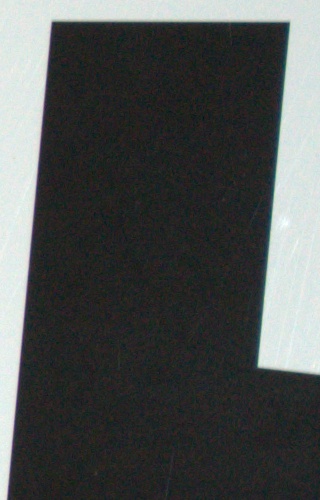
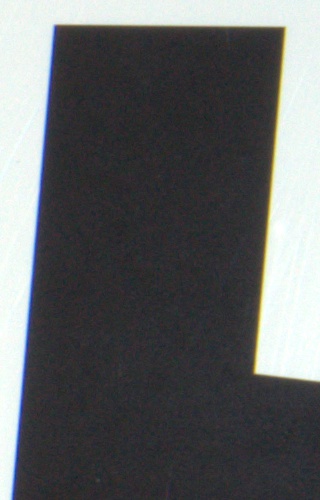
To sum up you can say the Samyang AF 14-24 mm f/2.8 FE deals with the correction of both variants of chromatic aberration really well. With such parameters and physical dimensions of the lens it certainly wasn't an easy task.
| A7R IIIa, RAW, 24 mm, f/2.0 | A7R IIIa, RAW, 19 mm, f/16.0 |
|
|
Spherical aberration
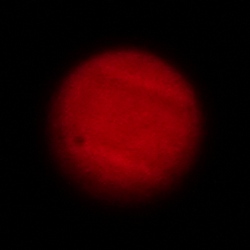
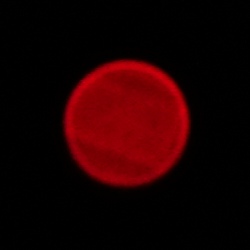
First photos of this chapter show a slight focus shift effect because on stopping down the depth of field moves toward greater distances . When it comes to defocused circles of light, their appearance also confirms some problems with spherical aberration – there are noticeable differences between circles we got before and behind the focal point. It is a classic symptom of uncorrected spherical aberration, soft edges in one circle and a brighter rim in the other.
| A7R IIIa, 24 mm, f/2.8, before | A7R IIIa, 24 mm, f/2.8, after |
|
|