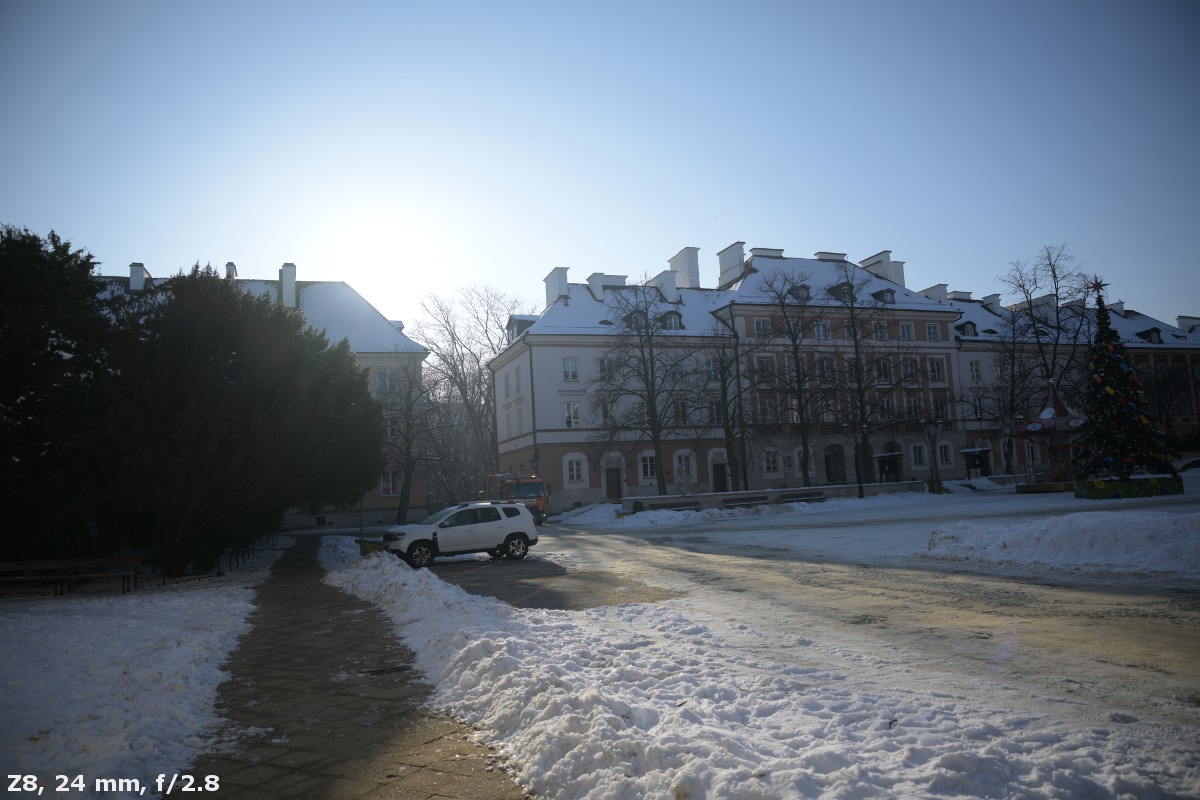
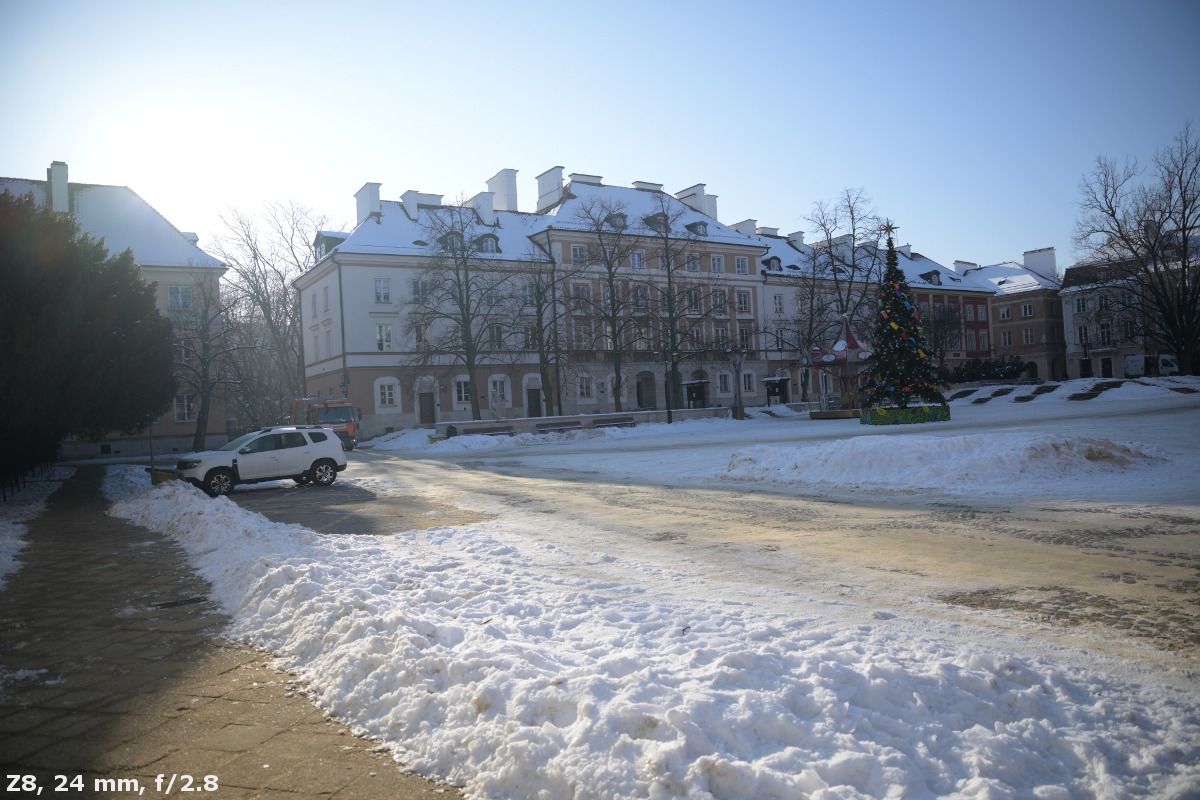
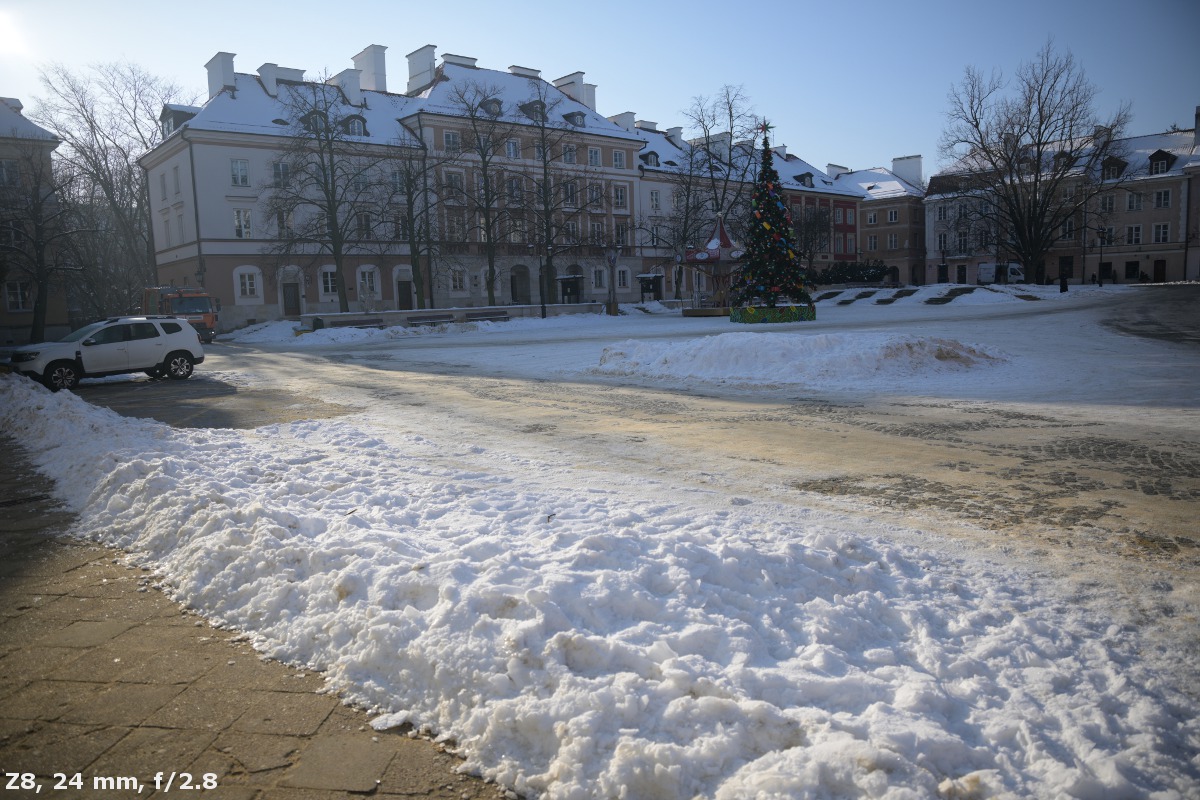
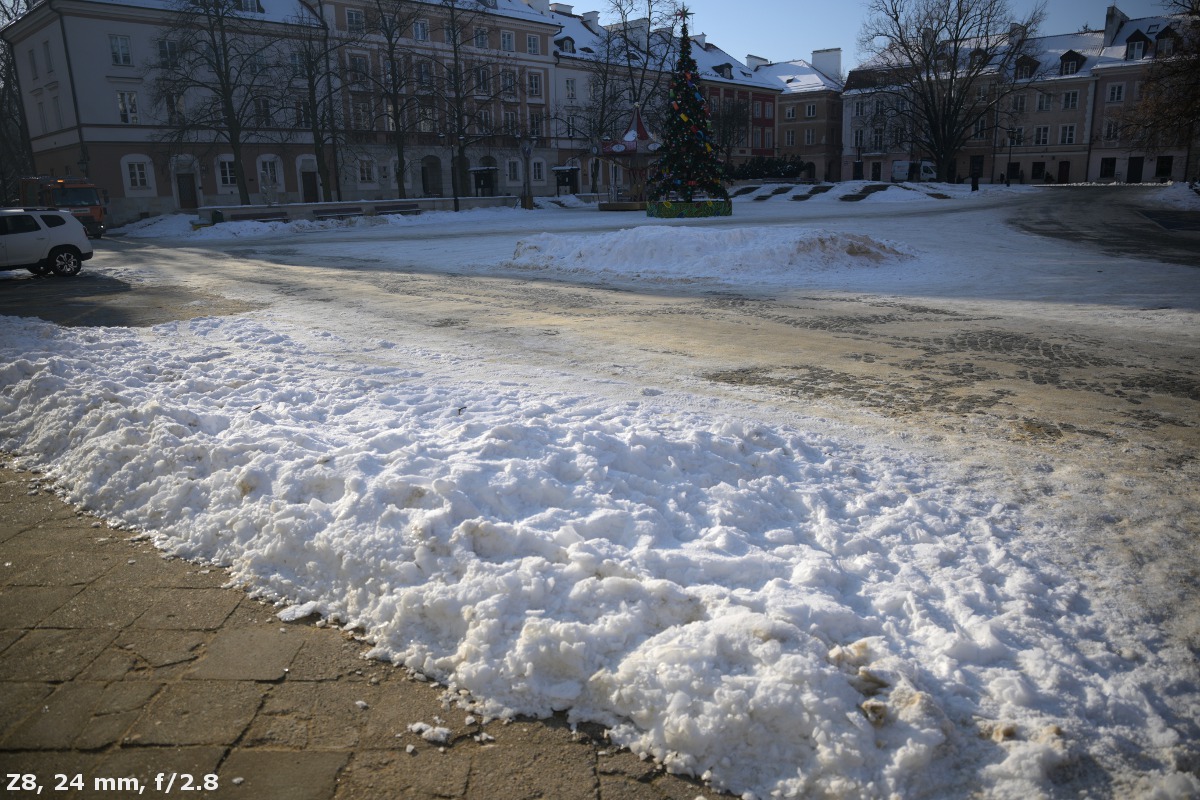
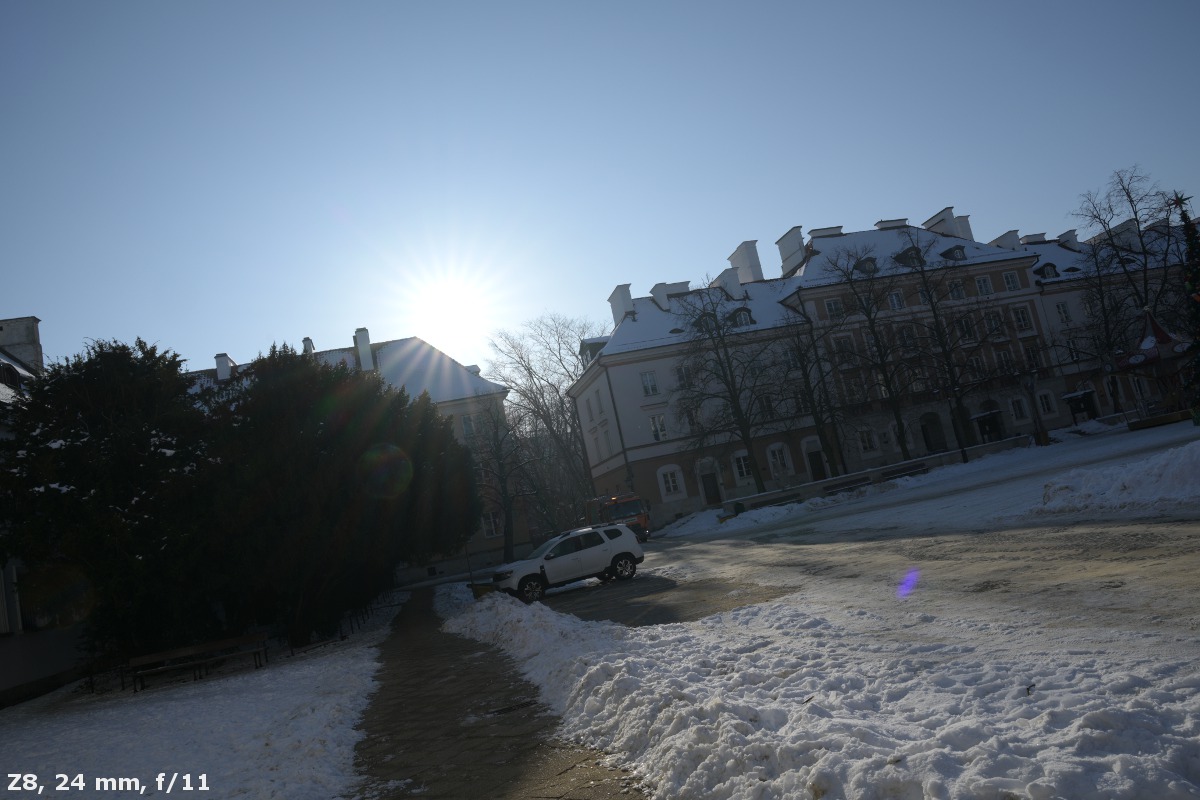
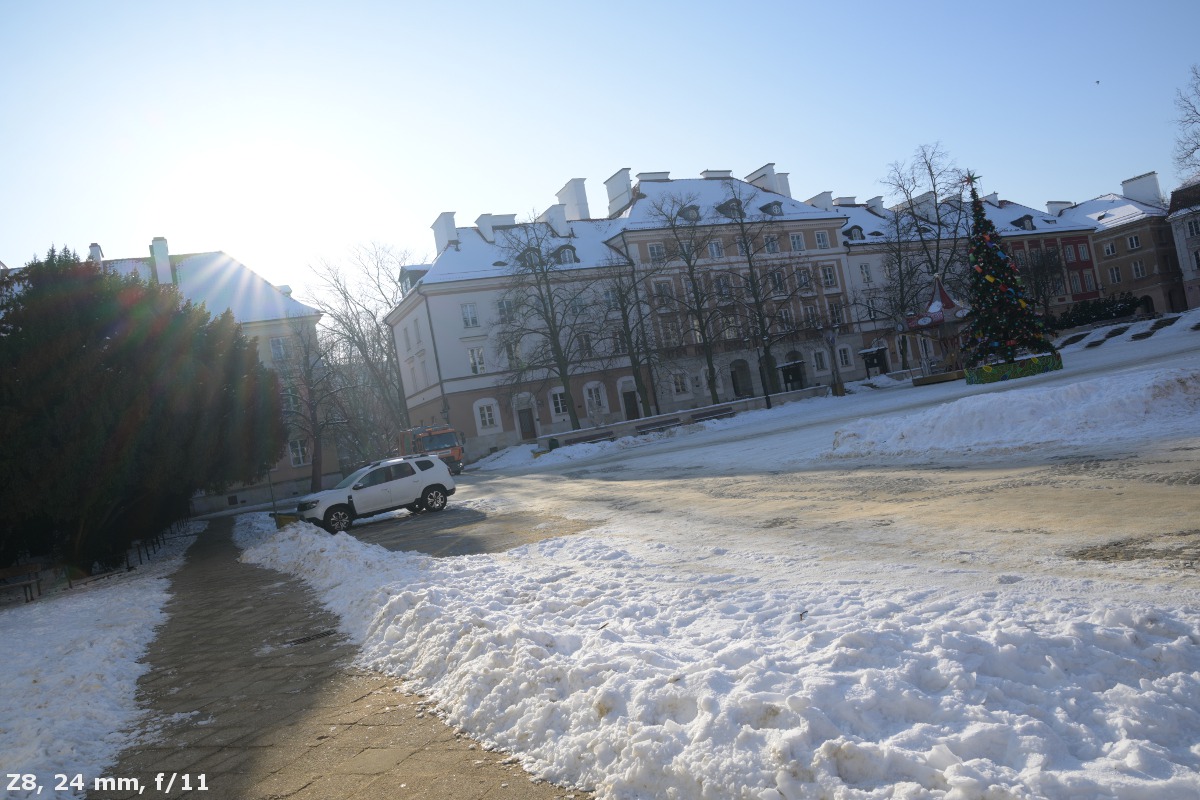
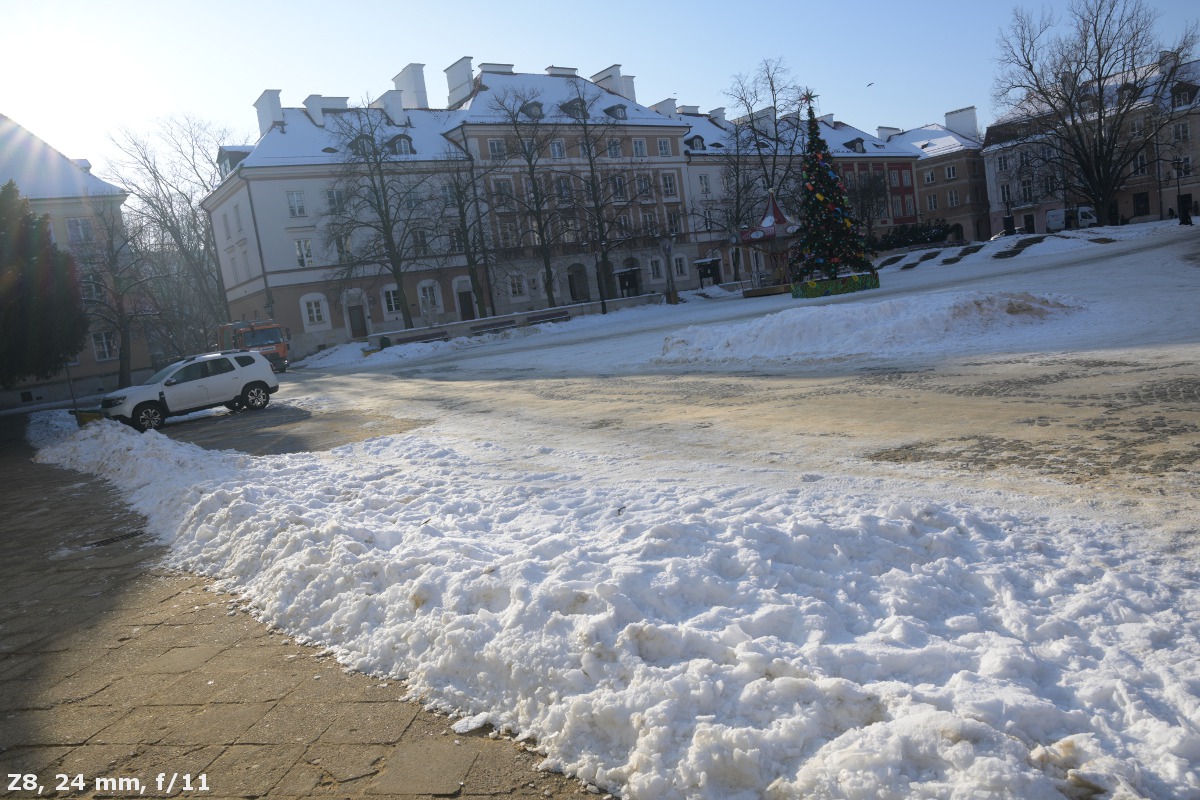
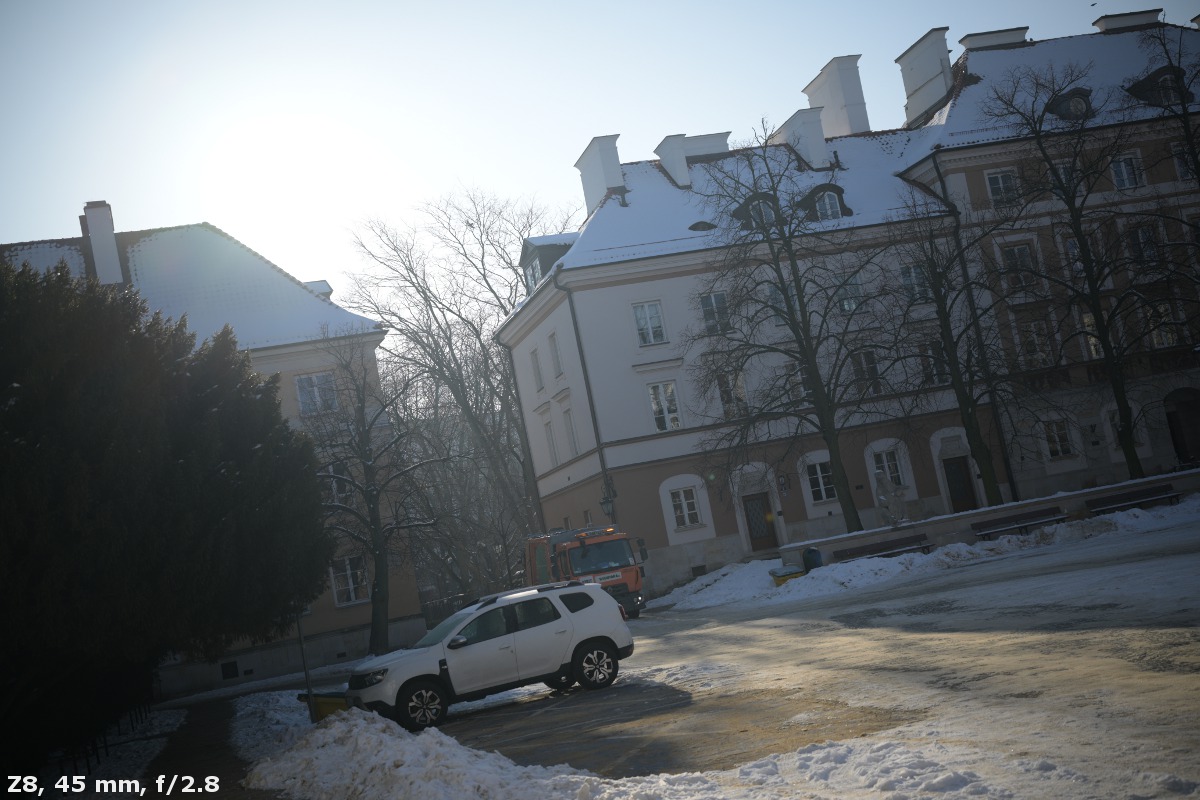
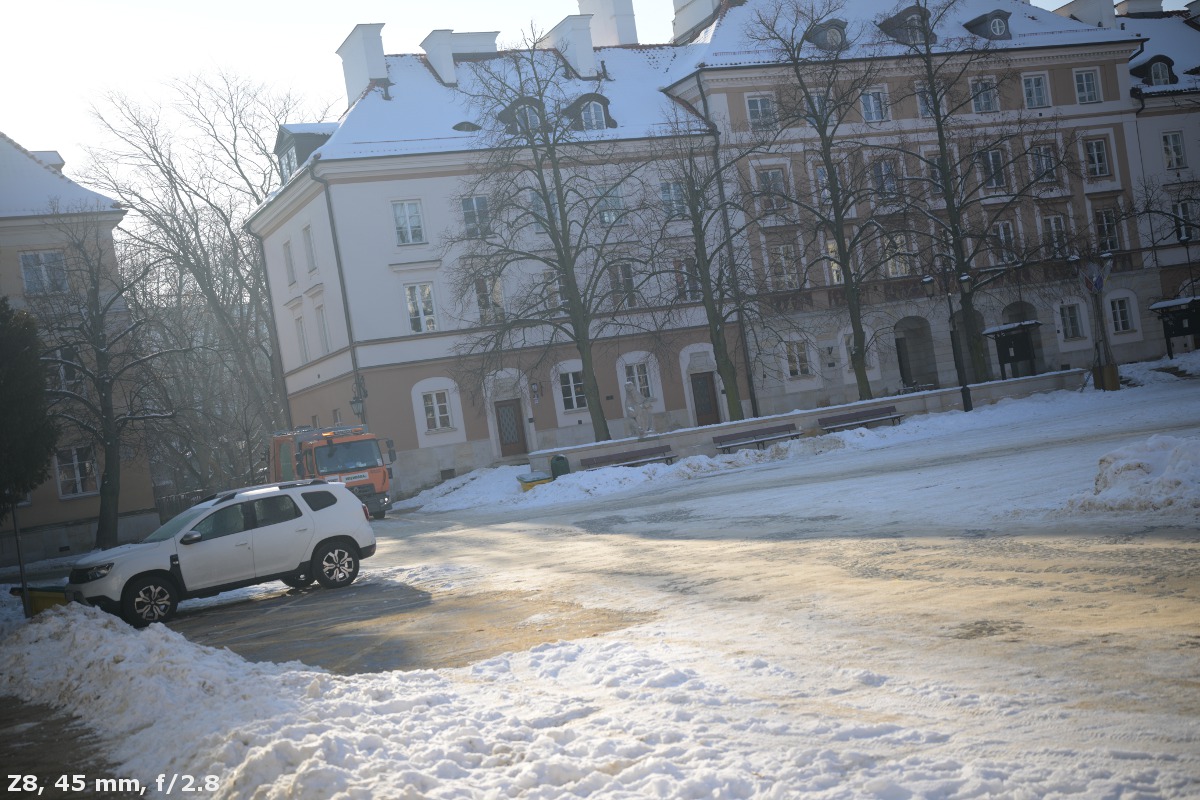
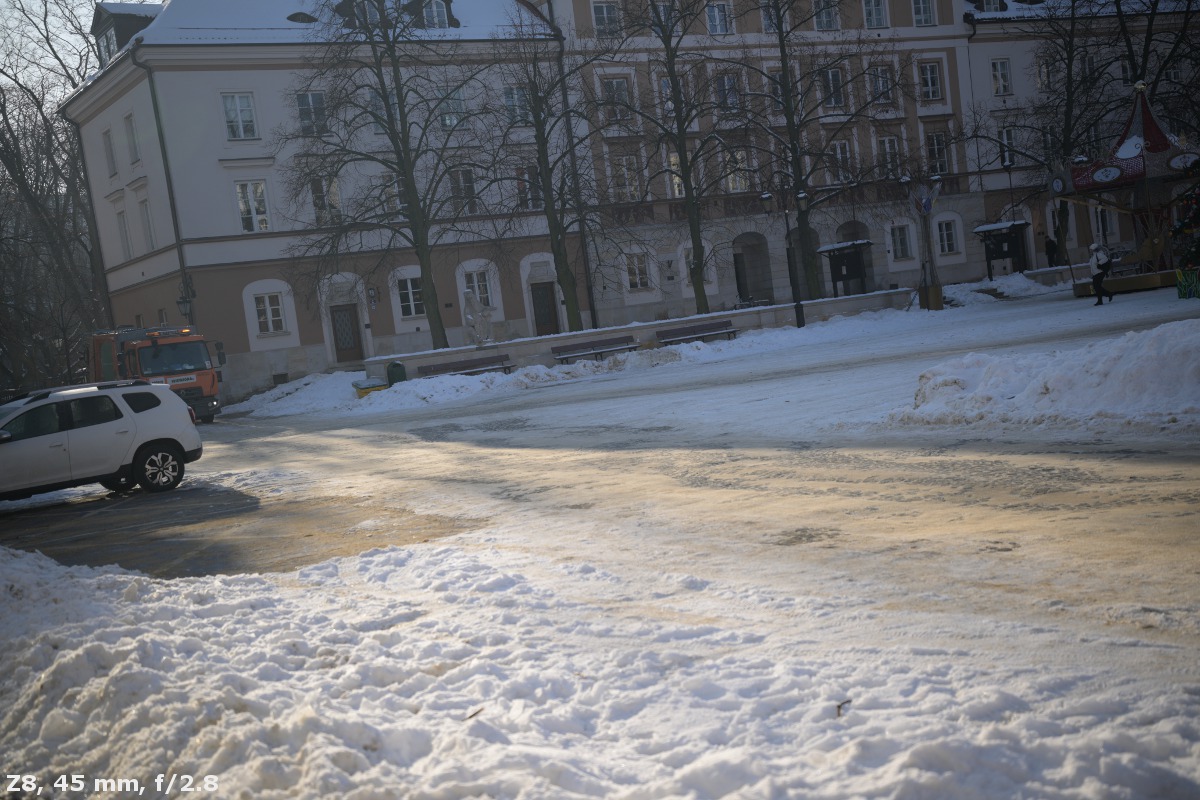
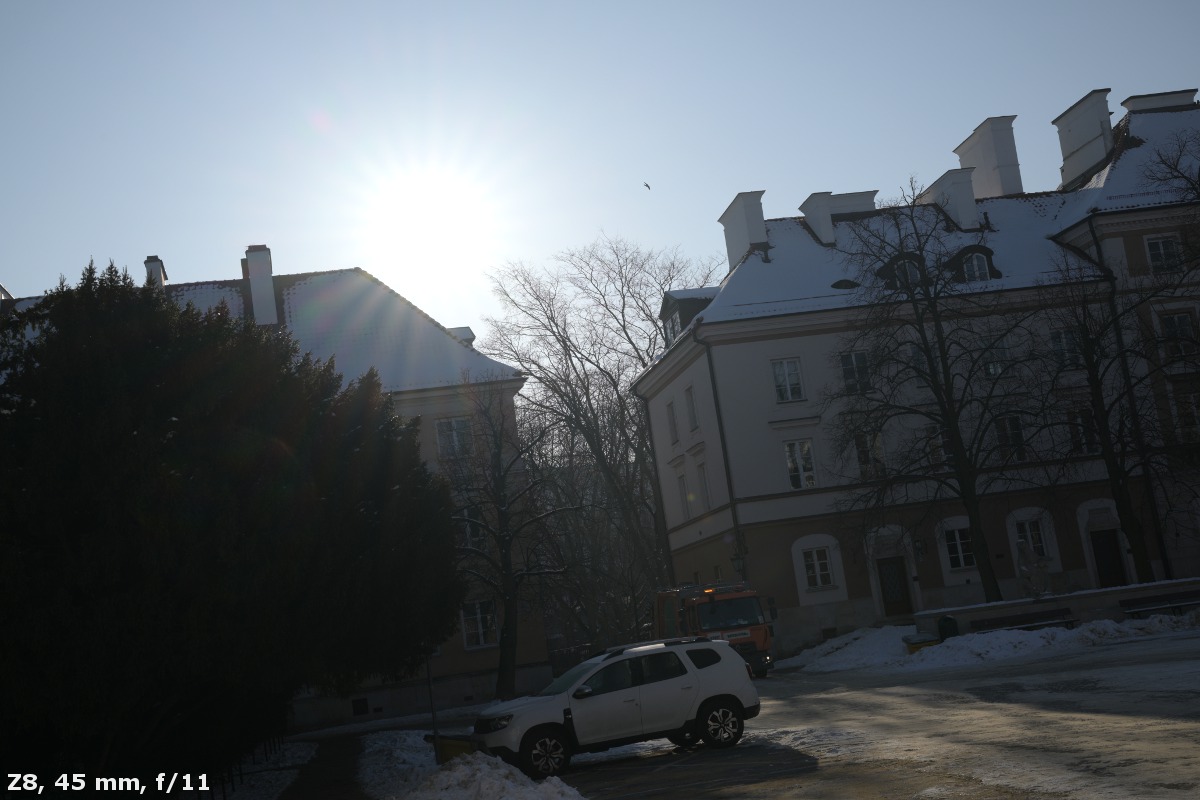
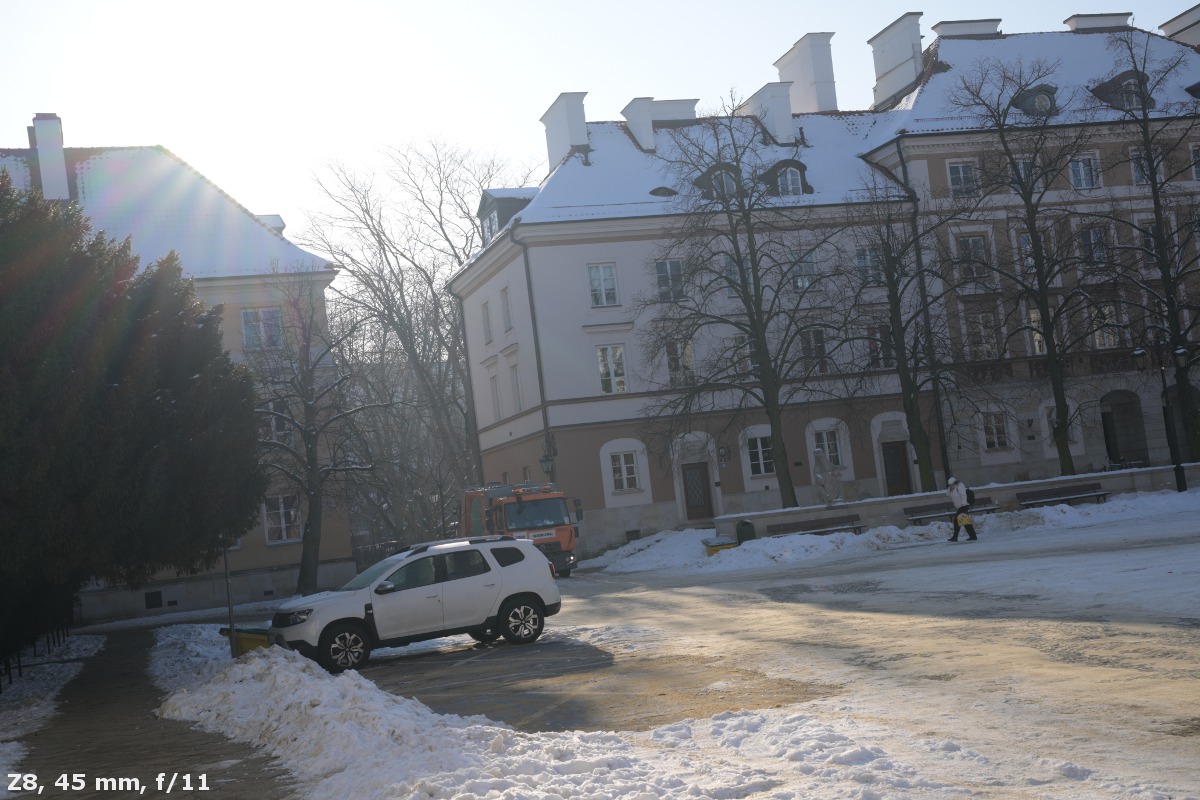
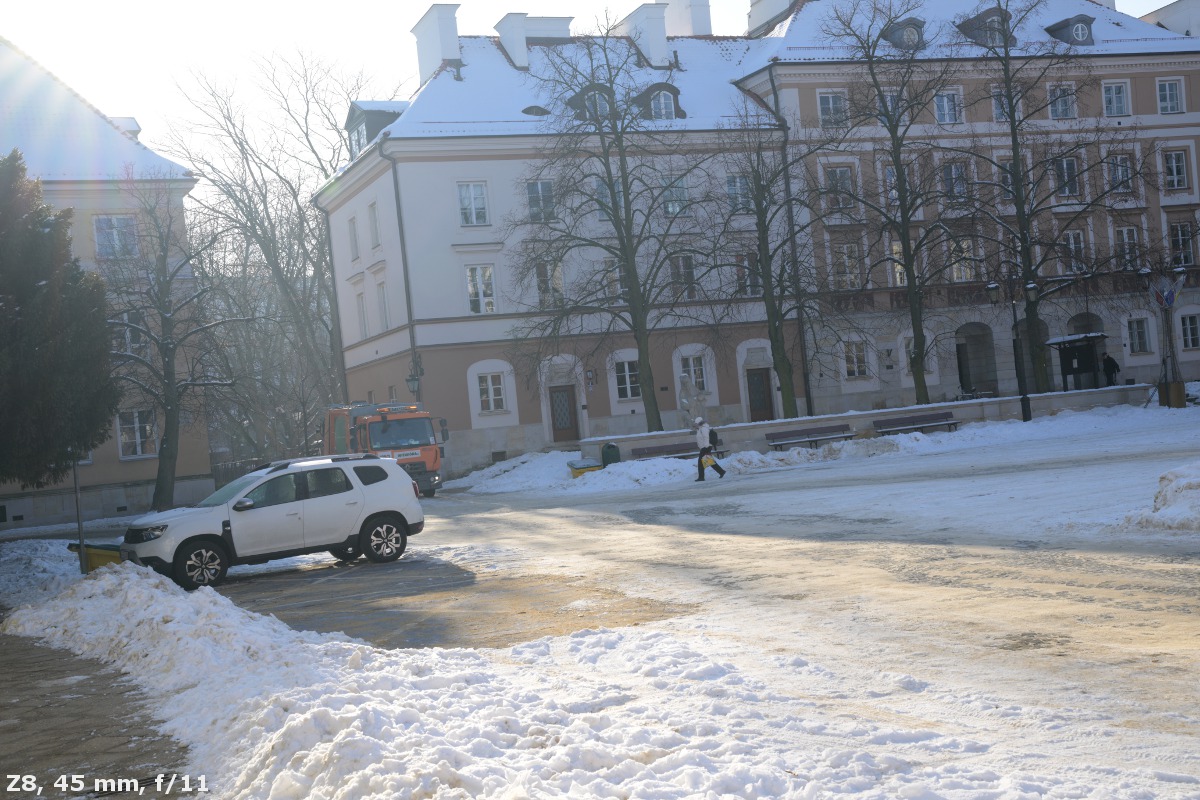
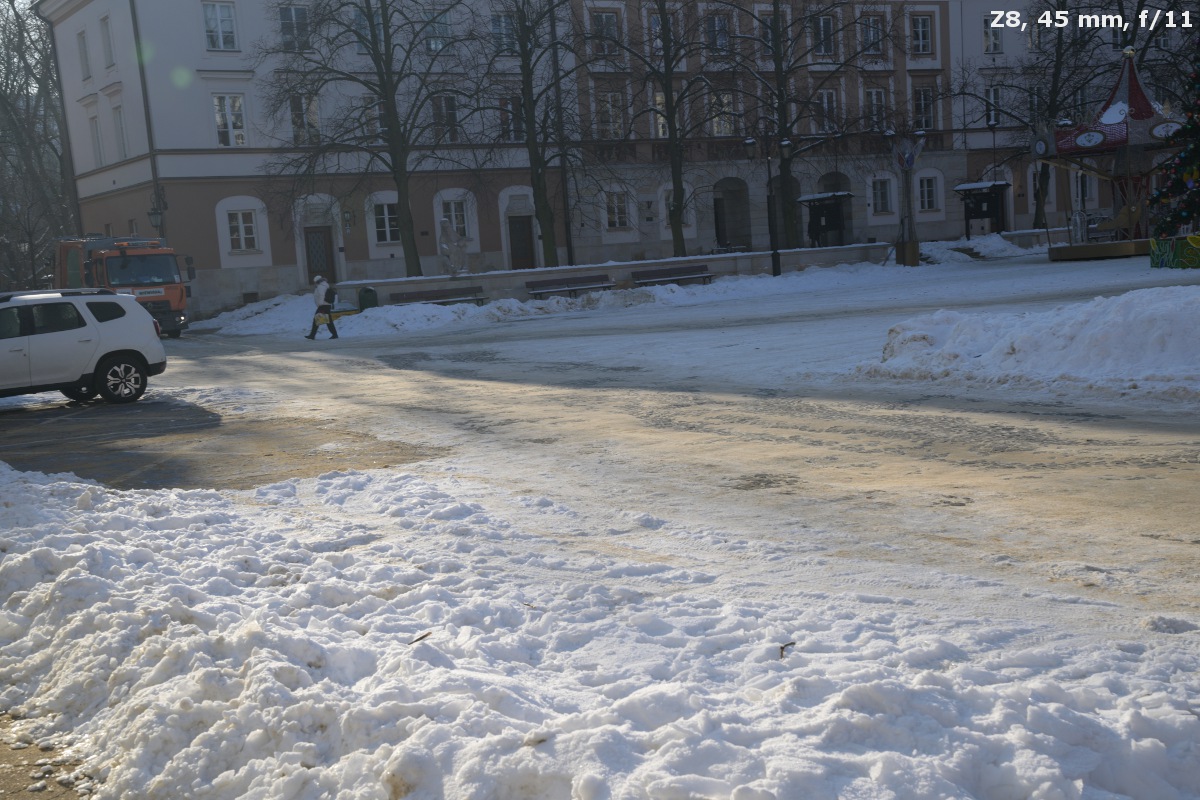
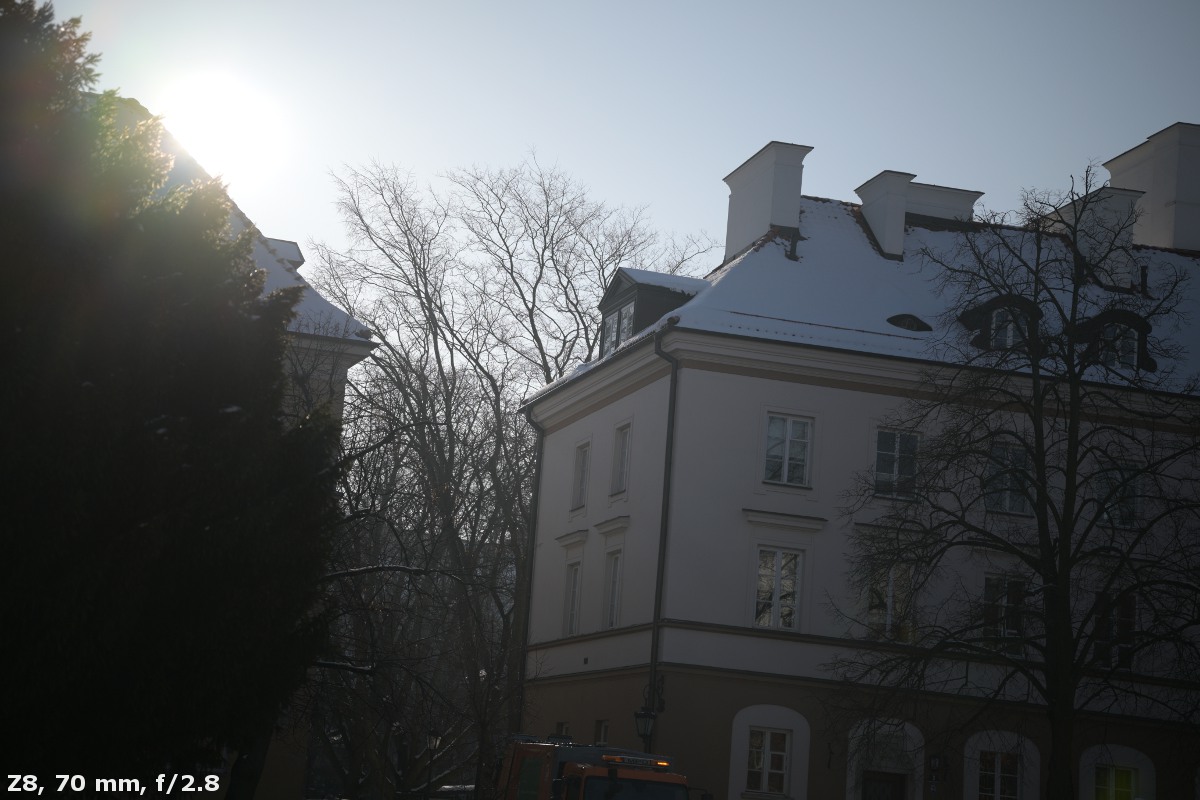
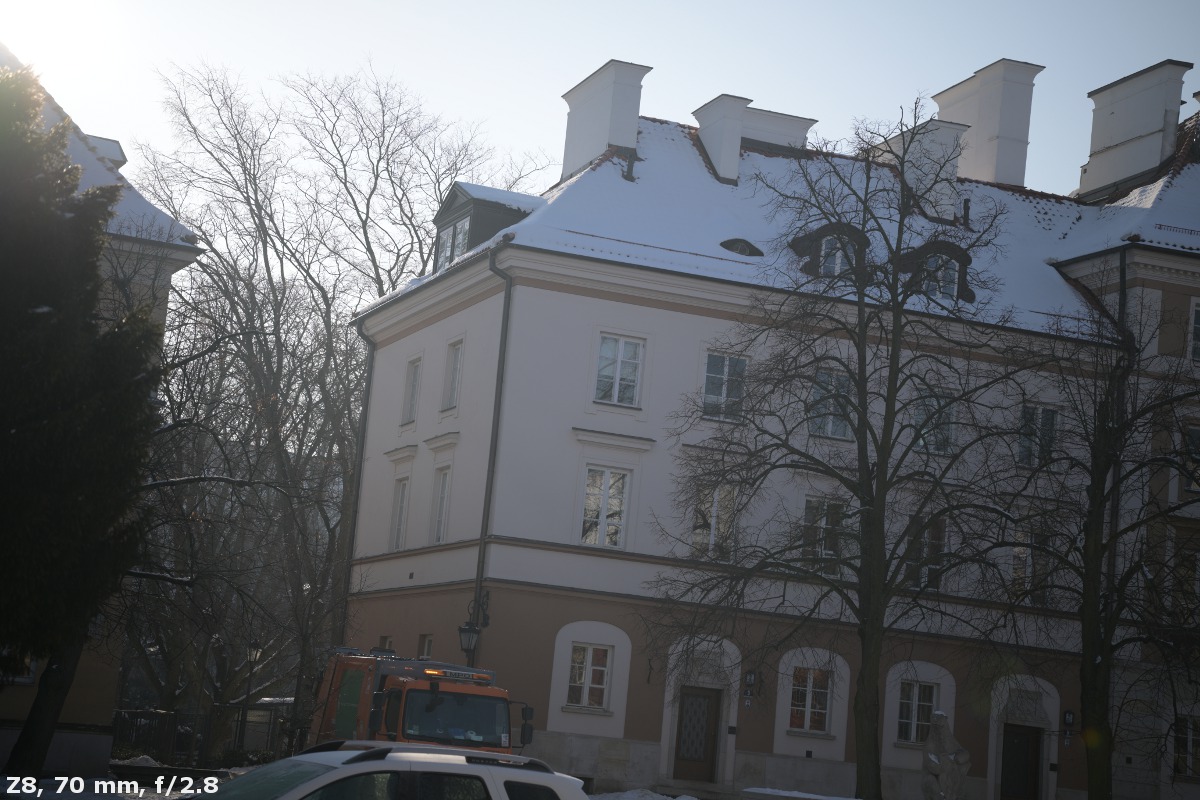
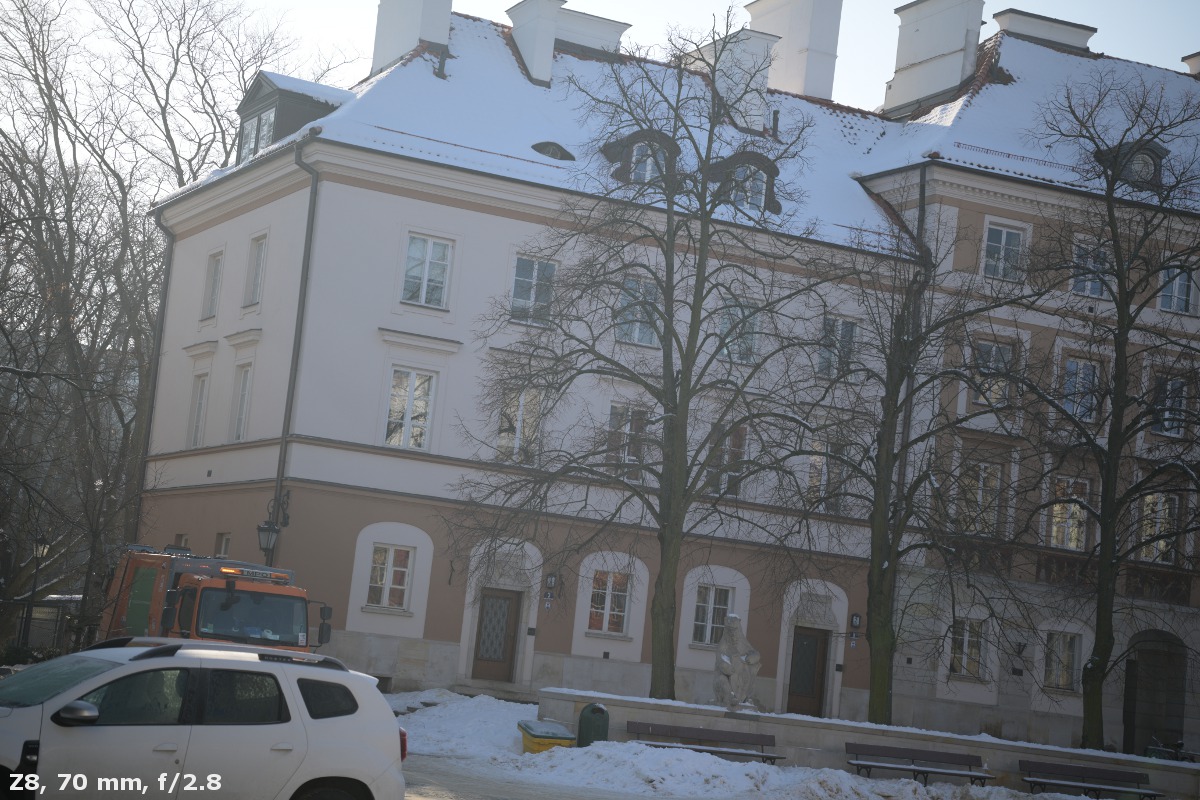
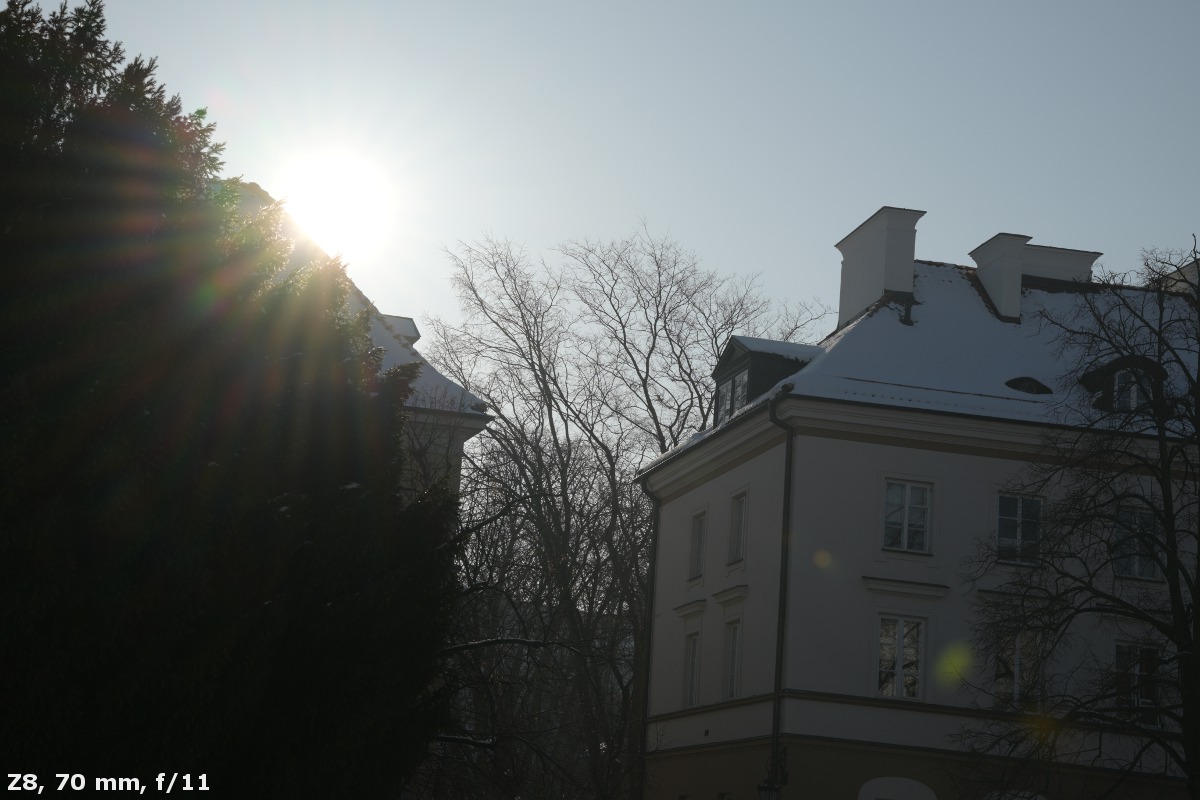
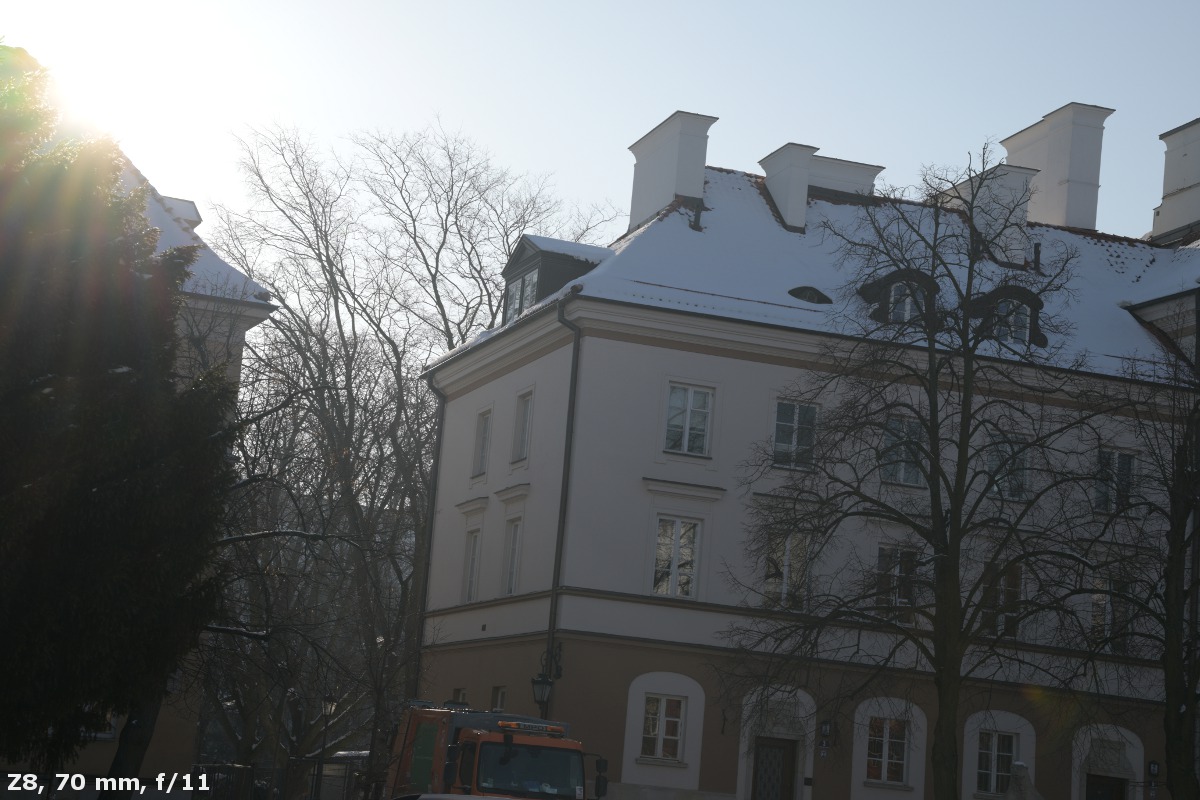
When it comes to guaranteeing good performance against bright light the constructors of the Nikkor Z 24-70 mm f/2.8 S II dealt with a very difficult task. After all it is a fast lens with a wide range of angles of view, a closed construction where the movement of all parts is limited, with not enough place for additional apertures and baffles. As if it wasn't enough, you get 10 groups of elements, meaning as many as 20 air-to-glass surfaces where you can catch unwanted light reflections.
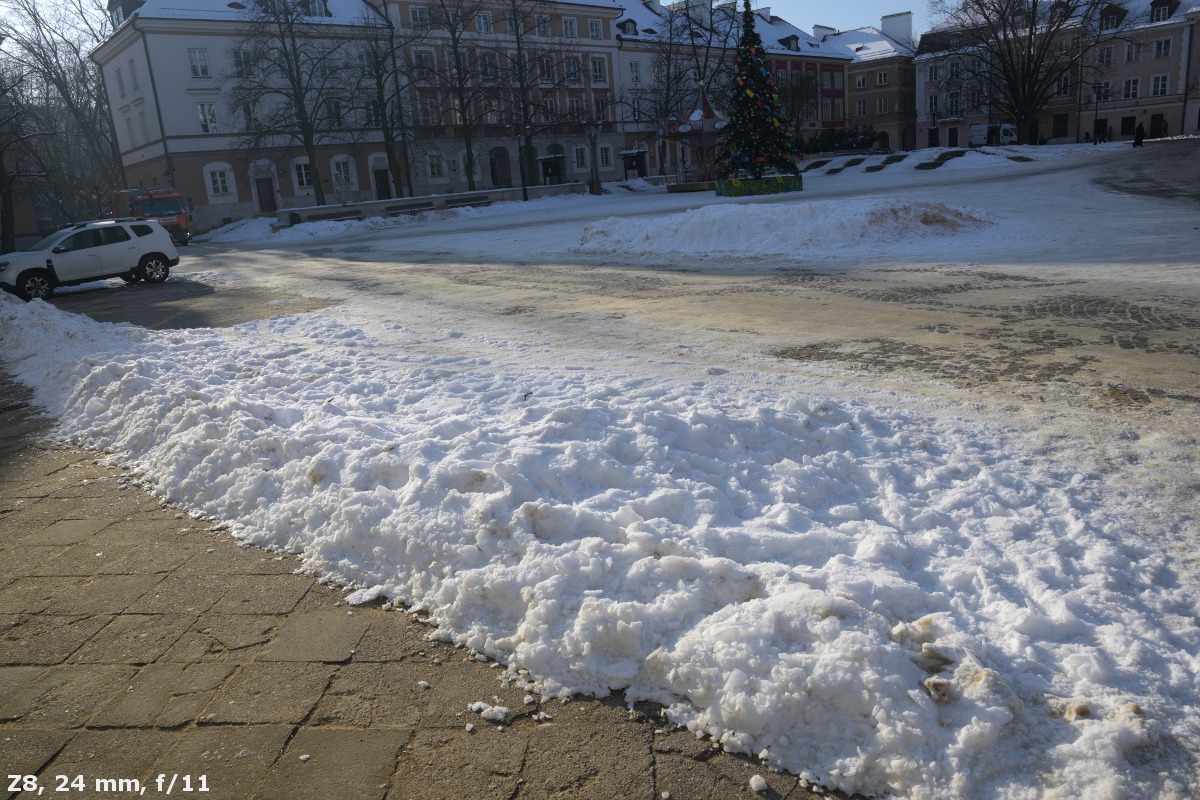
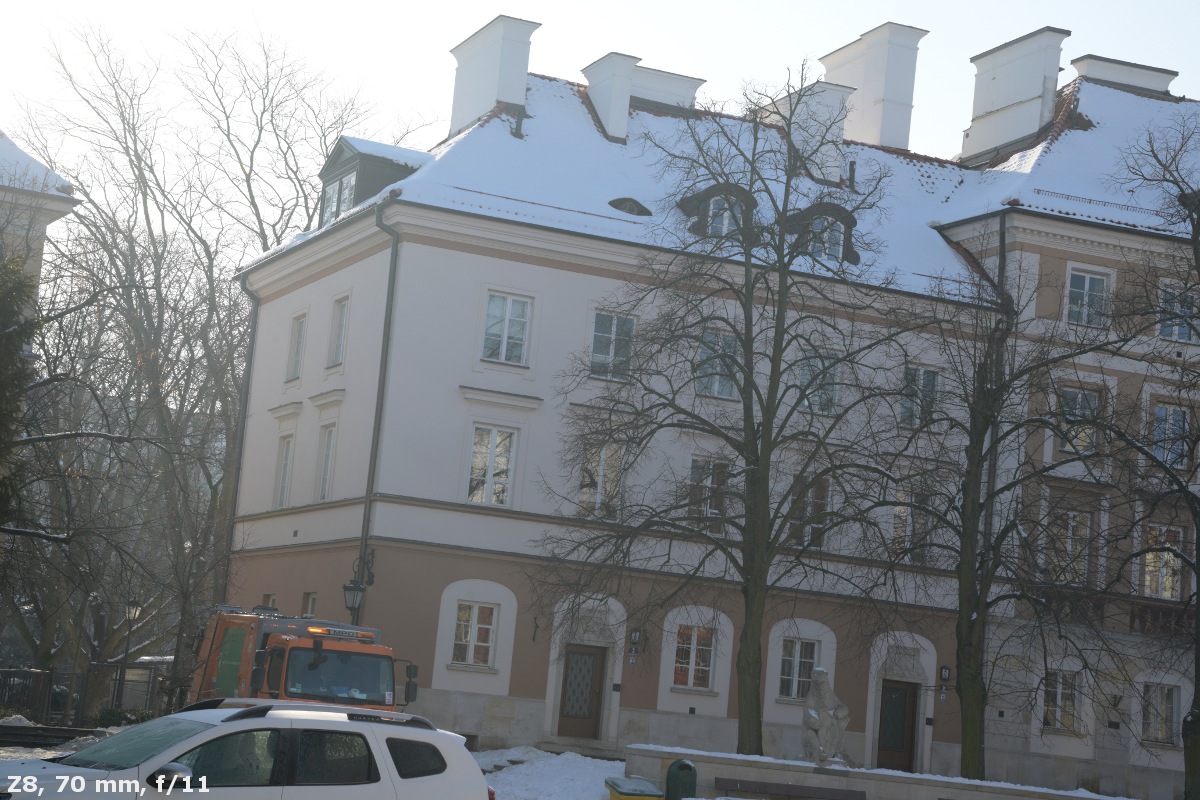
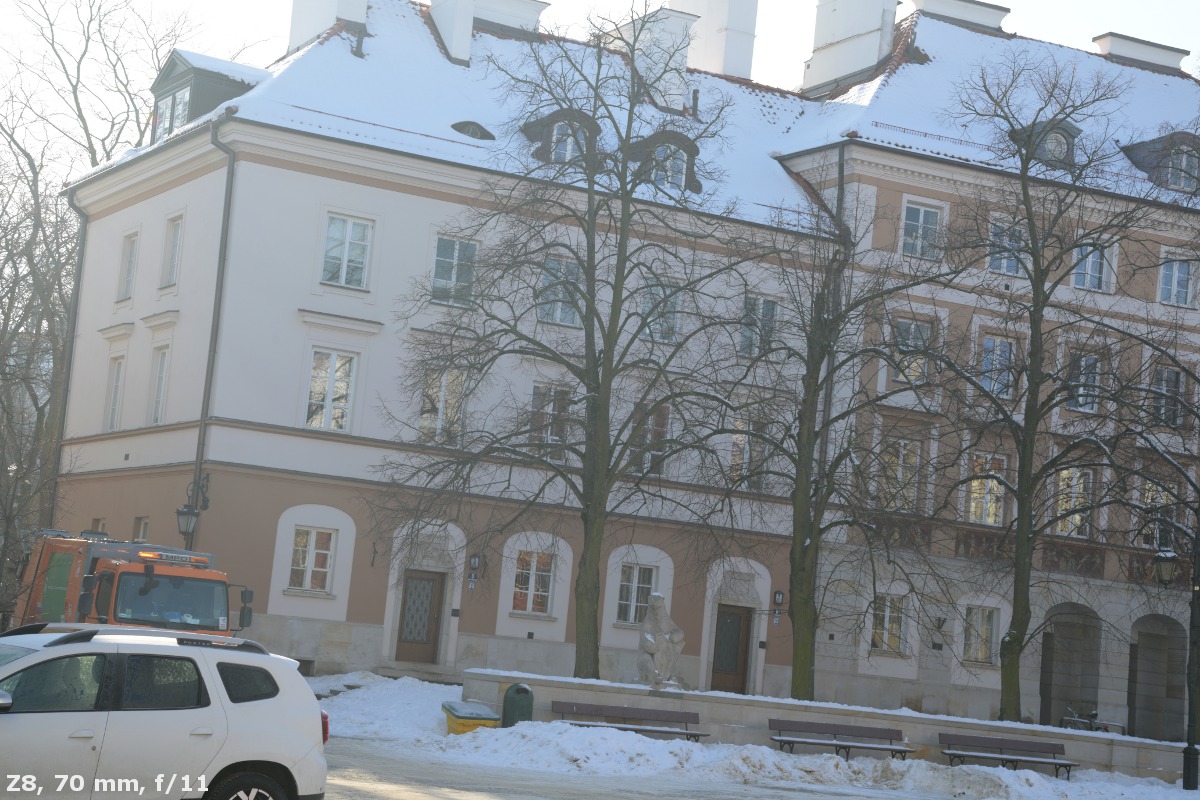
Despite the fact that the bar was raised so high, the Nikon optics specialists handled the whole problem very well and it can be seen in photos below. Light artifacts appear only sporadically and if you catch them, they are small, with low intensity.
In some situations, especially at the longest focal lengths, you can notice a slight decrease of global contrast. They might be caused not only by the optics of the lens but also by conditions under which we were forced to take these photos. It was a very cold January day, with the Sun shining just a dozen or so degrees over the horizon and the air clarity also left a lot to be desired. What can be done – such is the weather in Poland. If I wanted to avoid situations such as this one, I suppose I would have to stop testing lenses completely during three-four winter and autumn months.
Please Support Us
If you enjoy our reviews and articles, and you want us to continue our work please, support our website by donating through PayPal. The funds are going to be used for paying our editorial team, renting servers, and equipping our testing studio; only that way we will be able to continue providing you interesting content for free.
To sum up the new Nikkor 24-70 mm f/2.8 performs against bright light quite well and its optics constructors did a good job here – a round of applause!