Nikon Nikkor Z 24-70 mm f/2.8 S II
6. Distortion and field of view
Field of view
A rectilinear 24-70 mm lens on a full frame sensor should provide you angles of view of changing from 84.1 to 34.3 deg and the producers of the Nikkor in their official specifications, state very similar values, from 84 to 34.3 deg. Of course we decided to check how big this field really is anyway. In order to do so, we took photos of a starry sky and saved them as JPEG files witout distortion correction. Then we transformed the pixel layout (X,Y) from the photo into the equatorial coordinate system (right ascension and declination), which locates a star on a celestial sphere. That way we were able to measure the field very precisely and exactly as it should be done for rays of light coming from infinity.At the 24 mm focal length our transformation was based on positions of 167 stars spread evenly across the frame. An average mesh-fitting error amounted to one minute and 34 seconds of arc. Our result amounts to 85.45 deg with a measurement error on a level of 0.03 of a degree or less. It is a result a tad higher than stated in official specifications of the lens suggesting that the producer left here some spare field for distortion correction.
v
In case of the 70 mm focal range, we used an uncorrected JPEG file and positions of 149 stars; an average mesh-fitting error decreased to just 10 seconds of arc. Our result amounts to 33.89 deg with a measurement error not exceeding 0.04 of a degree. Here the field is narrower than stated in official specifications, but it's rather an advantage. It means that the offered effective focal range is by over 1 mm bigger than declared.
Please Support UsIf you enjoy our reviews and articles, and you want us to continue our work please, support our website by donating through PayPal. The funds are going to be used for paying our editorial team, renting servers, and equipping our testing studio; only that way we will be able to continue providing you interesting content for free. |
- - - - - - - - - - - - - - - - - - - - - - - - - - - - - - - - - - - - - - - - - - - - - - - -
In other words, fields of view offered by files without distortion correction are an equivalent of a rectilinear lens with a focal range from 23.4 to 71.3 mm.
Distortion
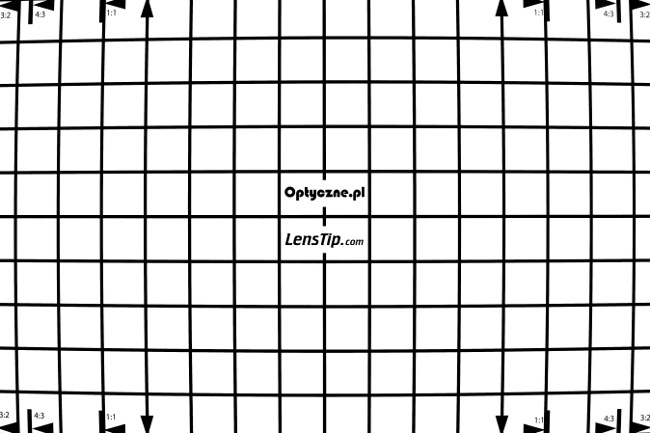
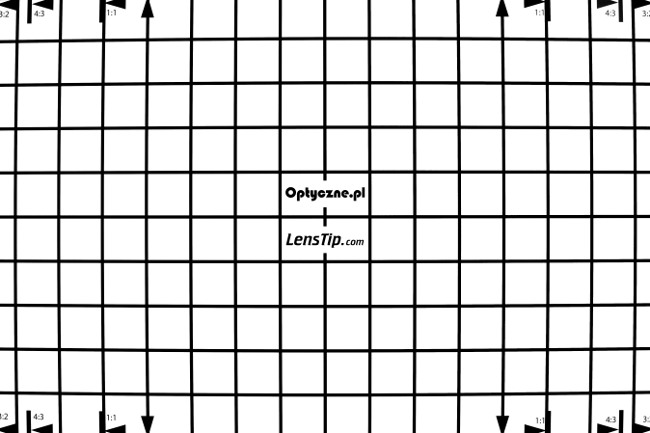
First let's check how the Nikkor Z 24-70 mm f/2.8 S II deals with distortion correction on the smaller APS-C/DX sensor. At 24 mm you deal with moderate barrel deformations of -2.08%. After passing to the 28 mm focal length, this value decreases to -1.32%, and at 35 mm it is -0.21%. Then the aberration changes its sign and at 50 mm you deal with a slight 'pincushion' of +0.79% that increases to +0.93% after applying the maximum focal length.
| Nikon Z8, APS-C/DX, JPEG, 24 mm | |||
|
|||
| Nikon Z8, APS-C/DX, JPEG, 28 mm | |||
|
|||
| Nikon Z8, APS-C/DX, JPEG, 35 mm | |||
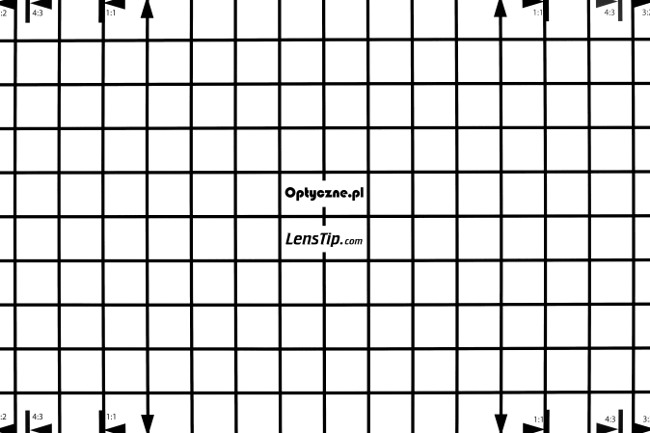
|
|||
| Nikon Z8, APS-C/DX, JPEG, 50 mm | |||
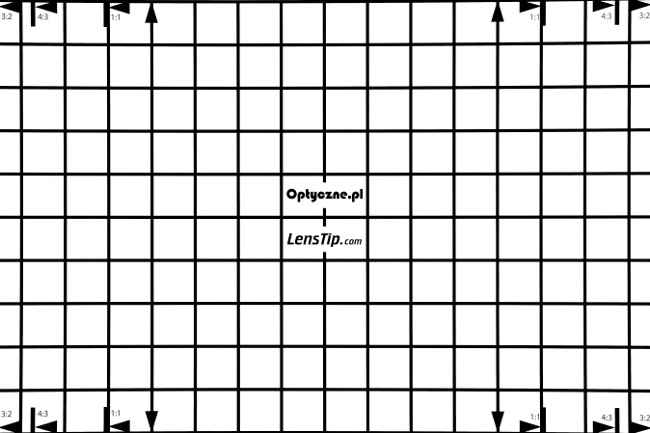
|
|||
| Nikon Z8, APS-C/DX, JPEG, 70 mm | |||
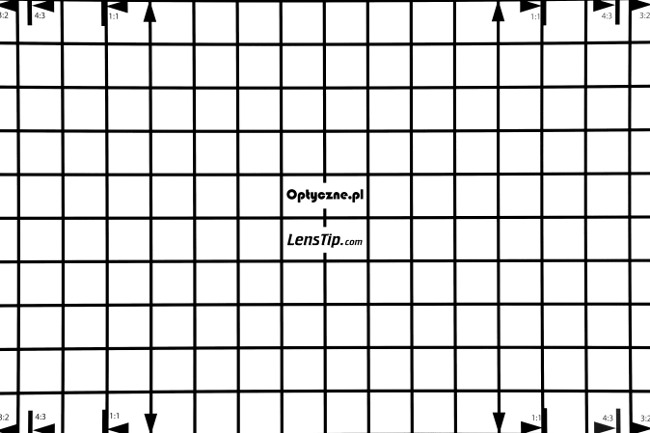
|
|||
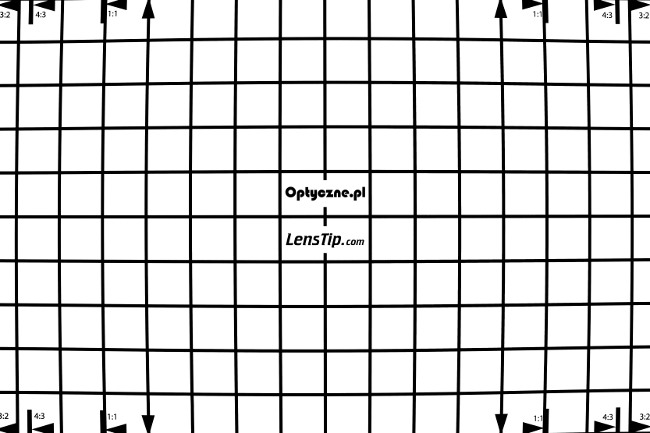
On full frame there are more problems because at the widest angle you deal with a noticeable 'barrel' of -3.91%. Officially it is a result a tad weaker than in the case of the predecessor, but the older lens got help in the form of a distinct moustache distortion. In the new version the 'moustache' is not so visible, so the performance of the newer model can be assessed a bit better.
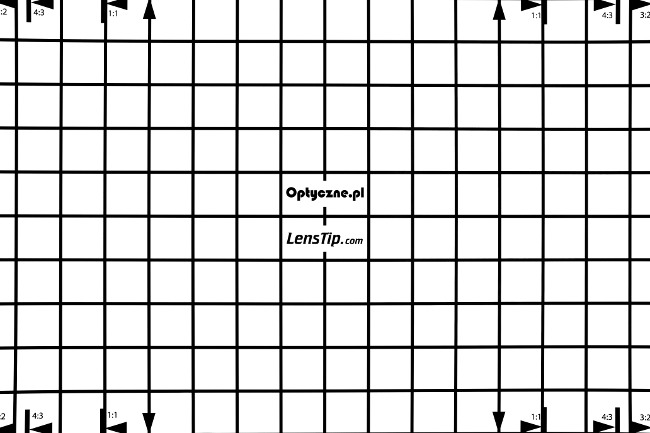
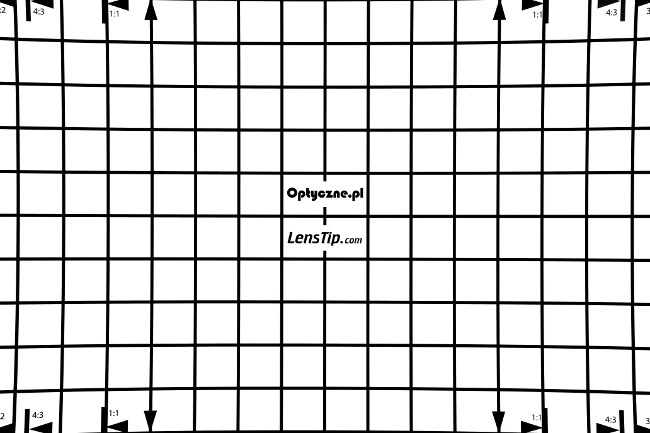
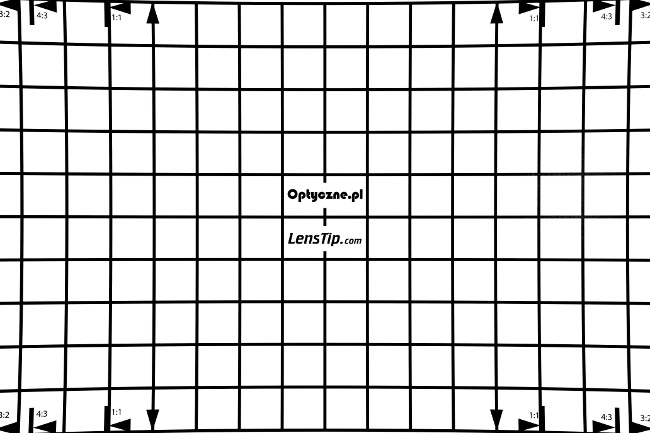
By increasing the focal length to 28 mm you can reduce the deformations to -2.18%; at 35 mm they are practically zero (official result amounts to +0.09%) and by 50 mm there is a distinctly accented 'pincushion' of +2.38% that remains on the same level after passing to 70 mm, where officially we measured a level of +2.36%. That last result is a tad lower than in the case of the predecessor, but, for a change, at 50 mm the older model fared better.
To sum up, compared to the older model, we don't see a meaningful improvement. The only thing worth our attention is the elimination of acute moustache distortion, something that plagued the predecessor on the wide angle of view.
| Nikon Z8, FF, JPEG, 24 mm | |||
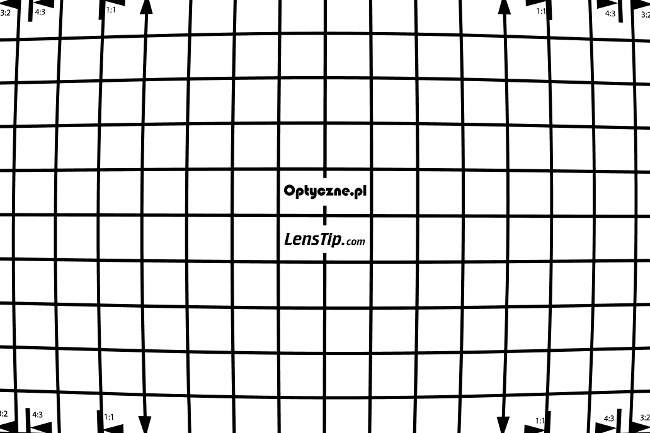
|
|||
| Nikon Z8, FF, JPEG, 28 mm | |||
|
|||
| Nikon Z8, FF, JPEG, 35 mm | |||
|
|||
| Nikon Z8, FF, JPEG, 50 mm | |||
|
|||
| Nikon Z8, FF, JPEG, 70 mm | |||
|
|||