Viltrox AF 35 mm f/1.8 EVO
3. Build quality
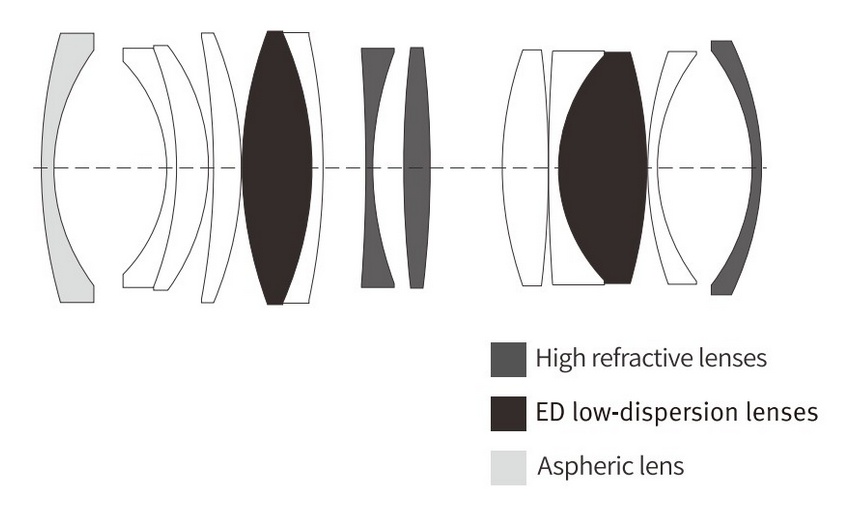
Looking at this groups you find out that the Viltrox is a quite big and heavy lens. In these two categories it is defeated only by the Nikkor. It becomes understandable up to a point when you examine its optical construction, the most complex of all lenses, presented here. The Viltrox lags behind with the longest minimum focus distance, but when it comes to other parameters, it presents itself similarly to its direct rivals.
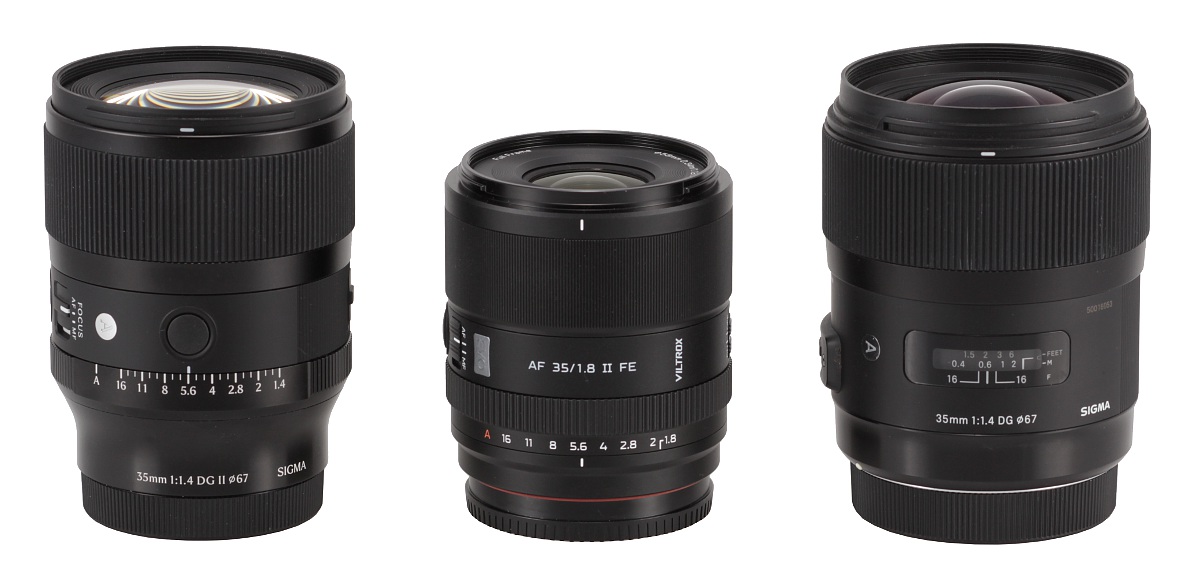
In the photo below, the Viltrox AF 35 mm f/1.8 EVO is positioned between two 1.4/35 Sigma models. On the left you get the new Sigma A 35 mm f/1.4 DG II, and on the right the older, reflex camera Sigma A 35 mm f/1.4 DG HSM.
Please Support UsIf you enjoy our reviews and articles, and you want us to continue our work please, support our website by donating through PayPal. The funds are going to be used for paying our editorial team, renting servers, and equipping our testing studio; only that way we will be able to continue providing you interesting content for free. |
- - - - - - - - - - - - - - - - - - - - - - - - - - - - - - - - - - - - - - - - - - - - - - - -
 |
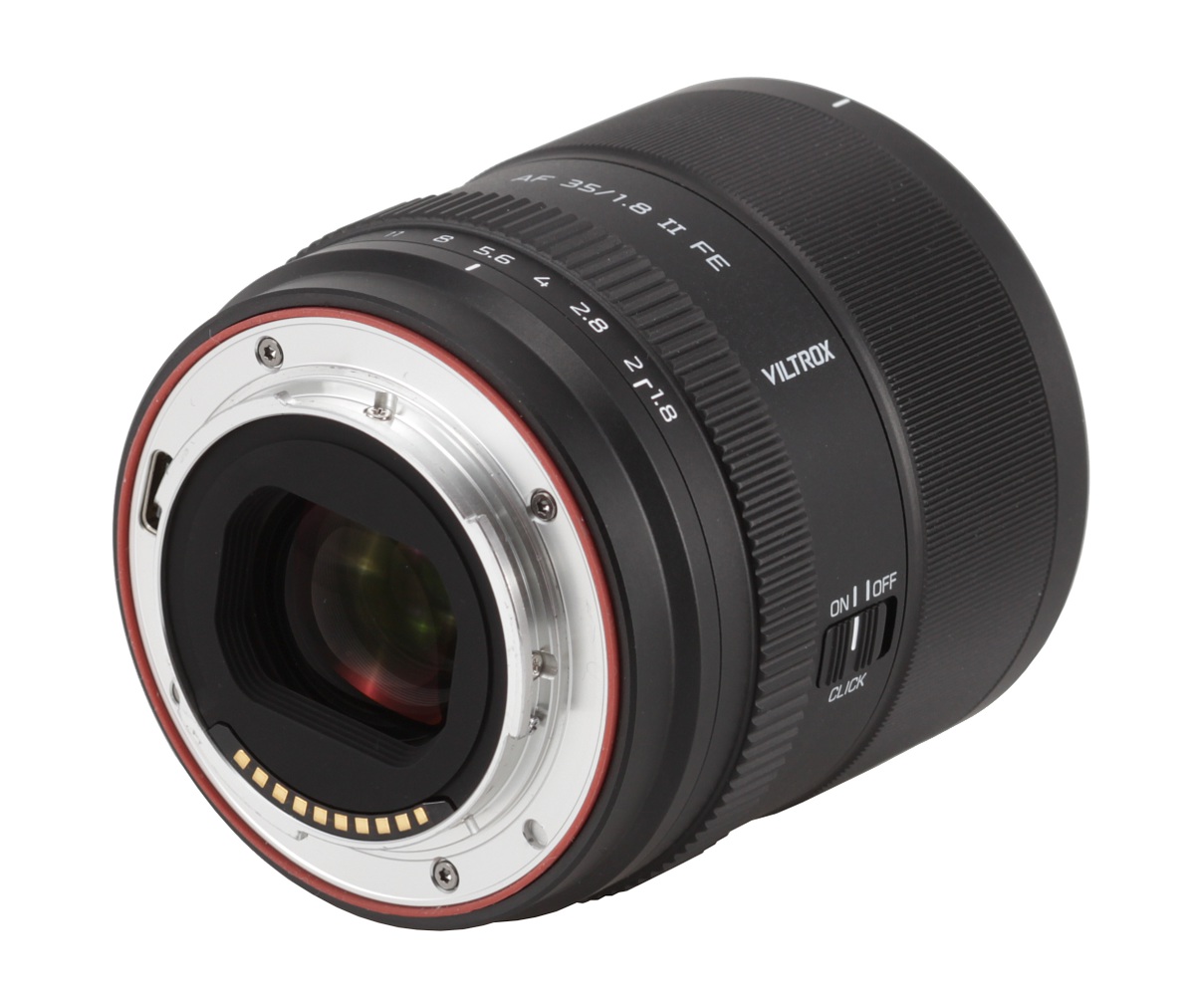 |
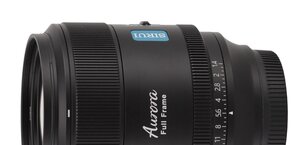
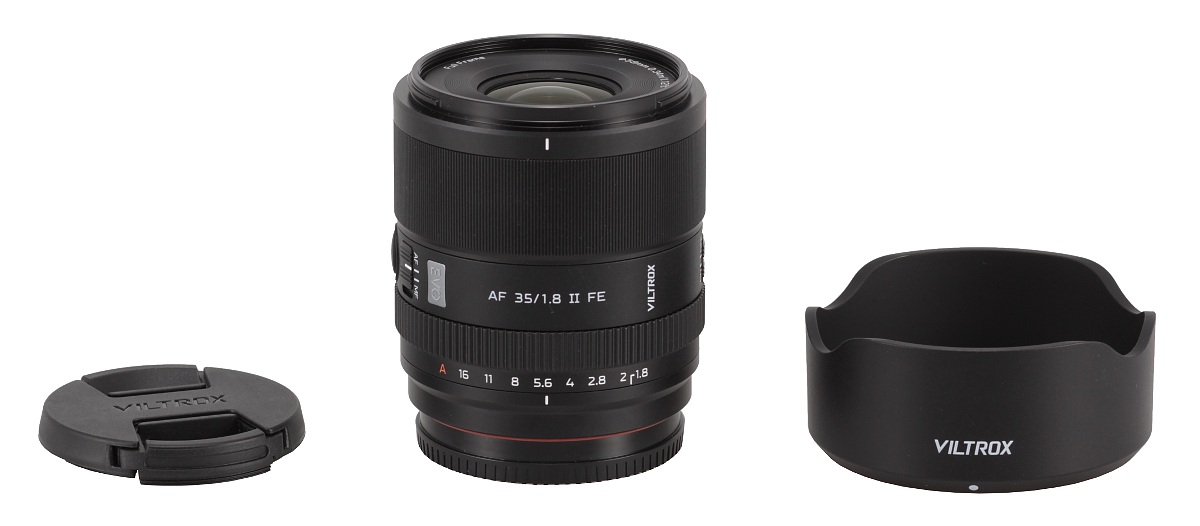
Then you find a metal, ribbed aperture ring, 14 mm wide. On the ring you find aperture markings ranging from f/1.8 to f/16 (every 1/3 EV step) and an automatic A value. The ring can be clicked or declicked, it moves properly well.
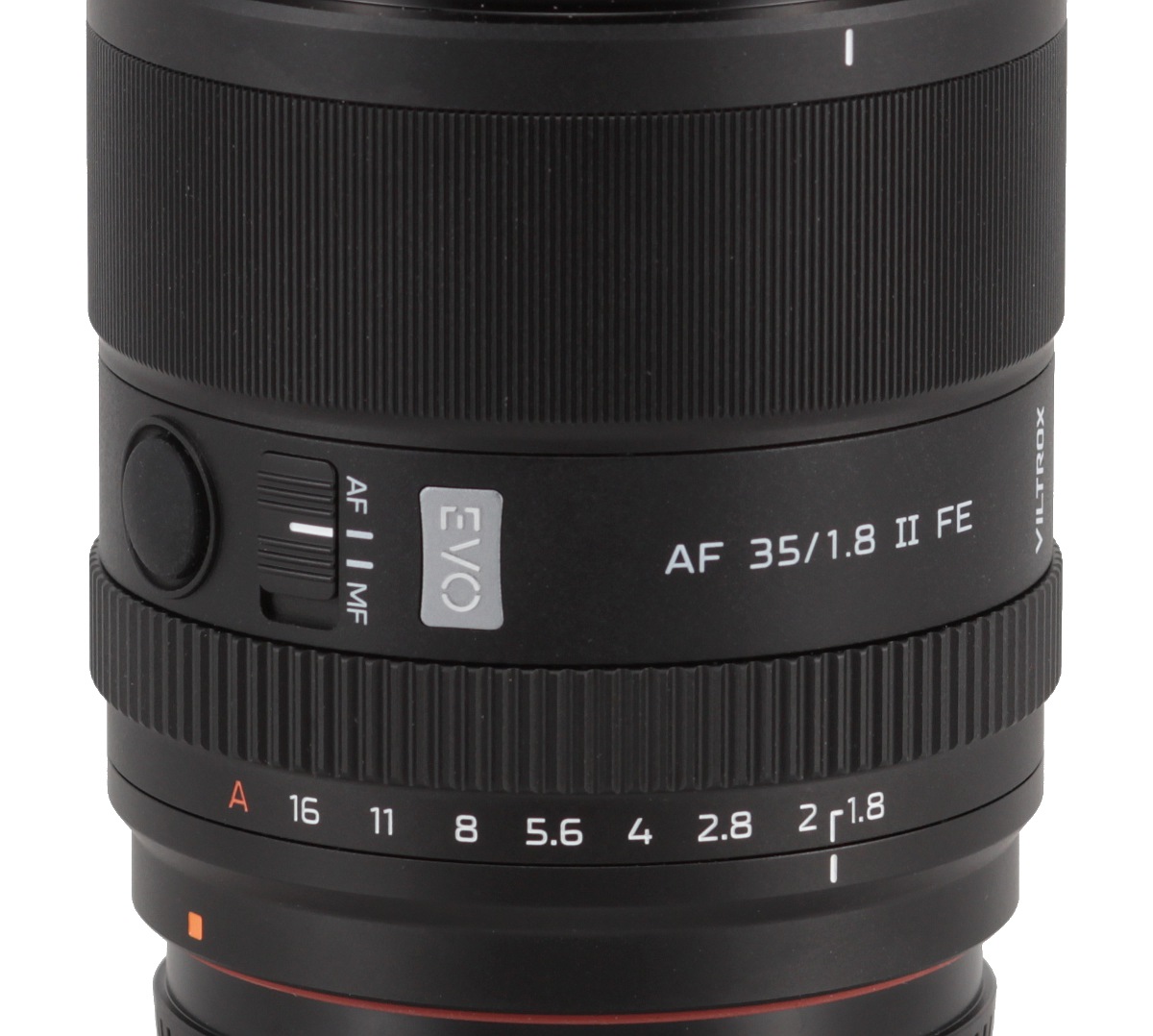 |
Then you see a manual focus ring, as wide as 24 mm, almost completely covered by fine ribbing. You won't find any distance or depth of field markings on it. The focus throw amounts to an angle of over 300 deg even if you move the ring fast, a significant value, allowing you very precise settings.
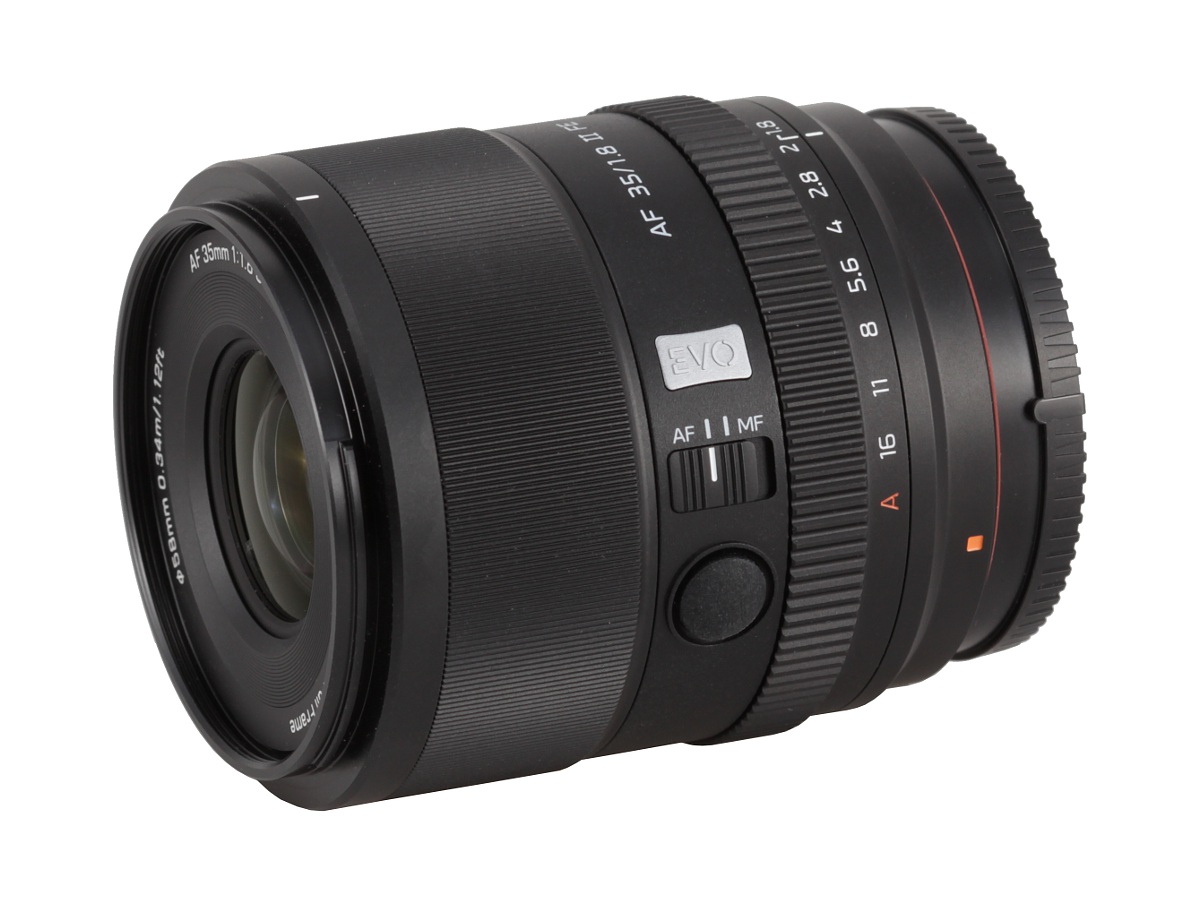 |
The front element of the lens doesn't move, is slightly convex, 29 mm in diameter. It is surrounded by a part of the casing with inscriptions and a non-rotating filter thread, 58 mm in diameter. Among inscriptions that run around the front element, you also find one informing you about the filter diameter, minimum focusing distance, (0.34m/1.12ft), and the next one stating the basic parameters of the lens and abbreviations concerning different technologies used in the construction.
In this case it's STM, meaning a stepping motor, used in the lens's autofocus, ED concerning special glass elements inside; IF, meaning focus is set internally; and APO, suggesting perfect correction of chromatic aberration. Additionally, there is a 'Full Frame' inscription, informing you that the lens was designed to cooperate with full frame cameras.
 |
Buyers get in the box along with the lens: both caps, a hood and a soft pouch whose protective properties are rather mediocre.
 |